

Interactive Health Insurance Powered by Wellness Data Emerges as Industry Trend
While the debate over whether health insurance should incorporate health management services was still ongoing, a public letter released by U.S. life insurance giant John Hancock prematurely announced the advent of an era in which health management has become a standard feature of health insurance.
“Starting Wednesday, all our policies will come with the ‘Vitality Program’—a platform designed to help policyholders live longer, healthier lives by motivating people to make healthier choices related to physical activity, nutrition, and mindfulness,” said Brooks Tingle, President and CEO of John Hancock.
As one of the top ten life insurance companies in the United States, John Hancock has a 156-year history since its establishment in 1862. What unique considerations lie behind such a decision?
“Our journey began with a simple, revolutionary idea: your life insurance company should care about how long you live,” said Brooks Tingle. It is basic economics that all life insurers want their customers to live longer. Yet for a long time, the industry has not truly invested in what it aims to protect: life.
In 2015, John Hancock launched the “Vitality Program” based on health behavior data and health management, rewarding customers for adopting longer-lived, healthier lifestyles, and quickly witnessed significant changes. Data showed that more than 3 million health activity records were logged, and policyholders took nearly twice as many steps as the average American. Policyholders interacted with the company an average of 576 times per year, a substantial increase compared to the one or two interactions typical in traditional insurance annually.
All of this ultimately led John Hancock to make the decision: to sell only insurance that helps customers extend their lifespan and live healthier lives.
The issuance of this open letter may mark a new starting point for the transformation of the U.S. insurance industry.
In fact, it is not only in the United States and at John Hancock that, with the rapid development of technology, an increasing number of countries and enterprises have come to recognize the importance of health management in insurance. In 2015, the same year John Hancock launched its Vitality health insurance program, Beijing Miaoyijia Information Technology Co., Ltd. (abbreviated as “Miao Jiankang”) was formally established in China. It is a health technology company built on big data related to health behaviors and artificial intelligence.

According to reports, after more than three years of exploration, Miao Health has established a comprehensive empowerment service system centered on health data tracking capabilities, AI-driven health intervention capabilities, and gamified operational capabilities. This system not only helps insurance companies enhance customer acquisition and conversion, develop differentiated insurance products, increase user affinity and stickiness, and reduce claim ratios, but also assists users in continuously improving their health behaviors to achieve the ultimate goal of extending lifespan.
Data shows that Miao Health has currently collected extensive health behavior data from over 40 million users. By leveraging big data analytics, it has developed professional health management solutions focusing on four key areas: exercise, sleep, nutrition, and psychological well-being. This approach has yielded measurable outcomes, including a 1.7-fold increase in users’ average daily step count and an extension of average daily sleep duration by 35 minutes. Furthermore, it has helped insurance companies achieve their goals of increasing user interactions from 1–2 times per year to 6–8 times per day, and enhancing the frequency of health data collection from once a year to 1–2 times per day.
John Hancock and Miao Jiankang, two companies separated by half the globe with no prior intersection, have independently embraced the core philosophy of promoting health improvement through healthy behaviors, creating a new model of health insurance that integrates insurance with health management. This may indicate that “insurance + health management” has become a global trend in the development of health insurance.
A careful comparison of the business models of John Hancock and Miao Health reveals that, in terms of health management enablement, Miao Health is more comprehensive than John Hancock, both in the number of connected devices and in the quantification of health behaviors.
In terms of integration with smart health wearables, John Hancock supports fitness devices from Fitbit, Garmin, and Polar, whereas Miao Health offers over 300 models across 28 categories from more than dozens of brands, including Fitbit, Garmin, Xiaomi, and Huawei. Miao Health has fully integrated data from these devices, enabling the creation of more comprehensive and accurate personal health data profiles.
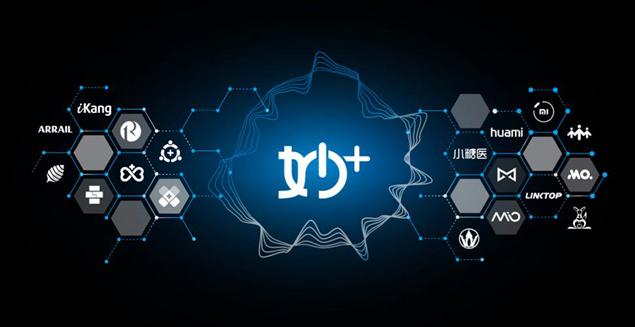
“Miao+” platform has currently integrated data from over 300 smart devices across major mainstream brands (Image source: Provided by the company)
“With data in hand, the key to achieving personalized, precision health management lies in how efficiently it is utilized,” said Kong Fei, CEO of More Health. More Health applies internet technologies and artificial intelligence algorithms to the field of health management. In collaboration with a team of medical experts, the company has developed the proprietary Health Behavior Index (M-Value). By intelligently recommending health tasks based on user profiles and continuously self-learning and optimizing its algorithms throughout this process, More Health achieves a perfect blend of efficiency and scientific rigor, comprehensively promoting improvements in users’ health behaviors.
Empowered by emerging technologies such as the Internet of Things (IoT), big data, and artificial intelligence (AI), the business model of health insurance is ushering in an era of transformation. Much like how the introduction of the iPhone propelled the traditional mobile phone industry into the smart era, the emergence of John Hancock and Miao Jiankang will accelerate the upgrade of the traditional health insurance industry from offering single-layer coverage to providing interactive, full-lifecycle health services.