

Unknown Biotech Collaborates with Top-tier Hospitals Nationwide to Advance FMT-based Liver Disease Therapies

Xbiome
AI Drug Developer for Gut Microbiota

In the complex physiological system of the human body, the gut and liver are intricately connected, and the bidirectional communication network between them is referred to by the academic community as“Gut-Liver Axis”With the deepening of microbiological research, the impact of intestinal microecology on liver health has gradually come to light, becoming a new focus in the field of liver disease diagnosis and treatment.
Gut Microbiota and Liver Health
The human gut is home to trillions of microorganisms. When dysbiosis occurs, harmful bacteria multiply excessively and produce toxins such as endotoxins. These toxins enter the liver through the gut-liver axis, triggering chronic inflammation and exacerbating liver damage and the progression of related diseases. Abnormal liver function also affects bile secretion, further disrupting the balance of gut microbiota, creating a vicious cycle. Liver injury impairs core functions such as metabolism, detoxification, nutrient synthesis, and bile secretion, leading to multi-systemic disorders and causing a chain reaction of negative effects on overall bodily functions.
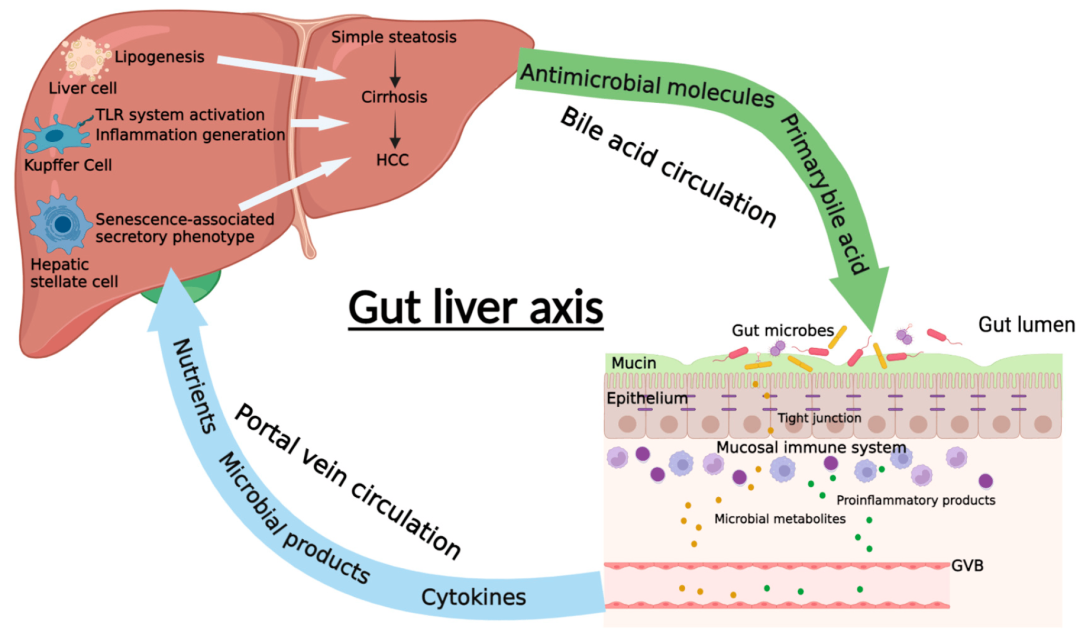
Schematic Diagram of the Gut-Liver Axis
Intervening in liver disease treatment by modulating the gut microbiota has become a popular research direction. Among these, Fecal Microbiota Transplantation (hereinafter referred to as: FMT), as an important technique for regulating the gut microbiome, is considered a potential breakthrough in liver disease treatment due to its ability to reconstruct a healthy gut flora and quickly break the vicious cycle of the gut-liver axis. Currently, FMT technology is being explored globally for various types of liver disease indications, such as severe alcoholic hepatitis, chronic hepatitis B, fatty liver, cirrhosis, hepatic encephalopathy, and even liver cancer; significant progress has been made in multiple studies.
In China, the translational research on gut microbiota and liver diseases is accelerating. The 2024 "Guidelines for the Diagnosis and Treatment of Liver Failure" and the 2025 "Guidelines for Fecal Microbiota Transplantation in Patients with Liver Cirrhosis," as national expert clinical guidance documents, have provided further recommendations for the clinical application of FMT in certain areas of liver disease.
Xbiome, as a leading company in China's gut microbiome field, has obtainedThe Fifth Medical Center of PLA General Hospital(PLA 302 Hospital), Shenzhen Hospital of Southern Medical University, and other top-tier tertiary hospitals in China; collaborate with frontline clinical experts on FMT clinical research and sampling projects for various liver diseases, promoting the clinical application of FMT technology and bringing new hope to patients with liver disease.
National Key Scientific and Technological Project for Liver Cancer Research
The Fifth Medical Center of PLA General Hospital (PLA 302 Hospital)It is an authority in liver disease diagnosis and treatment in China, with profound accumulation and rich clinical experience in the diagnosis and treatment of various liver diseases. 2025,National Science and Technology Major Project on the Four Major Chronic Diseases: "Creation and Clinical Evaluation of an Integrated Traditional Chinese and Western Medicine Prevention System for Primary Liver Cancer"Officially approved by the National Health Commission; in the project, the Fifth Medical Center of the PLA General Hospital, Xbiome, and other top hospitals and technology enterprises in China collaborate to focus on the research topic of using intestinal microbiota intervention to reduce the risk of liver cancer, develop comprehensive clinical intervention strategies, and construct "China's Solution for Chronic Disease Prevention and Treatment."

With experience in the registration and application of FMT drugs, an FMT production system that complies with GMP and cGMP standards, and a leading-scale, strictly managed FMT donor bank,Xbiome Becomes One of the Participating Enterprises in China's Major Science and Technology Projects, Responsible for Building the FMT Donor Selection System, Maintaining the Donor Bank, and Providing Bacterial Suspensions.
FMT Intervention for Metabolic Associated Fatty Liver Disease
In addition, Xbiome andShenzhen Hospital of Southern Medical UniversityJoin hands to conduct clinical research on metabolic associated fatty liver disease (hereinafter referred to as MAFLD) and achieve significant results;The article co-authored by both parties has been officially published in the renowned academic journal Scientific Reports., revealing the potential regulatory mechanisms between gut microbiota and liver diseases, and providing new ideas and methods for the prevention, diagnosis, and treatment of related diseases.
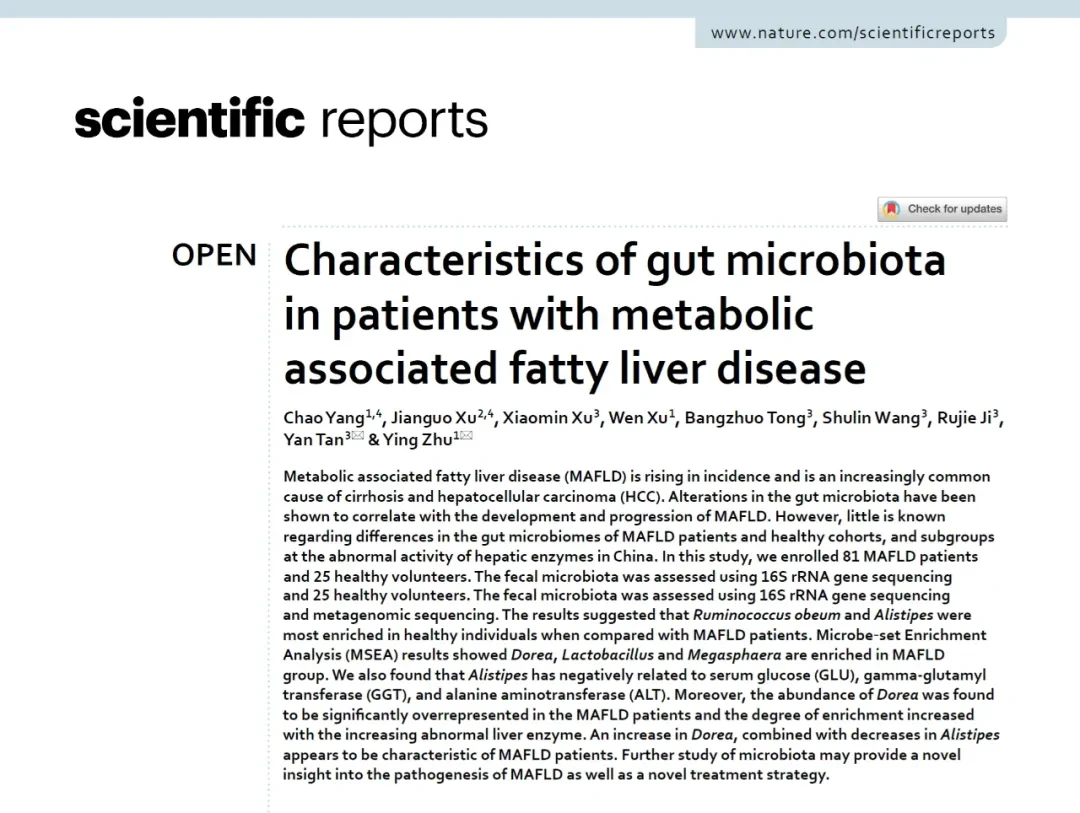
It is reported that the current academic understanding of the interaction between the gut and liver is limited, especially lacking data from the Chinese population. Some studies have pointed out that FMT can improve the intestinal microbial status of patients and reduce fat accumulation in the liver, thereby alleviating fatty liver disease. Xbiome collaborates with Shenzhen Hospital of Southern Medical University,Clarified the gut microbiota characteristics of MAFLD patients, focused on in-depth exploration of microbial mechanisms, and identified key biomarkers.To establish MAFLD microbial interventions based on the fecal microbiota of the Chinese population, and thereby optimize FMT treatment outcomes, providing crucial scientific research evidence.

Collaboration with top-tier tertiary hospitals in China is an authoritative recognition of Xbiome's scientific research capabilities and FMT product quality. Xbiome always focuses on unmet clinical and broader health needs, relying on an advanced AI+BT technology platform to build a full-chain service system for fecal microbiota transplantation (FMT), ensuring the scientific nature and safety of each FMT treatment.
In the future, Xbiome will deepen its scientific research cooperation with top clinical experts in China, promoting translational research on the application of gut microbiota in the treatment of major diseases and sub-health interventions, allowing FMT technology to benefit a wider population. The dual support of scientific innovation and authoritative medical resources will also undoubtedly bring higher quality and more reliable gut microbiota intervention solutions to countless patients.
Note: Schematic diagram of the gut-liver axisCitation: Song, Q.; Zhang, X. The Role of Gut–Liver Axis in Gut Microbiome Dysbiosis Associated NAFLD and NAFLD-HCC. Biomedicines 2022, 10, 524. https://doi.org/10.3390/biomedicines10030524
-End-
About Xbiome
Xbiome Co. Ltd., founded in 2017, owns a leading AI microbiome research and industrial transformation platform, strategically focusing on FMT, drug discovery, and probiotics. In drug discovery, the team has completed layouts in areas such as oncology, digestive system diseases, immune-related diseases, and urinary system diseases, with four pipelines entering clinical stages, two of which have reached phase II clinical trials. Regarding FMT, Xbiome has collaborated with nearly 20 well-known tertiary hospitals in China, including Peking University Cancer Hospital and Peking Union Medical College Hospital, to conduct gut microbiome clinical research across various indications. Additionally, they have developed the AI-FMT personalized precision gut microbiome treatment project, targeting the broader health market to benefit patients with chronic diseases and sub-health populations. In the field of probiotics, Xbiome has completed commercial collaborations and transformations with several top domestic and international health companies and is continuously advancing the development of proprietary strains.