

From Dolly the Sheep to Diabetes Therapy: University of Edinburgh's Regenerative Medicine Technology Lands in Shenzhen with IPO Filing
The University of Edinburgh has been engaged in biotechnology research for three centuries and is the creator of Dolly, the cloned sheep. Today, this world-renowned institution has brought its cutting-edge technologies and leading scientists to Shenzhen, using it as a gateway to transform these innovations into products that benefit people worldwide.
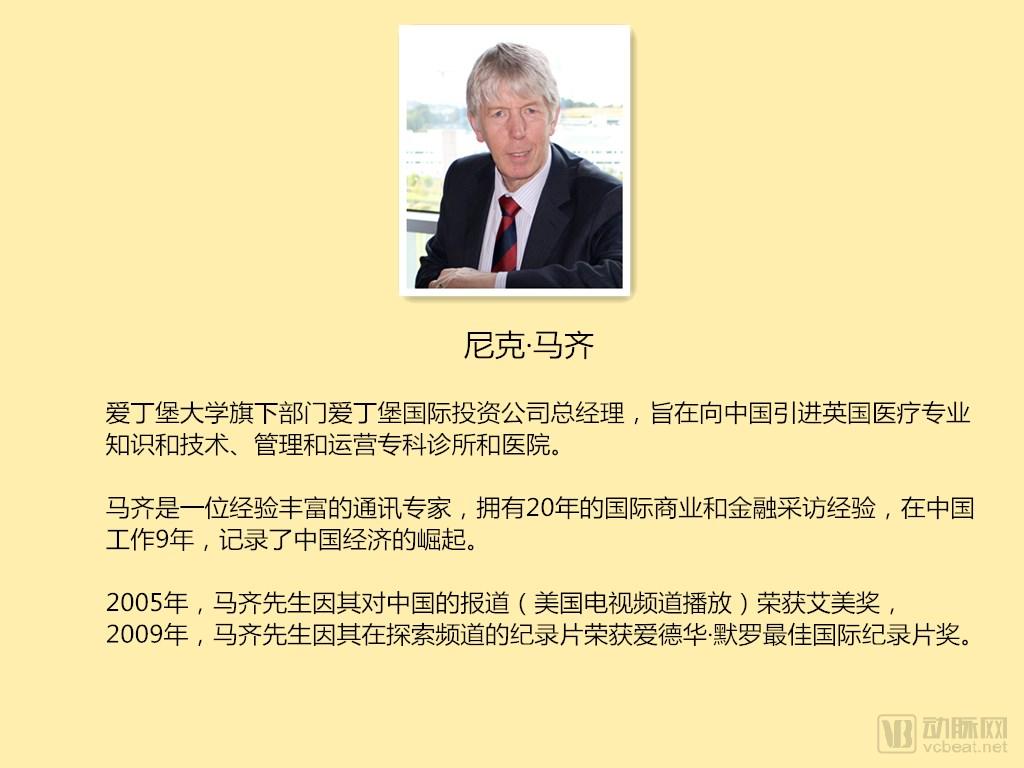
In this article, VCBeat interviews Nick Mazzi, Managing Director of Edinburgh International Investment, a subsidiary of the University of Edinburgh. He shares insights into why the University of Edinburgh is bullish on Shenzhen and outlines its next steps...
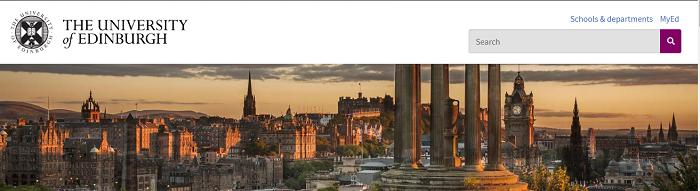
Image from the official website of the University of Edinburgh
The University of Edinburgh, located in Scotland’s capital city, is a world-leading, long-established British university renowned globally for its excellent and diverse teaching and research. It is also the sixth-oldest institution of higher learning in the English-speaking world. Founded in 1583, the university boasts a history spanning more than 400 years, during which it has produced 28 Nobel laureates, two Turing Award winners, and one Abel Prize recipient in mathematics. Many distinguished figures, including Charles Darwin, David Hume, Arthur Conan Doyle, Adam Smith, James Clerk Maxwell, Adam Ferguson, James Mirrlees, and former UK Prime Minister Winston Churchill, have studied or conducted research at the University of Edinburgh.
In the medical field, this institution has been cultivating expertise for three centuries; Dolly the cloned sheep was created by scientists at the University of Edinburgh. In recent years, researchers at this university have turned their focus to stem cell technology, conducting extensive scientific research built upon the technological foundation established with “Dolly the sheep.”
In May 2017, the university came to Shenzhen, signed multiple cooperation agreements in the health field with Shenzhen People's Hospital, and decided to jointly establish an International Diabetes Center in Shenzhen.
Nick Mazzi, Managing Director of Edinburgh International Investment, told VCBeat, “The core competitiveness in the future healthcare sector will stem from two areas: regenerative medicine and data.” At the 5th Shenzhen International BT Leaders Summit in 2018, VCBeat met with Nick Mazzi, Managing Director of Edinburgh International Investment, to discuss the university’s rationale for entering China, as well as its current progress and future objectives.
China, a country with a vast population, boasts robust economic strength, a diverse populace, and the most abundant talent resources. It is precisely these advantages that have attracted numerous top-tier institutions from around the world. Ma Qi told VCBeat that Shenzhen is an open city, and they are more than willing to use it as a starting point to benefit humanity with more achievements.
Although the University of Edinburgh is not the only top-tier institution to enter China, MacKay claims that their model is unique: “Typically, foreign institutions come to teach, conduct research, or exchange courses—these are relatively traditional forms of collaboration. We will adopt an entirely new model.” They plan to bring the University of Edinburgh’s cutting-edge technologies, top-tier talent, and innovative hospital service models to Shenzhen. By operating independently or in partnership with local enterprises, they aim to translate these technologies into commercial products, leveraging Shenzhen as a global showcase to reach markets worldwide.
They established a company in Shenzhen, using it as their headquarters to conduct research on diabetes, rare pediatric diseases, and assisted reproductive technologies.
They are currently conducting a study on diabetes treatment in Shenzhen, which involves extracting pancreatic cells from donors, reprogramming and modifying them, and then transplanting them into patients with diabetes. They hope to find experienced partners and investors in China to achieve greater breakthroughs within three years.
“We have been preparing for six years; it is time,” he told VCBeat.
After obtaining the donor cells, researchers transport them to a specialized laboratory for transplantation into the patient’s body. This is a minimally invasive procedure that can even be performed while the patient is awake.
“The entire process, from cell extraction to the completion of transplantation, must be completed within 48 hours. ‘The cells cannot be cryopreserved, as this may lead to loss of viability,’ explained Ma Qi. Donors and recipients do not even require specialized matching; following successful cell transplantation, patients may no longer need daily insulin injections.”
This technology is primarily targeted at patients with type 1 diabetes. However, because the transplanted cells are derived from other individuals, patients must take immunosuppressive drugs for life after transplantation.
“There are two issues: one is that it is difficult for us to find such a large number of donors, and the other is that if patients need to take anti-rejection medications for the rest of their lives after surgery, then we have not fundamentally solved the problem,” Ma Qi told VCBeat. “This is the previous generation of technology, which has been around for ten years so far.” He revealed to VCBeat that the University of Edinburgh has invented a new generation of technology that attempts to eliminate transplant rejection by reprogramming cells.
“It may take another two to three years; we still need to conduct extensive testing,” he added.
Next, they will bring the top scientists from the University of Edinburgh and even across Scotland to Shenzhen, facilitating scientist-to-scientist dialogues to identify the most suitable partners. “China’s economic strength is beyond doubt; data and equipment are not issues. The biggest challenge we face now is talent,” said Ma Qi. “This is a challenge, but it can certainly be overcome through action.”
Next, they will continue to seek suitable enterprises and capital partners in China to jointly advance the commercialization of their technology. Ma Qi also expressed his aspiration to establish a University of Edinburgh-affiliated diagnostic and treatment hospital in China, which could be developed independently or through collaboration with other partners.
“In addition to various research initiatives, we will also see better and larger projects established in Shenzhen by the end of this year,” revealed Ma Qi.
Note: The cover image is from the official website of the University of Edinburgh.