

Bridging the Gap: Advancing Innovation in Translating Basic Research – Insights from Chinese and American Academicians, University Leaders, and Industry Investors
The Chasm in Translating Basic Research into Applications: A Challenge Facing China’s Academia and Industry. How Should Government, Capital, Industry, and Academia Collaborate in This Process? Hear What Chinese and American Experts Have to Say.
Molecular diagnostics, cryo-electron microscopy, and other fundamental research areas play a pivotal role in precision medicine and translational medicine. The key to translational medicine lies in the integration of industry, academia, and research. This process relies on capital participation, industrial promotion, and government support. Conversely, advances in basic research and translational medicine also influence investment trends and drive industrial development.
So, how should the government, capital, industry, and academia collaborate? How can innovative talents be cultivated, and how can the gap between academic research and commercial translation be bridged? At the high-level dialogue of the 5th Shenzhen International BT Leaders Summit, which has just concluded, Chinese and American academicians and top scientists from the academic community discussed these issues.
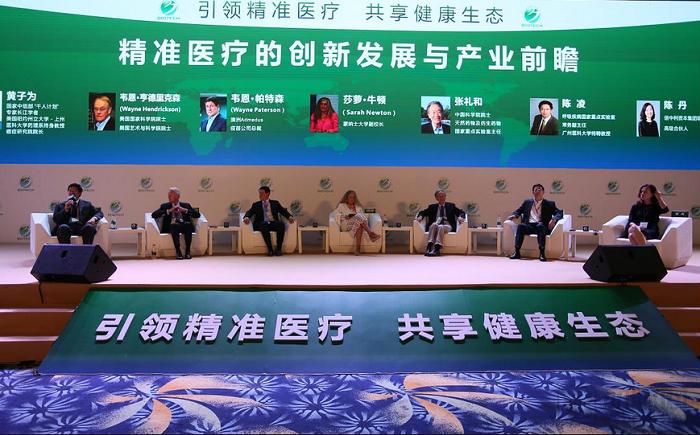
“For a long time, I have held the belief that basic research is immensely beneficial to translational medicine and commercial applications, a conviction in which I firmly believe,” said Wayne Hendrickson, Professor at Columbia University, Member of the U.S. National Academy of Sciences, and Member of the American Academy of Arts and Sciences.
The importance of basic research lies in providing us with fundamental insights. Without basic research, commercialization would be out of the question, as exemplified by HIV-related studies. Research on HIV began as early as the 1980s. The elucidation of the structure of the CD4 protein caused a sensation in the academic community. When Wayne Hendrickson joined Columbia University, one of his colleagues was conducting molecular research on HIV.
These studies laid the foundation for subsequent vaccine research. “Without this foundational research, subsequent commercialization efforts would have collapsed,” said Hendrickson. Such foundational research is a prerequisite for all subsequent developments; without it, there would be no basis for the development of follow-on compounds, viral inhibitors, or receptors.
“These developments are of great significance to the advancement of Western medicine, and also hold important implications for people living with AIDS and HIV carriers,” he concluded.
“Scientific research, translational medicine, and product development are inherently inseparable.” Chen Ling, Executive Deputy Director of the State Key Laboratory of Respiratory Disease and Distinguished Professor at Guangzhou Medical University, expressed his agreement with this view. Taking cryo-electron microscopy (cryo-EM) as an example, using it to elucidate the tertiary structures of ion channels and explain the complex architecture of biological macromolecules may seem far removed from pharmaceutical products in the eyes of many. In reality, however, this technology is indispensable for both the identification of novel therapeutic targets and the development of original drugs. The relationship between precision medicine and biopharmaceuticals essentially lies in pioneering directions for primary innovation—paths that are truly unprecedented.
However, basic research is primarily conducted in universities and research institutes, while product translation mostly takes place within the industry. The integration of these two distinct domains—academia and commerce—often yields unsatisfactory results.
“Currently, many universities are either pursuing pioneering innovations or engaging in ‘Me-too’ and ‘Me-better’ research. However, the environment in enterprises differs from that in universities; without extensive market research, some studies are highly limited in scope,” said Zhang Lihe, an academician of the Chinese Academy of Sciences and professor at the School of Pharmaceutical Sciences, Peking University.
“For academia, research and papers are indispensable.” Chen Ling agrees with this view. He believes that a large amount of basic scientific research in China remains confined to laboratories. It is precisely this mindset that keeps much university research focused on publishing papers, rendering its ideas unacceptable to enterprises. Companies operate at a much faster pace, leading to a disconnect between scientific research and industry.
But how can we translate excellent laboratory technologies and achievements into industrial-scale production? Zhang Lihe believes that people are the key. On one hand, universities should ensure that students understand current trends in the pharmaceutical market and future development directions during their training. On the other hand, researchers should consciously integrate their original ideas with industry needs.
“In talent development, we must focus on cultivating individuals who are adaptable to both advancement and lateral or downward mobility, enabling them to excel in their current roles while also providing broader strategic insights for the company’s future growth,” said Zhang Lihe.
This may be inseparable from the collaboration among government, industry, and academia; only through coordinated efforts can a continuous supply of innovative talent be ensured.
Since the 1970s and 1980s, pharmaceutical companies have set an excellent precedent. Previously, these companies tended to focus on a single specialty or therapeutic area, such as cardiovascular disease. However, industry-wide collaboration has now commenced. Beyond their internal efforts, pharmaceutical companies are actively seeking partnerships with third-party organizations and academic institutions.
“This is an excellent case study,” said Wayne Patterson, President of Admedus Vaccines in Australia.
In 1998, Patterson, who was working at Roche, visited Shanghai for the first time. At that time, the Shanghai municipal government had already provided substantial financial support to academic institutions and pharmaceutical companies. The biotech hub in Shanghai’s Pudong New Area was established with such government backing. Beyond Shanghai, the emergence of many major international biotech and commercial hubs, such as Boston, also demonstrates the synergistic efforts between governments and various stakeholders.
Furthermore, government support for translational medical research is equally significant. The achievements made by Professor Hendrixson in his research on the physiological mechanisms underlying HIV vaccine platforms and tumor-related studies are attributable not only to the researchers’ years of dedicated effort but also to substantial government support.
“It is crucial from the university’s perspective that the government strengthen its collaboration with universities,” said Sarah Newton, Deputy Vice-Chancellor of Monash University.
The government cannot act alone, and universities have their own cultures. In the past, universities have always focused on basic research and paper publication. “To promote a culture of commercialization, we must place greater emphasis on innovation and the commercialization of technology,” she added.
Newton (Sarah Newton in this article, the same below) believes that only by fundamentally encouraging commercialization and innovation can a cultural shift fundamentally enhance universities' international competitiveness and attract more talent to gather together.
“Such a shift is occurring worldwide, as seen in exchange programs. University students, young scholars, professors, and industry professionals can all engage in mutual communication and learning through these initiatives,” said Newton. She also emphasized that universities should prioritize international collaboration and, with government support, attract more talent and resources.
Monash University is a highly internationalized institution with five distinct campuses worldwide. Previously, the university adhered to relatively traditional models of teaching and research. Driven by the growing emphasis on global international collaboration, it recognized that in the current landscape, it must not only collaborate with other universities around the world but also actively engage with industry, businesses, and government to bring its superior research outcomes to the global stage.
For many years, Monash University has maintained a strong collaborative partnership with China. Newton believes that China possesses significant economic power that cannot be overlooked globally and should engage in innovative cooperation through new approaches. Currently, Monash University has joined hands with the Shenzhen Municipal Government to establish the Monash Technology Transfer Institute (MTTI) in Pingshan District. Over the next 15 to 25 years, they will bring new therapeutic solutions and medical technological achievements to China through effective intellectual property development and commercialization, as well as technology readiness initiatives.
Over the past few centuries of research history, chemists and biologists have continuously created and discovered new drugs by designing novel structures. Chemistry and biology are both fundamental sciences and serve as critical foundations in new drug research. “Although the study of drugs has a history spanning hundreds of years, our exploration of drug structures remains insufficient to this day,” said Zhang Lihe, an academician of the Chinese Academy of Sciences and professor at the School of Pharmaceutical Sciences, Peking University.
Of the 46 new drugs approved by the FDA in 2017, the vast majority were biologics, with chemical small-molecule drugs accounting for only a very small proportion. Science magazine commented on this trend, noting that these small-molecule drugs were all previously discovered compounds acting on well-established targets. “This is a critical issue. If there are few drugs targeting novel mechanisms, the likelihood of so-called ‘blockbuster’ or ‘megablockbuster’ drugs emerging will diminish,” explained Zhang Lihe.
How Should New Targets Be Discovered?
Current methods can identify certain active sites, but it remains unclear whether they are indeed the targets. Zhang Lihe believes that conducting further basic research on these active sites and elucidating their structures will create opportunities for discovering new drugs based on these findings.
“There is now a very important design philosophy: transforming molecules that were previously considered undruggable into useful therapeutics through protein degradation. Identifying the true targets of action can provide a solid foundation for the design of new drugs,” he continued.
In this regard, China has an inherent advantage—traditional Chinese medicine (TCM) serves as an excellent source. TCM has been applied in clinical practice for thousands of years, yet its active compounds have remained poorly understood. “Combining these two technologies to identify highly active compounds from TCM will lay the foundation for new drug development,” stated Zhang Lihe.
For example, camptothecin is one of the significant discoveries in the history of Chinese medicine. This compound is highly toxic, and researchers have found that it acts as an inhibitor of DNA topoisomerase I. By leveraging such inhibitors, there is potential to develop a broad new class of drugs. Zhang Lihe emphasized that traditional Chinese medicine resources lay the foundation for the discovery of innovative drugs.
The National Laboratory of Natural and Biomimetic Drugs, where Zhang Lihe is based, has established collaborative partnerships with numerous enterprises. The key research directions of this national key laboratory are twofold: first, natural medicines; and second, biomimetic drugs, which are designed by leveraging endogenous normal proteins and nucleic acids as research targets.
In 2017, the laboratory employed non-natural amino acid encoding technology to modify viral nucleic acids, knocking out the DNA and RNA of infectious viruses to develop a potential vaccine.
In the field of natural medicines, the laboratory is also in discussions with numerous pharmaceutical companies and venture capital firms regarding potential collaborations. “This represents a highly positive interaction. With government support and corporate funding, the university can transform many concepts into viable possibilities,” stated Zhang Lihe.
“Schools and laboratories are primarily engaged in research-oriented work. If the upstream research is conducted effectively, downstream enterprises will be more willing to take on the subsequent stages of commercialization. ‘This will enable better collaboration between investment institutions and enterprises,’ he added.”
“The primary mission of academia is to cultivate talent,” said Chen Ling.
In the early years, Chen Ling worked at the GlaxoSmithKline (GSK) Shanghai R&D Center. The center recruited more than 50 top scientists from around the world. However, for these elite talents to succeed in China, a cohort of “high-tech workers” was essential to comprehend the scientists’ thinking and help translate their ideas into reality.
“Finding ‘high-tech talent’ is more difficult,” Chen Ling recalled. Whether they hold master’s or bachelor’s degrees, these individuals are trained according to academic paradigms and have little understanding of the industry. They may know nothing about how to advance drug development or how to coordinate between pharmaceutical companies and research projects.
“Therefore, while cultivating top-tier talent, we should place greater emphasis on the development of ‘high-tech skilled workers.’ We need to train a large number of young people to become the technological workforce required for industrial development,” stated Chen Ling.
“Many universities are currently engaged in either pioneering innovation or developing ‘me-too’ and ‘me-better’ products. However, the environment in enterprises differs from that in academia; lacking extensive market research, some studies are highly limited,” Zhang Lihe agreed.
He believes that a significant amount of basic scientific research in China remains confined to laboratories. There appears to be a severe disconnect between laboratory innovations and their industrial commercialization. “We believe that talent development should bridge these two areas,” he stated. “Professionals trained in this manner should be versatile—capable of working at both strategic and operational levels—so they can excel in their current roles while also providing broader insights for the future growth of enterprises.”
“Only when basic research is translated into products can it have a profound impact on human life.“Chen Dan, President of Zhongxinli Capital, stated that the development of the biomedical and healthcare industries is fundamentally aimed at keeping humans free from disease. Looking back on the evolution of academia, researchers have conducted extensive and highly significant foundational research to help humanity conquer diseases.”
“These studies are the source of innovation,” she commented.
The development of a product undergoes a long chain, progressing from basic research to final product, and ultimately reaching the general public through channels such as hospitals. Capital plays a very subtle role in this process. In recent years, China’s academic strengths in biopharmaceuticals have become competitive with leading international enterprises and research institutions. However, in the field of chemical drugs, it remains difficult to identify any blockbusters capable of competing at the global level, with many players still focused on producing generic drugs.
“Biomedicine has opened up a new frontier for scientific research in China, where Chinese scientists and enterprises have conducted extensive exploration. For investors, we have detected opportunities in this sector,” stated Chen Dan. From early-stage research to clinical trials and industrialization, venture capital or private equity investment has been involved at every stage.
Such phenomena are very common in Europe and the United States, but were relatively rare in China a few years ago. The investment cycle for the biomedical industry is quite long, possibly five to ten years, or even ten to twenty years. During this period, the initial stages are primarily characterized by investment, with no products being launched and no cash flow for the company. “At this stage, companies require substantial financing and government support to advance their research to the point where it can be commercialized,” she explained.
Early-stage venture capital for biopharmaceutical companies is highly mature abroad, with substantial capital involvement that helps companies rapidly advance to the next stage. In China, however, many venture capital firms remain relatively conservative due to the lack of robust methodologies for accurately valuing companies through Phase I, II, and III clinical trials.
“But now, with the improvement of academic capabilities in the biomedical field and the return of talents with many years of R&D experience at pharmaceutical giants, a large group of new entrepreneurial forces has emerged in the biomedical sector,” Chen Dan continued. As this group attempts to translate their research findings into commercial products and bring drugs to market, their approach has gained recognition from investors. Furthermore, as management, regulation, and approval processes increasingly align with international standards, many investment institutions have begun to actively enter this field.
“Especially in the field of translational medicine, many investment institutions have already begun to get involved,” she added. “In addition to investing in research, scientists should not forget to leverage external forces; capital and government are both powerful sources of support.”
“The growth in early-stage investment in China’s biotech sector has been astonishing,” said Patterson.
The 11th, 12th, and 13th Five-Year Plans all saw substantial investment in the pharmaceutical sector, with cumulative funding likely exceeding RMB 10 billion. These investments helped universities and enterprises establish R&D platforms, laying the foundation for China’s transition from a major pharmaceutical producer to a leading global pharmaceutical power.
On the other hand, many pharmaceutical companies have completed or are in the process of transitioning from generic manufacturing to developing “me-too,” “me-better,” and even “best-in-class” drugs. The threshold for future pharmaceutical development will continue to rise, with new drugs requiring more rigorous review and in-depth research. Consequently, industry advancement demands a stronger integration of basic research and translational research.
Chen Ling expressed his agreement, stating, “The prospects for China’s biopharmaceutical industry are bright. Although the sector has not yet reached the level of the United States, it is precisely this gap that creates abundant opportunities.”