

High-Value Data Empowers AI to Better Assist Doctors: An Interview with Zhang Shaodian, CEO of Synyi Intelligence

SYNYI AI
Provider of Comprehensive Solutions for Medical Big Data
In Shanghai this September, the 2018 World Artificial Intelligence Conference brought together top talents from around the globe, with the vision of AI empowering a new era already taking root in the minds of attendees. Healthcare, as a key stronghold in the AI landscape, became a focal point for dynamic exchange and collision of ideas.
A new wave of technological revolution and industrial transformation is on the rise. To better grasp the nuances of AI development in healthcare, VCBeat held an in-depth discussion with Zhang Shaodian, CEO of SYNYI·AI, at the Summit on AI-Assisted Clinical Diagnosis, Treatment, and Medication Safety. Through his insights, we gain a detailed understanding of how AI technology drives the standardization of medical big data, as well as the significance and value of AI’s empowerment in the healthcare sector.
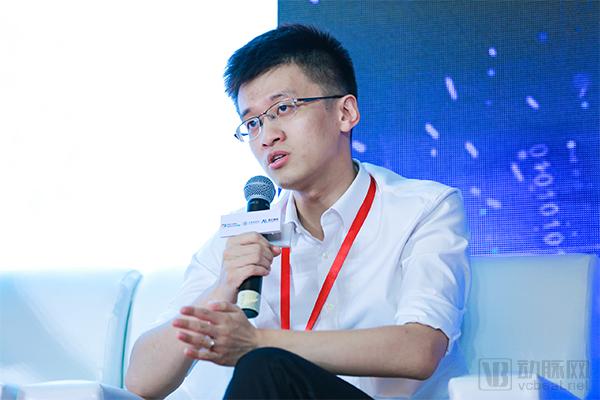
Zhang Shaodian, CEO of SYNYI·AI
As is well known, medical institution data in China is currently quite fragmented, with a substantial amount of unstructured data whose value urgently needs to be explored and leveraged. How to acquire and effectively utilize high-value data has long been a shared concern among the government, hospitals, research institutions, and enterprises.
“At present, the government and healthcare institutions are actively exploring and vigorously promoting the standardization of medical record information and healthcare data, striving to eliminate information silos. However, this is a long-term and challenging endeavor. As an AI enterprise, SYNYI·AI focuses on addressing the standardization of already-generated data. On the premise of understanding the work habits of doctors and medical staff, we leverage our medical natural language processing technologies to standardize the typically personalized medical records written by physicians, thereby fully unlocking the high value of the data,” said Zhang Shaodian.
It is understood that medical data standards are complex, encompassing control standards, governance standards, entry standards, security standards, and more. The current challenge with data standards lies in their abundance; however, some do not align with clinical practice habits and cannot be implemented, as clinical diagnosis and treatment are highly personalized and difficult to standardize.
Take the Mayo Clinic, a top-tier U.S. hospital, as an example. It has numerous standardized guidelines, such as diagnostic pathways for lung cancer. However, the standards it adopts are integrated from cases and experience, forming “Mayo’s standards,” which are not universal standards. Zhang Shaodian believes, “In clinical diagnosis and treatment, true standardization cannot be achieved simply by policymakers and technology companies issuing a set of standards, because clinical practice inherently requires a degree of personalization.”
“Facing the data generated by medical institutions in the context of personalized clinical diagnosis and treatment, ‘if we do not perform medical natural language processing based on deep learning to structure and standardize the data, a lot of valuable historical data will remain dormant in hospital databases, unable to be more effectively mined and utilized, nor can real-time management be achieved,’ said Zhang Shaodian.”
The first step for medical AI is to leverage technology to structure and standardize data, thereby creating high-value data assets that can be utilized by hospitals and physicians.
In addition, Zhang Shaodian introduced that medical AI, through machine learning methods and training with massive high-value data, can empower doctors and healthcare professionals.
For instance, to prevent pulmonary embolism, nurses in high-risk departments must spend considerable time each day assessing the risk of lower extremity venous thromboembolism for every inpatient. With the integration of AI, not only is a significant amount of nursing time saved, but more importantly, the system can issue early warnings when patients are at risk of developing venous thromboembolism, prompting physicians to intervene. Furthermore, it can recommend treatment options for clinical reference following the alert.
“The final step is implementation. Although many artificial intelligence technologies remain confined to the laboratory stage and are not yet applicable in clinical settings, only by starting with small, targeted entry points can we continuously improve healthcare efficiency, help alleviate, and gradually resolve the scarcity of high-quality medical resources in China,” said Zhang Shaodian.
Today, SYNYI·AI has completed its second year of operations. This AI enterprise started with medical data, focusing on medical data governance, medical data mining, and medical natural language processing. For scientific research, it provides doctors with an integrated research platform to enhance the capabilities of precision medicine research. For clinical practice, it offers a clinical diagnosis and treatment decision support system to standardize doctors' behaviors in the workflow. For management, it provides hospital administrators and medical affairs departments with an in-hospital disease quality control platform to optimize the allocation of medical resources within hospitals and improve healthcare quality.
Currently, SYNYI·AI’s products have been deployed in nearly 30 Grade A tertiary hospitals. Renowned institutions such as Shanghai Children’s Medical Center, Shanghai Tenth People’s Hospital, Shanghai Chest Hospital, and Children’s Hospital of Fudan University have all established partnerships with SYNYI·AI.
To sustain its R&D leadership in the industry and deliver more robust sector-specific solutions, SYNYI·AI has engaged in deep collaboration and joint development with the Clinical Research Center of Shanghai Jiao Tong University School of Medicine, the Center for Medical Informatics at Peking University Health Science Center, the Department of Biomedical Informatics at Columbia University, and Weill Cornell Medicine. Focusing on areas such as data governance and mining, as well as medical natural language processing, the company promptly translates cutting-edge scientific achievements into practical industry applications, continuously addressing critical challenges and pain points in healthcare and leading the transformation toward smart healthcare.