

Aiva Health Files for IPO After Receiving Investments from Google and Amazon to Enhance Voice-Powered Healthcare Communication
On September 28, U.S. startup Aiva Health secured investment from the Google Assistant Investment Program, with the amount undisclosed. Previously, Amazon had also invested in the company.
Aiva Health is a startup based in Los Angeles, United States. Founded in 2016 by Sumeet Bhatia, the company is dedicated to applying voice technology to the healthcare sector, providing support for doctor-patient communication and elderly care.
Aiva Health’s product is a voice assistant application that enables users to communicate with healthcare providers, primarily nurses. Nurses can use the app to manage their schedules and arrange care tasks. Meanwhile, administrators can monitor care delivery and manage all devices through the backend system.
Aiva Health also delivers its services through Google Home, Amazon Echo, and other smart speakers, enabling users to manage connected smart devices—such as televisions, thermostats, and lighting systems—via voice commands.
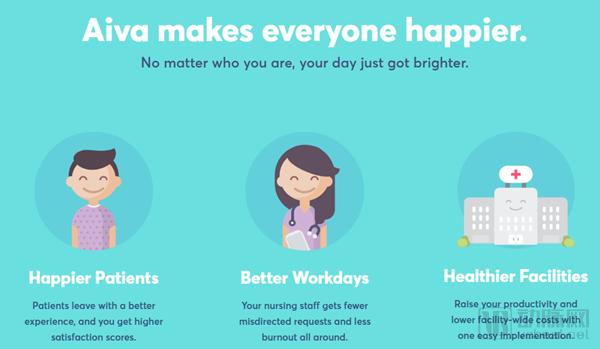
Image source: Aiva official website
For older adults, voice assistants do more than just make communication more convenient. They also enable seniors to stay closely connected with friends, family, and neighbors through hands-free calling and video chats, thereby alleviating feelings of loneliness. Additionally, they can provide reminders for various events in the lives of elderly users, making daily life more engaging and enjoyable.
“Voice technology presents an opportunity to deliver better healthcare services,” said Sumeet Bhatia, CEO of Aiva. “We are excited to collaborate with the Google Assistant investment team to help expand our product offerings and provide improved care to those who need it most.”
In recent years, as voice technology has matured and smart speakers have entered American households, a number of competitors have emerged in the field of applying voice technology to healthcare services, including Orbita, Robin Healthcare, and Notable Health. Voice technology and smart speaker manufacturers such as Google and Amazon are also keen to support such projects to enrich the service ecosystem of the smart speaker industry chain.
Voice technology platforms in the healthcare sector are primarily targeting the elderly care market, as population aging has become increasingly severe in the United States. With the post-World War II baby boomer generation growing older, the aging rate is expected to continue rising, driving a sustained increase in demand for healthcare services.
The elderly population requires more concise and convenient medical and health services. Coupled with well-established family doctor systems and long-term care insurance for the elderly, the integration of voice technology into elder care can attract a substantial number of users and service providers, making it a highly promising direction.
In terms of the domestic market, China shares many similarities with the U.S. market, whether in population aging, the proliferation of smart voice-enabled devices, or the pilot programs for long-term care insurance. Previously, health devices specifically targeted at elderly users—such as mobile phones or all-in-one machines equipped with call functions, vital sign monitoring, and emergency alerts—had emerged in China. However, most of these projects stalled due to an immature industry landscape.
Currently, there are several domestically based voice technology companies with mature capabilities that have already applied their technologies to various aspects of healthcare services, such as medical record entry, doctor-patient communication, and patient follow-ups. If elderly care presents a promising opportunity, these companies are likely to respond quickly.