

The Medical Traffic Landscape: Value Report on Healthcare Traffic Entry Points (Part II)
The book Out of Control posits that the intricate world of the 21st century can be characterized by a “network” structure—decentralized, selfless, and distributed. The essence of this world lies in various connections; the attributes of each node can only be described through its connections, and without these connections, such attributes cease to exist. As Karl Marx stated, “The human essence is no abstraction inherent in each single individual. In its reality it is the ensemble of the social relations.” Similarly, studying a company fundamentally involves examining its relationships with employees, upstream and downstream suppliers, and customers; the essence of a company is also the sum of its social relations. The process by which consumers reach an enterprise is referred to as a traffic entry point.
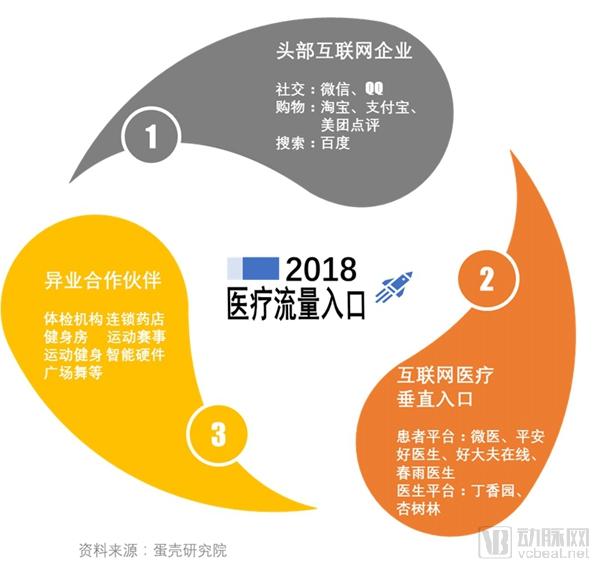
Based on differences in traffic sources, we categorize the primary healthcare traffic entry points into three types: leading internet companies, vertical internet healthcare platforms, and cross-industry partners.
The so-called “gateway-level” traffic is characterized by its large scale and exclusivity; capturing these gateways effectively amounts to monopolizing the associated user base and traffic. Examples include payment, browser, and search gateways. In the field of internet healthcare, these platforms also serve as leading traffic gateways.
This category of entry points is represented by super apps such as WeChat, Alipay, and Meituan-Dianping. Their user bases cover the majority of internet users, particularly in the mobile internet era, where they have essentially captured all non-specific demand traffic channels through social networking, e-commerce, and other services. We refer to these as “general traffic entry points.” They serve as secondary entry points for healthcare services, tailoring their business scopes and service types according to their respective positioning. Nevertheless, their primary services remain appointment scheduling, online consultations, and health management.

WeChat and Alipay User Data
Data Source: Compiled from public information, VCBeat.
Super apps have amassed vast user bases through their own services, and these users exhibit equally strong demand for medical and healthcare solutions. Consequently, we observe that super apps such as WeChat, Alipay, and Meituan-Dianping have all launched dedicated medical and healthcare service sections. By either building capabilities in-house or integrating third-party providers, they have established comprehensive medical and healthcare service ecosystems under their own high-traffic platforms.
Next, we take the health service systems of WeChat and Alipay as examples to introduce the construction of medical service products under the traffic entry points of super apps.
WeChat Health Service System
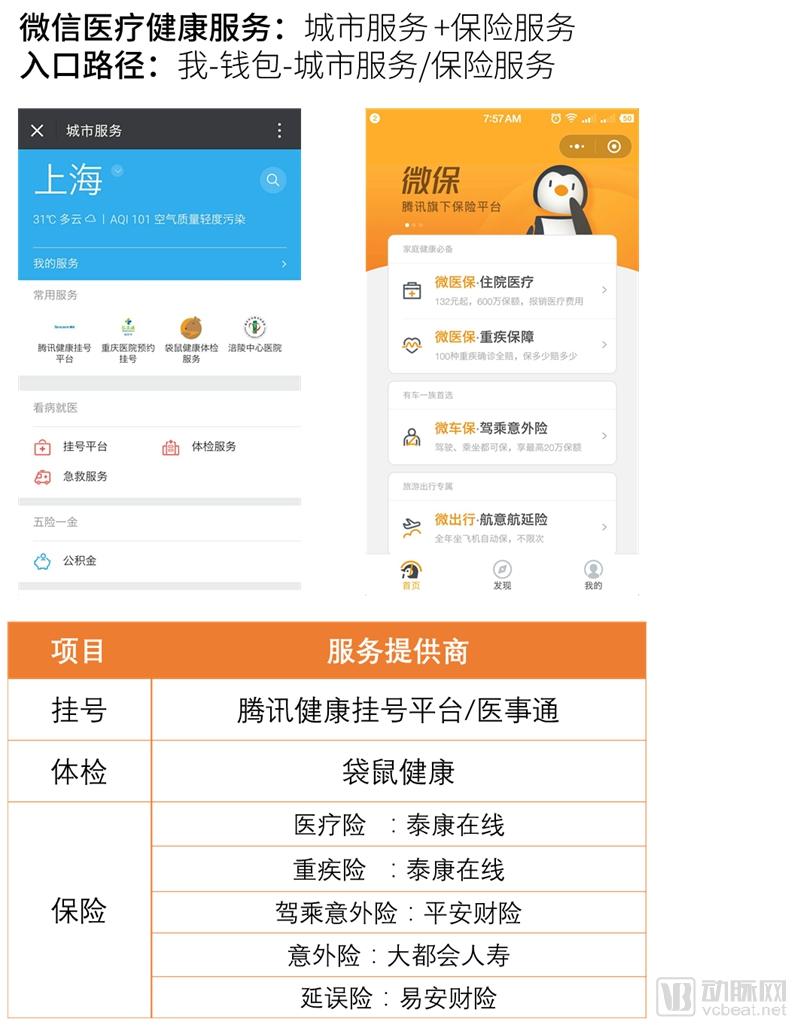
WeChat’s healthcare and medical services comprise two components. The first component includes appointment registration and physical examination reservation services within the City Services section. Appointment slots are sourced from Tencent Health’s self-built registration platform as well as from Yishitong. For physical examination services, Kangaroo Health has been primarily introduced as the service provider. The second component consists of insurance operations. Tencent obtained an insurance brokerage license in 2017 and promptly launched “Wei Yi Bao” (Micro Health Insurance) for medical insurance products. To date, it has rolled out five categories of insurance policies customized in collaboration with various partners.
The launch of insurance services on WeChat is seen as a move that will transform the existing reimbursement marketing system. Currently, WeSure’s strategies remain relatively conventional; however, once its sales and operational framework is fully established, it is expected to bring significant changes to the insurance brokerage business.
Alipay Health Service System
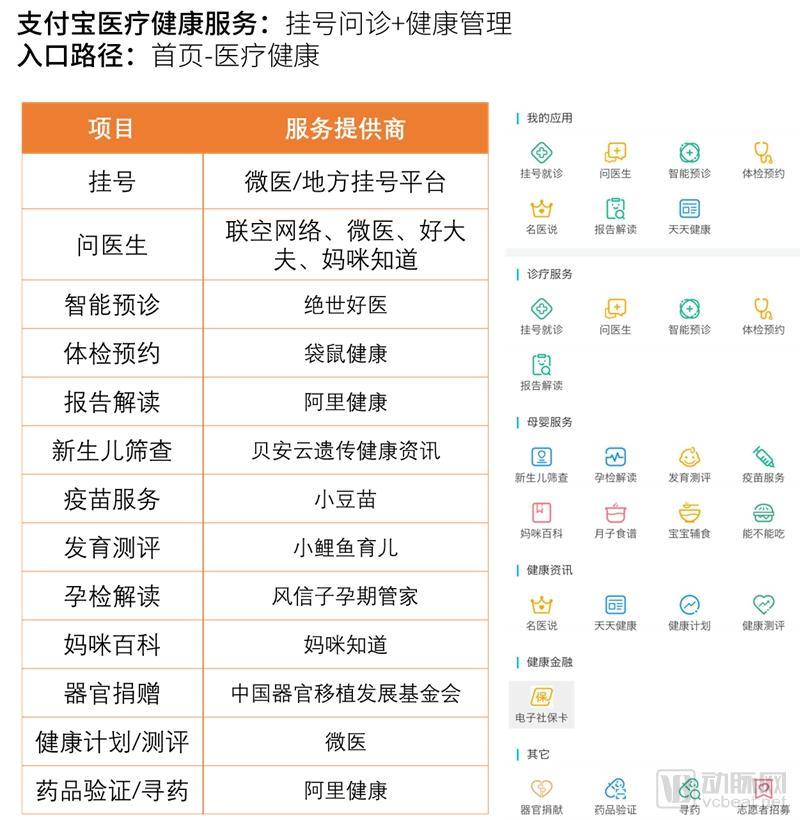
Compared with the medical and health services provided by WeChat, Alipay offers a broader range of services, which can be categorized into two types: appointment registration and consultation services, and health management services. Alipay’s strategy is to introduce professional medical and healthcare service institutions to expand its service coverage as extensively as possible.
When partnering with super apps like WeChat and Alipay, greater emphasis is placed on the service provider’s capabilities. These super apps command massive traffic volumes and enjoy considerable flexibility in selecting partners; only enterprises whose service quality ranks at the industry forefront can secure such collaborations. Once established, these partnerships tend to be long-lasting, as there are generally no conflicts of interest and the relationship is largely synergistic.
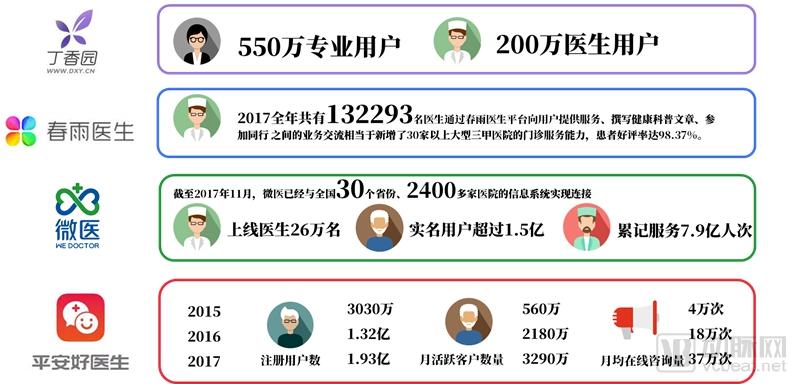
Category 2 Entry Point: Vertical Medical PlatformsThese are internet healthcare platforms represented by well-known names such as Chunyu Doctor, Haodf Online, and DXY. Among leading internet platforms, they appear as service providers, acting as contractors for specific services offered by major traffic-generating platforms. They also exist as independent platform entities. For instance, Chunyu Doctor aggregates a large population with health and medical needs based on basic health knowledge and interactive Q&A sessions. Building on this customer base, it provides corresponding services such as diagnosis and treatment, assisted reproduction, and medical aesthetics. Internet healthcare platform companies are themselves service providers. Collaborations with these platforms are more suitable for initial patient acquisition and traffic diversion. Unless there is a deep strategic partnership, cooperating with such vertical medical platforms rarely achieves significant traffic acquisition results.
User Data of Major Vertical Healthcare Platforms
Data Source: Public Information Compilation, VCBeat
The third category of cross-industry collaborative traffic refers to unlocking long-tail medical value within existing business scenarios. Identifying medical value in specific scenarios is viewed as the direction for emerging new traffic channels, a topic we will focus on and discuss in detail in the final section of this report.
Cross-industry collaboration, as the name suggests, refers to the partnership between the healthcare industry and other sectors, a process characterized by mutual identification of needs and reciprocal traffic diversion. Healthcare services are fundamental necessities for human life, and their market potential is far greater than commonly perceived. For instance, senior universities can refer students to health checkup institutions, which in turn can direct patients to specialized diagnosis and treatment or chronic disease management programs. Identifying the long-tail medical value within existing scenarios has become a new focal point for uncovering traffic entry points.
Online and offline traffic channels, such as health checkup centers, chain pharmacy clinics, gyms, marathons, and other sporting events, have become new customer acquisition channels for healthcare companies.
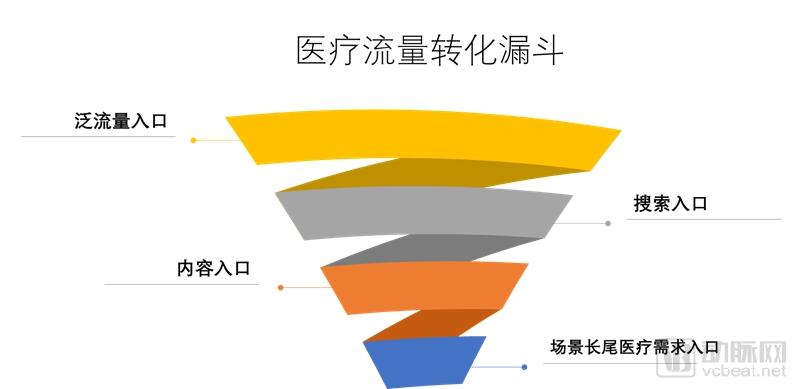
In the preceding section, we listed the major internet healthcare traffic entry points in the internet era. We initially categorized them into three groups based on traffic sources. However, upon evaluation, we found that classification by traffic source was inappropriate. Therefore, we have reclassified healthcare traffic entry points into the following four categories based on the differing nature of the traffic:
Pan-traffic entry points represented by super apps; search entry points represented by search engines; content-based entry points represented by vertical healthcare platforms with content as a foundation; and entry points for long-tail medical needs in specific scenarios, represented through cross-industry collaborations.
There is a wide variety of traffic entry points, each with different orientations and vastly differing payment conversion efficiencies. How should we evaluate these different types of traffic entry points? Many operations professionals now have KPIs related to traffic, but they sometimes overlook whether these efforts can deliver substantive results.
We aim to evaluate the quality of various healthcare traffic sources by assessing three key metrics: targeting precision, conversion rate, and retention rate.
1 Drainage Precision
Different types of platforms have specific requirements for different user segments. When constructing user personas, we strive to conduct multi-dimensional analyses, including factors such as gender, age, and geographic region. To precisely target users, it is necessary to leverage diverse traffic entry points.
2 Conversion Rate
We need to think in reverse: first identify who our customers are, and then choose the appropriate methods for building our fan base.
For instance, with anti-aging products, is there a segmentation of target age groups? Can product pricing further differentiate consumer segments? Some price points cater to white-collar workers, while others target the mid-to-high-end market. Should we capture such information?
For example, since we specialize in maternal and infant products, our target audience is undoubtedly mothers with young children or babies. We should tailor our content to their psychological state to attract followers. It would be inappropriate to recommend maternal and infant products to a mother whose child has already been weaned, wouldn’t it?
Regardless of the process and methods of traffic acquisition, one of the ultimate goals is conversion rate. There are cases in the internet industry where platforms with massive traffic ultimately failed. Key priorities include screening for high-quality traffic, optimizing the steps to achieve user acquisition, cultivating user stickiness, and shaping brand image. Determining which strategies and campaigns resonate with which target audiences remains a topic that requires in-depth research.
3 Retention Rate
Traffic entry points have a short window of opportunity and an eventual decline phase. Those who first discover the most effective methods for tapping into a given traffic source reap the greatest benefits. Such methods quickly command premium prices, before gradually entering a period of decline.
However, user entry points are constantly evolving, and the rules and methods governing these entry points are also in flux. Therefore, acquiring traffic and building a user base is not a one-time effort; it requires an agile, sustained, and long-term operational strategy. Each month, certain tactics may shift from being highly cost-effective to merely average, or even become obsolete, while new channels and approaches emerge. For instance, Tencent has opened up WeChat’s APIs, and Apple has introduced features in its new operating system. Every such change warrants careful consideration of its relevance to your business.
Driving user acquisition and retention requires not only a clear understanding of your product and users, but also meticulous operations, strategic planning, and active involvement from the product development team. Even minor shortcomings in any of these areas can significantly undermine final user retention rates.
Next, we will analyze the four traffic entry points previously proposed based on the metrics of targeting precision, conversion rate, and retention rate. Furthermore, in the context of the healthcare industry, we will examine their mining value, cooperation models, and levels of difficulty within the development of internet healthcare.
To evaluate the value of these four traffic entry points, we need to start by analyzing the user pathways from these entry points to the corresponding server-side services:
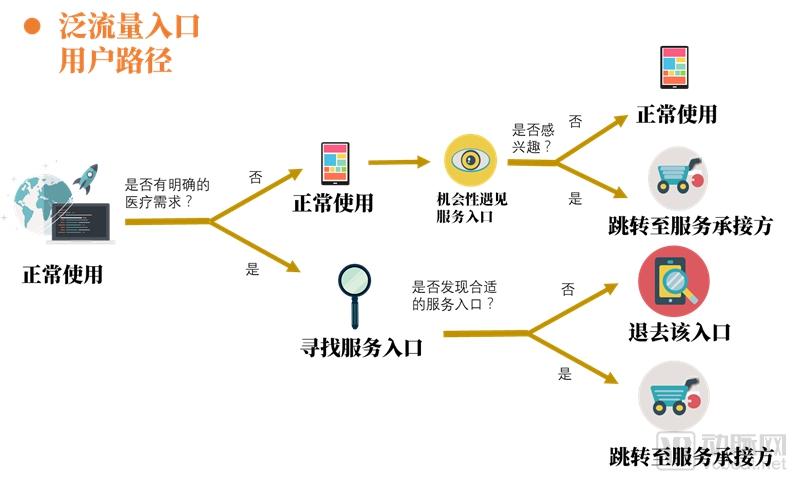
Most users entering through high-volume, general-traffic channels do not have immediate medical needs. However, since super apps dominate the majority of user screen time, these individuals may either develop a need for medical services during this period or opportunistically encounter service entry points, thereby converting into patients served by healthcare providers. The entire user journey is characterized by its length and randomness.
Users entering healthcare services through broad, non-specialized traffic channels exhibit heterogeneous characteristics and ill-defined needs, resulting in suboptimal performance in terms of precision, conversion rates, and retention rates.
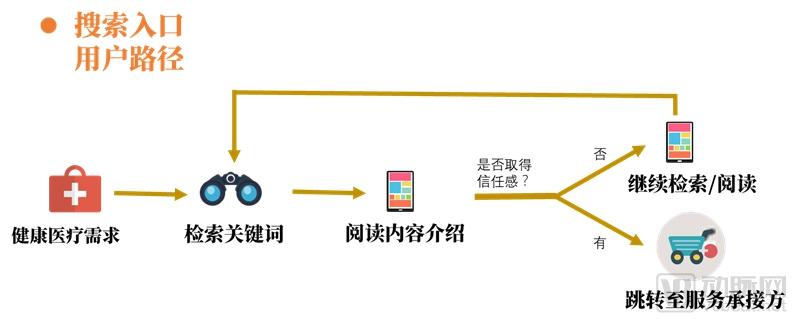
Most users accessing search engines have immediate healthcare needs and aim to reach service providers through search queries. Typically, search engines return a large number of undifferentiated results, requiring users to extensively review content before selecting a trusted service provider and proceeding to their platform.
The key to this user journey lies in building user trust. Users entering through search channels typically have clear needs, and their user profiles are equally complex; however, their choices tend to be random. As a result, precision at the search entry point is relatively low, conversion rates are generally favorable, but retention rates remain low.
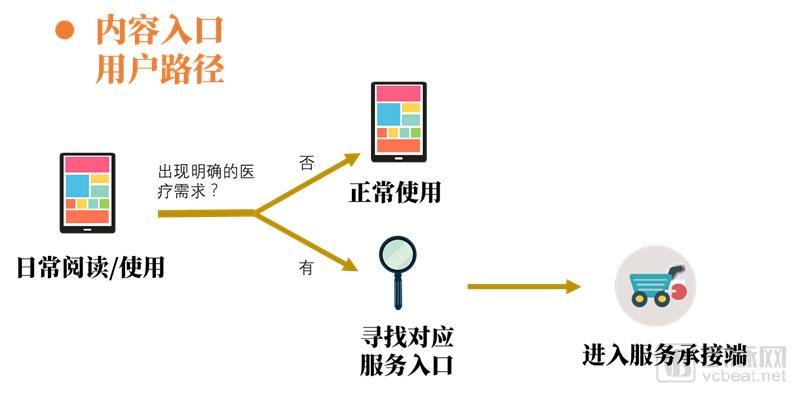
Most users entering through the content gateway have long-term healthcare service needs and spend considerable time on the platform’s content side. When immediate healthcare needs arise, they often proceed directly to the service fulfillment end. Due to their extended dwell time, user behavior is relatively clear, trust in the enterprise has been established, and stickiness is strong. The key to this user journey lies in whether sufficient high-quality content can attract users. Consequently, while the content gateway boasts high precision and generally favorable conversion rates, it suffers from lower retention rates.
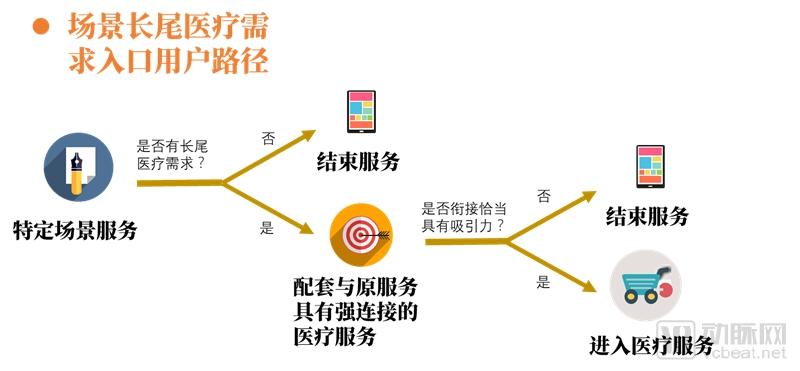
Mining the long-tail medical value of scenarios is the direction we believe in for finding new traffic entry points. The user path for such scenario-based entry points typically involves having medical service needs within specific service scenarios. By establishing smooth connections, the original service value is expanded, achieving in-depth exploration and satisfaction of user needs.
Users entering through scenario-based demand channels are the same as those from the previous scenario, with clear user personas and well-defined needs that can be identified solely through demand mining. Due to an established trust relationship, user stickiness is relatively high. The key to this user journey lies in uncovering user needs within specific scenarios and delivering appropriate medical and health services. In summary, scenario-based entry points demonstrate superior performance in terms of precision, conversion rate, and retention rate.
Based on the length of user paths, the potential drop-off rates within those paths, and the addition of traffic volume metrics, we can draw the following conclusions:
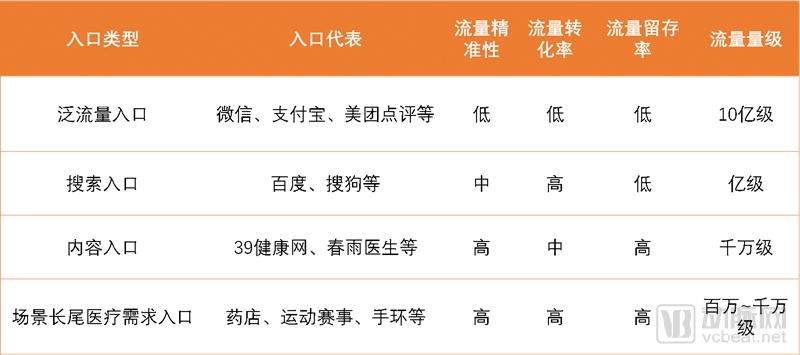
General traffic and search entry points, which command hundreds of millions of visits, suffer from issues with precision and user retention. In contrast, content-based entry points and those addressing long-tail medical needs in specific scenarios outperform them across these three metrics, albeit with relatively smaller traffic volumes.