

Where Are the New Healthcare Traffic Entry Points? – Insights from 'Report on the Value of Healthcare Traffic Entry Points (Part I)'
Following the typical development trajectory of internet companies, we can divide corporate growth into three stages: product iteration, traffic accumulation, and business value addition. Once you have moved beyond the “all we need is programmers” phase and completed the initial product iterations, acquiring traffic becomes the most critical component in the three-step development model of “product–traffic–value addition” for internet enterprises.
In the internet era, product iteration relies heavily on a substantial user base. Internet unicorns have captured the majority of market traffic, and competition for this traffic is intensifying. It can be said that modern commercial warfare can be summarized as a struggle for “traffic entry points.”
As the number of internet users approaches its ceiling, the trend toward mobile traffic is rapidly emerging. The original internet traffic ecosystem is undergoing swift restructuring, with traffic gateways increasingly shifting to vertical platforms. Consequently, competition for traffic is gradually evolving into a battle for capturing user engagement time.
It is often said that internet healthcare started early but has been the slowest to undergo transformation. In our "Internet Healthcare Workplace Report," we noted that as early as the 1990s, internet healthcare began exploring areas such as chronic disease management, maternal and child health, medical imaging, and medical education. Riding the wave of the internet at the turn of the new century and addressing the information asymmetry characteristic of the healthcare industry, internet healthcare penetrated various pre- and post-hospital stages through services like information inquiry, appointment registration and referral, and doctor-patient communication, thereby completing the first round of user education.
Since 2003, internet healthcare has begun to extend into the diagnosis and treatment phase, with biotechnology, adjunctive therapies, and specialized medical services emerging rapidly. Alongside the broader trend of consumption upgrading in society, the healthcare industry has undergone similar transformations. Consumer healthcare and medical aesthetics companies were established around 2005, becoming a new driving force in the current landscape of internet healthcare.
We have found that the traffic shift in the internet healthcare industry is at a critical juncture: with a lack of trust in search engines, mobile traffic is being redistributed, breaking down the original industry gaps. Content entry points and scenario-based entry points are gradually converging, making it the right time to explore long-tail medical demands.
Since 2015, VCBeat has sequentially highlighted and briefly analyzed various healthcare traffic entry points, including “square dancing,” “smart sleep products,” “home-based health checkups,” “primary care,” “maternal and infant stores,” and “clinics.” Today, we attempt to systematically review the current major traffic entry points, discuss their characteristics and value, and explore where new healthcare traffic entry points may emerge.
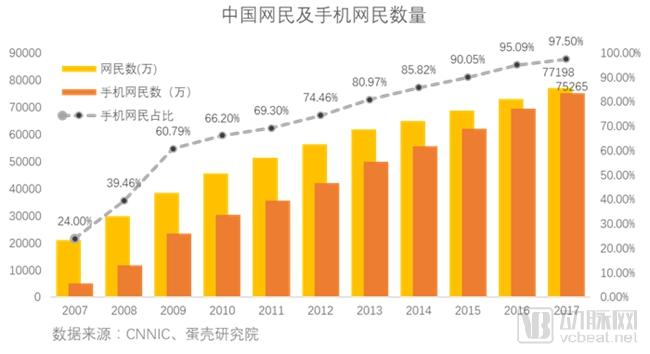
According to data from the China Internet Network Information Center, as of December 2017, the number of internet users in China reached 772 million, an increase of 40.74 million compared to 2016. The internet penetration rate rose by 2.6 percentage points, with a clearly evident slowdown in the growth rate of new internet users. The number of mobile internet users had already reached 753 million. The internet penetration rate was 71.0% in urban areas and 35.4% in rural areas.
Instant messaging has replaced search engines as the new core traffic gateway in the mobile internet era. Amidst the trend toward mobilization, subtle shifts are occurring in traffic flows. The maturing development of the mobile internet has led to a divergence in user needs. If speed and popularity were the keywords during the initial growth phase, once a certain level of maturity is reached, users’ mindset shifts from viewing services as essential necessities or standard offerings to seeking personalized experiences. Products will become more differentiated, focusing on specific features; a one-size-fits-all, bandwagon approach is no longer viable.
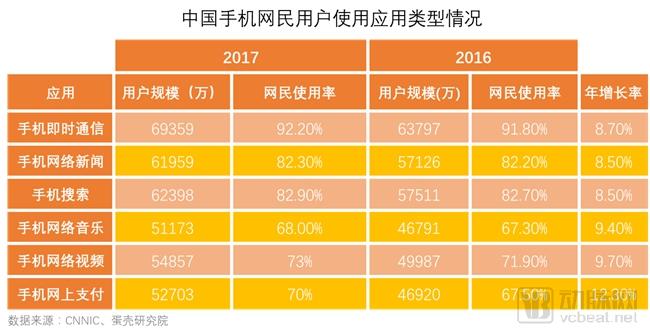
Unlike instant messaging and search applications that save users’ time, social media and audio-visual platforms have initiated competition for user attention by helping them spend time in a different way.
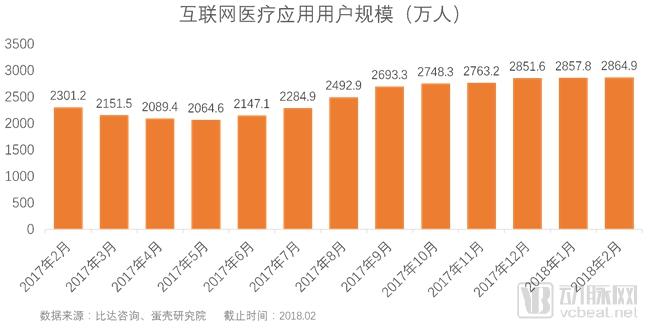
Healthcare differs from other sectors, as user needs are inherently more specialized and segmented. Unlike mobile internet products in social networking, entertainment, or utility categories, mobile health products often target specific patient populations, such as individuals with diabetes, pregnant women, or those with chronic diseases. These groups possess distinct characteristics, making it highly challenging to achieve broad, mass-market adoption and sharing of such products.
In the early days of the internet, medical traffic was dominated by search engines. The slogan “Baidu it, and you shall know” was equally resonant in the healthcare sector. This flow of information—from search to knowledge—relied heavily on users’ trust in search platforms. However, when Wei Zexi, tormented by his illness, turned to Baidu, even his last shred of hope for survival became a bargaining chip for others’ profit. Some members of hemophilia-related online communities on Baidu Tieba sought what they believed would be a supportive space for mutual encouragement among patients, only to discover that even the role of “bar master” (forum moderator) could be bought and sold, and that the so-called “medical expert” credentials claimed by these moderators were entirely fabricated. In the information age, building trust is a complex systemic endeavor, whereas destroying it is far easier.
Therefore, trust can only be exchanged for trust. Judging from Baidu’s repeated public relations crises, its credibility crisis stemmed from issues regarding the authenticity of the information it provided. Frankly speaking, however, Baidu has not demonstrated sufficient sincerity in regaining public trust when confronted with scrutiny. From paid search rankings to the Wei Zexi incident, then to the Hemophilia Bar controversy, and most recently to the allegations surrounding location tagging on Baidu Maps, the public has been deeply disappointed. Baidu appears to still lack the resolve for thorough introspection, and public confidence in its search engine is gradually eroding.
Currently, there are many types of internet companies, but regardless of the type, user experience is always the primary concern. So-called user experience is not just about creating a good product; more importantly, it involves building trust with users. With trust, you can retain users, and retaining users means securing the future. For Baidu, one or two high-profile incidents may only result in the loss of a small portion of its user base, but the long-term impact of diminished trust is far more enduring.
The post-traffic era implies that rapidly accumulating popularity and monetizing through platform effects or advertising are unlikely to become the mainstream model for mobile healthcare. While it is possible to aggregate individual users, these users exhibit two key characteristics: one is an issue of loyalty. The broad, mass-market traffic mindset is ill-suited for mobile healthcare, resulting in high user churn rates. This is already evident in consumer health-tracking wearable devices, where churn rates are extremely high after six months. Because users are not driven by urgent needs but rather by fashion and trends, they easily grow weary.
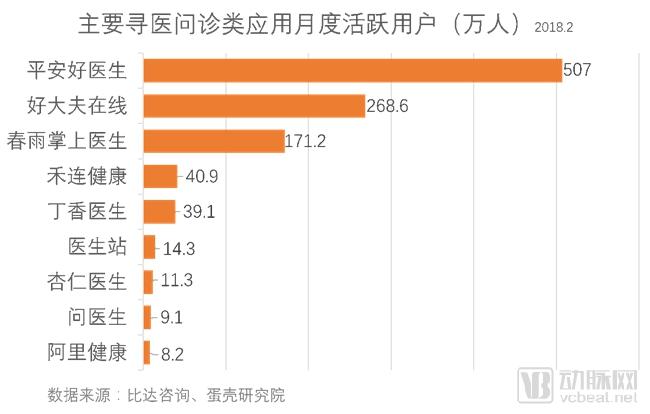
With the rise of Chunyu Yisheng (Spring Rain Doctor), an increasing number of entrepreneurs from non-medical industries have entered the niche sector of medical consultation and diagnosis, leveraging internet technologies and policy guidance. This trend aims to address users' challenges during the pre-diagnosis, intra-diagnosis, and post-diagnosis phases, significantly enhancing the patient experience and improving diagnostic and treatment efficiency.
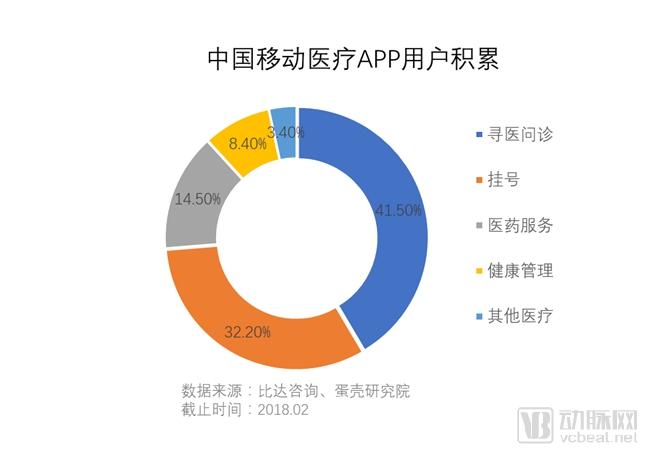
As time progresses and users become more educated through the internet, their needs are becoming increasingly specialized and in-depth. This trend is leading more and more entrepreneurs to abandon the creation of large, all-encompassing comprehensive platforms in favor of specialized vertical platforms. These vertical sectors can be categorized into single-disease management and rehabilitation services. Single-disease management includes conditions such as diabetes, hypertension, and cancer, while rehabilitation services encompass elderly care and rehabilitative medical consultations.
The essence of internet healthcare is healthcare itself, and medicine is a serious discipline. Whether providing appointment registration and triage services or specialized consultations, substantial resources are required to operate effectively. Leading internet companies with high-traffic platforms generally do not establish such comprehensive teams. Behind these platforms, it is typically internet healthcare enterprises that serve as the service providers. These providers have evolved into a professional force within the healthcare industry, capable of delivering the most specialized services.
For more information, please see:
The World of Healthcare Traffic: "Report on the Value of Healthcare Traffic Entry Points (Part II)"