

China's CAR-T Cell Immunotherapy: In-Depth Analysis of Leading Domestic Companies and Products – A Potential Leapfrog in Global Manufacturing
(V) Analysis of Classic Domestic Cases: Enterprises and Products
3.5.1 Legend Biotech (a wholly-owned subsidiary of GenScript, collaborating with Janssen Biotech on global R&D)
Legend Biotech, established in 2014 as a subsidiary of GenScript, focuses on the research and development of chimeric antigen receptor (CAR) T-cell technology in immunotherapy. Its BCMA-targeted CAR-T therapy, LCAR-B38M CAR-T, received approval for its clinical trial application in China, marking the first such approval nationwide.
Nanjing Legend possesses innovative dual-epitope technology. Its technology differs from that of overseas companies in the following ways:
1) By employing a dual-epitope technology that simultaneously targets two epitopes of BCMA, this approach achieves a low off-target rate, minimal side effects, and superior clinical efficacy;
2) Utilization of alpaca nanobodies: Alpaca antibodies consist solely of heavy-chain variable regions and lack light chains. Compared with murine-derived single-chain variable fragments (scFv), alpaca heavy-chain sequences exhibit high homology to human sequences, resulting in lower immunogenicity. Furthermore, the absence of light chains reduces the tendency for self-aggregation, thereby enhancing stability and persistence.
On June 5, 2017, at the ASCO Annual Meeting, Nanjing Legend Biotech presented clinical data on its independently developed BCMA-targeted cell therapy for multiple myeloma (MM), causing a significant stir in the industry. Among 35 patients with relapsed multiple myeloma (MM) who had received prior treatments, 33 (94%) achieved clinical response within two months after treatment, showing clear signs of myeloma clinical response (CR or VGPR), with an objective response rate (ORR) reaching 100%. Among the first 19 patients treated, Nanjing Legend conducted follow-up observations for 4 to over 14 months. Of these, 14 patients continuously met the criteria for stringent complete response, while five showed partial response. In this trial, five patients who had been treated for more than one year remained in sCR status.
Regarding side effects, 8 out of 10 patients experienced cytokine release syndrome, which was mostly transient or mild (Grade 1 or 2).
With over three months of follow-up as of September 2017, updated results in 40 patients who had failed third-line therapy showed an overall response rate (ORR) of 97.5%, including a complete response (CR) rate of 60%, a very good partial response (VGPR) rate of 30%, and a partial response (PR) rate of 7.5%; the cure rate remained remarkably high. These outcomes were superior to those of BCMA-targeted products from Bluebird Bio and Novartis.
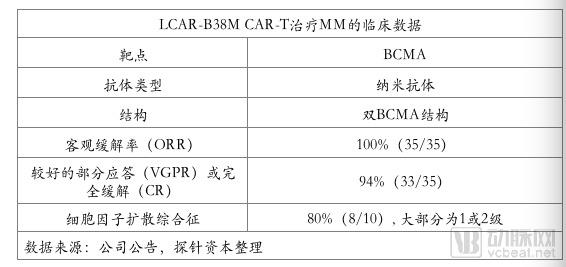
On December 11, 2017, the Investigational New Drug (IND) application for Nanjing Legend Biotech’s CAR-T technology product, “LCAR-B38M CAR-T Cell Autologous Infusion Preparation,” was accepted by the Center for Drug Evaluation (CDE) and included in the 25th batch of priority review programs to expedite the product evaluation process. On March 12, 2018, this CAR-T product received approval, marking the first such case in China. An IND submission to the United States was expected in early 2018. The product was registered as a Class 1 biological product and targets B-cell maturation antigen (BCMA, CD269).
On December 22, 2017, Janssen Biotech, Inc., a pharmaceutical subsidiary of Johnson & Johnson, announced a collaboration agreement with Legend Biotech, under which Legend Biotech would grant it global rights for the research and development, manufacturing, and commercialization of LCAR-B38M. The announcement stated that for overseas markets, Legend Biotech and Janssen Biotech would share costs and profits on a 50:50 basis, while in China, costs would be borne and revenues shared in a 7:3 ratio.
At the outset of the collaboration, Janssen will pay an upfront fee of $350 million. As development and regulatory milestones are achieved, Janssen will provide additional funding.
3.5.2 Shanghai Hengrun Dasheng
Hengrundaisheng, established in 2015 and headquartered in Zhangjiang, Shanghai, is an innovative biotechnology company focused on cellular immunotherapy. Its primary research areas include CAR-T cell therapy, novel dendritic cell (DC) vaccine therapy, stem cell gene-modified iNKT cell therapy, and CAR-NK cell therapy.
The company has currently launched a substantial number of CAR-T projects in preclinical and Phase I clinical stages. It has obtained two "Drug Clinical Trial Approvals" for anti-human CD19 T-cell injections issued by the National Medical Products Administration (NMPA): Approval No. 2018L02734 for the treatment of relapsed/refractory CD19-positive diffuse large B-cell lymphoma and follicular lymphoma; and Approval No. 2018L02739 for the treatment of relapsed/refractory CD19-positive B-cell acute lymphoblastic leukemia (ALL). On May 31, 2018, the company’s another CAR-T product targeting BCMA, "anti-human BCMA T-cell injection," also submitted an Investigational New Drug (IND) application, which is currently under review. Hengrun Dasheng is the third company in China to obtain clinical trial approval for CAR-T therapy, following Legend Biotech and WuXi Juno.
The company has registered eight clinical trials on ClinicalTrials.gov, covering indications such as multiple myeloma, adult and pediatric B-cell leukemia, B-cell lymphoma, and CD22 CAR-T therapy for B-cell lymphoma that has relapsed or is refractory to CD19 CAR-T therapy. It maintains a pipeline of 15 product candidates.
Its CD19-targeted CAR-T product, MatchCAR, has enrolled 15 patients with relapsed/refractory B-cell leukemia in the Hematology Departments of Henan Provincial Hospital of Traditional Chinese Medicine and the Second Affiliated Hospital of Xuzhou Medical University; 11 patients completed infusion, and all achieved complete remission (CR) (NCT02685670). Additionally, 10 patients with relapsed/refractory B-cell lymphoma were enrolled at Xinqiao Hospital of Army Medical University; 8 patients completed infusion, among whom 5 (62.5%) achieved varying degrees of objective response rate (ORR) (CR+PR) (NCT02652910).
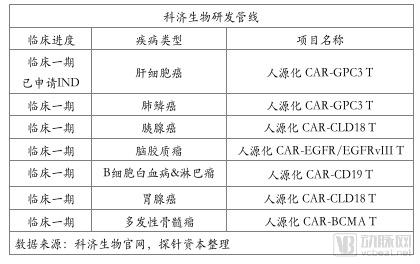
Hengrundaisheng R&D Pipeline
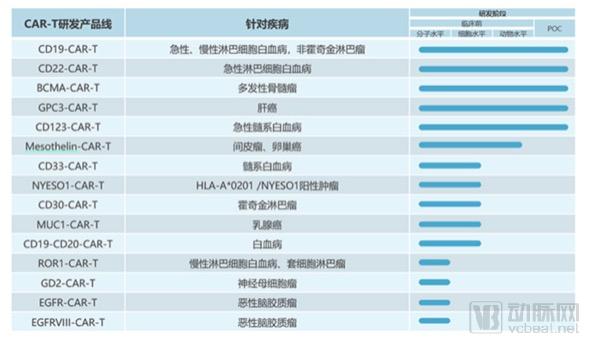
Image source: Hengrun Dasheng official website
3.5.3 Shenzhen Puruijin
Progen Biotech, established in November 2012, is a specialized cell therapy company with an exclusive, independently owned intellectual property portfolio for its integrated nanobody platform. It was among the earliest companies in China dedicated to developing CAR-T therapies in accordance with pharmaceutical drug standards.
Progen established an alpaca breeding and antibody immunology R&D base, built a nanobody technology platform, and independently mastered the full spectrum of industrialized nanobody technologies, including antigen preparation, immunization, library construction and screening, and antibody production. This has reduced production costs to one-tenth that of conventional antibodies while meeting quality control standards.
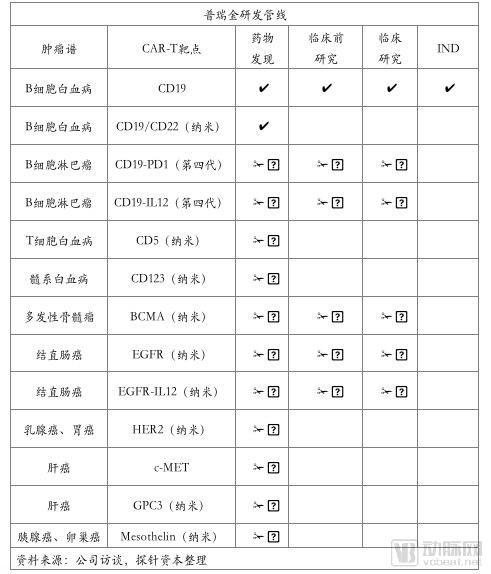
“Nanobody + CAR-T Synergistic Development” is Puruijin’s current primary R&D pipeline. On June 14, 2018, Puruijin Biologics submitted its first project for clinical trial approval. The investigational product, “Chimeric Antigen Receptor T-Cell Injection Targeting CD19,” is indicated for B-cell Acute Lymphoblastic Leukemia (B-ALL), with clinical trial approval expected in October.
Puruijin’s CD19-targeted product has currently enrolled 20 patients in clinical trials. Among them, 9 patients received the updated CAR-T product incorporating a safety switch, with 8 achieving complete response (CR), resulting in a CR rate of 89%. Meanwhile, the incorporation of the safety switch also reduced adverse reactions; although 6 patients experienced adverse events, none developed grade 3/4 adverse events (AEs), serious adverse events (SAEs), or cytokine release syndrome (CRS) of grade 2 or higher.
In addition, the same CD19 product is undergoing clinical trials for the treatment of lymphoma. To date, 16 patients have been enrolled, including two who received the CD19 product equipped with a safety switch; both achieved complete response (CR).
Meanwhile, Puruijin is conducting multiple CAR-T clinical trials, having treated nearly 100 patients to date. The company boasts a robust pipeline of future products.
3.5.4 Bosheng Jianke (a joint venture established by Anke Biotechnology and Boshengji)
BoShengJi was established on May 31, 2010. The company’s business scope includes the research and development of cancer diagnostic kits, anticancer drugs, biopharmaceutical products, and more. In June 2015, Anke Biotechnology invested RMB 20 million in BoShengJi, acquiring a 15% equity stake, which enabled BoShengJi to successfully build a fully functional GMP-compliant workshop for CAR-T cell preparation.
In February 2016, Anke Biotechnology acquired an additional 5% equity stake in Boshengji. In October of the same year, the two companies established a joint venture named Boshengji Anke. In the field of cell therapy, Boshengji is at the forefront of domestic research on CAR-T and CAR-NK therapies. Through its equity investment in Boshengji, Anke Biotechnology has strategically focused on key areas of cell therapy, including CAR-T and CAR-NK.
On December 28, 2017, the new drug clinical trial application for “Anti-CD19 Chimeric Antigen Receptor T-Cell Infusion” submitted by BoSheng JiAn Biotechnology was formally accepted by the China Food and Drug Administration (CFDA). In January 2018, BoSheng JiAn Biotechnology signed a memorandum of understanding with Miltenyi Biotec from Germany to establish a fully automated CAR-T cell manufacturing facility in Hefei based on the CliniMACS Prodigy and MACSQuant platforms, thereby enhancing fully automated production and quality control technologies.
Bosheng Jianke currently has multiple CAR-T projects in clinical trials. The CD19-targeted CAR-T product officially initiated clinical trials in October 2016, yielding favorable results with a complete response rate of 90% or higher.
Currently, in addition to the CD19 target, three other targets are in clinical trials. Bosungianke is also developing therapies for solid tumors (lung cancer and pancreatic cancer) targeting MUC1, with clinical trials demonstrating efficacy. Available data indicate that Bosungianke’s CAR-T products outperform competing products from Novartis, Kite, and Juno targeting the same antigen in terms of risk metrics such as CRS-related mortality, neurotoxicity, and manufacturing failure rate, demonstrating superior risk management capabilities.
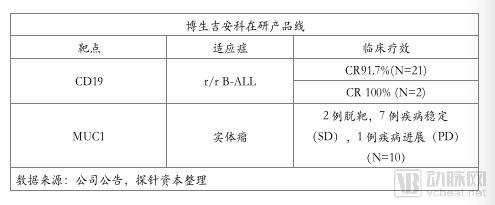
In the development of CD19 CAR-T cell therapy (chimeric antigen receptor-modified T cells targeting CD19), since the initiation of investigator-initiated clinical trials, Bosengen Biotech’s CD19-CART has treated 21 patients with relapsed/refractory disease. Among the 19 enrolled patients with B-cell acute lymphoblastic leukemia (B-ALL), the complete remission (CR) rate was 91.7%; among the 2 patients with B-cell non-Hodgkin lymphoma (B-NHL), the CR rate was 100%. The company plans to submit an investigational new drug application for CAR-T in 2019.
Currently, Bosheng Jianke is collaborating with multiple hospitals to conduct CAR-T clinical studies, including the First People's Hospital of Hefei and Hefei Binhu Hospital. Notably, in partnership with the Department of Hematology and Oncology at the First People's Hospital of Hefei, clinical trials of its MUC1-targeted product, which features a unique dual-antibody structure, have demonstrated favorable outcomes.
This product utilizes NK92 cells co-expressing anti-Mucin1 and anti-PD-L1 CAR molecules, transduced with lentiviral vectors. Employing CD28-CD137 as costimulatory signaling domains and truncating the PD-1 peptide chain on NK92 cells, it generates PD-1/MUC1CAR-pNK92 cells as the final effector cells for adoptive cell therapy.
To date, the company has enrolled a total of 10 cancer patients, including those with lung cancer, pancreatic cancer, colon cancer, and ovarian cancer, to receive treatment. Among them, 2 patients discontinued the study. Following treatment, 7 patients achieved stable disease (SD), and 1 patient experienced progressive disease (PD). No serious adverse events, such as cytokine release syndrome or myelosuppression, were observed in any of the subjects, demonstrating favorable biosafety and tolerability.
3.5.5 Shanghai CARsgen Therapeutics (with Zuoli Pharmaceutical as a shareholder)
Caris Biopharmaceutical Co., Ltd. was established in Shanghai in October 2014 as a biopharmaceutical company primarily focused on the clinical research and development of CAR-T cell therapies for solid tumors. In January 2016, Zuoli Innovation Medical, a wholly-owned subsidiary of Zuoli Pharmaceutical, increased its capital investment in Caris Biopharmaceutical by RMB 89.1 million, acquiring a 7.85% equity stake in the company and thereby entering the CAR-T sector.
In June 2015, CARsgen Therapeutics initiated the world’s first clinical trial of GPC3-targeted CAR-T cell therapy for hepatocellular carcinoma (HCC), and presented the Phase I clinical trial results at the ASCO 2017 Annual Meeting in June 2017. The results demonstrated that all 13 patients with refractory or recurrent HCC who received CAR-T cell therapy tolerated the treatment well, with no dose-limiting toxicities (DLTs) or grade ≥3 adverse events reported.
Given the high specificity of the GPC3 target for hepatocellular carcinoma, the likelihood of off-target toxicity is effectively reduced, demonstrating good tolerability in clinical settings. In the Phase Ib/II clinical trial, among five patients evaluable for efficacy, one patient achieved a partial response (PR), two had stable disease (SD), and two experienced progressive disease (PD).
With the exception of one patient with disease progression who died 12 months after treatment, the other four patients remain alive, with survival times exceeding 14 months, 20 months, 14 months, and 10 months, respectively. The experimental results were favorable.
On December 11, 2017, CARsgen Therapeutics submitted an Investigational New Drug (IND) application to the Shanghai Food and Drug Administration for the registration of its CAR-GPC3 T-cell product for the treatment of refractory and recurrent hepatocellular carcinoma; the application has been accepted.
In May 2017, CARsgen Therapeutics initiated a clinical trial of Claudin18.2-targeted CAR-T therapy for gastric and pancreatic cancers. Claudin18.2 regulates cell membrane properties and controls substance exchange. Previous reports from the ASCO conference indicated that in patients with advanced gastric cancer highly expressing Claudin18.2, the combination of the Claudin18.2 antibody IMAB362 with chemotherapy doubled survival time compared to chemotherapy alone (16.7 months vs. 9 months), demonstrating remarkable efficacy.
3.5.6 Sibioman Biotechnology Group (the only Chinese cell therapy technology company listed on NASDAQ)
Cibiom Group was established in 2009 and listed on the NASDAQ in the United States on June 18, 2014. It is the only Chinese cell therapy biopharmaceutical technology company listed on the NASDAQ in the United States.
Through strategic collaborations with the Chinese PLA General Hospital, the First Affiliated Hospital of Nanjing Medical University, GE, and Thermo Fisher Scientific, CytoMed has established its research and development footprint in the CAR-T field. Notably, C-CAR011, a CD19-targeted therapy co-developed with the Chinese PLA General Hospital, is currently undergoing Phase I clinical trials for the treatment of relapsed/refractory B-cell acute lymphoblastic leukemia (r/r B-ALL). Additionally, C-CAR011, developed in partnership with the First Affiliated Hospital of Nanjing Medical University, has also entered Phase I clinical trials, targeting refractory diffuse large B-cell lymphoma (DLBCL).
Furthermore, CytoMed has partnered with GE and Thermo Fisher Scientific to establish GMP laboratories for automated, industrial-scale cell production.
On April 21, 2018, Cytopeutics Biotech Group, under the entity “Shanghai Cytopeutics Biotechnology Co., Ltd.,” submitted two Investigational New Drug (IND) applications for CBM.CD19 Chimeric Antigen Receptor T-Cell Injection for the treatment of relapsed/refractory B-cell acute lymphoblastic leukemia (r/r B-ALL) and refractory diffuse large B-cell lymphoma (DLBCL), which are currently under regulatory review.
In addition to the CD19 target, Cytopeutics has entered into a strategic collaboration with Professor Han Weidong, Director of the Molecular Immunology Laboratory at the School of Life Sciences, Chinese PLA General Hospital, to conduct research on CD20 CAR-T therapy for the treatment of relapsed or refractory B-cell non-Hodgkin lymphoma. The Phase IIa clinical trial results demonstrated an overall objective response rate of 81.8%. In August 2016, its anti-CD20 CAR-NKT patent was granted by the China National Intellectual Property Administration.
This patent became the first CD20-targeted immune cell therapy for malignant tumors to be granted a national patent in China.
Sibimann and the Chinese PLA General Hospital (301 Hospital) jointly conducted a Phase I clinical study targeting patients with B-cell leukemia and malignant lymphoma. The Phase I clinical results of CART-CD20 targeted immune cell therapy in seven patients with chemotherapy-refractory advanced diffuse large B-cell lymphoma (DLBCL) showed an overall response rate of up to 75% (3/4) among patients with high tumor burden. This is the first report of CART-CD20 combined with a tumor debulking regimen.
Results from a Phase I clinical study of CART-CD19 targeted immunotherapy in nine adult patients with chemotherapy-refractory, relapsed acute B-lineage lymphoblastic leukemia showed an overall response rate (ORR) of 67.7%.
IV. Exit Reference
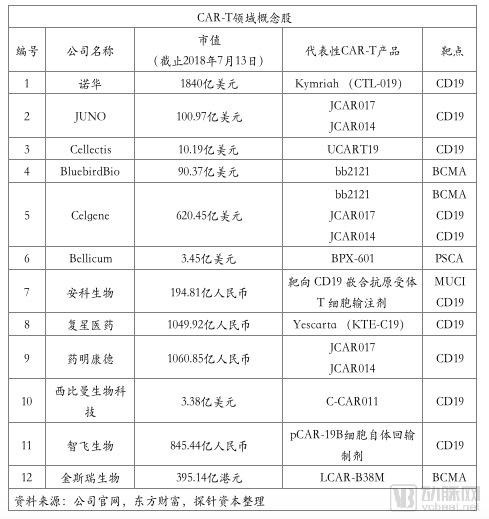
(I) Market Launch
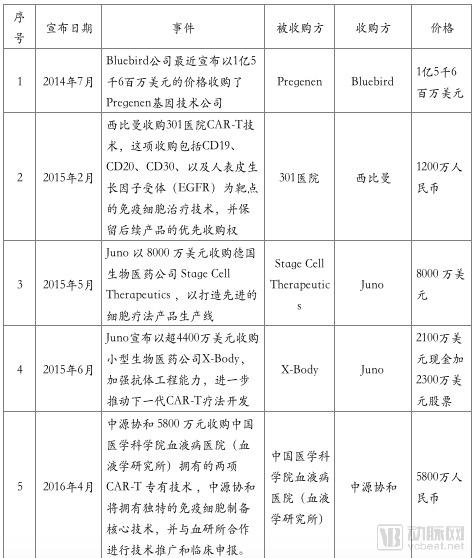
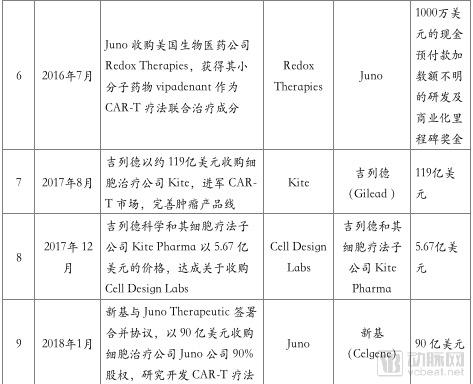
(II) Mergers and Acquisitions
V. Investment Distribution
(I) Investment Overview
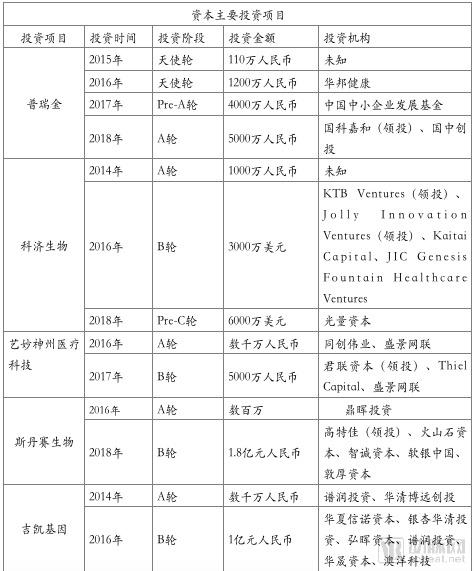
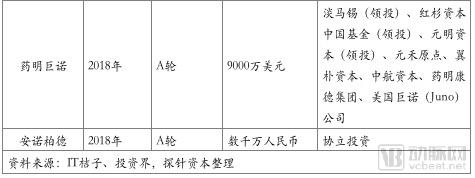
Since the second half of 2017, with the market launch of CAR-T products by Novartis and Kite, the CAR-T industry has strongly attracted significant capital investment. Gilead’s acquisition of Kite in August 2017 and Celgene’s acquisition of Juno in January 2018 have both served as bellwethers for the global rise of the CAR-T industry.
In China, with the promulgation of policies such as the “Administrative Measures for Drug Registration (Revised Draft),” a total of 24 Investigational New Drug (IND) applications for CAR-T products were accepted by the Center for Drug Evaluation (CDE) as of July 25, 2018, involving 17 companies. Furthermore, following Johnson & Johnson’s $350 million partnership with Nanjing Legend’s LCAR-B38M CAR-T in December 2017, GenScript’s stock price surged. The advancement of technological projects and the enthusiasm of capital inflow have highlighted the opportunity for Chinese manufacturing to achieve leapfrog development.
(II) Investment Risks
Although CAR-T therapy has made certain progress, it still requires continuous improvement in areas such as in vivo expansion, persistence, tumor recognition and cytotoxicity, overcoming the immunosuppressive microenvironment, safety, and mitigation of adverse effects. Meanwhile, regulatory compliance and policy oversight also play a crucial role in the development of cellular immunotherapy.
For cellular immunotherapy, due to the complexity of its development, many domestic companies have chosen to collaborate with well-known international leaders to share risks. Due to the complexity of CAR-T patents and the ease of overlap in antibody sequences and preparation processes, patent issues have become increasingly prominent and obvious.