

Emerging Frontiers in Gene Sequencing: Tumor Immunology, Domestic Substitution, or Genomic Big Data?
The decline in sequencing costs triggered a startup boom in China’s genetic testing industry in 2015. That year, regulatory oversight was introduced for the non-invasive prenatal testing (NIPT) sector, marking the first time next-generation sequencing (NGS) technologies were brought under regulatory supervision. Leveraging reproductive health genetic testing services such as NIPT, BGI Genomics and Berry Genomics emerged as leading players in this niche and went public in 2017. Following the rise of NIPT, cancer detection services gained momentum, microbiome research gradually expanded under policy guidance, and consumer-grade genetic testing entered the “20-yuan era”...
Moreover, domestic products have begun to emerge in the upstream segments of the sequencing supply chain, which had long relied on imports. Chinese brands such as MGI Tech and Agilent are starting to gain prominence. Big data and artificial intelligence are also being applied within the sequencing industry; as tools, they hold promise for accelerating industry development.
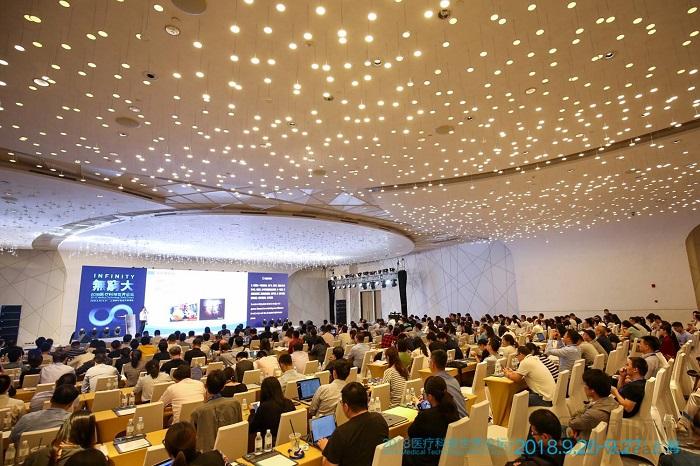
It can be said that following the advent of NIPT, industry development has begun to exhibit diversification. At the “Infinity” 2018 Medical Technology World Forum (MTWF 2018) recently hosted by VCBeat, participants engaged in in-depth discussions on two major categories of genetic testing: research-grade and clinical-grade. Domestically produced sequencers and tumor immunotherapy were hot topics of discussion, and the gathering of gene-focused entrepreneurs served as a microcosm of the current era of gene sequencing.
In the medical field, genetic sequencing can serve individuals throughout their entire lifespan: before birth, it can assist in in vitro fertilization (IVF), helping parents with known genetic defects conceive healthy offspring; during pregnancy, non-invasive prenatal testing (NIPT) can screen for fetal aneuploidy; and in newborns, testing not only identifies hereditary genetic variants in somatic cells but also helps determine the etiology through pathogen detection...
Next-generation sequencing (NGS) is the cornerstone of precision medicine. A key factor driving the vigorous growth of this industry is upstream sequencing technology. The rapid advancement of NGS technology is the primary reason for how gene sequencing has been realized and evolved to its current state.
The earliest batch of startups invariably chose to position themselves in the mid- and downstream segments, leading to market oversaturation and severe product homogenization. Initially, it was a few leading enterprises that explored the upstream sector, breaking into upstream sequencing through independent and collaborative R&D efforts. However, with shifts in talent availability and the industry landscape, along with the emergence of new technologies, the upstream segment no longer appears to be the exclusive domain of industry giants; several startups have quietly emerged in this space.
Before returning to China, Bai Jingwei worked on sequencer R&D at Illumina, focusing primarily on fluidic chips for NGS sequencing. His team made outstanding contributions to reducing the cost of NGS.
“After returning to China in 2016, many people asked me about my profession. I told them I was engaged in gene sequencing,” Bai Jingwei told VCBeat. Bai has published more than 30 professional research papers in various academic journals. After his return, he co-founded Qitan Technology with several like-minded partners, aiming to develop China’s own fourth-generation sequencer based on nanopore technology.
“Each nucleic acid measurement in next-generation sequencing (NGS) constitutes a biochemical reaction cycle, and the cycling process itself introduces issues,” Bai Jingwei told VCBeat. Although current research efforts are primarily focused on cost reduction, many challenges remain unresolved in NGS. The sequencing field still requires a single-molecule continuous sequencing method to enable substantial improvements in performance metrics such as read length and speed.
The earliest technology to meet this criterion was PacBio’s zero-mode waveguide single-molecule fluorescence method. Subsequently, Oxford Nanopore developed a nanopore sequencing system that threads individual DNA molecules through nanoscale pores and determines the DNA sequence by detecting changes in ionic current.
“The principle of nanopore sequencing is quite elegant,” Xie Dan, co-founder of Qitan Technology, once told VCBeat. Internationally, Oxford Nanopore’s technology has gradually matured, with its products expanding beyond Europe into laboratories around the world. However, in China, upstream technological development for nanopore sequencing remains a blank slate.
After returning to China, Bai Jingwei and Xie Dan assembled a team and began exploring nanopore sequencing. However, developing nanopore sequencing technology from scratch is no easy feat; it took Oxford Nanopore more than a decade to achieve this.
Past experience told Bai Jingwei that addressing these two issues would require concerted efforts across multiple technical domains, including protein engineering, biofilm chips, microcurrent measurement circuits, and bioinformatics. After two years of dedicated work, Bai Jingwei’s team developed China’s first prototype of a nanopore sequencer with independent intellectual property rights. Using a 64-channel chip and current testing setup, they kept signal errors within 1 pA. During this period, they secured a round of financing from Baidu Ventures. While participating in the forum, Qitan Technology had already begun assembling engineering prototypes in their laboratory, aiming to launch a commercial product in 2020.
In addition to Qitan Technology’s fourth-generation sequencing technology, other upstream startups in China’s sequencing sector include Shenzhen-based Hanhai Gene, which developed the third-generation sequencer GenoCare based on Helicos technology and was the first to obtain a Class III medical device registration certificate. Furthermore, Sinocelltech, currently in the prototype stage, is poised to become a strong competitor in the second-generation sequencing field with its proprietary error-correction coding technology.
Jin Ge is a renowned beauty boss in the medical entrepreneurship circle, with beauty and competence being most people’s first impressions of her. Born in the 1980s, she is already an entrepreneur with 13 years of experience in the medical field.
“In fact, looking at the development over the past five years, the competitive landscape for genetic companies has become increasingly clear. Compared with assisted reproductive technology and consumer-oriented businesses, Jin Ge is more optimistic about its oncology business: ‘Cancer is largely a disease of aging, and China is gradually entering a period of explosive growth in cancer incidence. Furthermore, there are certain barriers to entry in cancer testing.’”
Rendong Medicine is the second company she founded, specializing in tumor immunodiagnostics and aiming to provide comprehensive precision immunotherapy solutions for cancer patients in China.
More than once, I have heard people confidently assert that “immunotherapy will usher in a new era of cancer treatment.” This is evident from the fervor with which global pharmaceutical companies are pursuing PD-1/PD-L1 targets. Similarly, the rapid entry of Bristol Myers Squibb (BMS) and Merck & Co.’s PD-1 immune checkpoint inhibitors into the Chinese market underscores the strength of demand—each step has drawn significant market attention.
However, not all patients respond to PD-1/PD-L1 inhibitors, and genetic sequencing has once again played a critical role. In the early years, when foreign products had not yet entered the Chinese market and domestic products had not advanced to mid-to-late stage clinical trials, most sequencing companies remained focused on guiding targeted therapy selection. According to incomplete statistics, only a handful of companies publicly offered sequencing services for immunotherapy in 2017. Among them, Yuce Bio and Rendong Medicine launched tumor immunology cohort studies named the “Tianti Project” and the “Fangzhou Project,” respectively.
As foreign products begin to enter the Chinese market and domestically produced products advance into late-stage clinical trials or even regulatory submission phases, an increasing number of companies are launching companion diagnostic products for immunotherapy. At the 2018 CSCO Annual Meeting, companion diagnostics for immunotherapy had already become a trend in the sequencing industry.
Will these products experience widespread homogenization, similar to prenatal testing and targeted testing? We cannot say for certain. However, one thing is clear: the moment James Allison and Tasuku Honjo were awarded the 2018 Nobel Prize in Physiology or Medicine, it was determined that research into tumor immunotherapy would inevitably reach a peak.
In conventional understanding, a gene sequencing product simply consists of a sequencer plus a bioinformatics team. “Most companies are developing technologies based on next-generation sequencing (NGS) platforms, but in reality, there are many testing platforms, each with its own unique features,” Xu Yuanping, Managing Director at Fortune Capital, told VCBeat.
Nowadays, an increasing number of companies emphasize that next-generation sequencing (NGS) is only one component of their product offerings, as the value of data from proteomics, immunohistochemistry, and clinical phenotypes has also been recognized. Companies such as Huidu Medical have added RNA testing to the DNA dimension, employing a combined “RNA + DNA” liquid biopsy approach to achieve real-time tumor detection, precision treatment, and prognosis monitoring. At Jin Ge’s company, omics technologies also constitute just one part of the product portfolio. In addition to NGS, the company has established unique technical platforms, including ultra-low input library preparation technology, Sanger sequencing, and highly spatially resolved multiplex chromosomal analysis.
As companies serving the clinical sector, tumor testing firms have almost universally opted to collaborate with clinical experts. With the assistance of these experts, they aim to position their products as essential tools to support physicians in diagnosis.
Certainly, current medical capabilities can only address a portion of health issues, with numerous clinical challenges remaining unresolved. It is precisely for this reason that an increasing number of companies are channeling investments into large-scale population studies. In addition to sequencing companies, clinical experts, and hospitals, a growing number of pharmaceutical firms are also participating. Pharmaceutical manufacturers demonstrate stronger research and development capabilities. Compared to the sequencing industry, their extensive experience in the pharmaceutical sector has enabled them to accumulate larger patient enrollment cohorts and more comprehensive omics data.
“A startup can only focus on one or two things, so for companies serving the clinical sector, founders now need to think about how to integrate more resources from the industry,” said Jin Ge.
Nick Mazzi, Managing Director of Edinburgh International Investment, told VCBeat: “The core competitiveness in the future healthcare sector will stem from two areas: regenerative medicine and data.”
Similarly, Jin Ge also told VCBeat, “In the future of healthcare, human health and diagnosis and treatment will undoubtedly be data-driven. As the largest underlying database, genomics holds predictable value.”
Berry Genomics is investing hundreds of millions to build a genomic big data industrial park, while Shoudu Gene aims to establish China’s authoritative cancer genomic information database. We are seeing an increasing number of sequencing companies emphasizing big data. “The driving forces behind the development of genomic big data are technological maturity and cost reduction. It was the advent of next-generation sequencing that made big data possible,” explained Xu Yuanping.
The integration of big data may shift the focus of healthcare from individual patients to the entire population, encompassing health assessments across the full life cycle—from birth to death—with predictive analytics and interventions. Currently, healthcare remains predominantly centered on diagnosis and treatment; however, empowered by big data, future healthcare processes are likely to shift upstream, prioritizing health assurance.
Of course, such visions remain distant. Returning to the present, the role of big data in genetics (or multi-omics) is to conduct analysis and research on a specific disease or population within a niche field, establish more reliable models, and then apply these models to broader, previously uncharacterized populations.
To put it into practice, the first step that enterprises need to take is the accumulation of massive amounts of data. These data should include not only genomics, proteomics, transcriptomics, and metabolomics but also clinical phenotypes, clinical cases, and even follow-up data. It is worth emphasizing that big data does not merely mean large data cohorts. In addition to the accumulation of massive amounts of data, reliable and efficient sample management and data screening are also essential.
For most startups, both data accumulation and management represent a significant financial burden. With the exception of a few leading enterprises, few companies can afford such substantial capital outlays. Consequently, it is common to see that most startups accumulate data gradually as their businesses progress, resulting in data silos with limited interoperability and potential incompatibility due to differing standards. Therefore, government support and involvement may be necessary in the development of big data infrastructure.
In early 2018, the Harbin Municipal People’s Government, in collaboration with the Municipal Development and Reform Commission, established the Northeast Gene Innovation Industry Alliance and allocated RMB 200 million to build a genetic database for the population of Northern China, with the aim of using this as a foundation to create a nationwide population database. This government-led, enterprise-driven model may bring additional resources to the industry.
The level of market demand determines consumers’ willingness to pay; therefore, the first products to gain traction in the gene sequencing industry have been those addressing unmet, essential needs. In these niche segments, product certification represents the greatest value driver for companies in their early stages. Without regulatory approval, even long-developed products will struggle to achieve commercialization. However, in later stages, price becomes the key factor determining whether a product can achieve widespread market adoption.
Routine biochemical and immunological tests cost only a few dozen yuan, while the prices of most single-target next-generation sequencing (NGS) products remain at the thousand-yuan level, despite the already low per-base sequencing cost. “Furthermore, routine testing must ultimately achieve automation; otherwise, it will be difficult to achieve widespread clinical adoption,” said Xu Yuanping. For testing segments with inelastic demand, future product cost and degree of automation may become the focal points of the second round of competition.
In addition, we are witnessing the nascent emergence of markets for pharmacogenomic guidance and microbial sequencing. Compared with genetic diseases, subsectors such as prenatal screening, pharmacogenomic guidance, and oncology testing do not constitute rigid demand. However, technological maturation and heightened market awareness will serve as catalysts for the industry.
Although the most mature product categories in the market remain severely homogenized, it is evident that both established companies and startups are seeking products with greater substantive value and more diverse business models. It can be said that products represented by NIPT have demonstrated the market value and future potential of gene sequencing, paving the way for an era of diversified development in the industry.