

Jin Ge of RenDong Medicine: Realizing the Value of Genomics and Building Clinically Meaningful Products
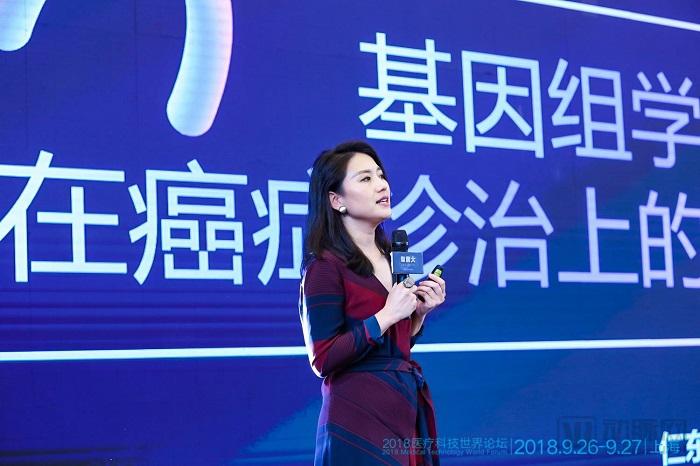
Conference: 2018 World Forum on Medical Technology
Speaker: Jin Ge, CEO of Rendong Medicine
On September 26–27, the 2018 Medical Technology World Forum (MTWF2018) was held at the Le Meridien Minhang Baolong Hotel in Shanghai. The forum was jointly organized by the Industry-University-Research Collaboration Coordination Department of the China High-Tech Industrialization Research Association, VCBeat, and VCBeat Institute, under the theme “INFINITY.”
Jin Ge, CEO of Rendong Medicine, was invited to attend the summit and delivered a keynote speech titled “Genomics and Tumor Diagnosis and Treatment” at the Forum on Frontiers in Genetic Testing Development.
Regarding the application of gene sequencing in oncology diagnosis and treatment, Jin Ge’s presentation can be summarized into three core viewpoints:
The Value of Gene Sequencing;
2. Beyond NGS: How to Build Clinically Valuable Products;
3. Integrate resources to create data value.
The following is a summary of the speech, compiled by VCBeat (WeChat Official Account: vcbeat).
“Whenever genetic testing companies are mentioned, people either say they’re extremely hot or that there are just too many of them,” said Jin Ge.
Over the past five years, the competitive landscape for genetic companies has become increasingly clear. Compared to its assisted reproductive technology and consumer health businesses, Rendong Medicine is more optimistic about its oncology business line. Cancer is predominantly a disease of aging; China is gradually entering an era of surging cancer incidence, and existing cancer diagnostics present certain entry barriers.
First, setting aside the commercial essence to examine China’s healthcare sector, significant reforms have been vigorously implemented in recent years across the healthcare system itself, medical insurance payment mechanisms, and pharmaceutical distribution channels. Each reform step has exceeded our expectations, leading to a surge in genetic testing companies, particularly those specializing in oncology diagnostics. Among these, two sales companies have already achieved break-even status.
We cannot help but wonder: Will the genetic testing industry truly usher in a period of explosive growth?
An undeniable reality in the medical community is that, under pharmaceutical system reforms, drug markups have been eliminated. Consequently, physicians seek additional revenue streams, leading to the emergence of high-cost diagnostic tests. Both imaging modalities and genetic testing fall into the category of high-unit-price services.
Looking back at the industry, where does the true profit model lie? The healthcare sector essentially involves five key stakeholders: doctors on one end, and patients, pharmaceutical manufacturers, payment systems, and technology companies on the other four. These five roles form an organic, closed-loop ecosystem in which each is indispensable to the others.
Based on this logic, for an industry to achieve long-term development, enterprises must have a clear understanding of their own foundational position.
Leading companies in the industry are already raising funds at unicorn valuations, with multiple firms securing financing rounds starting at $100 million. Are such valuations reasonable?
In the future of healthcare, human health and clinical diagnosis and treatment will undoubtedly be data-driven. As the largest underlying database, genomics holds predictable value. Consequently, the valuation of genetic testing companies cannot be assessed using traditional models.
Even during the widely acknowledged “capital winter,” investors were still willing to back these companies—demonstrating that their existence is justified. Despite the uncertainties introduced by regulatory scrutiny, the approval of two tissue biopsy products from Burning Rock Biotech and Novogene in 2018 also underscores the industry’s recognition of NGS technology.
All logic is fundamentally rooted in technological advancement. In this industry, there are still many areas requiring improvement, including limited data exchange between enterprises, poor integration capabilities, the absence of established industry standards, and product homogenization. Economists advise entrepreneurs not to focus excessively on macroeconomic trends; after a brief overview, they should return to micro-level considerations and reflect on what their companies ought to do. The value of an enterprise lies in creating value for its customers. For companies specializing in tumor testing, the ultimate customers are patients at the clinical endpoint. Whether a company can tangibly create value for patients is the foundation of its sustainability.
Many people question whether tumor testing simply involves purchasing an instrument to produce a product. Of course not. The development of any industry and product requires the drive of many technologies. In the era of omics, besides detection technology, bioinformatics technology is also very important.
When building its comprehensive medical platform, Rendong Medicine leveraged five-level noise-reduction molecular labeling technology, Super CNV technology, and a one-click data analysis system. These technologies have incrementally established a complete indicator system and a delivery information system.
In addition to these, Rendong Medicine also possesses unique low-input library preparation technology, multi-omics platforms including next-generation sequencing (NGS), high-resolution spatial chromosome mapping systems, and tissue ecosystem analysis platforms.
More importantly, as a company serving clinical practice, we must possess substantial medical expertise in addition to technical capabilities. RenDong Medicine currently has a team of 150 employees, with the medical team comprising nearly one-third of the total. Among these medical experts, five or six hold the title of Chief Physician at hospitals.
We engage daily with frontline clinical experts from top-tier (Grade 3A) hospitals, some of whom have returned from the United States. Upon their return, these large Grade 3A hospitals have provided them with the world’s most abundant patient resources and the largest volume of clinical cases. Some of these physicians specialize in genetic medicine, while others focus on pathology; by integrating these resources for interdisciplinary applications, they are uncovering novel solutions within clinical diagnostic and treatment pathways.
This outstanding cohort of young and middle-aged physicians has made remarkably significant contributions to the advancement of clinical medicine in China. Leveraging expert communication and collaboration, Rand Medicine has established a highly distinctive integrated diagnostic and therapeutic framework for minor cancers, encompassing medicine, genomics, and a dynamic monitoring system for evaluating treatment efficacy.
When people discuss omics, many immediately think of next-generation sequencing (NGS). In reality, NGS is only one component of omics. Industry professionals have long emphasized that clinical practice demands products with good reproducibility, cost-effectiveness, and practical utility that can truly benefit patients. Therefore, the key lies not in the specific sequencing technology employed by a product, but in whether these tools can genuinely provide solutions for patients.
Medicine is a serious industry, requiring enterprises to obtain various qualifications and refine their R&D and medical systems. Rendong Medicine evaluates and predicts the efficacy of entire treatment courses and drug development mechanisms by integrating DNA and RNA signaling pathways through causal inference.
Tumor detection currently remains a challenging field, with several clinical questions yet to be answered. In 2017, RenDong Medicine launched the “Oncology Immune Ark Project,” a cohort study involving tens of thousands of participants, expanding its collaborative network beyond hospitals and clinical experts to include pharmaceutical companies.
Pharmaceutical manufacturers have a well-established history, with significantly stronger R&D and scientific research capabilities compared to emerging industries. They also possess substantial industry-wide patient enrollment volumes and accumulated omics data, including genomics, immunomics, and pathomics data.
In addition to the high-throughput data generated in laboratories, phenotypic and follow-up data are also required. Returning to the industry and enterprises themselves, companies can only focus on one or two core competencies. Therefore, more enterprises are considering how to integrate resources across the broader industry.
For instance, regarding clinical phenotype data, Rendong Medicine has established a database based on patient-side medication follow-up data. This constitutes a highly comprehensive omics dataset. The company aims to identify biomarkers for specific cancer subtypes through big data analytics and proprietary algorithms. Furthermore, with an open mindset, the company seeks to contribute its expertise to the advancement of omics data initiatives in China.
From surgery and chemoradiotherapy to immunotherapy, cancer treatment has gradually entered the era of immunotherapy. However, immunotherapy is not a panacea; 80% of patients do not respond to it. The medical and biotechnology communities hope to continuously explore more methods to provide solutions for these patients.
In the realm of innovative therapies, combination treatments have achieved notable successes, and tumor vaccines are poised to become commercialized products within a few years. Over the past five years, the entire healthcare industry has enjoyed strong investor enthusiasm, supported by highly favorable policy directions. However, upon reflecting on the underlying business logic of each company, those merely pursuing sales revenue are unlikely to survive when the market undergoes significant consolidation. Therefore, Rendong Medicine aims to launch its own research initiatives leveraging patient management and omics data.
Finally, regarding Rendong Medicine’s key areas of focus, the company prioritizes pediatric oncology and cancers affecting young and middle-aged adults. Under the Ark Program, Rendong Medicine has published highly valuable data, including findings from 100 PD-1 cases. The company aims to collaborate with clinical experts to launch an immune diagnosis and treatment decision-support product that assists clinicians in helping patients with advanced-stage cancer achieve higher-quality survival extension.