

Zhibei Pediatrics Completes Tens of Millions RMB Series A+ Financing to Deepen Chain-Style Medical Management System
Recently, VCBeat (WeChat ID: vcbeat) learned that Zhibei Pediatrics has completed an A+ round of financing amounting to tens of millions of RMB, led by Y Capital.
Co-founded by seasoned industry professionals and investors with a long-standing focus on healthcare, the firm specializes in early-to-growth stage investments in the healthcare sector across China and the United States. In the U.S., it primarily invests in high-tech, innovation-driven minimally invasive surgical devices and consumables. In China, its current focus is on emerging healthcare services, as well as enterprises capable of facilitating the domestic commercialization and technological translation of its U.S.-portfolio minimally invasive surgical device projects.
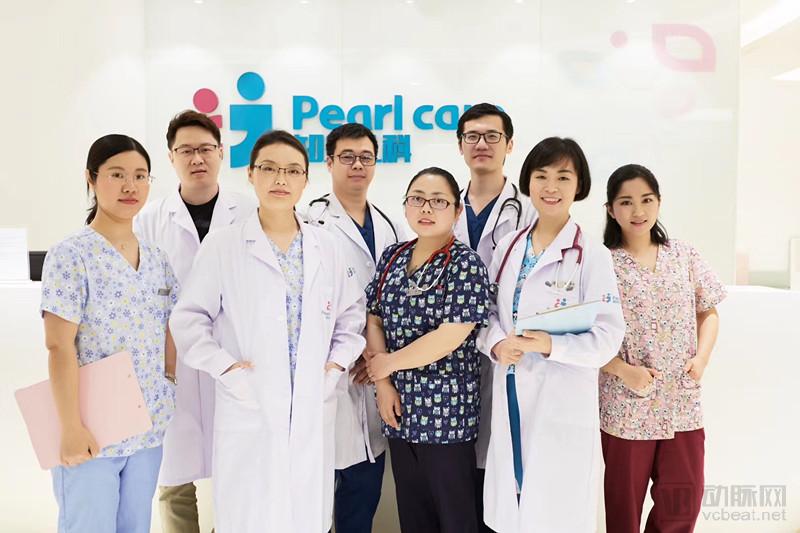
So, what are Zhibei Pediatrics’ next steps following the financing round? What stories emerged from the fundraising process? And what do investors view as Zhibei’s core competencies? To find out, VCBeat conducted exclusive interviews with Zhao Qiang, CEO of Zhibei Pediatrics, and Fang Fang, Founding Partner of Y Capital, to hear their perspectives.
For a long time, patients have been accustomed to seeking care at public tertiary hospitals and relying on treatment modalities such as intravenous infusions and prescription medications; shifting these established healthcare-seeking behaviors requires time. However, the most critical bottleneck remains the shortage of physicians, particularly the severe lack of pediatricians in the field of pediatrics.
Fang Fang believes that this is a widespread pain point caused by multiple factors, a common challenge faced by all pediatric medical institutions. As an individual enterprise, it is unlikely to completely resolve this issue alone in the short term. What can be done is to minimize the constraints this pain point imposes on its own development: (1) improve clinical pathways to ensure that every physician delivers high-quality care; (2) prioritize tiered talent development to build long-term, sustainable service delivery capacity; (3) respect physicians by providing them with a comfortable and dignified practice environment, attractive compensation and incentive mechanisms, and opportunities and space for learning and professional advancement; (4) deliver high-quality, dignified medical services to patients, establish brand image, and further enhance the attractiveness of the institution to physicians.
To address these pain points, Zhibei Pediatrics has carved out its own unique path. VCBeat is no stranger to Zhibei Pediatrics, having followed the journey from Zhao Qiang’s initiation of the project through each round of financing and up to the latest developments. It has always been VCBeat’s mission to accompany entrepreneurs in their growth and witness the myriad stories that unfold during their development. Over the past year or more, Zhibei Pediatrics has expanded externally by establishing multiple new pediatric clinics, while internally strengthening its core competencies by enhancing chain clinic management and building a robust system for medical talent development.
Zhao Qiang stated that over the past year, Zhibei Pediatrics has undergone changes in the following areas:
First, Zhibei Pediatrics will highlight the clinic's specialized development path in the new year.In its previous service offerings, Zhibei’s clinical departments included Child Health Care, General Pediatrics, and Dermatology. As the patient base has grown, demand for specialized care has increasingly emerged. Zhibei Pediatrics is now expanding with multiple new departments to provide families with a broader range of high-quality medical services, such as Child Psychology, Otolaryngology (ENT), Speech and Language Delay Intervention, and Autism Rehabilitation. The soon-to-open Shenzhen Outpatient Clinic will house Zhibei’s first Autism Rehabilitation Center.
Second, in terms of internet applications, Zhibei has also adopted a brand-new development strategy.Over the past year, internet-based medical services, whether in the form of health education courses or health management services, have remained constrained by physicians’ working hours. However, it was observed that during the 0–3 age range of children, the questions raised by new mothers each year were largely similar. Based on this insight, Zhibei compiled high-quality Q&A content accumulated over the previous two years in its online health management services into a database, aggregating frequently asked questions from most family users. It then developed a search engine focused on pediatric health—[Zhibei Parent Hub]—to help new mothers find answers to their concerns.
In addition to “search engines,” Zhibei has identified and cultivated many outstanding mothers from its user base who share the company’s philosophy. These individuals play a significant role in assisting Zhibei’s medical team with community management and are able to share their knowledge with other mothers in a very short amount of time.
【Zhibei Parents’ Hub】 has been online for just over a month and has already amassed more than 10,000 registered users. The renewal rate is also very high. As the user base of Zhibei Parents’ Hub continues to grow, Zhao Qiang stated that they will continually enrich the search content within this mini-program and add more engaging and practical features for families, such as the Zhibei Rumor-Debunking Column.
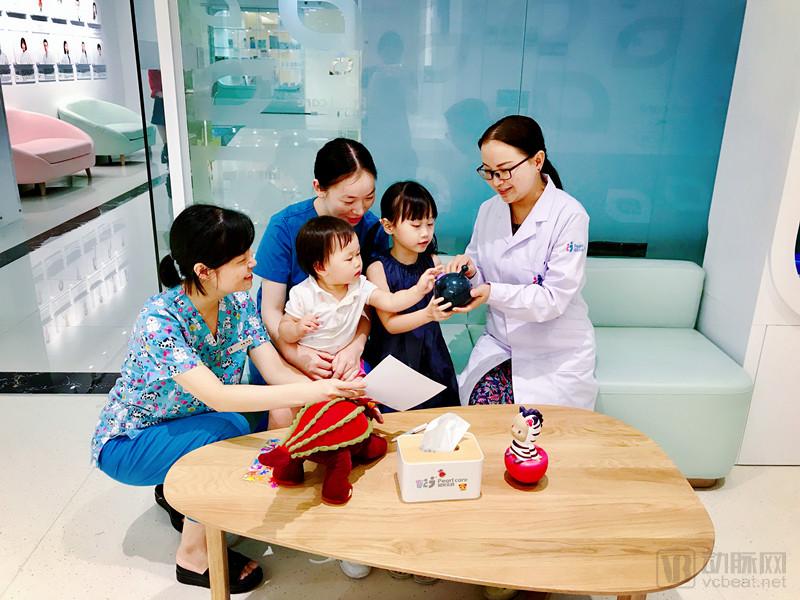
ZhiBei’s internet-based medical services have long been a distinctive feature of its pediatric development model, ranging from ZhiBei Micro Courses and community-based health management to practical family-oriented mini-programs and other supportive tools. According to Zhao Qiang, nearly 40% of the patients visiting ZhiBei Pediatric Outpatient Clinic come through online channels.
Third, in terms of clinical practice and management, Zhibei has devoted considerable effort to building a comprehensive management system.Over the past year, Dr. Ou Qian and the Zhibei Medical Affairs Committee have devoted substantial time to developing standardized clinical protocols. They have implemented rigorous medical quality monitoring across all stages of care—from pre-consultation data collection to post-consultation outcome tracking and professional follow-up—earning strong recognition from parents.
Fourth, in terms of medical talent, Zhibei has established a relatively comprehensive training system for medical and nursing staff. Currently, there are more than 20 full-time physicians and over 20 nurses, along with more than 50 online physicians.
Currently, Zhibei Pediatrics has established four outpatient clinics. The two clinics located in Panyu and Tianhe Districts have already achieved profitability, with a monthly patient volume of approximately 1,000 visits and an average revenue per customer exceeding RMB 800. The other two clinics, situated in Shenzhen and Kunming, are scheduled to open in November. Kunming was selected due to its highly competent medical team; while second-tier cities generally have less abundant medical resources, Zhibei aims to expand its presence in these markets. Additionally, the company has already accumulated a notable user base in the Kunming region through its online platform.
Following the financing round, he aims to open two to three additional clinics next year, with site selection focused on areas such as Foshan, Shunde, and Zhongshan. The strategy prioritizes optimizing the operations of a single outpatient clinic before expanding; a slower pace of store openings is acceptable. Additionally, he plans to increase investment in the research and development of utility software to integrate online and offline data and uncover greater demand for specialized medical services. The company will also consider acquiring other clinics, leveraging a comprehensive medical management system to deliver enhanced healthcare services to families.
What impressed Fang Fang most during her interactions with the Zhibei Pediatrics team was their down-to-earth approach to healthcare and service delivery, free from short-sightedness or impatience for quick results. Their strong emphasis on and substantial investment in medical quality, clinical pathways, training systems, and standardization frameworks will undoubtedly yield significant long-term returns for Zhibei as it scales through chain replication.
There were two reasons that prompted her to make the investment decision:
First, the I-Capital team has been focusing on tiered diagnosis and treatment and pediatrics for nearly three years. Earlier this year, we participated in the investment in Chongqing Yuboshi Pediatric Chain, and have consistently sought to expand our presence in other regions. Zhibei is an outstanding and representative enterprise. After discussions with Dr. Ou, Mr. Zhao, and their team, we found strong alignment in our philosophies regarding evidence-based medicine, healthcare quality, and development pathways, leading to mutual recognition and a swift agreement.
Second, for Iridium Capital, Zhibei, as one of the best pediatric chains in South China, represents a crucial component of its strategy for deep, multi-regional, and multi-specialty expansion in pediatrics. We are highly enthusiastic about Zhibei becoming one of the core companies in our portfolio.
Compared with other projects, she believes that the advantages of Zhibei Pediatrics lie in:
(1) The founding team possesses exceptional overall competence. For healthcare service entities, medical expertise and operational capability are two indispensable pillars. Dr. Ou is a rare pediatrician who excels not only in clinical care and communication but also in building standardized systems and cultivating talent pipelines. Mr. Zhao is a scarce managerial talent who combines online operational thinking with offline execution capabilities and understands commercial insurance; he has also assembled an outstanding operations team.
(2) Through the initial development of the online platform, a substantial base of seed users has been accumulated alongside strong word-of-mouth reputation, yielding a certain degree of brand effect;
(3) There is also a certain advantage in geographical location. Guangzhou is a very good city, with consumption power comparable to that of Beijing, Shanghai, and Shenzhen, while rental costs are lower than in these cities, allowing for the development of a relatively strong operational model.
She described Zhibei Pediatrics as a company with passion, a clear philosophy, strong execution capabilities, a well-defined business model, as well as significant potential and room for growth. Therefore, in addition to providing financial support, she will also offer the following services to the project:
(1) In certain cities, we have also secured a pool of pediatricians; in specialized sub-disciplines such as adolescent psychology, autism intervention, scoliosis and foot-and-ankle rehabilitation, pediatric dentistry, healthcare for preterm infants, adolescent sports medicine, and pediatric nutrition, we have assembled top-tier domestic technical teams. These resources will be gradually integrated based on ZhiBei’s needs.
(2) We are also more than willing to invite the management team and academic leaders of Zhibei to visit some of the best children’s hospitals in the United States for in-depth exchanges, learning, and even short- to medium-term advanced training.
Meanwhile, she also hopes to foster mutual learning and exchange with other pediatric clinic chains in which the company has invested, particularly in areas such as clinical pathways, health information technology infrastructure, and standardization systems. Further discussions could explore possibilities for joint talent development, system development, and cross-regional collaboration. Additionally, by leveraging other specialized medical teams in its pipeline, the company can achieve complementary advantages and mutual benefits. For instance, these specialized teams can assist Zhibei in building disciplinary capabilities, while Zhibei contributes local patient traffic and operational expertise.
Iridium Capital’s original mission and vision are to leverage its team’s industrial strengths and international background to invest in companies with strong concepts and advanced technologies, while also bringing more innovative ideas and technologies back to China, thereby making a modest contribution to advancing healthcare in China and benefiting Chinese patients.
In the future, she hopes that Zhibei Pediatrics will become one of the best and most recognized brands among pediatric chain clinics in China, earning high acclaim from both physicians and patients. The goal is to realize social, economic, and capital value. The strategic path involves continuously refining clinical pathways and standardization systems, strengthening tiered talent development, upgrading healthcare management systems, expanding the number of offline outpatient clinics, and enriching specialized medical services.