

Juding Medical Expands Its AI-Powered Medical Imaging Ecosystem, Covering Over 3,000 Hospitals and 160,000 Radiologists in Six Years
The “Internet + Medical Imaging” industry has entered the fast lane.
With the continuous emergence and development of big data, cloud computing, and AI technologies, the landscape of healthcare services is undergoing a dramatic transformation, ushering in a golden age for the medical imaging market: imaging centers are springing up across various regions, AI applications are providing comprehensive support, and a wide array of imaging solutions are emerging one after another...
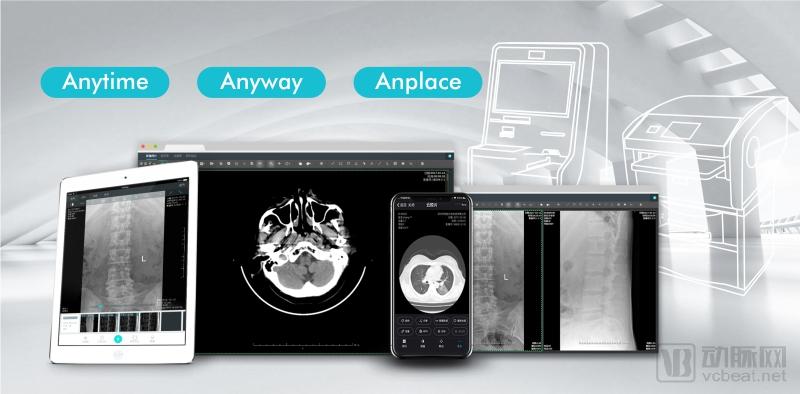
Amidst this soil of explosive growth, Juding Medical leverages six years of accumulated expertise and collaborative experience with over 3,000 hospitals. By integrating five core capabilities—hospital-wide self-service cloud services, intelligent hardware, AI-assisted diagnosis, internet healthcare, and smart informatization—the company has established a deep vertical presence in the imaging sector. It is building an ecosystem for medical imaging connectivity, delivering comprehensive smart medical imaging services to hospitals, physicians, and patients, including digital imaging cloud solutions, regional cloud platforms, and AI integration boxes.
Amid continuous improvements in healthcare services, how is Juding Medical strategically positioning itself across the medical imaging industry chain? To explore this, VCBeat conducted exclusive interviews with Wu Tong, General Manager of the Medical Imaging Division, and Long Han, General Manager of the HIT Division at Juding Medical, to provide a comprehensive interpretation of the story behind their strategy.
Addressing the internet-oriented nature of radiology specialties, Wu Tong stated, “Building on the robust promotion of cloud films, cloud storage, and cloud PACS services, Juding Medical has launched the CLEAR Kelier Smart Imaging Cloud Solution. This solution centralizes imaging data in the cloud, enabling capabilities such as data transmission, viewing, report downloading, and information management. It also provides cloud-based collaborative services, including premium consultations, an imaging academy, and imaging centers, thereby effectively connecting patients, physicians, and healthcare institutions.”
By digitally integrating medical imaging data, patients can simply scan a QR code to access original DICOM images and diagnostic reports, which are stored in the cloud to create personal electronic health records. This not only enables real-time viewing and browsing but also facilitates one-click access to authoritative specialists for premium consultations through information sharing.
According to VCBeat, Juding Medical’s Radiology Salon app has currently gathered more than 160,000 radiologists in China. In addition to providing high-end consultation services for patients, medical experts can leverage fragmented time to deliver professional skill training, enabling ubiquitous learning and continuous self-improvement.
At a time when both policy and capital are offering strong tailwinds, medical AI applications have been advancing rapidly. Major tech giants and emerging startups alike have begun to stake their claims in the AI healthcare space. Unlike most vendors, Juding Medical has not initially sought breakthroughs in imaging AI algorithms and technologies for any single disease; instead, it aims to co-build an AI ecosystem.
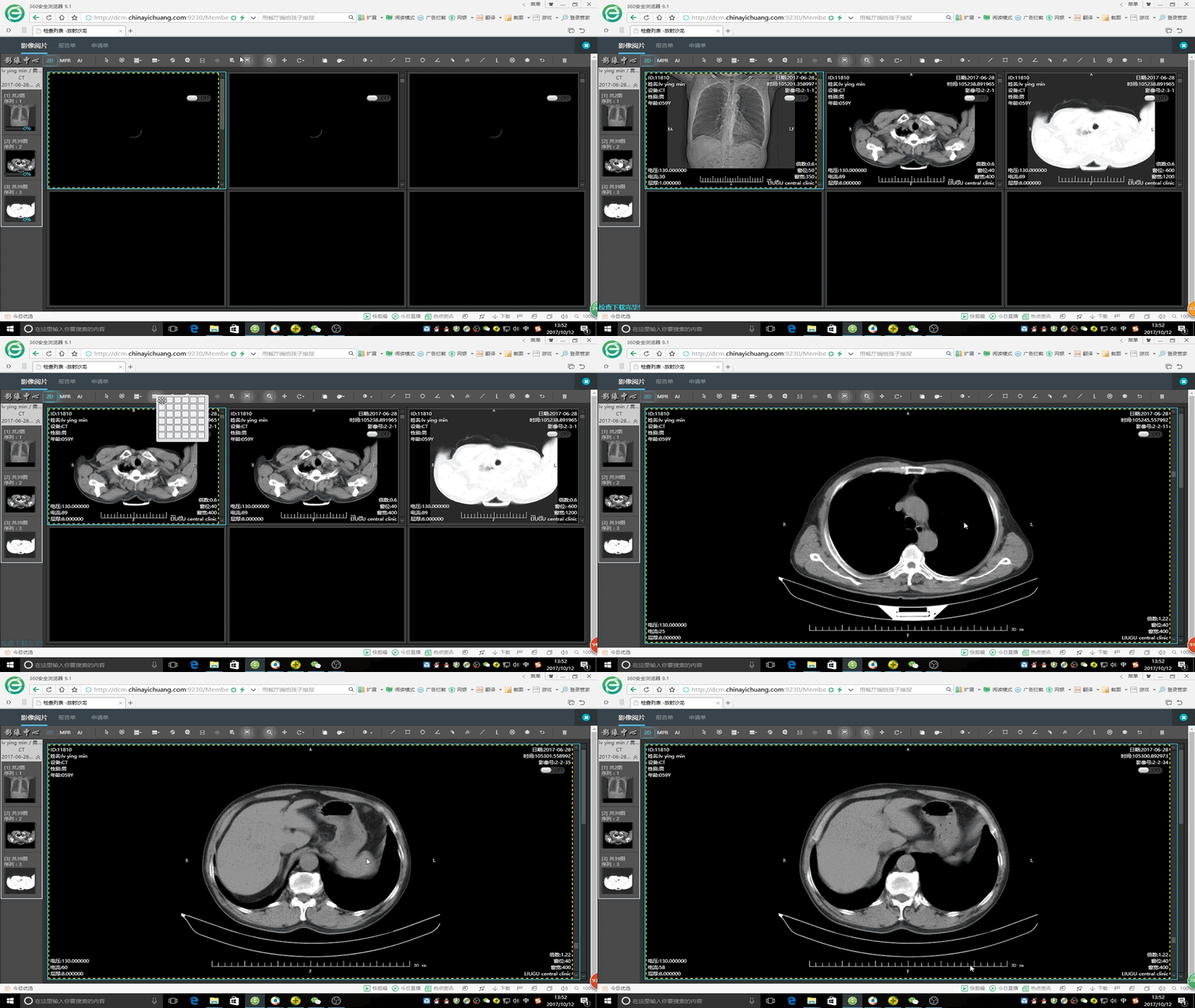
Long Han stated, “At the current stage, AI technologies such as deep learning and big data have become highly effective in performing image classification, object detection, image segmentation, and retrieval, thereby assisting physicians in screening and diagnosis. Juding Medical has entered into strategic partnerships with leading technology companies, including Alibaba Health and Infervision, to establish an integrated AI imaging platform. This initiative is dedicated to providing healthcare institutions with personalized, diverse, and precise AI-driven capabilities for various clinical scenarios.”
Juding Medical Imaging AI Integration Platform provides healthcare institutions with a unified artificial intelligence tool engine. The platform can integrate AI tools from multiple vendors to meet the needs of AI-assisted diagnosis across various departments and specialties, thereby eliminating the complexity for healthcare institutions to interface with numerous AI providers. It reduces the selection burden for institutions while offering high-quality, professional AI-assisted diagnostic tools tailored to different anatomical regions and disease types.
In the field of regional medical imaging, Juding Medical’s Regional Imaging Cloud Platform Solution leverages imaging centers as hubs to connect healthcare institutions at all levels, forming a medical imaging consortium. This creates an integrated provincial-municipal-district/county imaging center network, dedicated to providing end-to-end solutions for the entire medical imaging industry chain. It establishes a comprehensive remote imaging service system that integrates remote image interpretation, medical collaboration, online appointment scheduling, remote consultations, and remote teaching and training, thereby facilitating the effective implementation of tiered diagnosis and treatment and supporting the upgrading of medical services.
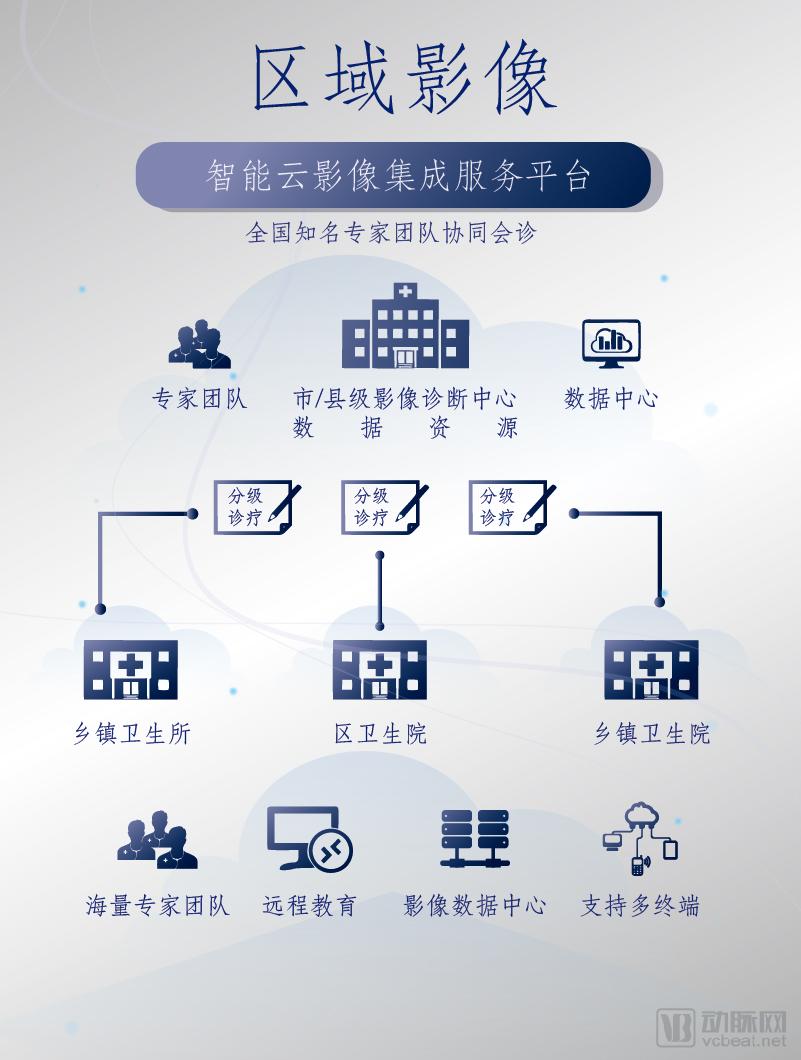
According to VCBeat, the outcomes of this initiative have already become evident in Juding Medical’s support for Nanyang City in establishing itself as a benchmark city for smart healthcare. To date, Juding Medical has assisted seven medical institutions—including the First Affiliated Hospital of Nanyang Medical College, Nanzhao County People’s Hospital, Nanyang Wolong Hospital, Zhenping County Imaging Center, Nanyang First People’s Hospital, Nanyang Sixth People’s Hospital, and Nanyang Nanshi Hospital—in setting up regional shared imaging diagnostic centers. More than 30 medical institutions across the city have been integrated into this network, earning widespread acclaim from patients in the region.
Under the regional imaging cloud platform model, patients in the Nanyang area have received more professional, authoritative, and high-quality medical services. The “Nanyang Model” has also gained strong recognition from the Nanyang municipal government. It is believed that this benchmark model will expand to cover more regions in the future, bringing universally accessible smart healthcare services to a broader patient population.
Today, technology is ushering in a golden age. As a field dedicated to universal public benefit, healthcare requires technological empowerment and intelligent innovation. Whether through the application of internet-based imaging clouds or the integration of AI technologies, Juding Medical remains steadfast in its commitment to empowering health through technology and business models. What will more inclusive and intelligent healthcare services look like in the future? We await with anticipation.