

Zhongnuo Puhui Files IPO to Build a 'Huabei for Healthcare' — A Medical Installment Payment Platform
To address the challenge of healthcare payments, Zhongnuo Puhui has launched three core modules: installment financing for pharmaceuticals, customized insurance services, and advance payment services for medical insurance reimbursements, with the aim of establishing a healthcare installment payment platform in the future.
When seeking medical treatment in hospitals, both patients and their families are often resolved to use the best available medications. However, reality often falls short of expectations; faced with the short-term financial burden of upfront payments, many patients and families are forced to reconsider their options carefully.
Due to the high out-of-pocket costs for certain specialized medications or delays in medical insurance reimbursements, most Chinese families face significant short-term financial pressure during treatment. Unwilling to forfeit any therapeutic opportunities or hope for survival, they struggle in this dilemma. For patients, such a predicament represents the greatest obstacle and a devastating blow on their journey to recovery.
Zhongnuo Puhui aims to alleviate patients’ short-term payment burdens by offering supplementary payment solutions beyond health insurance and out-of-pocket expenses, enabling more patients to access affordable and high-quality medical care. In layman’s terms, it is akin to the “Huabei” of the healthcare payment sector.
Crowdfunding enables some individuals to access medical care, while Zhongnuo Puhui aims to allow more people to enjoy worry-free medical services within their financial means. It transforms the short-term financial burden of optimal treatment plans into long-term, more affordable healthcare consumption, thereby improving both healthcare accessibility and patients’ hope for cure.
In the global ranking of healthcare access and quality published by The Lancet, China ranks 48th with an average score of 77.9. Furthermore, China is among the countries with the most severe regional disparities in healthcare accessibility. Notably, high-scoring countries such as Australia and the United Kingdom have established universal healthcare systems. In the UK, the National Health Service (NHS) ensures that hospitals provide immediate care to patients involved in major accidents or requiring emergency treatment, utilizing the best available medications and optimal medical protocols, without either doctors or patients needing to consider payment issues.
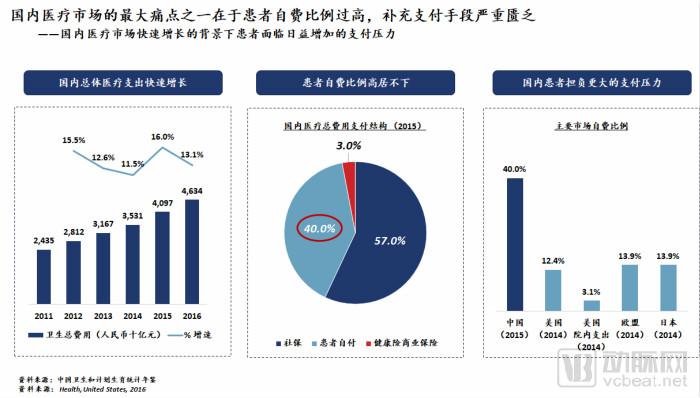
In China’s healthcare environment, one of the most significant pain points is the excessively high proportion of out-of-pocket expenses for patients, coupled with a scarcity of supplementary payment methods, which leaves patients without adequate financial protection and support during treatment. Against the backdrop of rapid growth in China’s healthcare market, while the overall medical landscape is gradually improving, patients are facing increasing payment pressures, with the out-of-pocket expense ratio remaining stubbornly high at 40%.
Previously, patients had no options beyond out-of-pocket payments, basic medical insurance, and commercial insurance. The vast majority of hospitals were unable to provide direct reimbursement for patients enrolled in the New Rural Cooperative Medical Scheme (NRCMS), and there were time lags in the cross-regional settlement of basic medical insurance. Although these delays may seem short, they effectively constitute a race against time. Due to the need for upfront self-payment and the subsequent waiting period for fund reimbursement, many families were forced to forgo superior treatment plans or struggled to maintain continuous medication, thereby failing to achieve optimal therapeutic outcomes.
Although the National Reimbursement Drug List (NRDL) is continuously being adjusted, with pediatric drugs, emergency medications, and drugs for critical illnesses (such as anti-tumor agents), as well as innovative drugs, being progressively included, it is undeniable that the majority of innovative drugs remain excluded from the NRDL.
Patients’ existing financial burden has become the most significant pain point, not only hindering their own recovery but also preventing access to newly launched drugs and medical devices. For multinational pharmaceutical companies, the Chinese market is increasingly becoming a key growth engine. As national policies provide greater flexibility in the approval of new drug launches, addressing the issue of “priced but inaccessible” medications will inevitably become a new focal point.
Taking innovative drugs as an example, the *2017 China Pharmaceutical Market* report indicates that sales of innovative drugs are currently concentrated primarily in first- and second-tier cities, specifically within the 162 largest hospitals. For innovative drugs to penetrate grassroots markets, medical insurance cannot cover them entirely; the proportion of out-of-pocket expenses remains significant. Since patients using innovative drugs typically require long-term treatment, pharmaceutical companies must directly address the issue of healthcare payment for these products.
With substantial capital support, domestic new drug R&D enterprises are well-prepared to embrace the boom in innovative drugs. However, the payment capacity of patients in China has failed to keep pace. Just as innovative drugs are about to benefit patients upon market launch, many are forced to hold back due to their inability to afford them.
Alleviating patients’ financial burden may become one of the top priorities in the healthcare sector, creating more room for medical innovation. At the policy level, the state has introduced measures to encourage the development of supplementary payment mechanisms. The Outline of the “Healthy China 2030” Plan proposes fully mobilizing the enthusiasm of social organizations and enterprises to establish a diversified funding structure, while encouraging financial institutions and other entities to innovate their products and services and improve supportive measures. The 13th Five-Year Plan for Deepening the Reform of the Medical and Healthcare System also mentions exploring intangible asset pledge loan services and encouraging the development of health-related consumer credit.
The services provided by Zhongnuo Puhui are designed to address the short-term payment difficulties faced by most patients. Committed to alleviating the financial burden of treatment through professional and comprehensive support, we strive to make quality healthcare accessible and affordable for more patients.
Currently, Zhongnuo Puhui has established partnerships with dozens of pharmaceutical companies, medical device manufacturers, healthcare institutions, and over one hundred pharmacies, providing integrated solutions that combine installment payment plans for treatment costs, advance payment for medical insurance reimbursements, and customized coverage. As of August this year, its services have covered more than ten disease categories, served thousands of patients, and received widespread acclaim from patients.
The “Xingfu Kewei” installment payment program for the innovative targeted therapy Anlotinib (brand name: Fukewei®), launched by Zhongnuo Puhui and Chia Tai Tianqing, allows cancer patients to purchase medication in installments. The simple and rapid approval process significantly enhances convenience for patients. Instead of a one-time payment of RMB 12,400, patients can complete the payment over six months with monthly installments of RMB 2,066.7. In 2017, the national per capita disposable income of residents in China was RMB 25,974 annually, averaging RMB 2,164 per month. The economic relief provided by the installment payment option is self-evident.
Currently, Zhongnuo Puhui primarily offers three core product modules: installment-based financial support for medications, customized insurance services, and advance payment services for medical insurance reimbursements. In the future, it plans to tailor diverse financial solutions to individual patient needs, striving to benefit a broader patient population.
Using inclusive finance as a tool to address patients’ medical payment challenges remains an “uncharted territory.” When asked why the founders had the courage to establish Zhongnuo Inclusive Finance, Co-founder Cong Guojun explained that the founding team of Zhongnuo Inclusive Finance all had certain investment backgrounds. Previously, they had hoped to invest in emerging medical technologies on the supply side to improve patients’ treatment experiences and enhance the likelihood of cure.
“However, from the patient’s perspective, when a good treatment plan emerges, the primary consideration is whether the regimen or product can cure the disease; the second is how much the treatment costs. We have been focusing on building medical capabilities, but we found that payment mechanisms are lagging behind,” Cong Guojun stated frankly.
He also pointed out, “We anticipate that a large number of highly advanced therapies will enter the current healthcare system in the coming years. While these treatments demonstrate significant efficacy, they come with correspondingly high price tags, and public health insurance schemes will be unable to cover these novel therapies and their eligible patients within a short timeframe. With the support of Zhongnuo Puhui, we aim to effectively bring these emerging treatment options to patients, thereby serving a broader population.””
Zhongnuo Puhui aims to establish a medical installment payment platform that builds robust trust with patients in China’s market, where doctor-patient tensions are acute, thereby becoming a platform truly relied upon by patients.
First, Zhongnuo Puhui is positioned as a medical technology finance company. In terms of user verification, a financial risk control department is established to review the creditworthiness and repayment capacity of every patient applying for installment payments.
The review process includes both medical and financial risk control. A technology-driven risk control process can also accelerate the review, allowing applicants to receive a response within 24 hours and receive funds within 48 hours if all documentation is complete. The overall application process is simple and fast, removing initial barriers for patients.
Cong Guojun stated to VCBeat, “We have now served over a thousand patients, with the total amount of financial support reaching tens of millions of RMB. Based on current repayment performance, there have been no bad debts or delinquencies. This demonstrates that while we are helping patients, they are also placing their trust in us. Therefore, we are highly confident in expanding into this field and aim to provide medical financial support to more patient families while ensuring high-quality asset management.”
In the process of bringing its offerings to market, Zhongnuo Puhui aims to connect multi-party resources to jointly promote healthcare finance solutions, thereby delivering greater benefits to patients and society.
Zhongnuo Puhui exerts efforts on both the B-end and C-end fronts. On the B-end, Zhongnuo collaborates with pharmaceutical companies and medical device manufacturers. Once a specific drug is linked to the corporate platform, any individual needing to purchase that drug can apply for public welfare support programs. For instance, in partnership with Chia Tai Tianqing, Zhongnuo launched the “Happy Kewei Installment Drug Purchase Support Program.” Through this program, patients requiring medication can access it more conveniently and quickly at any pharmacy via installment payments, thereby alleviating short-term financial pressure at zero cost.
On the consumer side, Zhongnuo has also implemented various initial promotional campaigns. Through both online platforms and offline ground promotion efforts, patients are informed about different programs, enabling them to apply when needed and thereby alleviating their financial burden.
To bridge the B2B and B2C segments, Zhongnuo Puhui recognizes that hospitals and physicians play a pivotal role in selecting treatment plans. Accordingly, the company is collaborating with hospitals and doctors on joint promotional initiatives.
Cong Guojun explained using data: “We have also conducted some basic statistics. For instance, while an appropriate treatment regimen may be applicable to 100% of the target population, at the physician level, doctors comprehensively evaluate patients’ economic status and physical condition. When deciding between conservative treatment and novel therapies, approximately 20% to 30% of patients may not have access to the optimal treatment plan. Furthermore, even when physicians recommend superior treatment options, a portion of patients still decline them, largely due to the high costs and significant financial burden associated with these regimens.”
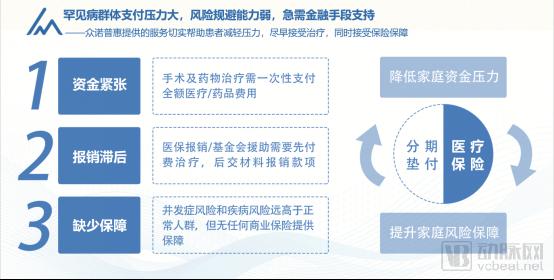
Currently, Zhongnuo Puhui has also launched public welfare initiatives to serve society and expand its social impact. In particular, it introduced “Zhongnuo Zhenai” to address the challenges of rare diseases, which are characterized by a scarcity of treatments and high costs. Patients with rare diseases face significant financial burdens and have limited capacity for risk mitigation, creating an urgent need for support from medical finance programs. The “Zhongnuo Zhenai” program provides professional, comprehensive solutions for this population, including installment plans for treatment expenses, assistance with health insurance reimbursement, and customized protective insurance, offering all-around services at a “0%” fee rate.
Specifically, for example, Zhongnuo partnered with a foreign pharmaceutical company to launch a credit-based advance payment service for hemophilia medications. Patients with hemophilia in East China have long faced financial pressure due to delays in medical insurance reimbursements for their ongoing treatments. Zhongnuo provided local patients with interest-free, fee-free medical advance payments amounting to tens of thousands of yuan. As most of these patients come from economically disadvantaged families, Zhongnuo’s service effectively alleviated the financial burden during the reimbursement delay period, offering public-interest financial support services to patients with rare diseases, including hemophilia.
In addition to its existing medical installment payment services, customized insurance solutions, and health insurance advance payment services, Zhongnuo Puhui plans to serve all stakeholders in the healthcare sector by focusing on six key areas to build a comprehensive healthcare financial support platform.
The first direction is a solution for patient treatment staging;
The second direction is financial solutions for specialty drugs, specifically tiered financial solutions for marketed self-pay specialty drugs;
The third is a financial solution for medical insurance reimbursement. For treatment costs that cannot be directly covered by medical insurance, patients can enjoy an advance payment service with the same reimbursement amount. For example, when patients receiving medical treatment in other places face short-term financial pressure and the reimbursement cannot be received in real time, Zhongnuo can also provide financial services;
Fourth, customized insurance solutions. Zhongnuo has partnered with multiple insurance companies to design and launch a range of commercial medical insurance products that offer superior coverage and strong market competitiveness, building upon the integration of similar insurance products available in the market. These initiatives have significantly addressed the shortcomings of existing insurance offerings and filled gaps in the market. By sharing risks associated with surgical accidents and hospital-related incidents, and providing tailored insurance services, Zhongnuo leverages its professional expertise in insurance product design to develop customized insurance solutions for potential medical risks within hospitals.
5. Partnering with hospitals to launch comprehensive smart hospital payment solutions, specifically tailored for medical institutions by providing customized “treat first, pay later” payment modules. This approach lowers the financial barrier for patients, enhances their healthcare experience, and equips hospitals with powerful tools to compete in the market and strengthen patient loyalty.
6. Financial Support Solutions for the Retail Sector: As competition intensifies in the retail market for high-cost, out-of-pocket prescription drugs and home-use medical devices, Zhongnuo provides differentiated competitive strategies for medical product retail outlets. By offering installment payment financial tools, it alleviates patients’ burden of lump-sum payments and lowers the purchase threshold for customers.
Zhongnuo Puhui is a financial healthcare payment company. In a sense, it can “cure” diseases, just as the movie *Dying to Survive* puts it: “There is only one disease in this world, and that is poverty.”