

Pinghosw's Tale of Two Cities: From Silicon Valley to Beijing, Empowering 5 Million Global Users with Proprietary Patents in Internet Healthcare
“I’m truly afraid that when I return home, I’ll find my parents have collapsed…” In fact, once parents reach a certain age, every child harbors such concerns. How can one know if their parents are safe while away from home? And in the event of an emergency, can they receive timely medical treatment? In the healthcare sector, there is a significant gap between family “caregiving” and safety “monitoring.”
To bridge this “unbridgeable chasm,” Stanley Wang, a Chinese-American entrepreneur whose ventures have achieved market valuations exceeding $5 billion and who holds more than ten U.S. patents, has proposed a solution and returned to China with Pinghsow (Yi Bo Tong), the company he founded in Silicon Valley.
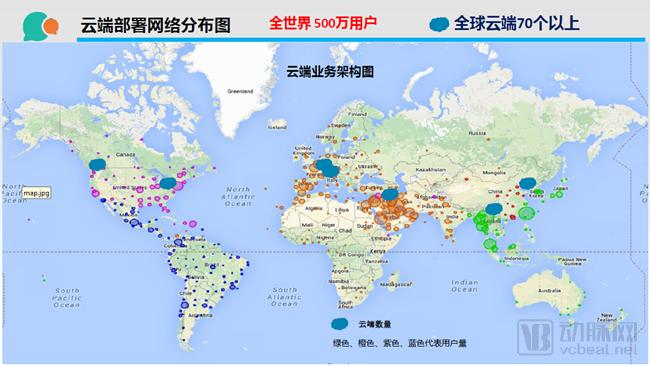
Pinghosw is dedicated to providing telemedicine systems and building data integration platforms. Founded in Silicon Valley, USA, in 2011, the company later relocated its headquarters to Beijing to oversee R&D, design, and domestic market promotion in China. Meanwhile, it maintains a branch in Silicon Valley responsible for monitoring cutting-edge international technologies, product localization, and overseas market promotion. Its business now spans the globe.
Such a large-scale strategic layout was initiated under the leadership of a team of “engineering-minded” professionals. Pinghsow’s founding team consists entirely of tech-savvy experts, all of whom are returnees from overseas with prior experience at major technology and semiconductor companies such as Intel, AMD, Nvidia, and LSI.
To learn more about this company that has “crossed the ocean” from Silicon Valley, the reporter called Stanley Wang.
With the widespread adoption of mobile health terminals, the development of the Internet of Medical Things (IoMT), increased participation by healthcare institutions, and the continuously growing elderly population in China, the number of individuals with chronic diseases is rising rapidly, making telemedicine a highly contested strategic frontier.
However, acquiring patients' health data in telemedicine has become a "challenge." Most current smart medical devices rely on communication methods such as Bluetooth and Wi-Fi, which have many limitations, primarily manifested as:
I. Inability to Operate Independently: Bluetooth- and Wi-Fi-based devices are heavily dependent on smartphones or Wi-Fi networks. In scenarios where users are temporarily separated from their smartphones or where no Wi-Fi network is available—such as when users forget their phones or the phone battery is depleted—smart medical and health devices fail to transmit data in a timely manner.
2. Complex Configuration: Reconfiguration is required every time the smartphone is replaced or when connecting to a new Wi-Fi network, creating a significant barrier for many users;
III. Security Risks: Wi-Fi networks pose significant security risks, and transmitting data over Wi-Fi can easily lead to the leakage of sensitive personal privacy information;
IV. High Power Consumption: Although some smart medical and health devices based on 2G/3G/4G networks are user-friendly, they suffer from high power consumption. Wearable devices such as smartwatches and continuous blood pressure monitors that are used frequently or worn on the body require charging daily or every few days, which reduces users’ willingness to adopt them.
These issues have hindered the development of remote health management. Addressing the aforementioned pain points, Pinghsow Inc. has independently developed over a dozen patented technologies, dedicated to providing patients with an enhanced testing experience.
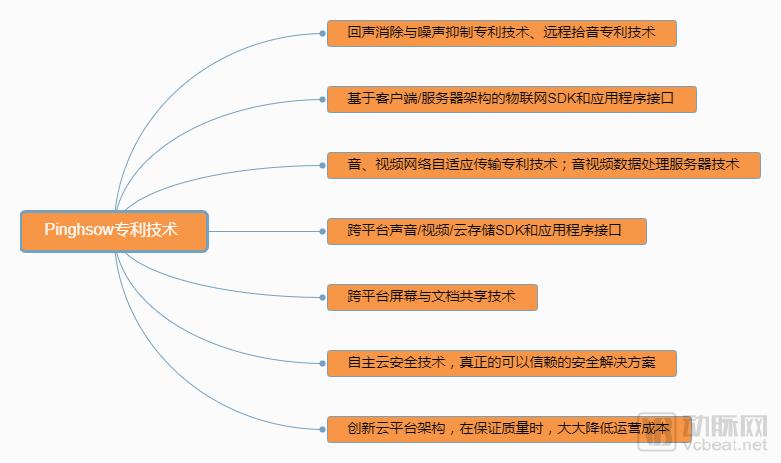
Patent Status of Pinghsow
Stanley Wang particularly emphasized two key aspects: first, real-time data upload. This technology enables proactive data transmission to the cloud platform and can only be implemented on Pinghsow’s proprietary cloud platform due to its reliance on various IoT protocols and cloud-based data distribution mechanisms. Second, WebRTC-based audio and video bandwidth processing, which features adaptive QoS bandwidth management to ensure consistent mobile quality across varying network conditions, thereby optimizing performance.
These patented technologies have laid a solid foundation for Pinghsow’s telemedicine and data integration.
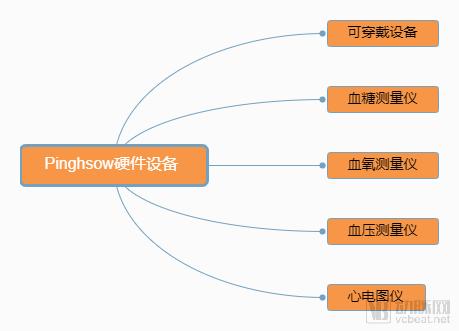
Pinghsow provides remote medical services for the elderly by leveraging the synergy between hardware devices and its service platform:
The pain point of telemedicine lies in the inability to obtain various physiological indicators of patients. Relying solely on patients' descriptions of their conditions increases the risk of diagnostic errors by physicians, thereby compromising treatment efficacy. Currently, medical devices available on the market are relatively expensive, with prices reaching as high as 18,000 yuan. Pinghsow Inc. has developed a home-use device that can be purchased for approximately 1,000 yuan.
Pinghsow’s hardware devices offer customers an affordable solution for measuring various health indicators at home, with data directly uploaded to a cloud platform for real-time access by physicians and family members to help prevent dangerous situations. Its service platform connects with top-tier (Grade 3A) hospitals across China, providing live video consultations and online medical services.
Patients need to turn on the measurement device, wait for the connection to be established, and then begin measuring their physical condition. Upon completion of the measurement, the report shown in the figure will be displayed.
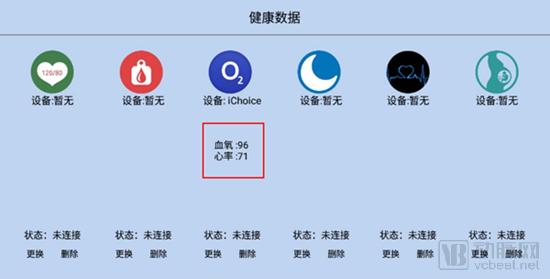
Measurement Results Chart
Smart medical health devices collect various patient characteristic data and upload it to the medical cloud platform. The medical cloud platform primarily includes gateways compatible with diverse medical devices, standardized databases, and business service modules for chronic disease management, follow-up visits, and health guidance. Through the medical cloud platform, physicians can remotely monitor patients’ health data in real time. Upon detection of any abnormalities, they immediately contact the patients to identify the causes and provide relevant health guidance recommendations.
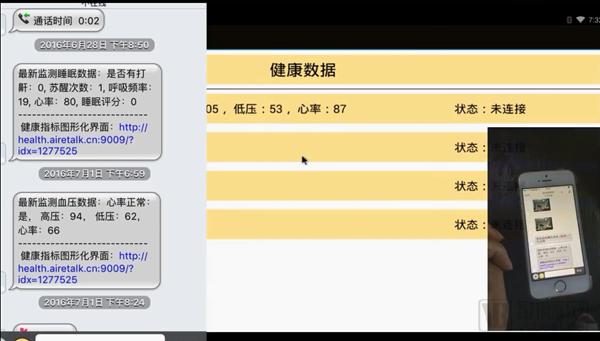
The platform records each of the patient’s measurements and generates trend charts to help patients monitor changes in their health status. It alerts them to seek timely medical attention when an overall downward trend is detected, thereby providing proactive health management.
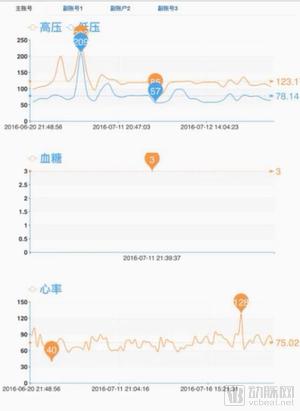
Trend Chart of Patient's Physical Condition Records
Through the cloud platform, physicians can monitor users’ health data in real time and provide a series of services—including chronic disease management for conditions such as hypertension and diabetes, exercise-based health management, health guidance, and follow-up care—leveraging big data analytics to achieve highly accurate health assessments.
When patients feel unwell at home, they can use the one-touch call feature to connect with a doctor at any time. The doctor reviews the patient’s health data, assesses the condition through consultation, and promptly formulates a diagnosis and treatment plan, which is also sent to the emergency contact’s mobile phone.
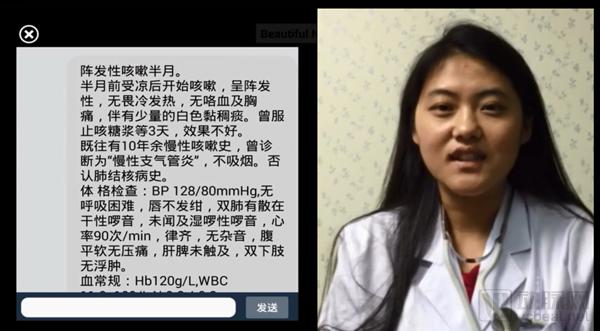
Patient Healthcare Utilization
Can entering the “red ocean” of elderly care through telemedicine truly generate profits?
Stanley Wang believes that, given the current payment methods, the elderly generally have relatively low incomes and often still need to rely on government support. This is not only the case in China but also in the United States.
The evolution of Pinghsow’s business model serves as the best example in this regard. Pinghsow’s products were officially launched in October 2016 and were piloted by the Beijing Disabled Persons’ Federation and the Douzhen Volunteer Federation in Fengtai District. In collaboration with the Qingyuan Nursing Home in Daxing, Beijing, Pinghsow implemented its home-based elderly care service system to monitor health measurement data for seniors and provide door-to-door services, including emergency alerts and one-touch calling to private physicians and family members. This significantly improved service efficiency and quality. Additionally, the integration of HD 1080P video calling has bridged the distance between the elderly and their families and friends, enabling around-the-clock service.
Based on the aforementioned pilot programs, there should be no obstacles to promoting this project within B-side entities serving the elderly, such as communities, nursing homes, and senior living communities. Indeed, in terms of “essential demand,” the elderly population represents a substantial market. However, in practice, since these B-side entities largely rely on government funding, every expenditure requires governmental approval. Consequently, they typically procure only a dozen or so units, reducing the initiative to a formalistic display rather than achieving widespread adoption.
After facing setbacks in the elderly care market, Pinghsow has refocused on its core medical offerings. Leveraging the favorable policy environment for internet hospitals introduced in April, the company has extended its projects to medical institutions and hospitals. In its further exploration, Pinghsow aims to provide equipment free of charge while charging for services, thereby increasing usage volume and ultimately achieving its goal of big data collection.
Currently, leading internet healthcare platforms in the market, such as Chunyu Yisheng (Spring Rain Doctor) and Weiyi (Guahao.com), primarily serve as resource integration platforms connecting hospitals and physicians. Benefiting from rapid development in recent years, they have amassed extensive hospital and physician resources, granting them a significant competitive advantage.
However, most of these companies focus primarily on mobile phones and computers, lacking cloud-based solutions and set-top box devices. Concentrated on internet healthcare, they are unable to connect to the home environment and also lack hardware support. In contrast, Pinghsow Inc. can provide devices that upload information to cloud platforms, connect with smart homes and the Internet of Things (IoT), integrate with hospital video systems, and deliver physical examination data.
Addressing the current pain points of internet healthcare, Pinghsow Inc. aims to collaborate with internet healthcare enterprises by leveraging its hardware advantages to achieve shared goals.