

SoYoung's CEO Jin Xing Outlines Strategic Shift from Traffic Platform to Professional Medical Aesthetics Service Provider with Recruitment of 100 Medical Experts
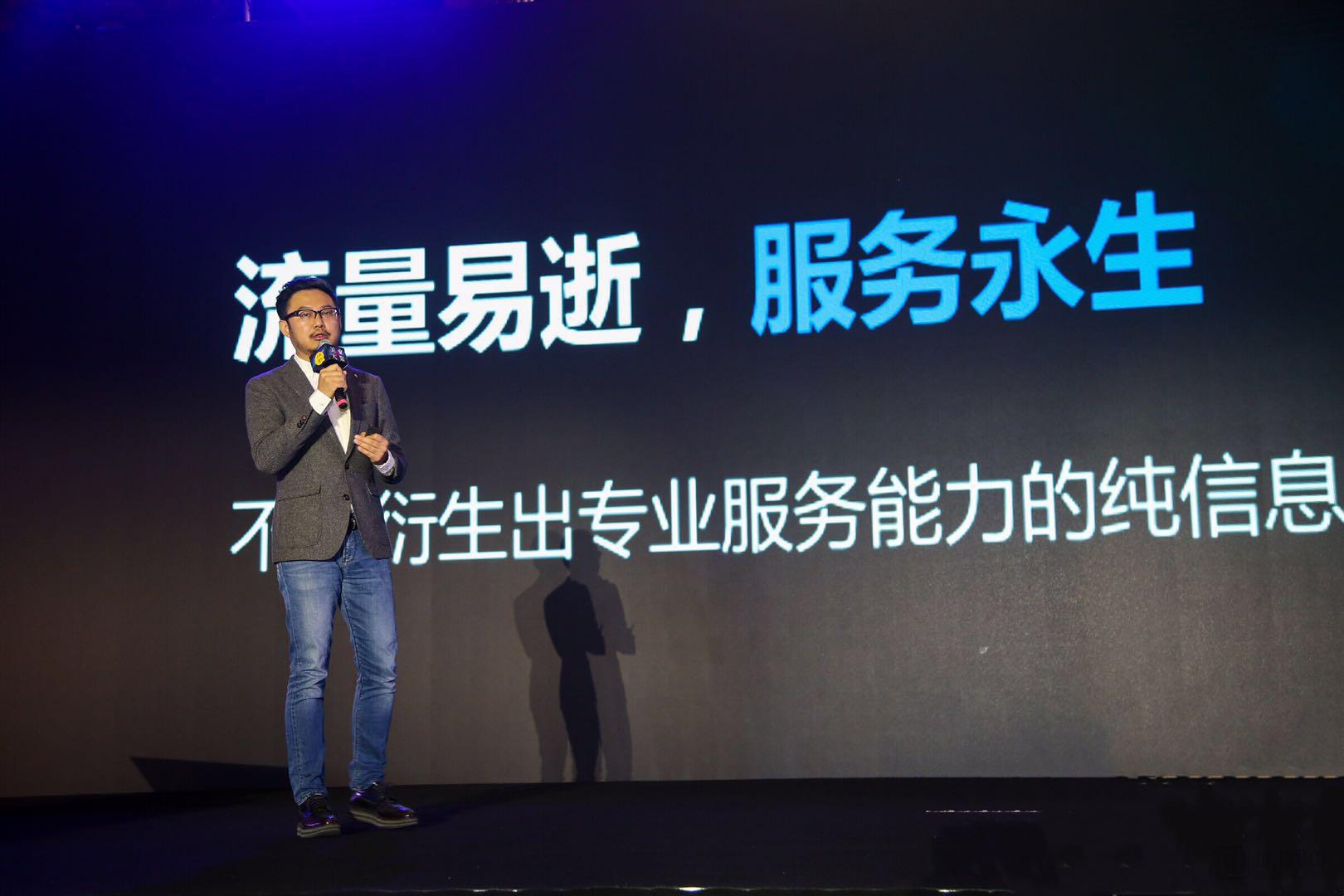 The image above shows Jin Xing delivering a speech at the 2018 Annual Summit of the Beauty Industry Grand Gathering (Image source: Provided by the company)
Autumn Harvest, Winter Storage, Spring Sprouting: The Cyclical Nature of Business Evolution. As the previous wave of entrepreneurial fervor subsides, it also signals the incubation of new opportunities. How are leading companies navigating this shift? And where will the next wave of opportunities emerge?
On October 15, 2018, at the Annual Summit of the Second Beauty Industry Grand Gathering, SoYoung founder and CEO Jin Xing delivered a speech titled “Why SoYoung Is Recruiting 100 Medical Professionals,” in which he presented SoYoung’s strategic thinking and business layout.
Founded in 2013, So-Young operates within the high-growth medical aesthetics industry, where China’s market has achieved an average annual compound growth rate exceeding 20% over the past five years. On the other hand, as a platform-based business with relatively low entry barriers, it faces intense competition. Nevertheless, So-Young has advanced with ease to become a leading platform, making its strategic thinking and business layout worthy of attention.
The main content of Jin Xing's speech can be summarized into the following four points:
First, selling traffic was once a lucrative business, but in the future, pure information-matching platforms that fail to develop professional service capabilities will be eliminated;
Second, the service industry in China is on the verge of a major boom, and possessing professional service capabilities will become a competitive barrier for enterprises;
Third, SoYoung is initially recruiting 100 specialized professionals as it transitions from an internet company to a medical enterprise, aiming to establish itself as a professional service-oriented company and promote the industry’s return to its medical essence;
Fourth, within three to five years, the proportion of in-house professional talent at So-Young is expected to reach 30%-50%. With the mission of “making everyone more beautiful and healthier,” So-Young provides warm and professional services to its users and customers.
Below is a summary of Jin Xing’s speech, compiled by VCBeat (WeChat ID: vcbeat):
Recently, many beauty industry executives have been asking for our perspective on So-Young. In the minds of many such executives, So-Young is often perceived merely as a platform—a company that sells traffic, similar to Baidu. So, how do we view ourselves? Today, I will not discuss our products or business model; instead, I will share some of our reflections and overarching strategic logic. First, I pose a question: Is selling traffic truly a good business? To answer this, we must first clarify what constitutes a “good business.”
What Attributes Should a Good Business Possess?
Businesses that generate revenue with minimal effort can be considered sound ventures. For instance, owning mineral or oil reserves is undoubtedly a lucrative business. Why? First, there is broad demand; second, these resources are scarce and non-renewable; and third, they offer strong sustainability.
From these perspectives, selling traffic can also be a lucrative business. Take Baidu, for example: although it is widely regarded as having fallen behind within the BAT trio, it remains China’s third-largest internet company and has carved out a critical pathway for online access, as we rely on Baidu to reach many websites.
However, the business of selling traffic differs from selling oil in one key aspect: I believe its longevity may be limited. This is my third point—its sustainability could be problematic. Therefore, while selling traffic was once a lucrative business, it may become increasingly difficult to sustain in the future. I have three reasons for this view.
First, the decentralization of traffic is an irreversible trend."In the past, people relied on search engines to find information online, but today they open a variety of apps. Even more concerning is that some individuals can now generate their own traffic—a deeply alarming development."
Today, we see that an increasing number of media platforms are providing various means to generate traffic. For instance, creating accounts on WeChat Official Accounts, Weibo, Douyin (TikTok), and Toutiao, or simply posting on WeChat Moments, can all drive varying levels of traffic. If earning revenue through search engines is akin to collecting tolls because there was only one route, then how can tolls continue to be collected when many routes emerge in the future? If every household could produce its own oil, would oil still hold value? Clearly, it would not.
Second, traffic platforms are constantly evolving.Today, many traffic platforms are at their peak, but “traffic” has gone by many different names in the past. In the era when television reigned supreme, it was called viewership ratings; in the age of print media, it was known as circulation. Thus, over the past two decades—from the early days of radio, newspapers, and magazines to the later rise of web portals, blogs, and social networking sites—a closer look reveals that traffic platforms have been in constant flux, with no single platform enjoying enduring dominance. This has been the case in the past, and it is likely to remain so in the future.
Third, consumer demands are upgrading.What is the "traffic business"? It simply means placing information here to draw my attention. In the past, when information was extremely scarce, this model held significant value. However, we now live in an era of information explosion, where information has become not merely fragmented, but pulverized. The issue today is not a scarcity of information, but an overwhelming deluge of it. Consequently, consumers no longer need a mere influx of raw information. I believe that the business model of simply selling traffic will increasingly shrink.
Traffic Fades, Service Endures
I believe: Traffic is fleeting, but service is eternal. In the future, pure information-matching platforms that fail to develop professional service capabilities will be eliminated.
What is professional service capability? For example, in its early days, Didi opened its platform to taxis. If you wanted to hail a ride, it would show you which taxis were nearby, and you would arrange the pickup yourself—this was merely information matching. Later, however, Didi launched its Premier service, for which it directly recruited, screened, trained, and paid drivers, established standards even for the vehicles used, and implemented an integrated set of service standards. This constitutes the provision of professional services. Therefore, this isFrom Simple Information Matching to Professional Services。
For example, in the early days of Meituan-Dianping, the platform featured extensive restaurant information, representing a simple case of information matching. However, today, more than 60% of Meituan-Dianping’s revenue comes from food delivery services. Within Meituan’s ecosystem, group-buying offers information matching, while food delivery provides professional services.
There are numerous examples like this, including used-car e-commerce platforms that frequently secure hundreds of millions of dollars in financing. Why are these used-car e-commerce platforms so highly valued? Because they are not merely facilitating information matching; instead, they have begun to provide services.
I believe this is a trend. If you still adhere to traditional thinking today, such as mere information matching, you are likely operating with a mindset from a bygone era. Take Meituan’s foray into ride-hailing as an example: it was launched with great fanfare and high public expectations, yet it quickly faded away. Why? Because ride-hailing, particularly premium ride services, is not a volume-driven business based solely on information matching; it is a professional service. Such professional services require the continuous accumulation of specialized talent and refinement over time, thereby building and deepening the company’s competitive moat.
What Will the Future Business World Look Like?
The Future Business Society: I Call It the New Service Era
In the future, each of us will unconsciously receive services from a multitude of individuals, including food delivery riders, courier personnel, ride-hailing drivers, domestic helpers, property managers, real estate agents, and providers across various training and beauty service platforms. In daily life, one is inadvertently served by many people. I believe this represents a future trend in commerce: everyone enjoys services provided by many others, while simultaneously serving others themselves.
This applies to individuals, and it also holds true for enterprises. In the future, a company will have many other firms providing various services across different aspects. For major brands such as Nike and Adidas, outsourcing is prevalent in several core areas, including design, production, and sales.
If a shoe company outsources its design, production, and sales, what kind of company is it? What is its core competitiveness? In essence, it leverages its brand and corporate culture, while outsourcing everything else. We believe this represents a prototype for the future enterprise.
Therefore, I believe that,The service industry in China is on the verge of a major boom.. Once a country’s economy reaches a certain level of development, the tertiary sector will inevitably rise. In a city-state, the tertiary sector typically accounts for more than 70% of GDP. However, China’s GDP is still largely supported by real estate and manufacturing; from this perspective, China’s service sector as a whole is poised to enter a significant phase of development.
SoYoung is, in fact, a professional services company.
Speaking of this, many professionals in the beauty industry feel a bit anxious: if you are providing the services, then what will we do?
We actually need to invest significant time and effort into initiatives that hospitals, physicians, and manufacturers are less likely to undertake, such as developing aesthetic evaluation systems, graphic and image processing, AI-powered consultations, post-operative care calendars for all surgical procedures, a medical aesthetics encyclopedia, equipment databases, material databases, pharmaceutical databases, user research, new media promotion, and financial leasing.
We are well aware that many products, once developed, are often replicated by other companies. Nevertheless, we remain willing to invest substantial time in undertaking tasks that others may be reluctant to pursue or tend to overlook, as we believe that excelling in these areas is of critical importance.
Many people hope that the entire industry can return to the essence of healthcare, but this is difficult to achieve. When a doctor has to spend a significant amount of time thinking about how to compete and promote services, it becomes impossible for them to focus on the core principles of medical practice.
Therefore, SoYoung aims to become a professional service provider, enabling doctors to devote their time and energy to advancing medical techniques, allowing institutions to focus on precise positioning and internal management, and empowering manufacturers to concentrate on research and development. The intermediary industry connectivity services will be handled by SoYoung, as we possess greater expertise.
If doctors, hospitals, and manufacturers are likened to the stars in the sky, then what is SoYoung? Physicists have found that the gravitational force generated solely by the mass of visible galaxies within a galaxy cluster is insufficient to bind them together. Therefore, a substantial amount of dark matter must exist within galaxy clusters to maintain celestial stability.
Therefore, we aspire to become the dark matter among the stars—doctors, hospitals, and manufacturers. Though imperceptible, we aim to forge connections between these luminaries, forming a stable structure that shines brilliantly.
The industry must join forces, with the ultimate goal of serving consumers. Therefore, So-Young’s mission is consumer-centric: “to make everyone more beautiful and healthier.” It may sound like an overly ambitious slogan, but I believe a company’s mission is akin to an individual’s dream; dreams that escape ridicule are hardly worthy of respect. We hope this mission will guide our path forward.
Why “Make Everyone More Beautiful and Healthier”?
First, medical aesthetics was once a luxury affordable only to wealthy socialites. Today, thanks to the rapid development of the industry, continuous technological advancements, rapidly declining costs, and steadily improving safety profiles, ordinary wage earners can now enjoy the benefits brought by these innovations. In the future, further development and continued cost reductions are expected to make safe and convenient access to beauty and wellness available to everyone.
Second, everyone deserves to become more beautiful and healthier. However, due to various factors today, access to aesthetic enhancements through technology remains a privilege enjoyed by only a few. Our vision is to become a trusted beauty and health technology company, providing warm and professional services to our users and customers.
So I am here today to recruit talent. SoYoung is not an internet company; in the future, we should actually be more of a medical company. We need to extensively recruit professionals with backgrounds in medicine or the aesthetic industry. IWe hope that in three to five years, the proportion of specialized professionals will reach 30% to 50%.%, professionals can access various departments of So-Young, deeply integrating with the business modules of each department to provide more specialized services to consumers and partners.
VCBeat has made additions and deletions without altering the original intent of the guests.