

LifeShine Files IPO Prospectus: Pioneering Standardized Medical Travel to Japan with Partnerships Across 150+ Healthcare Institutions
“Bring a serene approach to life to everyone, filling every existence with sunshine.”
——LifeShine
Japan's medical technology is second only to that of the United States. Given its proximity to China, Japan is an excellent choice for domestic patients seeking medical treatment abroad.
However, the early stages of a market boom are often characterized by chaos. Data shows that the overseas healthcare sector is plagued by irregularities, with medical examination centers emerging that “specialize in health checkups for Chinese patients,” while 90% of “medical intermediaries” outsource various aspects of their services, severely undermining patient experience.
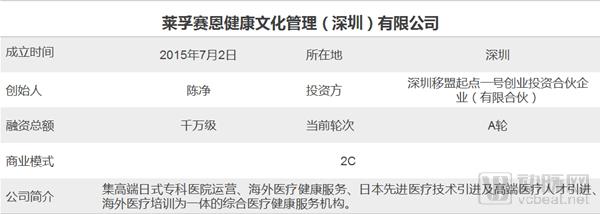
In 2015, Chen Jing founded LifeShine, dedicated to comprehensively aligning high-quality medical resources between China and Japan, bridging domestic and overseas medical service channels, and introducing cutting-edge global medical technologies into China.
LifeShine has established two professional teams in China and Japan to provide end-to-end services for patients seeking medical treatment in Japan, covering the entire process from health check-ups to clinical care. By employing professional medical translators and setting up green channels, LifeShine ensures that patients can be admitted for treatment within 30 days.
VCBeat (WeChat: vcbeat) has learned that LifeShine has signed contracts with more than 150 medical institutions in Japan and with over 100 Japanese physicians. The company serves more than 130 oncology patients and approximately 100 health check-up patients annually. In 2016, the project secured tens of millions of RMB in Pre-A financing from Yimeng and Junxin.
Establishing a Standardized Process for Medical Checkups and Treatment in Japan
Driven by profit-seeking, the industry of medical check-ups and healthcare services in Japan is characterized by extreme variability in quality. Due to widespread outsourcing across various stages, it is impossible to ensure that the entire treatment process—from interpretation during medical examinations, translation of reports, communication with clients, to providing secondary consultations for their inquiries—is seamlessly and accurately integrated, which severely undermines patient experience.
To enable Chinese citizens to truly benefit from local Japanese medical services, Chen Jing established a team in Japan in 2012, dedicated to forging partnerships with professional and accredited healthcare institutions in Japan. After an initial screening, the team visited 133 medical facilities, personally experiencing various forms of physical examinations and medical procedures, and compiled reports that stacked up to half a meter high.
After two years of effort, the first hospital contract was signed in 2015 with Dokkyo Medical University Hospital (the affiliated hospital of Dokkyo Medical University, Japan’s largest private medical university). Only then was LifeShine officially established, with independent companies set up in China and Japan, each engaging its own law firm.
Under the leadership of professors from Japan’s top medical universities, the LifeShine team has established a standardized service protocol. Every step is performed directly by LifeShine, with no outsourcing whatsoever, ensuring that patients receive a healthcare experience consistent with that of local residents in Japan.
The steps involved are as follows:
Domestic business inquiries; Japanese medical translators present translated case records to referring physicians for review; physicians determine the necessity of traveling to Japan for a health check-up; LifeShine arranges for clients to undergo health examinations in Japan; upon completion, the examination reports are translated and mailed to the client; if further treatment is required, LifeShine will coordinate with the partner hospital, enabling the client to receive diagnosis and treatment through a green channel.
LifeShine is involved in the entire process, from the client’s initial consultation in China to the completion of all examinations and treatments. Based on each client’s specific circumstances, at least two work meetings are held at key stages to confirm arrangements before and after each phase.
All medical interpreters possess a certain medical background and have been personally vetted by professors; handovers are facilitated through dedicated hospital green channels; and meals are jointly selected and customized in collaboration with the hospital.
LifeShine’s health examination report goes beyond mere translation. After the initial translation, designated specialists communicate directly with physicians via phone or email to verify the accuracy of the wording. The final deliverable provided to the client is a comprehensive approximately 50-page report that includes the original Japanese report, the direct translation, easy-to-understand explanations enhanced with illustrations and text, and an exclusive follow-up treatment plan finalized in consultation with the physician.
In accordance with the treatment plan, LifeShine further provides clients with an integrated green channel service that includes medical visas, Certificates of Eligibility (guarantee letters signed by Japanese sponsors), and hospital invitation letters. This facilitates patient admission for treatment within 30 days, while also providing on-demand medical translation services to ensure accurate and precise communication of physicians’ instructions to patients.
Zero Medical Disputes: Japanese Hospital to Open in China
LifeShine boasts a 100% repeat purchase rate and a 100% referral rate. Chen Jing stated that in the three years since its establishment, LifeShine has not had a single complaint or medical dispute. This track record is also the reason why LifeShine was able to secure tens of millions in financing before becoming profitable.
Regarding its business model, LifeShine explicitly stipulates that it “does not charge patients a single cent for medical services,” with patients settling their medical fees directly with the hospitals. The company’s revenue is derived from service fees, translation fees, and other charges. Chen Jing stated that although this approach yields lower profits per transaction, it enables the company to serve more patients and expand its scale at an earlier stage.
LifeShine: To facilitate patient access to medical care and reduce the burden of travel, Chen Jing decided to establish a fully Japanese-style specialized hospital in China (Shenzhen). The initiative involves comprehensively introducing Japan’s cutting-edge medical technologies and high-end clinic operational management models, engaging Japanese specialists for long-term on-site consultations, and offering remote diagnostic services connected with Japanese medical advisors to enable secondary referrals between domestic and international facilities. LifeShine is committed to creating a comprehensive, multi-dimensional, and high-quality healthcare service environment for the public.
The project is currently raising funds. The hospital is expected to launch by this time next year.