

PAREXEL and The Economist Intelligence Unit Release Report: Four Innovative Approaches Transforming Clinical Drug Development
Recently, PAREXEL International Corporation, a global leader in biopharmaceutical services, jointly released the thematic report “Innovation Is Imperative: The Future of Drug Development” with The Economist Intelligence Unit. The report explores the challenges currently facing global pharmaceutical R&D innovation and innovative solutions to address them.
The report indicates that four innovative approaches—adaptive trials, patient-centric trials, precision medicine trials, and real-world studies—have a positive impact on the drug clinical trial process, probability of market approval, and formulary inclusion. The application of these innovations can increase the probability of drug market approval by 10%–21%.
In key therapeutic areas—neurology, oncology, and rare diseases—drugs developed using these innovations are more likely to meet regulatory approval standards, with the average probability of market launch increasing by 16%. Oncology drug development is most significantly impacted by these innovations, showing a 33% increase in the likelihood of market approval.
Following the release of the report, VCBeat (WeChat ID: vcbeat) interviewed several senior executives at PPD. They stated that, as a global leader in innovative biopharmaceutical services, PPD is committed to driving innovation in China and worldwide. Its various projects focus on addressing challenges in global drug development and fostering the growth of the life sciences ecosystem, thereby providing patients with faster and more effective treatments and medications.
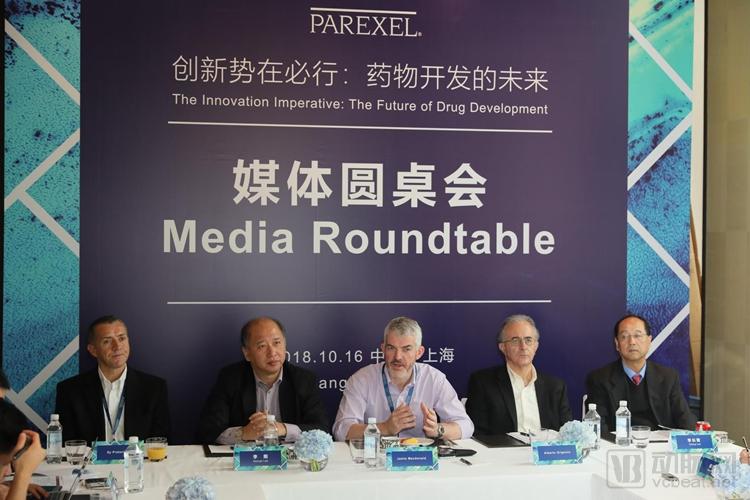
Parexel Media Roundtable, photo provided by the company
Jamie Macdonald, CEO of PPD (center)
Li Gang, Vice President of Clinical Research Operations at PPD, Head of China Region (second from left)
Alberto Grignolo, Vice President of PPD’s R&D Strategic Consulting Division (second from right)
Sy Pretorius, Senior Vice President and Chief Medical & Scientific Officer of PPD (left)
Li Changqing, Vice President of the R&D Strategic Consulting Department for PPD Asia Pacific (far right)
Parexel pays particular attention to the needs of the Chinese market and enterprises. CEO Jamie Macdonald stated, “In China, Parexel does more than just assist Chinese pharmaceutical companies in conducting clinical trials; we also address their needs on a global scale, providing support in areas such as drug commercialization, regulatory approval, and inclusion in national reimbursement lists. If Chinese pharmaceutical companies seek to expand their global operations, Parexel is well-positioned to offer extensive support and assistance.”
Jamie Macdonald stated that PPD is a global contract research organization (CRO) established in the early 1980s, primarily serving biopharmaceutical companies by assisting them with drug development and commercialization.
Over the past few decades, PPD has achieved remarkable success. Currently, 99% of the top 200 best-selling biopharmaceutical products on the market were developed with PPD’s assistance; the company maintains collaborative partnerships with the world’s top 50 biopharmaceutical enterprises, providing support for more than 2,300 clinical projects across 14 therapeutic areas.
According to igeaHub data, PPD’s revenue reached $2.441 billion in 2017, ranking it fourth among global CROs (Contract Research Organizations).
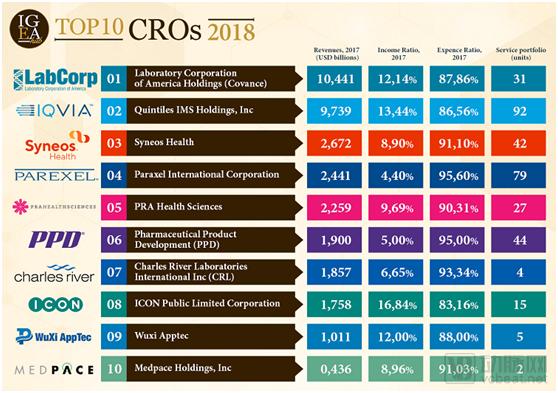
Source: igeaHub, VCBeat
Li Gang, Vice President of Clinical Research Operations and Head of China at PPD, pointed out that PPD had already conducted clinical trials in China as early as 1999, formally registered a company in Shanghai in 2002, and has since accumulated 19 years of operational history. PPD maintains offices in Beijing, Shanghai, Guangzhou, Chengdu, Shenyang, Taipei, and Hong Kong, with employees present in more than 20 regions across China. All international services offered by PPD have been introduced to the Greater China region. To date, PPD employs over 1,400 staff members in Greater China, a number that continues to grow.
In recent years, competition in the Chinese market has been intensifying, with a growing number of biopharmaceutical companies and biotechnology enterprises engaging in the development of innovative drugs. This trend has created increasing opportunities for global CROs such as PPD.
In addition to clinical trials, PAREXEL offers PAREXEL Informatics products, providing digital platforms for clinical trials, such as data capture and patient randomization systems, as well as central imaging systems. In this area, PAREXEL is a global market leader. The company has also introduced these services to China, leveraging these digital solutions in its support of both multinational and local pharmaceutical companies.
In terms of university collaborations, PPD has partnered with Shenyang Pharmaceutical University by incorporating data processing for clinical drug trials into their curriculum and providing training through dedicated staff. PPD also gives priority to recruiting outstanding graduates from the university. With over 300 employees in Shenyang, it is PPD’s largest office in China, many of whose staff members were jointly trained through this collaboration with Shenyang Pharmaceutical University.
Alberto Grignolo, Vice President of PPD’s R&D Strategic Consulting Division, interpreted the report jointly released with The Economist Intelligence Unit. The backdrop to the study is that new drug development is becoming increasingly “expensive” and “difficult.” The high costs are primarily driven by factors such as the risk of drug failure, growing complexity in diagnostic testing technologies, rising costs of comparative trials, and heightened regulatory data requirements.
Alberto Grignolo pointed out that the research and development (R&D) of new drugs is becoming increasingly difficult and expensive. The R&D costs doubled between 2003 and 2016, and it currently takes an average of 12 years for a new drug to go from discovery and development to market launch. If the current rate of increase in drug R&D costs continues, the estimated cost of drug development is projected to exceed $20 billion by 2043.
Concerns about rising drug development costs are not limited to countries with two or three decades of experience in pharmaceutical R&D; they have also emerged in emerging markets such as China. The scope for innovative work currently feasible in China is likewise influenced by the high costs of new drug development. Accordingly, this report explores whether innovative trial designs can help enhance the efficiency of drug development, reduce its costs, and deliver new therapies to patients more quickly and effectively.
The Economist Intelligence Unit collaborated with an interdisciplinary panel of drug development experts to conduct a survey of various innovations. The panel’s discussions ultimately identified four innovative approaches with the most positive impact on the sustainability and beneficial improvement of drug development: adaptive trial designs, patient-centric trials, precision medicine trials, and real-world data.
Specifically, adaptive trial designs allow investigators to pre-specify potential modifications to the study protocol and implement them as needed. Protocol amendments may include adjustments to sample size, drug dosage, and patient selection criteria. Such flexibility enables investigators to modify the trial in response to emerging results, thereby reducing waste and preventing premature trial termination.
Patient-centric trials are those oriented toward engaging patients in the design and execution of the study. Such trials aim to align closely with patient needs, thereby encouraging patient participation. Research in the United Kingdom and the United States has found that only one-third of clinical trial sites are able to fully enroll their target participants, while approximately half of the sites are forced to extend their recruitment periods. To increase participant enrollment, it is advisable to involve patients in the trial design and implementation processes—for example, by leveraging wearable devices for remote data collection to attract participants and by promoting the thoughtful design of the trial within patient communities.
Precision medicine targets known genetic, molecular, or cellular biomarkers. These can be tailored to individual characteristics, thereby providing more personalized treatment approaches. Precision medicine trials require the incorporation of biomarker use into their design. The potential value of precision medicine has been recognized by major regulatory agencies. The EMA, FDA, and PMDA all encourage the banking of DNA samples during clinical development.
Real-world data (RWD) refers to information derived from diverse sources outside the context of traditional clinical trials, including electronic health records (EHRs), insurance claims and billing data, product and disease registry data, as well as data collected through personal devices and health applications. Researchers can leverage registry data to recruit participants, establish “virtual” or “historical” control groups, or utilize wearable devices for data collection. The use of real-world data has grown steadily since 2008, though it has been primarily applied in post-marketing pharmaceutical studies.
The results presented in the report clearly demonstrate that moderate innovation can and does impact drug development and market access, as evidenced by shortened patient recruitment timelines, increased probability of market launch, and enhanced likelihood of drugs being included in formularies or covered by medical insurance.
Reducing Patient Recruitment Time: These four types of innovative trial designs can all reduce the time required for patient recruitment. Adaptive trials can shorten patient recruitment time by more than four months; precision medicine trials can reduce recruitment time by several months across the three different therapeutic areas mentioned above; patient-centric trials can cut patient recruitment time by three months; and real-world data can reduce it by one month.
Increasing the Probability of Market Approval: New drugs utilizing innovative trial designs see a substantial increase in their likelihood of market approval, with an average improvement of 10–21%. For drug developers and pharmaceutical companies, this represents a significant enhancement.
Increased Likelihood of Formulary Inclusion or Reimbursement Coverage: Furthermore, drugs that incorporate one or more of these four innovative designs during development have a significantly higher probability of being included in formularies or covered by national reimbursement drug lists.
The Impact of Innovation
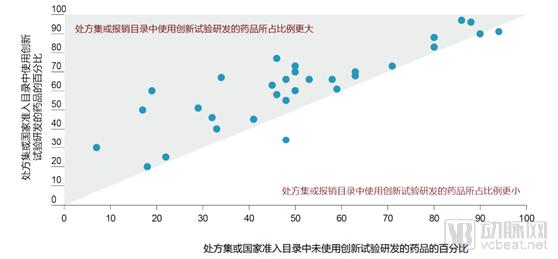
Source: The Economist report
Alberto Grignolo stated that the study also revealed a surprising finding: although innovation has significantly benefited drug development, the adoption rates of these innovative trial designs remain remarkably low. Specifically, the adoption rate for adaptive trials was only 0.6%, patient-centric trials 5.2%, precision medicine trials 13.7%, and real-world data trials merely 0.3%.
“Why should we discuss the significance of innovation for drug development in China? China has already joined the ranks of global innovators. Its accession to the International Council for Harmonisation of Technical Requirements for Pharmaceuticals for Human Use (ICH) in 2017 marked China’s commitment to adhering to ICH guidelines. While China’s integration into the global drug R&D community is welcome news, it also means that China must take further action to place greater emphasis on the impact of innovation on new drug development,” said Alberto Grignolo. PPD urges all stakeholders to take action by embracing innovation, increasing investment in talent development and cultivation, and comprehensively considering the needs of patients, enterprises, and regulatory authorities. Enhanced communication, collaborative innovation, and cooperative partnerships are essential.
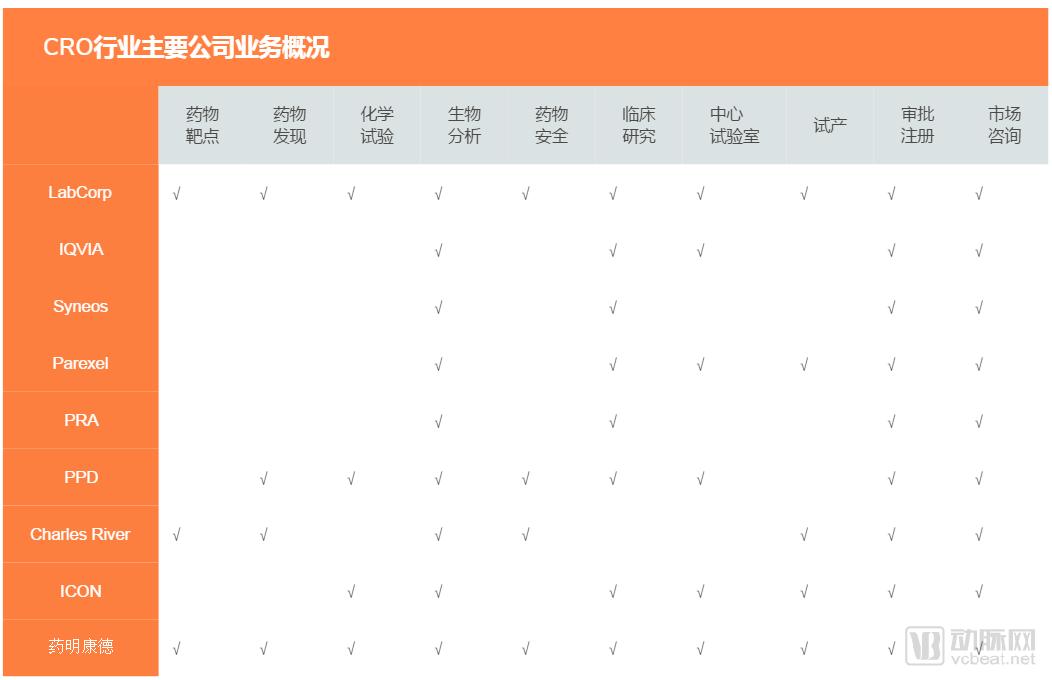
Contract Research Organizations (CROs) are an essential infrastructure in the process of pharmaceutical innovation. By providing specialized services to pharmaceutical companies and R&D institutions during drug development through contractual agreements, CROs transform fixed costs into variable costs, enabling these companies to focus more on building their core competencies.
CRO services encompass preclinical research, clinical trials, technology transfer, and consulting, covering the entire process from new drug discovery and clinical development to regulatory registration. As the CRO market matures, diversified business models such as contract manufacturing and industry-academia collaboration have emerged, making CROs an increasingly vital niche within the pharmaceutical and biotechnology sectors.
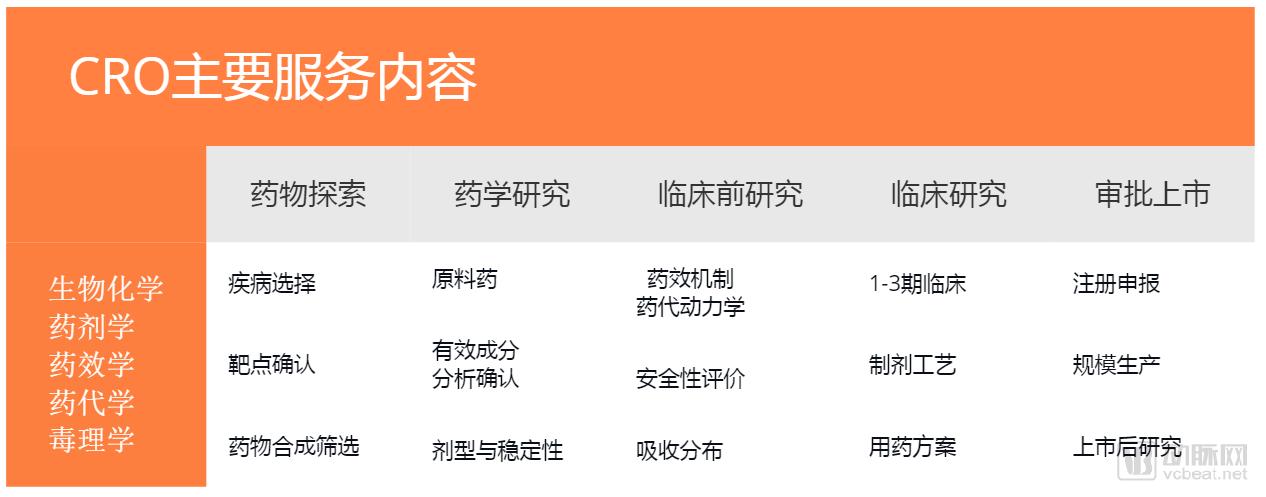
Source: VCBeat
According to a research report by China Merchants Securities, the global CRO market is currently valued at nearly $40 billion, with a compound annual growth rate (CAGR) of 13%. The top 10 companies account for 60% of the market share. By business segment, Phase I–IV clinical trials account for 11%, 13%, 21%, and 10%, respectively. Services such as data management, biostatistics, and central laboratory testing are expected to maintain double-digit rapid growth over the next five years. By therapeutic area, oncology holds the largest share at 29% and is projected to remain the leading therapeutic segment in CRO services, with its market share stabilizing at around 30%.
Source: VCBeat
In 2017, the size of China’s CRO market was approximately RMB 30 billion, with an expected annual growth rate of 28%, significantly higher than the global average. According to a research report by China Merchants Securities, the rapid growth of China’s CRO market is primarily driven by the following factors: First, the R&D-to-revenue ratio of Chinese pharmaceutical companies is low, averaging around 6.8%, leaving considerable room for improvement compared to the U.S. average of 15.2%. Second, the CRO penetration rate in China is only 31%, far below the 42% level in the United States. Third, following China’s accession to the ICH, domestic clinical standards need to align with international norms, giving Chinese CRO firms competitive advantages in resources and cost efficiency.
In June this year, multiple national ministries and commissions jointly issued the “Notice on Organizing the Implementation of the Special Project for the Construction of Contract Research and Manufacturing Service Platforms in the Biopharmaceutical Industry,” proposing to launch this special project during the 13th Five-Year Plan period. Through its implementation, the initiative aims to effectively support the research and development (R&D) and industrialization of innovative drugs, striving to achieve the capacity to provide services for the development of more than 100 new drugs annually; enhance the scale, intensification, and overall industrial efficiency of pharmaceutical production; support the growth of a cohort of small and medium-sized enterprises (SMEs) driven by innovation and entrepreneurship; further promote high-quality agglomeration of regional biopharmaceutical industries; and accelerate the cultivation of world-class biopharmaceutical industry clusters. This marks the first time that specialized policy guidance has been formulated specifically for the development of the CRO industry, representing a significant milestone.
Jamie Macdonald also expressed his optimism about the Chinese CRO market. He stated that PPD’s business initially started in North America and Europe, primarily due to the market maturity at the time, including the maturity of clinical trial qualifications and talent. The company subsequently expanded rapidly worldwide, entering Asia first through Japan before extending into other Asia-Pacific countries. Currently, China represents a very large and highly active market, particularly since joining the ICH. Furthermore, China boasts abundant talent and a robust healthcare system.
When establishing its presence in the Chinese market, PPD places significant emphasis on localization strategies, including the aforementioned collaborations with leading medical universities to cultivate talent and the establishment of local teams. Another key focus is strengthening partnerships with domestic investigators, such as forming long-term strategic alliances. PPD also integrates emerging hospitals into clinical trials by providing them with training to qualify more institutions for clinical research and leveraging these sites to recruit a larger patient population. Furthermore, through collaboration with Site Management Organizations (SMOs), PPD facilitates the referral of patients from relatively remote areas or smaller hospitals to larger medical centers for participation in clinical trials.
Of course, competition remains an unavoidable topic, including rivalry with multinational CROs and among domestic CROs. We have observed that Covance, IQVIA, and other major players have successively launched operations in China, drawn by the promising Chinese market. In the domestic landscape, strong competitors include WuXi AppTec, Pharmaron, and Tigermed. Li Gang noted that the domestic CRO market has undergone significant changes in recent years. While competition previously centered on pricing, market maturation has shifted client priorities; price is no longer the primary consideration. Instead, PPD gains a competitive edge through its high standards and quality in CRO services, as well as its capability to conduct global simultaneous clinical trials.
A project leader from the R&D department of a major Chinese pharmaceutical company told VCBeat that, due to the National Medical Products Administration’s announcement on self-inspection and verification of clinical data released in the previous two years, as well as policies implemented in the past two years—such as the consistency evaluation and incentives for innovation in drugs and medical devices—Chinese pharmaceutical companies are placing greater emphasis on standardizing clinical research and improving data management. Overall, demand in this area is rising. Many pharmaceutical companies previously did not prioritize investment in clinical research and lacked the necessary talent and capabilities, leading them to seek consulting services or purchase specialized systems to varying degrees.
“There are numerous domestic enterprises capable of providing CRO services; to my knowledge, there are nearly a thousand such firms. However, their operational scales are relatively small, and industry concentration is low. Apart from a few publicly listed companies and those that have gone public through reverse mergers, most operate on a regional basis. In contrast, foreign pharmaceutical companies offer more systematic and comprehensive service capabilities, making them a preferable choice when higher standards are required.” Companies may select consulting or business services based on the needs of different stages and specific projects. Services provided by both domestic and international CROs can coexist; the market is robust, offering opportunities for all players.
“The choice of services depends on the specific needs of pharmaceutical companies. Increasingly, these companies are seeking value-added services and consulting. For global operations, regulatory approval processes vary by country, necessitating tailored approaches. This involves a wide range of additional services, such as helping pharmaceutical companies enhance the likelihood of drug approval and market launch in different countries and regions—areas where PPD excels.” Even if a company does not plan to expand overseas, PPD can still help elevate its clinical trial standards to a global level by introducing global best practices to the Chinese market.
The vast and rapidly evolving Chinese pharmaceutical market has attracted numerous gold seekers, who, together with local innovative enterprises, are propelling the industry forward.