

Zhejiang's 'At Most One Visit' Healthcare Reform: Policy Design and Implementation Insights from Provincial Health Officials and Hospital Leaders
Recently, the First People’s Hospital of Yuhang District in Hangzhou, Zhejiang Province (hereinafter referred to as “Yuhang District First Hospital”) has drawn widespread attention from industry insiders for its implementation of facial recognition-based medical services across all processes and patient populations.
“Facial recognition for medical visits,” as mentioned here, refers to the ability of both insured and self-pay patients to easily complete all steps of the healthcare process simply by scanning their faces. As a result, Yuhang First People’s Hospital has become the first hospital in China to implement “full-process facial recognition for medical visits.”
According to observational statistics, Yuhang First People's Hospital has implemented facial recognition for a series of in-hospital procedures, including patient registration, outpatient appointment scheduling, and payment, with an average completion time of just 60 seconds, significantly reducing patients' medical visit duration. Since the pilot launch one and a half months ago, the hospital has served 1,000 patient visits using this facial recognition-based healthcare service, with cumulative payments exceeding RMB 34,000.
Yuhang First Hospital was the first to achieve this breakthrough, thanks not only to technologies from Alibaba Cloud, Alipay, and the hospital itself, but also to Zhejiang Province’s requirement for healthcare services to adhere to the “At Most One Visit” initiative.
To comprehensively present Zhejiang’s “At Most One Visit” healthcare reform from multiple perspectives, VCBeat (WeChat: vcbeat) conducted multi-faceted interviews at the “4th Zhejiang International Health Industry Expo” in Hangzhou.
Ma Weihang, Deputy Director of the Zhejiang Provincial Health Commission; Zhu Yanfeng, Deputy Director of the Hangzhou Municipal Health Commission; Zhang Weiqing, Director of the Taizhou Municipal Health Commission; Zheng Yunzheng, Director of the Medical Administration Division of the Wenzhou Municipal Health Commission; Ding Kefeng, Vice President of the Second Affiliated Hospital of Zhejiang University School of Medicine (hereinafter referred to as “Zhejiang University School of Medicine Second Affiliated Hospital”); and Zhou Mengtao, President of the First Affiliated Hospital of Wenzhou Medical University (hereinafter referred to as “Wenzhou Medical University First Affiliated Hospital”), respectively shared insights from their respective perspectives on the progress and existing challenges in advancing the “At Most One Visit” initiative for healthcare services.
Consequently, key issues of widespread concern—such as policy design, hospital-level implementation, and process reengineering—have now been addressed with clear answers.
To mark the 40th anniversary of reform and opening-up, further deepen reforms, and build Zhejiang Province’s prestigious brand for the “At Most One Visit” initiative, the Zhejiang Provincial Committee of the Communist Party of China and the Zhejiang Provincial People’s Government extended the “At Most One Visit” reform to areas concerning people’s livelihoods. In April 2018, they issued the Notice of the General Office of the Zhejiang Provincial People’s Government on Printing and Distributing the Action Plan for Deepening the “At Most One Visit” Reform in the Field of Medical and Health Services. The Provincial Health Commission further refined work requirements, formulated and issued detailed implementation rules, and comprehensively launched the “At Most One Visit” reform across the medical and health sector.
Ma Weihang stated that the “At Most One Visit” reform was initially a government-led initiative, closely integrated with streamlining administration, delegating power, and improving regulation and services, thereby promoting the transformation toward a digital government. However, limiting the “At Most One Visit” reform to the administrative sphere is far from sufficient; reforms in areas affecting people’s livelihoods are equally important. In particular, healthcare services are closely tied to the public’s well-being, making it imperative to improve medical services and enhance patients’ sense of gain when seeking care.
The “Internet Plus Healthcare” initiative launched by the National Health Commission uses Zhejiang’s “At Most One Visit” healthcare service model as a template to promote Zhejiang’s experience nationwide. While improving healthcare services, this initiative integrates entrepreneurs, investors, and healthcare professionals through the services provided under the “At Most One Visit” framework, thereby creating significant business opportunities for the health industry.
The “At-Most-One-Visit” Initiative in Healthcare Services Primarily Encompasses the Following Ten Areas: 1. Reduced Queuing for Medical Consultations. 2. More Convenient Payment Options. 3. Fewer Trips for Diagnostic Examinations. 4. Worry-Free Hospitalization. 5. More Thoughtful Convenience and Benefit Services for the Public. 6. Faster Emergency Response. 7. Easier Prescription Medication Access. 8. Warmer Maternal and Child Health Services. 9. Smoother Referral Processes. 10. Wider Adoption of “Internet + Healthcare” Services.
In terms of supervision and evaluation, the Provincial Health Commission adopted a problem-oriented approach, requiring all agency officials to personally experience the entire process of seeking medical care at the grassroots level by acting as “simulated patients.” They were tasked with extensively identifying issues and proposing recommendations, mandating hospitals to implement corrective action plans and conduct follow-up reviews. These reviews assessed whether surface-level issues had been adequately rectified, whether breakthroughs had been achieved in key areas, and whether substantive improvements had yielded tangible results.
Attention to detail enhances the patient’s healthcare experience; for instance, hospital wheelchairs are linked to Alipay, allowing patients to gain access by scanning a QR code and paying via the app. This approach reduces queuing time and eliminates cumbersome procedures. The admission and discharge processes have been transformed: the Admission Preparation Center coordinates hospital resources and leverages information technology to optimize service workflows. Electronic medical records are made accessible to facilitate seamless coordination with community hospitals and follow-up care after discharge, thereby providing convenient and continuous services.
Strengthening internal capacity is the key to the “At Most One Visit” initiative. Further expansion is needed in areas such as the standardized operation of the five major centers (including the Stroke Center), information integration with pre-hospital emergency care, the variety and volume of day surgeries, the development of convenient and efficient referral services with primary care hospitals, and the breadth and depth of “Internet + Healthcare” services.
In other aspects, issues such as inter-departmental coordination, medical insurance payment, third-party payment, electronic invoicing, and IT support are all key concerns for the “At Most One Visit” initiative.
Currently, the 2018 national healthcare reform policies have been formally implemented across China and are gradually yielding results. Among these, Zhejiang Province’s healthcare reforms stand out with unique highlights and characteristics. The province has fostered a robust environment for private medical practice, attracting substantial social capital and driving rapid growth in the health services industry. Meanwhile, government investment in the health industry has increased significantly, while the proportion of out-of-pocket payments by individuals has declined. According to statistics, personal health expenditure accounted for only 27% of total health spending in 2017.
Ma Weihang further emphasized, “People come to hospitals for medical care, not to stand in line. Any step that requires queuing is unreasonable; we must eliminate every such step within our control. This is the essence of ‘At Most One Visit.’”
How do governments in various cities implement these measures?
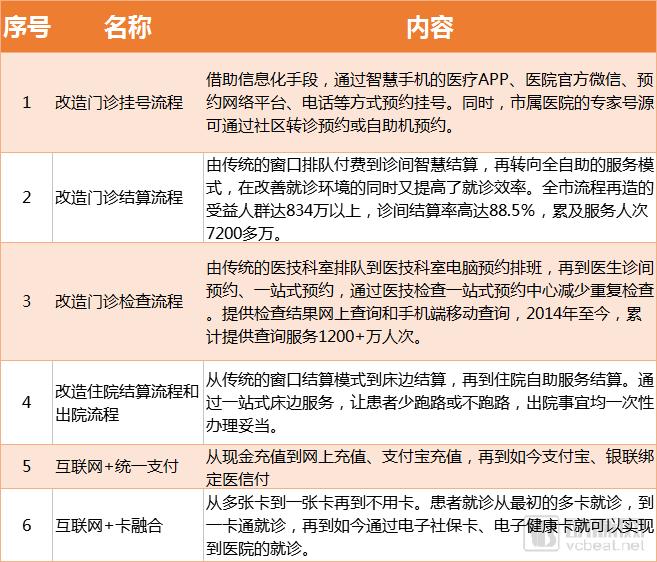
Zhu Yanfeng took the lead in establishing a smart healthcare model in Hangzhou, covering all district-level hospitals in the main urban area, as well as 52 community health service centers and 300 community health service stations within its jurisdiction. Five provincial-level hospitals provide medical services with electronic social security card payments, and 906 designated medical insurance pharmacies support purchasing medications using the electronic social security card.
The specific work spans the entire diagnosis and treatment process, implemented in six steps, as shown in the figure:
When discussing his practical experiences in advancing the “At Most One Visit” initiative, Zhu Yanfeng stated:
First, top-level design and citywide integrated implementation.
1. Emphasize top-level design, conduct thorough research before the project begins, and design the project from a city-wide perspective.
2. Adhere to the principle of piloting first by selecting certain medical institutions for initial trials and summarizing their experiences.
3. Adopt a phased, comprehensive rollout strategy. For projects proven effective through pilot programs, mandate direct replication and promotion across all levels of medical institutions, proceeding sequentially from municipal hospitals to county-level hospitals and then to primary healthcare facilities, thereby advancing implementation in stages.
Second, inter-departmental collaboration and win-win cooperation between government and enterprises.A successful model features government leadership, social operation, public convenience and benefit, and win-win cooperation. Smart healthcare is led by the health and human resources and social security departments, which have created an interconnected environment for its development. The development and reform commission and the finance department have provided strong support in funding health informatization. A working mechanism has been established with the health and family planning commission taking the lead and the Financial Investment Group collaborating closely. By integrating multi-party efforts, a smart healthcare industrial chain has been built to promote the development of the health industry and the digital economy.
Third, party-building guidance fosters a strong work atmosphere.Uphold the role of primary-level Party organizations as fighting fortresses and the vanguard and exemplary role of ordinary Party members; establish an assessment system for Party-building functions, implement a work system for Party member volunteer services and a Party Member Vanguard Index, and foster a strong working atmosphere.
Fourth, continuously innovate to improve the patient care experience. Reengineer clinical workflows across pre-consultation, consultation, and post-consultation phases, as well as from outpatient to inpatient settings, to address the challenges and frustrations associated with accessing medical care.
He expressed that since the implementation of the “At Most One Visit” reform in the healthcare sector, it has benefited a large number of people, covered numerous medical institutions, continuously improved public satisfaction, and gained recognition from leaders and all sectors of society. He advocated for letting data do the running, so that the public runs fewer errands, spends more time online, and less time on the road.
However, Wenzhou has encountered numerous problems and challenges in implementing the “At Most One Visit” reform. Zheng Yunzheng stated that although other regions within the province serve as pioneers and role models, it is still necessary to overcome various barriers from within the system itself. First, there is certain psychological pressure; second, the standards of hospitals across the Wenzhou region are uneven. Furthermore, influenced by entrenched mindsets, patients exhibit low acceptance and distrust, posing significant difficulties for the promotion of reforms at primary care hospitals.
Therefore, the first step in Wenzhou’s efforts to deepen the “At Most One Visit” reform was to align thinking. To this end, in April of this year, the Wenzhou Municipal Health Commission conducted a special study on the rationale for the reform, ultimately reaching a consensus. The second step involved recognizing that, externally, this reform is an important means of enhancing the public’s sense of gain and satisfaction with medical services, while internally, it represents an inevitable requirement for hospital management reform.
After several months of vigorous promotion of the “At Most One Visit” initiative by the Wenzhou Municipal Health Commission, significant progress has been achieved, with continuous improvement in public satisfaction and marked enhancements in medical quality management and operational efficiency. The rate of outpatient consultation-room settlement across hospitals in the city reached 49.55%, while the appointment rate for diagnostic examinations at consultation rooms in municipal hospitals remained between 53% and 76% for five consecutive weeks.
Specific reform measures include two aspects: one is the reengineering of service processes; the other is innovative services.
In terms of service process reengineering, it covers three aspects: outpatient, inpatient, and emergency services.
First is the reengineering of outpatient processes.Multiple appointment channels have been introduced to reach a broader population, encompassing more than ten methods across four main categories: in-person, online, telephone, and television appointments. The average appointment time slot is now precise to within 15 minutes. Over 80% of outpatient registration slots are made available for advance booking across all hospitals, with an appointment rate exceeding 65%. Appointments for primary care facilities can be scheduled up to 10 days in advance, while unbooked slots are returned to the in-person pool 24 hours prior to the appointment time. Additionally, a credit-based points system for appointments has been implemented to encourage scheduled visits, achieving high patient acceptance.
Outpatient Payment Made More Convenient: The Citywide Average Rate of Point-of-Care Settlement in Outpatient Clinics Reached 49.32%, Ranking Among the Top in the Province.The current smart settlement rate stands at 67.12%, and queue times at service counters have significantly decreased. Medication dispensing has become more convenient: upgrades to the smart pharmacy system have eliminated waiting times for prescription pickup. Integrated with point-of-care settlement, prescription information is transmitted to the pharmacy immediately upon issuance, ensuring that medications are ready at the counter by the time patients arrive.
Examination Appointment: The hospital has established a one-stop examination appointment center and actively promotes the direct scheduling of multiple examination items within consultation rooms. Currently, the in-clinic appointment rate stands at 21.82%. Reports have been fully digitized. On one hand, this is facilitated through mobile SMS, WeChat, Alipay, online queries, APP push notifications, and SMS alerts. On the other hand, as cloud imaging has not yet been universally adopted, the hospital prints QR codes on all radiology report forms. Patients can scan these QR codes to access their imaging data at any hospital.
In addition, other aspects of the reengineering of outpatient service processes include: an integrated outpatient service center, indoor navigation, a multi-channel complaint center, and precision volunteer services, all aimed at making services more considerate.
Next is the inpatient process, which involves comprehensively handling all discharge procedures within the ward, including bedside settlement, self-service settlement, mobile payment settlement, discharge itemized lists, discharge summaries, receipt printing, and UnionPay refunds. For disadvantaged groups such as low-income households, financially strained families, and individuals with disabilities, a one-stop service is provided in collaboration with various departments to resolve inpatient issues while ensuring they receive entitled benefits. Among them, Hangzhou Seventh People's Hospital assisted 1,025 patient visits, with total financial aid reaching 4.82 million yuan.
Finally, emergency department process reengineering.Actively develop Chest Pain Centers and Stroke Centers, with the requirement that at least one hospital in each county or district is covered; the Maternal Rescue Center and Neonatal Rescue Center have passed expert certification; the Maternal and Child Health Hospital has established a Perinatal Monitoring Center.
In terms of innovative services, Wenzhou City has established a municipal-level “Tier-1 Platform,” which integrates 294 provincial, municipal, county-level, and primary healthcare institutions into a collaborative referral and information platform, accumulating 2.08 billion medical treatment records. The city has implemented an all-in-one health information card, enabling access to comprehensive personal health records across three major domains—medical care, public health, and family planning—from birth to death. Multi-channel, one-stop access to health information is available, supporting cross-hospital retrieval during clinical consultations; residents can independently access their records via hospital self-service kiosks and mobile applications.
Meanwhile, starting June 27, 2018, ten core provincial and municipal hospitals in Wenzhou deployed and launched a facial recognition-based pre-filled form system. To improve the efficiency of birth certificate issuance and reduce errors associated with manual verification, facial recognition kiosks were introduced for processing birth certificates. Additionally, artificial intelligence is used to accurately guide patients through the medical consultation process, streamline pre-consultation procedures, minimize incorrect department registrations, and reduce the need for patients to make multiple visits.
At primary healthcare institutions, the municipal referral platform is deeply integrated with hospital electronic medical record (EMR) systems to facilitate the downward allocation of outpatient appointment slots and enable inpatient referral services, providing priority access to specialist appointments for contracted primary care physicians. Furthermore, the general practice clinical decision support system helps more primary care hospitals improve diagnostic accuracy, with knowledge base resources extended to the grassroots level via network connectivity.
Externally, it facilitates remote consultations with partner hospitals under counterpart assistance programs; internally, it enables remote consultations among multiple campuses. Upwardly, it establishes remote consultation links with superior tertiary hospitals such as Shanghai Huashan Hospital, Renji Hospital, and Peking Union Medical College Hospital; downwardly, it extends remote consultation services to county- and township-level hospitals in areas such as Taishun County.
Taizhou City has invested 150 million yuan in developing an all-in-one card project. In Zhang Weiqing’s view, the difficulty patients face in accessing medical care has long persisted; cumbersome diagnosis and treatment processes are time-consuming and labor-intensive, while cash payments create opportunities for illicit activities. Streamlining these clinical workflows is therefore an urgent priority in implementing the “At Most One Visit” reform initiative.
He questioned why medical payments could not be as straightforward as those in the food and beverage industry, where a single transaction suffices. Furthermore, he explored how to strengthen disciplinary talent development to enhance hospitals’ diagnostic and treatment capabilities, streamline cumbersome clinical workflows, mitigate risks associated with cash settlements, and enable real-time reading of serial test orders. After thorough consideration, he proposed prioritizing city-wide health informatization and launching an “All-in-One Card” initiative to achieve the goal of “at most one visit.”
However, after passing expert review and evaluation, the All-in-One Card project requires a minimum funding of RMB 150 million. Where will the funds come from? Zhang Weiqing stated that, by comparison, the three major telecom operators possess substantial financial strength. Leveraging the operators’ brands for advertising not only enhances brand reputation but also further builds trust. Therefore, the All-in-One Card project established a cooperative relationship with China Unicom through a bidding process. As a profit center for China Unicom, securing the ten-year operating rights to big data effectively positions it as the biggest winner.
The project architecture is divided into three phases. In the first phase, the project was launched in January 2017 and achieved interconnectivity among 164 medical institutions by the end of 2017. In the second phase, it aimed to establish interoperability with 443 medical institutions by the end of 2018. In the third phase, all medical institutions within the jurisdiction, including clinics, were integrated by the end of 2019.
The primary objective is to integrate the All-in-One Card project platform with the existing regional health information platform, thereby achieving interconnectivity among all medical institutions. The specific functionalities include: 1. One-card medical visits and appointment scheduling; 2. Interconnectivity and information sharing; 3. "Diagnosis-first, payment-later" service for basic medical insurance enrollees and urban/rural residents; 4. Real-name-based medical care and card-free settlement; 5. Data mining for precise decision-making; 6. Public health management and self-care.
Currently, the project has achieved seamless integration with the medical insurance and health administration systems. The binding of individuals to their accounts further reduces the risk of insurance fraud. The initiative aims to cover all public medical institutions in the city, having successfully onboarded 292 facilities to date. It also strives to encompass all insured individuals, providing comprehensive coverage for both outpatient and inpatient services.
Beyond the implementation measures adopted by local governments, what is the current state of the “At Most One Visit” reform as it applies to hospitals?
Let us first examine the achievements of The First Affiliated Hospital of Wenzhou Medical University in implementing the “At Most One Visit” initiative. According to monitoring data based on ten key indicators, the hospital ranks among the top in Zhejiang Province across multiple metrics. It ranks fourth in patient visit volume, has the shortest registration queue times during peak hours, handles the largest volume of payment settlements with convenient and efficient processes, and ranks at the forefront for both bedside settlement rates and smart settlement rates.
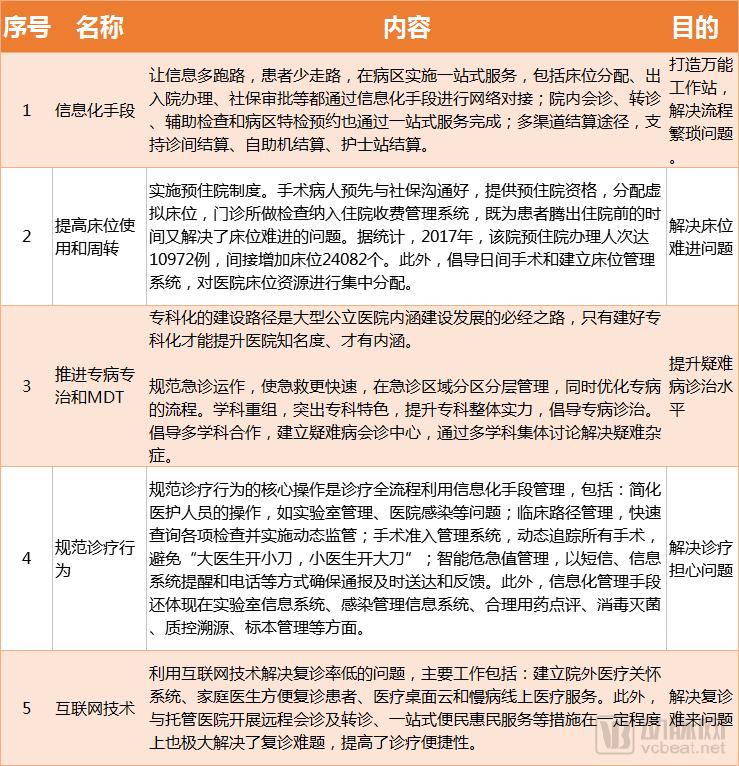
However, inpatient care faces challenges such as cumbersome processes, difficulty in securing hospital beds, difficulties in treating specialized conditions, patient concerns regarding diagnosis and treatment, and barriers to follow-up visits. To address these five major issues, Chen Xiaoming implemented the following improvement measures:
In implementing the “At Most One Visit” policy, Ding Kefeng believes that for any initiative, ideological awareness and leadership framework are paramount.
For hospitals, from top-level design to frontline staff, there is a high degree of consensus due to the “At Most One Visit” administrative initiative implemented last year, ensuring that momentum outweighs resistance during implementation. The core focus is on comprehensive, end-to-end process improvements centered on patient safety, covering all stages from pre-hospital care through emergency and outpatient services, diagnostic testing, inpatient care, and surgical procedures.
Next is the hospital’s own hardware infrastructure—smart healthcare. When Zhejiang Province required hospitals to consolidate appointment slots onto a single public platform, those already integrated with the provincial platform’s appointment system, as well as apps, WeChat, community services, and Alipay, could directly meet the requirement through seamless integration.
Regarding time-slot appointments, the high outpatient volume at hospitals makes automated systems indispensable. The solution involves sending repeated SMS and WeChat reminders to both patients and specialists. Typically, renowned specialists have busy schedules and are often late; the rate of self-service registration is approximately 20%, while the settlement rate is around 60%.
Implementing point-of-care settlement must begin with information technology infrastructure, achieving a settlement time of under 10 seconds per patient. Currently, the average time is basically 5–8 seconds, and even for cross-regional medical insurance cases, the settlement time must not exceed 15 seconds, which places high demands on IT systems. Additionally, there are two parallel systems for ward-based settlement: mobile carts and dedicated ward settlement stations.
Previously, the functions of the hospital’s outpatient comprehensive service center were segregated. Now, a single window handles a wide range of tasks—including medical insurance processing, financial transactions, and consultations—as well as services such as document copying and certification issuance. All these services are enabled through technological integration, eliminating the need for patients to make multiple trips.
Ding Kefeng stated, “Among our hospital’s four major centers, we have devoted substantial efforts to building the Chest Pain Center, Trauma Center, and Stroke Center. For a patient with stroke or myocardial infarction, the critical factor upon arrival at the emergency department is how quickly reperfusion therapy can be initiated. This is the core mission of our hospital. Every minute and second counts as a matter of life and death, so the process times across all these centers have reached the highest global standards.”
In the realm of air medical emergency services, a single phone call completes more than ten aviation-related approvals, and aircraft can take off within 30 minutes—measures that significantly streamline the patient care process.
Of course, the hospital has also made attempts in other areas to implement the “At Most One Visit” initiative, aiming to uphold the philosophy embodied by President David Duncan Main when he bowed to a young patient, thereby allowing the concept of serving both patients and staff to take root and flourish.
From policy formulation to hospital implementation and then to process reengineering, every link is seamlessly integrated. This may well be the key to the tangible results achieved by Zhejiang’s “At Most One Visit” healthcare reform.