

Tech-Enabled Skincare: Youthful Allure or Real Efficacy?
Editor’s Note: This article is from “Qingtong Capital” (WeChat Official Account: qtziben). Republished by VCBeat with authorization.
Facial cleansing devices, facial steamers, hair removal devices, facial mask devices, face-slimming devices... These intelligent beauty gadgets that have begun to appear on women's vanity tables are collectively referred to as“Beauty Devices.” In addition to their shared characteristic of being expensive, the companies behind them convey a consistent message to consumers: whether washing your face or applying makeup, using your hands alone is not enough.
Qingtong Capital, in serving clients in the beauty hardware sector, has found that the popularity of beauty devices cannot be simply explained by “consumption upgrading.” If it were merely a case of consumption upgrading, purchasing more expensive cosmetics would suffice. Instead, these beauty devices, with their varied names and specialized functions, have tapped into women’s desire for beauty and their fear of “early aging,” promising that consistent daily use for just a few minutes will lead to visible improvements over time.
Are these expensive new skincare darlings truly leveraging technology to enhance women’s beauty, or are they merely selling the concept of “tech-enabled skincare”?
The concept of beauty devices has existed for over 30 years. As early as the 1980s, Panasonic launched facial steamers in the Japanese market. Signs of a boom in beauty devices emerged around 2011, and in 2013, the Swedish brand Foreo and Clarisonic officially entered the Chinese market. In 2015, microcurrent and radiofrequency massage devices, represented by Japanese brands YA-MAN and ReFa, gained popularity. Domestic beauty device brands also began to emerge during this period.
The surge in popularity of at-home beauty devices in recent years is closely tied to the rapid expansion of the medical aesthetics market. According to data from research institutions, the global beauty and personal care products market is projected to grow from $423.7 billion in 2016 to $750 billion in 2024, making it the fifth-largest consumer spending hotspot after real estate, automobiles, electronics and telecommunications, and tourism.
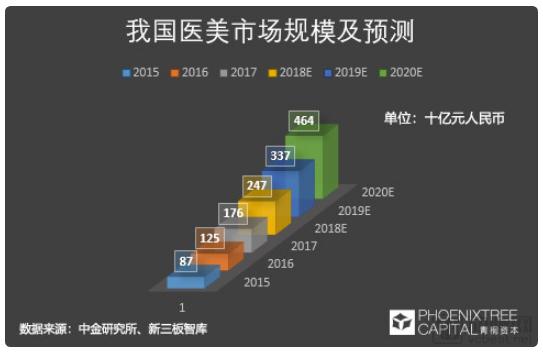
The high service fees of beauty salon treatments have kept most women at bay. Beauty devices, as small home-use appliances, have miniaturized, streamlined, and smartened large-scale professional equipment, enabling women to enjoy salon-grade results at a lower cost. Consequently, beauty devices have become the new favorite among modern women. In 2017, the transaction volume of beauty devices on Tmall Global tripled compared to 2016.
Beauty devices can be categorized by function into facial cleansing brushes, deep-cleaning devices, face-slimming devices, facial steamers, mask applicators, massagers, and more. The sheer variety of names for these at-home beauty devices is already dazzling, while the underlying technological principles are even more diverse. To provide a clear understanding of the technologies behind these devices, Qingtong Capital has compiled an overview of the most commonly used technologies in current beauty devices on the market, along with their primary benefits.
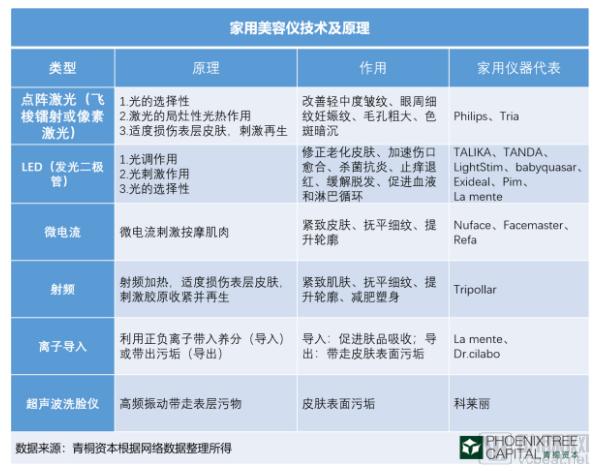
Among these technologies, LED has the lowest technological sophistication, resulting in the lowest prices and profit margins for such beauty devices, as well as the most intense market competition. Technologies such as radiofrequency and laser, which rely on light-based mechanisms for aesthetic treatments, represent a higher level of technical complexity. The highest technological sophistication is found in microcurrent, iontophoresis, and ultrasound technologies; beauty devices utilizing these three technologies demand advanced technical expertise, and consequently command higher prices and profit margins.
Depending on the underlying technical principles, the pricing of beauty devices varies significantly. If the high-, mid-, and low-end markets are segmented at price points of RMB 500 and RMB 1,500, the market already hosts numerous players, with the competitive landscape taking the following form:
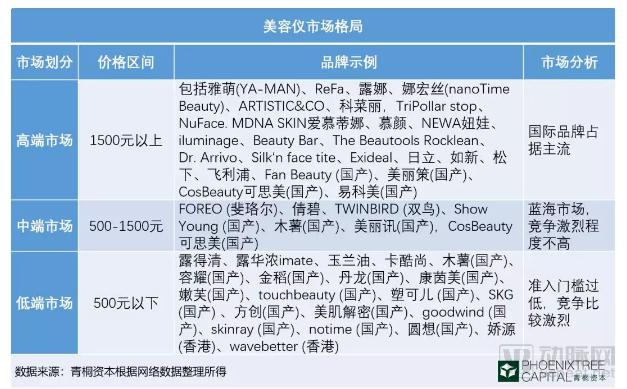
Competition in the mid-to-high-end market is significantly less intense than in the low-end market. While the high-end segment is populated by numerous international brands, no dominant domestic brand has yet emerged, prompting some Chinese brands to target this opportunity.
Zhang Yanhua, founder of the intelligent beauty brand Meilice, which is positioned as a high-end domestic brand, also stated in previous shares that, given current technological conditions and market potential, it is entirely possible for China to produce a major brand in the field of beauty devices.
“The Economic Effects of ‘Early Aging’ Anxiety”
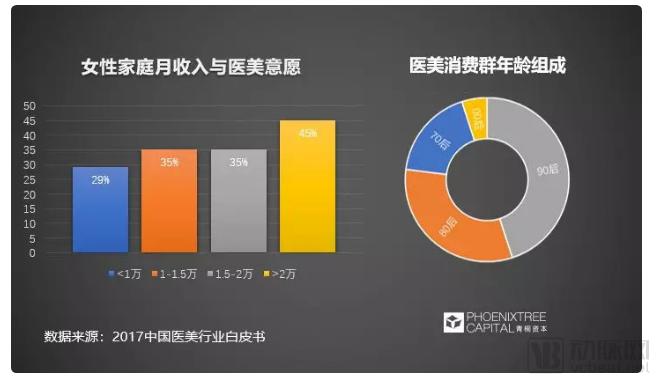
Since the concept of “early aging” was coined, it has become a popular marketing term for many women’s personal care products. The fear of “early aging” has also made women born in the 1980s and 1990s the primary users of beauty devices, reflecting young women’s anxiety about aging.
As individuals born in the 1980s and 1990s progressively ascend to mid- and senior-level management positions, their upbringing during an era of rapid wealth accumulation has made them more inclined to spend. Furthermore, their status as “digital natives” makes them a prime target for digital marketing campaigns in the beauty device market.
Sharing the Secrets to Enhancing Beauty
The concept of beauty devices has existed for a long time, but social networks have truly turned them into a consumer demand. With the emergence and proliferation of various social media platforms, beauty devices have increasingly come into the public eye. After 2010, Instagram and WeChat were launched successively, while Weibo reached its peak popularity. Two years later, Xiaohongshu (Little Red Book), a community-cum-e-commerce platform focused on beauty and skincare sharing, also emerged.
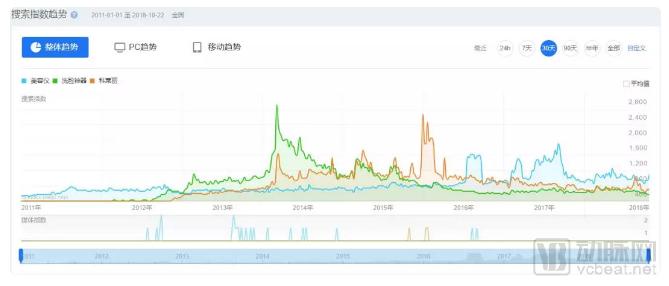
With the development of social media and e-commerce, beauty devices have entered their golden age, as the inherent attributes of this category are well-suited for e-commerce sales and dissemination through social networks.
High Consumer Education Costs
The promotional and consumer education costs for beauty devices are higher than those for ordinary cosmetics such as lipstick. Female consumers require more time to understand and evaluate issues related to the efficacy, safety, and near-medical-aesthetic technologies of beauty devices, resulting in a longer purchase decision-making process.
Consumers find it difficult to grasp the technologies behind beauty devices—such as sonic waves, LED light therapy, radiofrequency, and microcurrent—as well as concepts like the dermis and epidermis. Moreover, these elements have limited direct relevance to cosmetic outcomes. Consequently, relying solely on advertising and celebrity endorsements is insufficient for effective consumer education.
Features such as online reviews and recommendations on social media have also helped address this issue to some extent, allowing a segment of consumers to skip the in-store trial experience. Online channels account for the majority of sales revenue in the beauty device category.
Numerous well-known brands have emerged in the overseas market for beauty devices. Despite their high prices, these products remain highly sought-after in cross-border consumption. In contrast, domestic brands appear to lag behind consumer demand, indicating that China’s home-use beauty device sector is still in its nascent stage.
With domestic brands yet to rise, competition in the beauty device market primarily comes from European, American, and Japanese brands. In its analysis of the beauty device sector, Qingtong Capital found that this trillion-yuan market in China remains a blue ocean for startups, with the convergence of consumption upgrading and technological innovation representing the future opportunity direction for this market.
Current consumption upgrades have shifted from consumables and conspicuous goods to durable goods. The concept of “treating yourself better” has extended into home care and personal care. The introduction of innovative technologies has also disrupted and revolutionized the skincare market, with core scientific technologies in beauty hardware products and new mobile client engagement models creating significant growth potential for the beauty device market.
Beauty devices, as a new product category, entered the market at an initial price point of around RMB 1,000, to which consumers were not highly sensitive. With ongoing consumption upgrades in the future, more customers from the low-end segment are expected to migrate to the mid-to-high-end market, further expanding the overall market size. By effectively managing brand awareness as a key metric and successfully addressing the challenges of consumer education and initial customer acquisition, domestic brands can leverage the strong user stickiness characteristic of beauty devices to cultivate a loyal fan base.