

Cell Care Therapeutics Secures $4.3M Seed Funding to Advance Ophthalmic Stem Cell-Derived Therapies
Recently, VCBeat (WeChat Official Account: vcbeat) learned from foreign media reports that Cell Care Therapeutics, a biotechnology company based in Monrovia, California, has completed its seed funding round, raising $4.3 million. The investment was led by a consortium of individual investors. Cell Care Therapeutics did not disclose further details about the specifics of the financing to the media.
Cell Care Therapeutics, founded in 2014, is a biotechnology company. The company is developing regenerative immunotherapies based on novel biologics derived from the secretions of adult stem cells. These secretions, known as the “secretome,” consist of a complex mixture of natural therapeutic components, including proteins, exosomes, and microRNAs. The secretome contains anti-inflammatory and pro-regenerative molecules that are expected to reverse inflammatory processes while stimulating tissue regeneration. Cell Care has assembled a robust team comprising internal scientists, world-class advisors, and manufacturing experts to advance this technology into clinical development for the treatment of severe inflammatory and degenerative eye diseases that can lead to vision loss.
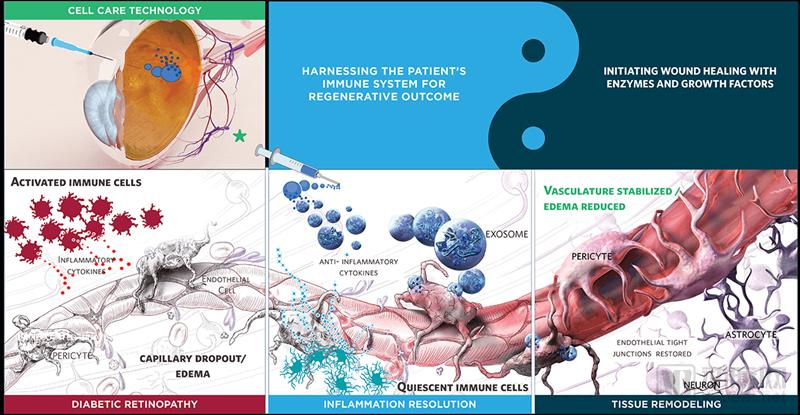
Image from the official website of Cell Care Therapeutics
Following the completion of the financing round, the company plans to leverage these funds to develop its proprietary manufacturing platform and apply its leading preclinical-stage drug candidates to the treatment of major ocular diseases, including diabetic retinopathy (DR) and neovascular age-related macular degeneration (wet AMD), which are the two leading causes of vision impairment and blindness in developed countries.
“The completion of our first funding round is a testament to the recognition of our novel approach using stem cell secretions to modulate the immune system,” said Nicolas Sohl, President and CEO of Cell Care. “The ophthalmic research community is increasingly embracing the theory that treating complex degenerative eye diseases may require a broader spectrum of signaling molecules—ones that cannot be replicated by any single small molecule, RNA, or recombinant protein. There is growing recognition that the primary therapeutic properties of adult stem cells derive from their secretome rather than the cells themselves.”
The secretome-based cell care products currently in use represent an improvement over first-generation live stem cell transplantation, a method that is costly for patients, difficult to quantify, associated with low cell survival rates, and incapable of providing off-the-shelf availability. The company’s next-generation regenerative therapy will broaden the clinical applicability of regenerative medicine and increase patient access to these novel treatments.