

Pregene Advances CAR-T 2.0 Era with Proprietary Nanobody Platform to Accelerate Industrialization and Global Commercialization
The Emergence of CAR-T Therapy Brings New Hope to Cancer Patients in the Name of Miracles, Sparking Another Wave of Investment Fever. This is Also a Field Where China Can Exert Efforts to Overtake Competitors on the Curve. If the Past Two Years’ Exploration of Safety and Efficacy Through Clinical Trials Marked the 1.0 Era of Chinese CAR-T, Then the Standardization and Approval of CAR-T as a Drug Signify the Beginning of the 2.0 Era of Chinese CAR-T.
In the era of CAR-T 2.0 commercialization, domestic enterprises aiming to overtake competitors and achieve the industrialization of CAR-T therapies face new challenges: how to circumvent intellectual property barriers, overcome common key technical bottlenecks in cell therapy industrialization—such as scalable manufacturing processes for plasmids and viruses—and establish core product competitiveness. Leveraging their late-mover advantage, Chinese companies are now focusing on providing comprehensive CAR-T therapy solutions as a new strategic focal point.
Among the numerous companies developing CAR-T therapies, Shenzhen Puruijin stands out as the only one to have fully integrated a comprehensive nanobody platform. Puruijin holds two key assets: a nanobody R&D platform and a CAR-T R&D platform. The nanobody platform not only enhances CAR-T therapy by leveraging its advantages to develop more optimized products, but also enables the independent development of nanobody-based drugs, thereby establishing a complete nanobody industry chain.
The significant clinical advantages of CAR-T therapy are driving biopharmaceutical companies and investment institutions to compete in funding its commercialization. Data from Southwest Securities predicts that the global market for CAR-T cell therapy in hematologic malignancies could approach $30 billion, while the Chinese market may reach RMB 10 billion. Currently, CAR-T therapy has demonstrated promising efficacy in the treatment of hematologic malignancies; if it achieves breakthroughs in treating solid tumors, it is poised to capture a share of the global solid tumor market, which is valued at hundreds of billions of dollars.
With the successive introduction and continuous refinement of CFDA regulatory policies in 2017, the pathways for the clinical implementation and commercialization of cell therapies have become increasingly clear, serving as a powerful driver for industry development.
Despite numerous favorable factors, the success of CAR-T therapy yields only one outcome: a cure. Yet, the journey from the laboratory to clinical implementation is fraught with countless possibilities for failure. Barriers such as intellectual property restrictions and thresholds imposed by manufacturing processes can cause the industrialization of CAR-T therapy to fail prematurely, thereby denying patients access to this treatment.
To overcome various barriers, one of the predominant business models in China has been to introduce foreign products and process systems. While this approach can temporarily address intellectual property concerns, facilitate the adoption of manufacturing processes, and ensure maturity across product development, technology, and quality control—thereby enabling the safe industrialization of CAR-T therapies that might otherwise fail during market commercialization—it also entails certain drawbacks. Relying on imported foreign patents tends to constrain pricing flexibility, and companies often lack the capacity for foundational technology development and independent product innovation.
Puruijin has taken a less-traveled path. By deeply cultivating the foundational technologies of CAR-T and nanobodies, Puruijin is committed to original research and development, leveraging its industrialization platform to achieve a transformative transition from scientific research to new drug development, thereby gaining a profound understanding of the essence of “drugs.” With independent intellectual property rights, Puruijin can reduce manufacturing process costs while also possessing the capability to provide CDMO services to other CAR-T companies. Having solidified its foundational technologies for CAR-T druggability, Puruijin holds greater advantages in accumulating R&D capabilities and enriching its product pipeline.
Puruijin has conducted in-depth and sustained strategic planning and research around CAR-T as a therapeutic product, focusing on core aspects such as intellectual property, manufacturing processes, quality control, safety assessment, and cGMP systems. By gradually overcoming key technical bottlenecks in industrialization, the company has secured intellectual property rights and established a comprehensive CAR-T solution.
Puruijin Investment has established an alpaca breeding and antibody immunology R&D base, building a fully independent nanobody technology platform. It has independently mastered the entire industrialization process for nanobodies, including antigen preparation, immunization, library construction and screening, and antibody production, reducing production costs to one-tenth that of conventional antibodies while meeting quality control standards.
From an intellectual property perspective, Puruijin’s carrier is an independently designed innovation. The antibodies are also proprietary nanobodies. To secure fully independent intellectual property rights for its antibodies, the company has invested in establishing an alpaca breeding and antibody immunization R&D base, with full pedigree traceability for all purchased animals.
In the CAR-T manufacturing process, there are three key stages: plasmid production, lentiviral vector production, and CAR-T cell preparation, each involving yield and quality control. Progenics has achieved true industrialization at an early stage. Currently, Progenics employs fermentation technology for plasmid production, achieving a yield of 100 mg/L after extraction and purification. For lentiviral vector production, the company uses serum-free suspension packaging technology, which significantly increases yield, simplifies operations, and can produce enough vectors for hundreds of patients. In CAR-T cell preparation, Progenics has improved its cell expansion and culture processes by adopting closed-system technologies and has independently developed various cryoprotectants for cell preservation. Dozens of quality standards for plasmids, viral vectors, and CAR-T cells are established and tested in accordance with the requirements set forth by the Center for Drug Evaluation (CDE).
Moreover, Prekin’s CAR-T manufacturing process is cost-effective, requiring only 50–100 mL of peripheral venous blood to prepare CAR-T cells for the treatment of related cancers.
In terms of safety assessment, under the witness of the National Shanghai New Drug Safety Evaluation and Research Center, Puruijin signed a strategic cooperation agreement with Shanghai InnoStar Bio-Technology Co., Ltd. to jointly conduct non-clinical safety evaluation studies on CAR-T series products, ensuring the authority of the company's product safety assessments.
In terms of cGMP system development, the company has systematically upgraded its existing 2,000-square-meter cleanroom facility and recruited and trained dozens of quality and compliance experts to implement standardized management in accordance with GLP regulations.
As a first-tier domestic developer of CAR-T cell therapies, PuRuiGen is clearly positioned as a specialized company leveraging an internationally leading fused nanobody platform for CAR-T cell drug development. Currently, all platform construction, team building, and strategic planning are centered on developing independent intellectual property rights and expanding, strengthening, and refining China’s CAR-T cell therapy industry.
Puruijin CEO Li Hongjian stated, “Core technologies cannot be replicated, nor can they be purchased.”
By pursuing a path of independent intellectual property rights, Puruijin has emerged as a leader in the CAR-T sector, earning recognition from multiple stakeholders. At the recently concluded ASCO annual meeting in June, Puruijin presented a poster that attracted significant attention from international companies and physicians. Recently, the National Institutes for Food and Drug Control (NIFDC) officially released the “Key Considerations for Quality Control Testing and Non-clinical Studies of CAR-T Cell Therapy Products,” with Puruijin being one of the organizations that contributed comments and suggestions.
Although CAR-T therapies have not yet been marketed in China, the Technical Guidelines for Research and Evaluation of Cell Therapy Products (Trial) stipulate that cell therapy products should be researched and evaluated as pharmaceuticals for development and registration purposes. This means that companies developing CAR-T therapies must first clear the hurdle of submitting an Investigational New Drug (IND) application.
PuRuiGen’s CD19-targeted product, which uses traditional antibodies and is benchmarked against Novartis’ Kymriah, has received an IND acceptance number. Currently, the two CAR-T products already marketed globally both target CD19; by focusing on this target, companies can reduce the risk of drug failure in subsequent development.
Puruijin has also established a presence in less commonly targeted areas such as BCMA. The company holds full independent intellectual property rights for its nanobody CAR-T therapy targeting BCMA, which has demonstrated favorable efficacy in the treatment of multiple myeloma. Moving forward, Puruijin will submit simultaneous regulatory filings in both China and the United States for this nanobody CAR-T therapy targeting BCMA for the treatment of multiple myeloma.
CAR-T therapy has demonstrated remarkable efficacy in the treatment of certain leukemias and lymphomas, but progress in its application to solid tumors has been relatively slow. Furthermore, CAR-T therapy is associated with certain limitations and toxic side effects, necessitating urgent development of rational solutions. For instance, when T cells kill other cells, they release numerous proteins known as cytokines. While these cytokines can activate immune cells to combat pathogens, they may also trigger a severe immune reaction, commonly referred to as a cytokine storm.
Currently, Puruijin has submitted an Investigational New Drug (IND) application for its “CD19-Targeted Chimeric Antigen Receptor T-Cell Injection.” Compared with Novartis’ already marketed Kymriah, this product features structural modifications and incorporates a safety switch. Clinical studies have demonstrated that the therapeutic efficacy of this product is comparable to that of Kymriah, while its safety profile is significantly improved, with no occurrences of Grade 2 or higher cytokine release syndrome (CRS).
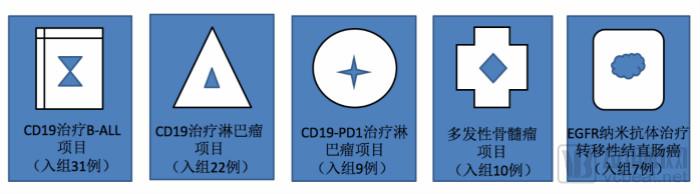
# Puruijin’s Product Pipeline Is Extensive
In the more challenging field of solid tumors, Puruijin has conducted in-depth R&D by integrating the latest international advancements. The company is currently collaborating with Shenzhen Second People’s Hospital on a clinical study of EGFR-targeted nanobody CAR-T therapy for metastatic colorectal cancer. This CAR-T product conditionally expresses IL-12 to reverse the immunosuppressive tumor microenvironment and represents the only investigational product of its kind worldwide, holding promise for breakthroughs in CAR-T therapy for solid tumors.
Built upon an autonomous, mature, and industrialized foundational platform technology, Puruijin can not only enrich its product pipeline but also provide various forms of CDMO services to other CAR-T R&D and manufacturing companies. These services include product development and contract manufacturing, thereby establishing an open platform that offers comprehensive solutions for CAR-T and nanobody therapies.
CAR-T holds immense potential, but Puruijin has not put all its eggs in one basket. In addition to facilitating the development of superior CAR-T therapies, Puruijin’s proprietary nanobody platform possesses significant market value and can be developed into standalone therapeutics or licensed through collaborations for nanobody sales.
It is reported that the global market size for monoclonal antibody drugs reached $91.6 billion in 2015, with a year-on-year growth rate of 7%, and is projected to reach $112.2 billion by 2018. If nanobodies can capture 50% of this market share, the global market capacity for nanobodies would amount to $56.1 billion. In terms of market competition, only Ablynx from Belgium has achieved a leading position in the global industry.
Compared with traditional antibodies, nanobodies offer the advantages of high affinity, high water solubility, and superior resistance and stability. Meanwhile, nanobodies exhibit low immunogenicity, enabling better “compatibility” with the human body. Due to their small relative molecular mass and single-domain structure, nanobodies elicit a weaker immune response in humans and demonstrate favorable biocompatibility.
In addition, nanobodies possess strong and rapid tissue penetration capabilities, high expression levels, and ease of clearance. This means they can penetrate dense tissues, such as solid tumors, to exert their therapeutic effects. They may also cross the blood-brain barrier, overcoming the historical limitation of drug delivery to the brain, and hold promise as novel therapeutics for Alzheimer’s disease.
Progin’s proprietary nanobody platform derives its core strength from its world-class founding team. Professor Li Shenghua, co-founder of Progin, is one of the earliest scientists worldwide to engage in nanobody research and brings over three decades of experience in biopharmaceutical product development. Founder Zhang Jishuai completed his postdoctoral training at the U.S. National Cancer Institute and has served as principal investigator on multiple projects funded by the National Natural Science Foundation of China. Leveraging their extensive expertise and research capabilities in antibodies and oncology, the team is now focused on translating this knowledge into clinical applications.
As an internationally leading nanobody platform, Puruijin also initiated the "2018 First International Summit Forum on the Development of Novel Antibody Drugs," and will continue to hold this forum annually.
“Having accumulated technology and professional resources to a certain extent, Progin believes it has the obligation and responsibility to build a platform for communication and exchange, contributing to the overall development of the industry,” Li Hongjian, CEO of Progin, told VCBeat. “In addition to applying nanobodies in CAR-T cell therapies, Progin will also expand into other areas such as nanobody-based therapeutics and diagnostics at appropriate times, aiming to establish a comprehensive nanobody technology industrial chain.”