

Oscar Health CTO Outlines Use of $375M Alphabet Investment to Enhance Telemedicine and Expand Medicare Advantage
In 2010, the U.S. Congress passed the healthcare reform bill proposed by then-President Obama. Under the new law, the health insurance coverage rate in the United States was set to rise from 85% to 95%, approaching universal health coverage. This legislation significantly propelled the development of the individual health insurance market in the U.S., creating market opportunities for startups such as Oscar Health.
In this context, Mario Schlosser, Josh Kushner, and Kevin Nazemi (who has since exited) co-founded Oscar Health in November 2012. The company positions itself as “a technology-focused health insurer,” aiming to transform the U.S. health insurance industry through telemedicine, healthcare-centric technological interfaces, and a transparent claims pricing system.
Since its inception, Oscar Health has been plagued by issues such as financial losses, corporate transformation, and shifting policy landscapes. Despite a journey far from smooth, the company has continued to attract significant interest from major investors.
In March 2018, Oscar Health secured $165 million in financing led by Founders Fund. Notably, two Alphabet subsidiaries—Capital G and the life sciences division Verily—also participated in this round. In retrospect, it appears that Alphabet had long been interested in Oscar. Following the completion of this funding round, Oscar Health’s cumulative capital raised approached $900 million, with its valuation reaching $3.2 billion.
Less than six months after the completion of that funding round, Alphabet announced in August of this year another investment in Oscar Health, amounting to $375 million. With this move, Alphabet has acquired approximately 10% of Oscar Health’s shares. As part of the strategic investment, Salar Kamangar, an early Google employee and former CEO of YouTube, has also joined Oscar Health’s Board of Directors.
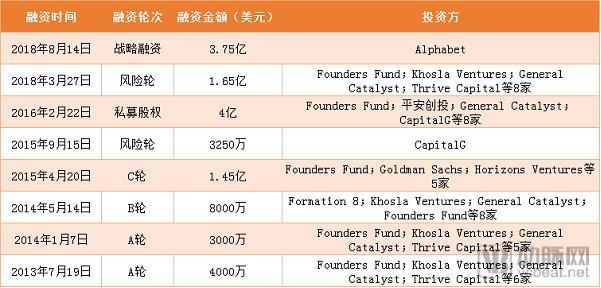
Oscar Health's Historical Financing Overview
Following this industry-watch fundraising round, Oscar Health CEO Mario Schlosser stated in a press release that Oscar plans to use the funds to launch its “Medicare Advantage for 2020” initiative, which aims to expand into the lucrative senior health insurance market by strengthening its presence in the individual health insurance exchanges and small employer markets.
Two months later, just recently, VCBeat (WeChat official account: vcbeat) learned from foreign media reports that at last week’s Connected Health Conference in Boston, Alan Warren, Chief Technology Officer of Oscar Health, gave an interview to the media. He shared detailed plans for how Oscar Health intends to utilize the $375 million investment received from Alphabet, Google’s parent company, in August 2018, as well as the progress made in its adoption of telemedicine technologies.
Alan Warren stated that, as Oscar Health operates within the insurance industry, it is required to set aside a substantial sum as capital reserves for its coverage across six major regions.
Of the remaining funds, a portion will be used to double down on investment in Oscar Health’s core technology team. Another portion will be allocated to help Oscar Health enter areas of strength within the health insurance industry. Alan Warren stated, “Operating in this sector entails different requirements. We have been preparing for a long time to enter these areas of strength without compromising the company’s other business lines.”
However, although this funding appears to be fragmented, the ultimate objective of its various allocations is to refocus on consumer experience. “We have already launched these initiatives, and Alphabet’s support has been driving us to continuously explore how we can enhance the member experience,” added Alan Warren.
In addition to providing member services in California, Ohio, New Jersey, New York, Texas, and Tennessee, Oscar Health leverages telemedicine technology to help consumers access faster and more convenient healthcare. Most of its 24/7 telemedicine offerings are provided free of charge.Through this service, physicians can diagnose patients and, if necessary, transmit prescriptions directly to pharmacies.
This service was launched through a partnership between Oscar Health and Cleveland Clinic, which announced the “Cleveland Clinic | Oscar Health Plan” in 2017 and officially implemented it in January 2018. Under this plan, Cleveland Clinic utilized a telemedicine platform provided by a third-party vendor. The health system hoped that Oscar Health would adopt the same approach, but Oscar Health declined the proposal, insisting on using its own proprietary telemedicine system.
Therefore, patients participating in this program had two options: the Cleveland Clinic telemedicine model or the Oscar Health telemedicine model. However, data showed that after the end of the first quarter of 2018, the program organizers found that most patients preferred Oscar Health’s telemedicine services.
Finally, Alan Warren stated that Oscar Health will continue to utilize these funds in a rational and efficient manner to advance its related initiatives.