

Mingma Biotech and Fudan Children's Hospital Launch 'XinCode', a Next-Generation Newborn Genetic Screening Product to Enhance Birth Defect Prevention and Early Rare Disease Intervention
As a supplement to the current newborn screening program, it effectively screens for the risk of common and prevalent genetic diseases, enabling early detection, prevention, and treatment of childhood-onset, severe, yet preventable and treatable conditions.
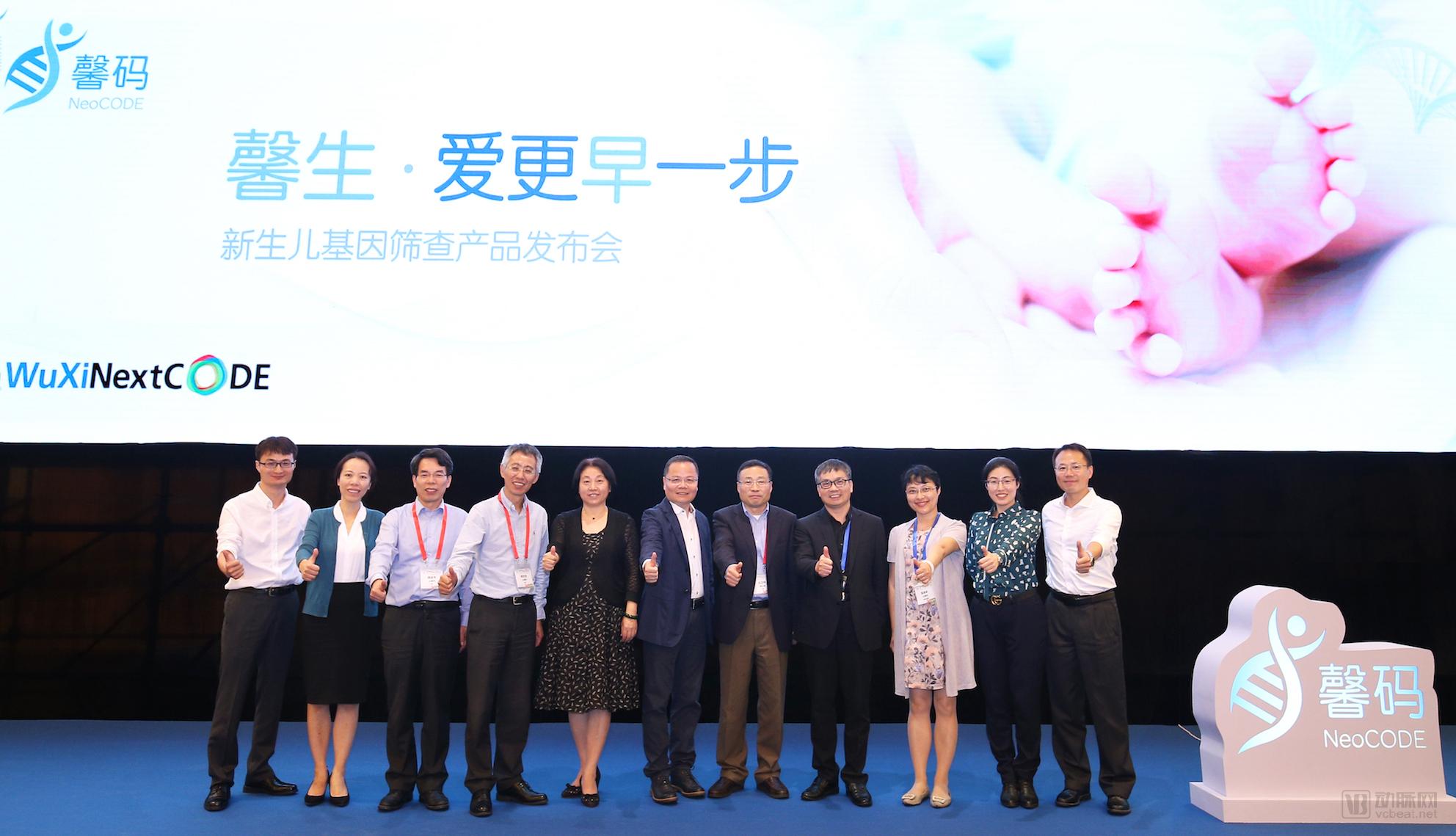
On October 26, 2018, a global leader in the field of precision medicine and an integrated platform company for gene R&D applications and gene big data empowerment
At the launch event for the newborn genetic screening product, themed “Xin Sheng: Love One Step Earlier,” held during the 23rd National Pediatric Academic Conference of the Chinese Medical Association, Mingma (Shanghai) Biotechnology Co., Ltd. (hereinafter referred to as “Mingma Biotech”) and the Children’s Hospital of Fudan University announced that they would collaborate to introduce a new newborn genetic screening product called “Xin Ma.”
Prevention and control of birth defects is a major challenge facing China, where the incidence rate stands at approximately 6%, with hereditary birth defects accounting for about 30% of all cases. “Genetic diseases are the leading killer of newborns and one of the significant causes of death among children under five years of age,” said Professor Zhou Wenhao, Vice President of the Children’s Hospital of Fudan University, in an interview with VCBeat.
Currently, a three-tiered defense system for birth defects has been established in clinical practice through screening at three stages: preconception, prenatal, and the neonatal period. As genetic testing is applicable to the detection of genetic disorders, it plays an increasingly important role in all aspects of tertiary prevention. The well-known NIPT (Non-Invasive Prenatal Testing) products represent the second line of defense built upon genetic testing technologies.
Mingma Biotech’s newly launched newborn screening product, “Xinma,” represents a strategic deployment of genetic testing technology along the third line of defense in birth defect prevention and control. As a supplement to existing newborn screening programs, “Xinma” is designed for obstetricians, gynecologists, and neonatologists, providing risk screening services for relevant diseases in newborns. By enabling early detection, prevention, and treatment, it aims to reduce the incidence risk of severe genetic disorders, thereby alleviating family suffering and societal burden.
Leveraging high-throughput sequencing technology, this product selects pathogenic genes associated with over 100 of the most common genetic disorders in the Chinese population. This selection is based on the requirements for birth defect prevention and control in China, references the First Batch of Rare Diseases Catalogue issued by the National Health Commission and other authorities, and integrates big data on genetic disease diagnosis from the Children’s Hospital of Fudan University.
“XinMa” is a newborn genetic screening product jointly developed by Mingma Biotechnology and the Children’s Hospital of Fudan University, building on their long-term, in-depth collaboration in pediatric genetic disorders and integrating the hospital’s database with actual clinical needs in pediatrics.
As early as September 16, 2015, Mingma Biotechnology signed a strategic cooperation agreement with the Children's Hospital of Fudan University to establish a Joint Laboratory for Pediatric Genetic Disorders. Together, they developed clinical exome-based auxiliary diagnostic tools for rare diseases and genetic testing products for neonatal intensive care units (NICU), thereby constructing a rare disease database tailored to Chinese children. In early 2016, the “Demonstration Project for Precision Medical Genetic Diagnosis of Pediatric Genetic Diseases” submitted by the Joint Laboratory was honored as one of the first national demonstration centers for gene testing technology applications.
As of the end of July 2017, the joint laboratory completed genomic research on more than 10,000 patients with rare diseases, a task originally planned for five years, in less than two years. Currently, BGI Genomics is collaborating with the Children’s Hospital of Fudan University to perform genetic testing and interpretation for over 10,000 pediatric rare disease cases annually.
“XinMa can simultaneously screen for over 100 common and frequently occurring genetic disorders in pediatrics, covering diseases affecting the nervous, endocrine, hematologic, digestive, immune, and urinary systems,” stated the Head of Medical Clinical Operations at Mingma Biotech in an interview with VCBeat. By accurately pinpointing the pathogenic genes responsible for genetic disorders, this product facilitates preventive measures before symptoms manifest in children.
It is reported that Mingma Biotechnology operates the first laboratory in China to achieve dual accreditation from the U.S. Clinical Laboratory Improvement Amendments (CLIA) and the College of American Pathologists (CAP). The high-throughput sequencing for “Xinma” is conducted at this facility. “Xinma” utilizes stable and user-friendly dried blood spots or 0.5 mL blood samples for specimen collection, analyzes high-incidence pathogenic or likely pathogenic variants within the targeted gene panel, and reports on potential disease susceptibility. “For positive results, we also refer patients to the Children’s Hospital of Fudan University for genetic counseling. The entire testing and reporting process is comprehensive, automated, and reliable,” added the company representative.
In August 2016, to achieve precise intervention for birth defects, the Children’s Hospital of Fudan University, in collaboration with the Genetic Counseling Branch of the Chinese Society of Human Genetics, launched the China Newborn Genomic Project. This initiative primarily targets two groups: critically ill newborns and general newborns. Infants in the Neonatal Intensive Care Unit (NICU) represent a high-risk population for genetic disorders, making them one of the primary target groups for this project.
Furthermore, although children may appear healthy, they can still be potential carriers of genetic disorders. The phenotypes of these genetic conditions gradually manifest during growth and development; once the disease onset occurs, it will cause severe harm to the child’s health and impose significant suffering and burden on the family. “We hope that ‘Xinma’ will eventually cover all newborns,” said Yuan Jianzhong, General Manager of Mingma Biotechnology.
Certainly, cost control is crucial for the widespread clinical adoption of the product. Yuan Jianzhong told VCBeat that they will promote the product through academic conferences to increase its usage. Subsequently, the accumulated data will provide significant value for product iteration and cost control.
“With these data, we can identify more precise genetic loci and expand the scope of detectable conditions. Our products will also undergo iterative updates to offer testing for a wider range of diseases at more competitive prices,” he stated.
Moreover, leveraging Mingma Biotechnology’s extensive resources in the pharmaceutical sector, these data can also provide direction and guidance for drug development by pharmaceutical companies, enabling them to bring solutions to market more rapidly.
Yuan Jianzhong believes that in the future healthcare landscape, big data will be indispensable for both clinical practice and drug development. In his vision, Mingma Biotech operates as a big data platform: the front end focuses on clinical discovery, where valuable data identified through clinical channels provide the foundation for clinical products such as “Xinma.” This is followed by data accumulation; once the data volume reaches a sufficient scale, in-depth mining can uncover more evidence to support drug discovery. “Of course, when new solutions are applied in clinical settings, they initiate another cycle,” he added. It is understood that Mingma Biotech has currently reached cooperation intentions with multiple pharmaceutical companies.
In addition to “Xinma,” Mingma Biotech previously launched “Fuma,” a preconception genetic carrier screening product, and “Ruima,” a clinical diagnostic product designed for patients with rare diseases. Through this portfolio of products, the company aims to track birth defects and rare diseases from multiple perspectives, thereby advancing precision prevention and precision diagnosis and treatment of childhood genetic disorders in China, ultimately benefiting the numerous children with genetic diseases and their families across the country. Moving forward, the company will promote “Xinma” through academic conferences and other channels to increase awareness and adoption of the product.