

National Engineering Laboratory for Internet-Based Medical Diagnosis and Treatment Technology — Integrating Medical and Engineering Expertise to Tackle Core Challenges in Digital Healthcare
Technology has always been the core driving force behind medical advancement, and the source of such technology often lies in leading laboratories both domestically and internationally. These institutions propel industrial development by proactively researching and developing key technologies.
Laboratories have not only shaped our present but are also defining our future. The technologies incubated within laboratories serve as the primary driving force accelerating the advancement of the healthcare industry.
To this end, VCBeat (WeChat ID: vcbeat) is officially launching the “Top 100 Labs” series, with plans toConduct interviews with 100 top domestic and international laboratories in the fields of digital health technology and biotechnology over a three-year period, for exampleMRC Laboratory of Molecular Biology, Cambridge, UK; Eaton-Peabody Laboratories (EPL); Alibaba DAMO AcademyTop-tier laboratories affiliated with universities, enterprises, and the public sector.
First Reported, First Partner InstitutionChina Technology Exchange (CTEX)Recommended to VCBeat the “National Engineering Laboratory for Internet-based Medical Diagnosis and Treatment Technologies”。
The China Technology Exchange is committed to building a technology trading market based in Beijing, serving the whole of China, and exerting international influence. It provides specialized services for technology transactions, including value assessment, transaction matchmaking, public bidding, project incubation, sci-tech finance, and policy research.
We encourage VCBeat readers to actively recommend relevant domestic and international laboratories and provide their contact information,Contact Email: tg@vcbeat.top (Please indicate "Top 100 Labs Interview Program Collaboration" in the email subject)。
In every field, there is a “national team” that plays a significant role.
In the field of internet healthcare, the “National Engineering Laboratory for Internet Healthcare Diagnosis and Treatment Technology” serves as a key member of China’s “national team.” Approved by the National Development and Reform Commission in March 2017, the laboratory is hosted by Xuanwu Hospital of Capital Medical University, with participation from multiple institutions including Beihang University. It represents a significant achievement in strategic cross-disciplinary collaboration between medicine and engineering under the new development paradigm.
In the booming field of internet healthcare, with numerous innovators and entrepreneurs active in the space, it is natural to wonder: What are the laboratory’s objectives? What research is it conducting? And what core technologies are being applied and promoted?
To this end, VCBeat (WeChat ID: vcbeat), in collaboration with the China Technology Exchange (WeChat ID: ctex2013), conducted an exclusive interview with Professor Guo Xiuhai, Deputy Director of the National Engineering Laboratory for Internet Medical Diagnosis and Treatment Technology and Director of the Scientific Research Department at Xuanwu Hospital, Capital Medical University.
The “Internet + Healthcare” model has long become commonplace, optimizing the allocation of medical resources and making peripheral services such as appointment registration and health consultations more convenient. However, regarding core challenges within the healthcare system—such as the difficulty in comprehensively allocating medical resources in China, inefficiencies in emergency care systems, lagging early warning and quality control for acute and critical conditions, and insufficient big data and clinical decision support capabilities—internet healthcare still requires significant breakthroughs.
Cardiovascular and cerebrovascular diseases are currently the leading causes of mortality and disability in China, posing significant challenges. The development of treatment systems for these conditions lags far behind that of developed countries. While some tertiary hospitals in first-tier cities have reached international standards, the rapid stroke treatment systems in most primary care hospitals—the ones closest to patients—are still in their infancy. This highlights a severe imbalance, with the inability of existing medical resources to reach the grassroots level being a major pain point.
The laboratory focuses on cardiovascular and cerebrovascular diseases, committed to integrating medicine and engineering. It addresses core issues such as the inability to comprehensively allocate medical resources in China, low emergency response efficiency, lagging early warning and quality control for acute and critical conditions, and insufficient big data and clinical decision support capabilities, thereby serving major national healthcare needs.
Director Guo Xiuhai stated, “We aim to genuinely implement tiered diagnosis and treatment by decentralizing the diagnostic and therapeutic expertise accumulated at tertiary A hospitals to primary care institutions. This goes beyond merely establishing remote partnerships with specialists; more importantly, it involves integrating medical technologies, information technology, and effective equipment into primary care settings. Our goal is to substantially enhance the diagnostic and treatment capabilities of primary healthcare institutions, enabling them to fulfill their designated responsibilities.”
Academician Li Wei of Beihang University stated, “Our technology has already been applied in both aerospace and underground environments; we now hope to extend its application to human health, thereby benefiting the public.”
Taking cardiovascular and cerebrovascular diseases as an example, this is a field with broad prospects for the integration of medicine and engineering. Previously, physicians had to spend considerable time performing three-dimensional reconstruction of CT images before they could diagnose the origin of vascular diseases, plaques in the vessel walls, luminal stenosis, and other conditions. The introduction of AI enables automated diagnosis of coronary heart disease, assists physicians in making diagnoses, and enhances emergency care capabilities.
The laboratory’s advantages extend beyond its collaboration with Beihang University and Xuanwu Hospital, which brings together top-tier scientific research capabilities and technology. It also partners with enterprises such as Lanweitong, iWit Technology, and Potevio Information to truly integrate industry, academia, and research. This synergy drives the research, development, and engineering of technologies including remote and mobile emergency care for cardiovascular and cerebrovascular diseases, intelligent early warning and intervention for high-risk populations, integrated treatment of cardiovascular and cerebrovascular conditions, and virtual surgery.
In addition to the advantages of integrating industry, academia, and research, the laboratory also possesses its own strengths in addressing the inherent data deficiencies in China’s healthcare informatization. Beihang University has joined forces with medical institutions such as Xuanwu Hospital to establish the Advanced Innovation Center for Big Data-Driven Precision Medicine. The center brings together top-tier talent across multiple disciplines, including medical big data, precision medicine, intelligent medical signal processing, intelligent computer-aided diagnosis, personalized medicine, medical image processing, and intelligent medical informatics, among whom are six academicians from relevant fields.
After nearly two years of consolidation, the laboratory is now focusing on addressing existing gaps in early warning systems and outdated quality control for cardiovascular and cerebrovascular diseases, translating core technologies into clinical applications. It aims to comprehensively enhance diagnostic and therapeutic techniques for these conditions through telemedicine, medical imaging, and intelligent clinical diagnosis, thereby standardizing clinical workflows.
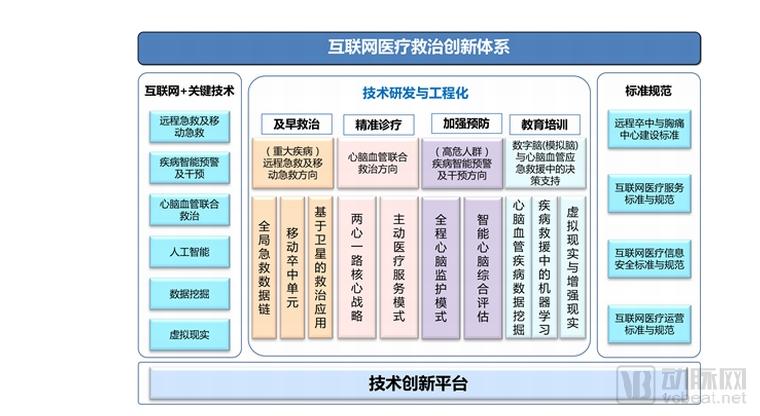
Xuanwu Hospital has implemented remote stroke technology, enabling specialists from tertiary hospitals to conduct remote consultations with primary care hospitals. This facilitates personalized endovascular therapy for patients with delayed treatment, allowing high-difficulty surgeries that were previously only performed in tertiary hospitals to be carried out at the primary care level. Currently, remote stroke technology has connected more than 20 hospitals, providing real-time guidance from experts to emergency physicians in primary care settings.
In addition to expert resource support, the laboratory has also launched an imaging support system that enables rapid image assessment, helping physicians determine whether patients have developed plaques in the vessel walls and assisting them in making decisions regarding thrombolytic therapy.
To enhance communication efficiency between healthcare providers and patients, prevent delays in treatment, and minimize ineffective interactions, a pre-hospital emergency care system has been established. During the treatment process, collaborations with enterprises will also be pursued to develop technologies such as mobile CT and mobile MRI scanners, thereby improving the existing stroke care system.
Stroke care requires a holistic solution. Leveraging the deep medical-engineering collaboration between Beihang University and Xuanwu Hospital, the National Engineering Laboratory has developed an AI- and big data-based clinical decision support system for cardiovascular and cerebrovascular diseases.
In addition to making significant efforts in the treatment phase, greater investment in early warning systems can substantially improve patient survival rates and conserve medical resources. Currently, Xuanwu Hospital is developing remote disease intervention strategies, such as its patented technology for remote ischemic conditioning for the concurrent treatment of cardiac and cerebral conditions.
To comprehensively enhance the diagnosis and treatment of cardiovascular and cerebrovascular diseases, it takes more than just the integration of medicine and engineering; enterprises also play a vital role. Discussing the mechanism for open collaboration, Director Guo Xiuhai stated in an interview with VCBeat, “Our laboratory is open. For enterprises seeking to collaborate, we prioritize utility over ownership. We welcome any company that possesses core technologies and, like our laboratory, is committed to benefiting the public rather than solely pursuing commercial interests.”
In addition to domestic collaborations, the laboratory has also engaged in in-depth cooperation with advanced medical institutions and researchers abroad.
Regarding future development, Director Guo Xiuhai pointed out: “This is a platform for the integration of medicine and engineering, which requires high-level medical expertise, cutting-edge technological capabilities, and policy support. More importantly, it demands deep mutual integration and close collaboration. Like a table that cannot stand if any leg is missing, we need to establish a genuine alliance among industry, academia, and research. I believe that achieving such integration requires leveraging the guiding role of policies. For instance, we should seek ways to break through organizational mechanisms and play an active role in setting standards, issuing regulations, integrating resources, and guiding industry development.”
About the China Technology Exchange
China Technology Exchange (CTEX) is a technology transaction service institution jointly established by the Beijing Municipal People's Government, the Ministry of Science and Technology, the State Intellectual Property Office, and the Chinese Academy of Sciences, with the approval of the State Council. CTEX operates as a limited liability company, jointly invested and established by Beijing Equity Exchange Co., Ltd., Beijing High-Tech Entrepreneurship Service Center, Beijing Haiguo Xintai Investment Holding Center, Beijing Zhonghai Investment Management Co., Ltd., and CAS Holdings Limited, with a registered capital of RMB 224 million. In accordance with the functional positioning requirements set forth by the Beijing Municipal Government and relevant ministries, CTEX is committed to building a technology trading center based in Beijing, serving the entire country, and possessing international influence. It provides specialized services for technology transactions, including value assessment, transaction matchmaking, public bidding, project incubation, sci-tech finance, and policy research.
This report was supported and assisted by the China Technology Exchange and Ms. Li Hongli, to whom we extend our sincere gratitude!