

Meituan-Dianping Launches 'New Beauty Industry' Initiative with 'Beauty Store Meituan Core' Plan and Strategic Collaboration with Singo Medical Aesthetics
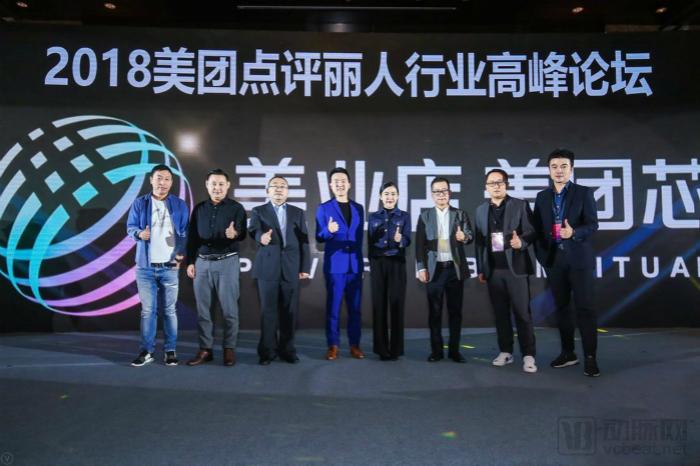
2018 Beauty Industry Summit: Meituan Dianping’s Beauty Division Unveils the “Beauty Store, Meituan Core” Initiative
The beauty industry, with a market size in the trillions, is at a critical juncture of transformation. Rising costs, intensifying competition, and shifting consumer demands are compelling beauty businesses to undergo strategic upgrades and transformation.
Last year, Meituan-Dianping’s Beauty & Wellness division introduced the concept of “New Beauty Industry.” On October 25, 2018, at the 2018 Beauty Industry Summit held in Beijing, the division launched the “Beauty Store Meituan Core” initiative—a comprehensive solution designed to enhance operational efficiency and optimize user experience—in order to fully implement the “New Beauty Industry” concept. This initiative provides merchants with integrated value across marketing, systems, and operations.
Initially, the pilot program is planned for the beauty, light medical aesthetics, and cosmetics sectors. Current partner merchants include well-known beauty industry brands such as XURFACE, Christina, Meiji Workshop, Starhe Medical Aesthetics Technology (Starhe iPretty), and Forest Cabin. What changes have occurred in the beauty industry? Why was the “New Beauty Industry” initiative proposed at this juncture? How is Meituan-Dianping’s Beauty & Wellness division shaping a model for the future of the new beauty industry? VCBeat (WeChat ID: vcbeat) provides an analysis.
“Meituan Core” Initiative for Beauty Industry Stores
Judging from the trajectory of industrial development, leading internet platforms, having completed their accumulation of consumer-side (C-end) traffic and established their role in delivering value-added services, are now shifting their focus to the business side (B-end). On one hand, they are transitioning from a traffic-driven mindset and simple information matching to a mindset centered on professional, refined services, thereby empowering merchants and the entire industry chain. On the other hand, they are continuously expanding the boundaries of B-end services, seeking new entry points into online-to-offline (O2O) scenarios, and attracting new consumer segments through enhanced experiences. This explains why internet giants such as Tencent, Alibaba, Meituan-Dianping, and JD.com are currently vying for dominance in the “New Retail” sector.
In the second half of the internet era, Meituan-Dianping is deepening its B-side layout. Recently, Wang Xing, CEO of Meituan-Dianping, disclosed in an internal letter that the company will strategically focus on "Food + Platform," centering on "eating" to build a user platform and two major business groups: In-Store and At-Home. On the new business front, the Kuailv and Xiaoxiang divisions will continue their business explorations, while an LBS (Location-Based Services) platform will be established.
In addition to its traditionally strong food and dining segment, the “in-store” business is beginning to focus on new niche service scenarios, seizing opportunities for growth. According to available information, Meituan-Dianping’s Beauty Division originated from the beauty services launched in 2015 and falls under the New In-Store Business Group. It primarily covers hairdressing, skincare, nail care, as well as newly added medical aesthetics and cosmetics, aiming to deepen its presence in the beauty industry by providing online-to-offline services for both merchants and consumers.
How Large Is the Beauty Industry Market? The market size of the beauty industry is projected to approach RMB 2 trillion by 2020, with an average annual growth rate of 15%.
Although the market size and potential are substantial, the beauty industry is characterized by low market concentration and a high turnover rate. Every day, a large number of new merchants enter the market, while others cease operations due to poor management. Well-established brands with strong reputations are scarce. Whether in first- and second-tier cities or fourth- and fifth-tier cities, the beauty market remains in a state of full competition, creating an urgent demand for new industrial models to emerge.
Zhang Jing, General Manager of the Beauty Division at Meituan Dianping, provided further elaboration on the “New Beauty Industry.” “2018 marks the inaugural year of online-offline integration. By combining business model innovation with technological advancement, we aim to achieve deep integration of online and offline channels, collaborating with beauty industry practitioners to co-create the ‘New Beauty Industry.’ Our future goal is to upgrade and transform 100,000 beauty establishments.”
To fully implement the concept of “New Beauty Industry,” Meituan-Dianping’s Beauty & Wellness division has launched a comprehensive solution aimed at enhancing operational efficiency and optimizing user experience—the “Beauty Store Meituan Core” initiative. This program provides merchants with integrated value across marketing, systems, and operations, facilitating the transformation and upgrading of offline beauty businesses. Initially, the pilot will focus on the sectors of facial care, non-surgical medical aesthetics, and cosmetics.
Changes in the Beauty Industry Market
Why Is It Time for the Beauty Industry to Undergo Upgrading and Transformation? Our reporters have learned that the beauty industry is currently experiencing growing pains during its transition. With changes in the broader economic environment, rising operational costs, and increasingly diverse consumer demands, new models and innovative approaches are emerging within the sector.
According to data from Meituan, from the merchant perspective, the beauty industry saw an annual new store opening rate of 42% and a closure rate of 28% in 2017, indicating a market with very high turnover. Since the first half of 2018, the overall closure rate in the beauty industry has been rising. The growth rate of labor productivity per single store has also slowed down. From 2017 to 2018, there were essentially no significant breakthroughs or changes. Furthermore, the two major operating costs for beauty businesses—rent and labor—increased year by year from 2016 to 2018.
Turning to consumer-side data, consumers are becoming increasingly rational. The proportion of young users under the age of 25 rose from 29% in 2016 to 40% in 2018. Their willingness to post online reviews has strengthened, with the annual number of reviews on the Meituan-Dianping platform continuing to grow. Users are also more willing to share their service experiences and outcomes. In summary, Zhang Jing believes that changes in the beauty industry market are mainly reflected in the following three aspects:
First, the “rising costs” of operations are primarily driven by increases in rent, labor, and customer acquisition expenses; the number of available brick-and-mortar stores has decreased, and business operations are increasingly required to adhere to standardized and compliant practices.
Second, intensified competition among peers has led to severe homogenization. Whether it is spas, barbershops, or nail salons, most operate under similar business models. This homogenization ultimately results in price wars, which are detrimental to the industry’s future development. Another issue is the efficiency bottleneck; the adoption of homogeneous operational strategies has prevented significant breakthroughs in labor productivity per store. Furthermore, pitfalls related to scaling are frequent, particularly in the medical aesthetics and non-surgical medical aesthetics sectors. Driven by capital influx, companies often fall into a trap of blind store expansion without having adequate talent reserves or information technology systems in place.
Third, “changes in demand” within the market environment. First, there is a pronounced trend toward consumption stratification among the same cities and consumer demographics. Second, the proportion of young users is increasing; these younger consumers tend to resist sales pitches and membership card enrollments, necessitating new strategies for customer acquisition and boosting Average Revenue Per User (ARPU). Finally, regarding decision-making influence, young users are willing to share their service experiences and discuss their service journeys with others, making the value of reviews increasingly important.
In light of the current market landscape, Zhang Jing stated that the market is calling for innovation in the beauty industry. As the digital transformation of the beauty sector accelerates and technologies continue to mature, the traditional brick-and-mortar store model is evolving. New formats characterized by “small footprints, high density, and chain operations” have emerged, raising unprecedented demands for comprehensive solutions and presenting platforms with an opportunity to deepen their integration into the industry.
“What’s New About the ‘New Beauty Industry’?”
“New Beauty Industry” Concept: Meituan-Dianping’s Liren Division Proposed It Last Year. This Year, the “Beauty Store Meituan Core” Solution Aims to Serve as the Engine for Stores and a Driver for Merchant Revenue Growth, Even Becoming the Core of Overall Industry Upgrading in the Beauty Sector.
For the new beauty industry ecosystem, Meituan Dianping will strategize from two dimensions: “stores” and “people.” All beauty services are initiated through in-store visits. Here, “stores” refers to helping merchants build an “online store” while upgrading their “physical store,” thereby achieving omnichannel operations; “people” refers to “member management” and “employee empowerment.” Meanwhile, the upgrade path for the “new beauty industry” will be completed through foundational capabilities such as digitalization of information, systematization of services, intelligent hardware and software, and data support.
In terms of empowerment, Zhang Jing believes that the redefined new beauty industry ecosystem centers on “new supply, new experience, new marketing, new service, and new talent.”
Specifically, supply is not limited to goods or services alone. For the beauty industry, new supply refers to “services + products,” or services that drive product sales, which is also an effective way to improve sales per square meter for individual stores.
User experience must be enhanced through services such as online appointment scheduling and product purchases, with 30-minute home delivery, enabling consumers to enjoy convenient services.
As online and offline channels become deeply integrated, with offline behaviors increasingly shifting online, mobile and digital experiences are penetrating more local life service industries. Users can directly complete actions such as appointment scheduling, payment, purchases, and reviews online. In this context, a new marketing model centered on omnichannel strategies and precise data will become key to enhancing the total customer value of target audiences. For instance, smart offline stores may equip merchants with intelligent phones and skin analysis tools, integrating member information and data with platforms to achieve seamless omnichannel operations across online and offline channels.
Meanwhile, the platform also provides tools to help artisans and beauty consultants fully connect with consumers, turning them into brand ambassadors and sales drivers. In addition, the Beauty Industry Academy aims to support more professionals in the beauty sector.
Compared to the “New Beauty Industry” concept introduced last year, this year’s upgraded and iterated version places greater emphasis on transforming brick-and-mortar stores through new supply models and enhanced customer experiences. Examples include establishing online information systems for newly opened stores, acquiring customers via closed-loop transaction methods, and leveraging intelligent store SaaS platforms to aggregate cross-platform data and improve operational efficiency.
Furthermore, beyond its marketing function, the greater value of Meituan-Dianping lies in brand intangible assets; consumer reviews also provide significant guidance for user decision-making, thereby driving the overall reputation and sales of stores.
Renovation of 100,000 Beauty Industry Stores
In a nutshell, “Meituan Core for Beauty Businesses” integrates online and offline operations, encompassing foundational capabilities, marketing capabilities, service capabilities, and merchant economic analysis capabilities. It will continue to penetrate the market and help users improve operational efficiency, serving not only the traditional “Three Beauties” (beauty, hairdressing, and nail care) but also piloting in the fields of beauty services, light medical aesthetics, and cosmetics.
Meituan-Dianping’s Beauty & Wellness platform is able to achieve this by leveraging its monthly active user base of over 50 million, covering 2,800 cities and counties across China, connecting with 2 million beauty and wellness merchants, and spanning 12 sub-sectors within the industry. These categories continue to expand, ranging from mainstream services such as skincare, hairdressing, manicures, and eyelash extensions to dance, yoga, makeup, and medical aesthetics.
Regarding new categories in the medical aesthetics sector, Zhang Jing revealed: “Last year, we expanded into medical aesthetics. Although we have only been operating in this segment for one year, our Daily Active Users (DAU) increased tenfold. This year, we will also launch our beauty and cosmetics business, thereby completing our service portfolio. Since the pursuit of beauty is inherent to women, all these services are designed to deliver value to women who seek to enhance their appearance. We will implement the philosophy of the ‘New Beauty Industry’ across these specialized sectors.”
In addition, Meituan-Dianping’s Beauty & Wellness segment benefits from localized, high-precision traffic. Leveraging its location-based services (LBS) infrastructure, Meituan-Dianping delivers accurate, locality-driven recommendations and integrates a rich ecosystem spanning multiple scenarios—including dining, movie-going, ride-hailing, and hotel stays. By capitalizing on its accumulated technological capabilities and data assets, the company bridges offline and online channels to enable omnichannel operations.
Star Harmony Medical Aesthetics: A Typical Sample of Strategic Cooperation
It has been reported that Meituan Dianping Liren has announced strategic partnerships with five initial partners, including Xinghe Medical Aesthetics Technology Group (hereinafter referred to as “Xinghe Medical Aesthetics”). Current partner merchants include well-known beauty industry brands such as XURFACE, Chlitina, Meiji Workshop, Xinghe Medical Aesthetics, and Lin Qingxuan.
Among these initiatives, the new beauty industry concept store launched in partnership with XURFACE, a brand under Beauty Farm, opened this October. Located in the Dapuqiao area of Shanghai, the store has already integrated online booking, group-buying, and review functionalities into its transactional ecosystem, thereby completing the digitization of its information services.
Meanwhile, on the supply side, a product dimension is added to existing beauty services, adopting a “service-driven retail” model and integrating on-demand delivery infrastructure. Users can schedule appointments and purchase services and skincare products with a single tap on their mobile devices, and have products delivered to their doorstep within 30 minutes via Meituan Waimai. In the future, the platform will also integrate CRM management and user consumption behavior systems, providing merchants with data analytics across online and offline consumer channels and behaviors to enhance the total customer value of target audiences.
As the exclusive partner for non-surgical aesthetic medicine, Star Medical Aesthetics was founded in Taiwan, China, in 2008. Over a decade of operations, it has become Taiwan’s largest chain of directly operated aesthetic clinics. Since entering mainland China in 2015, the company now operates a total of 14 aesthetic clinics and more than 50 smart lifestyle beauty stores. It has also launched a mini-program distribution platform and listed its products on major e-commerce platforms.
The reason why Xinghe Medical Aesthetics has gained favor from Meituan-Dianping lies in its “Three-Beauty Integration” and “Influencer Reputation” models. The “Three Beauties” refer to minimally invasive aesthetic procedures, lifestyle beauty services, and skincare products, offering consumers a comprehensive beauty experience and establishing skin management as a new industry category. With a user base spanning ages 15 to 35, the company enhances brand loyalty and boosts consumer conversion rates through a complete user experience. Meanwhile, the “Influencer Reputation” model means that all of Xinghe Medical Aesthetics’ communications are driven by Key Opinion Leaders (KOLs), enabling the brand to accumulate hundreds of thousands of loyal followers among celebrities and internet influencers.
Reporters learned that the collaboration between Meituan-Dianping’s Beauty & Wellness division and Xinghe Medical Aesthetics encompasses the creation of new-concept beauty industry stores, empowerment through system tools, and integration of traffic entry points, with the aim of cultivating consumer habits of purchasing services and products via Meituan-Dianping and increasing purchase frequency. All Xinghe “Xinghe Love Beauty” aesthetic centers exclusively utilize Meituan’s systems, including product shelves, online payment, real-time appointment scheduling, delivery services (within a 3-km radius, citywide, or via third-party couriers), omnichannel membership services, and smart hardware, jointly enhancing user experience and operational efficiency.
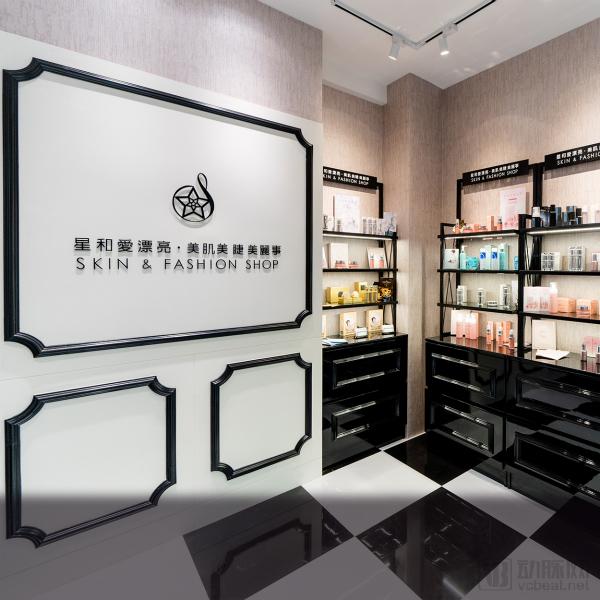
Star & Love Beauty Salon
Xinghe Aipiaoliang Beauty Salon positions lifestyle beauty services as both a preliminary experiential offering before medical aesthetics procedures and as complementary post-operative care, thereby creating a new industrial chain. Its collaboration with Meituan-Dianping primarily focuses on integrating online and offline resources through system-based solutions. By leveraging the system tools provided by Meituan-Dianping, Xinghe Aipiaoliang can access substantial traffic from Meituan while expanding its distribution channels. Furthermore, partnering with the unicorn enterprise Meituan-Dianping enables Xinghe to acquire significant intangible assets, such as enhanced brand equity and support from a broader network of business partners.
Regarding the partnership between the two parties, Lin Xinyi, Chairman of Starhe Medical Aesthetics, stated, “Everyone talks about service, but how can we deliver a superior customer experience? This actually requires leveraging technology to reconstruct outdated service models and establish data-driven foundational technical support. Beyond providing traffic support, Meituan-Dianping’s Beauty & Wellness division offers crucial assistance in integrating online and offline services. Currently, Starhe Medical Aesthetics has officially launched its Series A financing round to fund the expansion of its outlets (clinics and beauty salons).”
Empowering the Beauty Industry’s Industrial Upgrade Through Technology, Meituan Dianping Will Continue to Advance on the Path of Digital and Informational Transformation in the Sector.