

Yibangyi: A TV-First Visual Health Care Customer Service Platform Serving Over 2 Million Users Files for IPO
To build a platform, one must first secure a large user base, with traffic entry points serving as the most critical gateway. Currently, traffic entry points on both PC and mobile ends are largely dominated by BATJ (Baidu, Alibaba, Tencent, and JD.com). To “bypass the giants” and acquire users in large volumes, alternative strategies must be pursued.
The “In-Depth Research on Business Models and Strategic Construction Analysis Report for the Smart TV Industry” by Qianzhan Industry Research Institute predicts that the installed base of smart TVs will approach 200 million units in 2018. A company named Yibangyi has leveraged smart TV interfaces and IPTV platforms as entry points, collaborating with platform operators to reach a large user base directly through the television terminal channel.
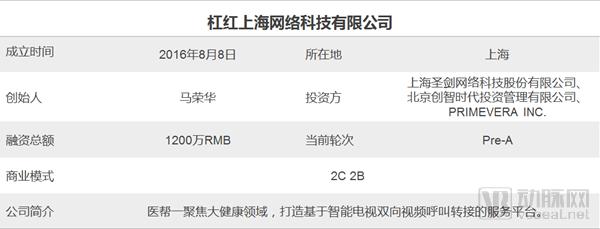
In November 2014, serial entrepreneur Ma Ronghua returned to the startup ecosystem with Yi Bang Yi. Positioned as a visualized healthcare customer service platform, Yi Bang Yi targets home TV users, connecting households on one end with healthcare and wellness service providers on the other. Through a process involving call initiation, customer service routing, and order acceptance by respective enterprises, it enables users to embark on a “health and wellness journey” without leaving their homes.
VCBeat (WeChat: vcbeat) has learned that, to date, Yi Bang Yi has amassed over one million users, delivered more than two million services, partnered with over 5,000 institutions, and serves clients across China.
Visual Customer Service Platform for the Healthcare Sector
Patients typically undergo a process when seeking medical care: first, they need to identify the nature of their health issue, and then find a specialist physician who matches their specific condition.
Yibangyi provides a visual customer service platform. Users can access real-time online remote video customer service directly through their home televisions for initial consultations. Through triage and screening by customer service representatives, users are effectively connected to appropriate medical and health resources. Based on LBS (Location-Based Services), the platform prioritizes localized health management and community physician services, while also supporting cross-regional specialist consultations.
The YiBang platform connects households on one end with healthcare service providers on the other. Guided by customer service representatives, clients can directly view the internal operations of service institutions and engage in face-to-face communication with home-visit personnel via large-screen televisions. If dissatisfied, clients may choose to “cancel the order,” which returns the case to customer service for re-screening.
In addition to LBS-based community health service centers, care institutions, pharmacies, nutritionists, medical consortiums, and health management organizations, the cooperative service providers of the Yibangyi platform also include Weiwenzhen, a telemedicine service platform that ensures over 400 doctors are online in real time every day to provide customers with 24/7 one-on-one video consultations.
In addition, YiBangYi has launched a platform rental service, which includes a 21-inch smart terminal dedicated to video calls, a mobile app tailored for healthcare institutions, and the leasing of video customer service personnel. This enables healthcare service providers and medical consortia to independently conduct their operations.
Broad coverage, continuously exploring user expansion methods
Currently, YiBangYi has not only established strategic partnerships with major domestic smart TV manufacturers such as Skyworth, Hisense, LeEco, Konka, TCL, Haier, and Xiaomi, but also collaborated with Alibaba YunOS, Tmall Magic Box, and China Telecom’s Bestone OTT boxes. Its IPTV services have achieved comprehensive product coverage across five provinces: Hubei, Shanghai, Zhejiang, Jiangsu, and Shandong.
Next, YiBangYi will expand its user base through both internal and external channels. Internally, it will launch video consultation services (including via a mobile app) on external promotional channels such as healthcare institutions and clinics, thereby acquiring effective users through video customer service. Externally, it will leverage the high volume of traffic from home-based video consultations to identify suitable users, transfer them via video calls, and provide triage and referral services to partner institutions, thus achieving user expansion.
In terms of quality assurance, YiBangYi’s customer service representatives are primarily qualified at the nurse level and undergo two weeks of pre-service training to ensure they can make preliminary assessments of clients’ conditions. Regarding service quality guarantees, healthcare service providers undergo comprehensive evaluations before being onboarded onto the platform, ensuring the safety and reliability of their services. Furthermore, user complaints about services are directed straight to the platform operator, thereby enhancing supervisory effectiveness.
The platform’s revenue depends on the breadth and depth of its coverage. Currently, YiBangYi primarily generates income from membership fees, consultation fees, and leasing fees. In the next phase, it will gradually expand into product sales, advertising revenue, commissions from its patient guidance and referral platform, and service fees for B-side visual call center solutions.