

Yunhu Tech, China's First Internet-Based Medical Testing Resource Platform Founded by Former SF Express Executive, Submits IPO Prospectus Following $7.2M Series A Funding
In China, primary healthcare has always been a crucial component of the medical system, yet its underdeveloped laboratory testing capabilities have undoubtedly become a major bottleneck constraining its growth. Primary healthcare institutions often lack the financial resources to purchase comprehensive diagnostic equipment, and third-party medical laboratories rarely serve this sector. Consequently, these institutions cannot provide clinicians with reliable reference data to support diagnosis prior to decision-making. This limitation results in poor patient retention and undermines public trust in primary healthcare facilities.
In developed countries in Europe and the United States, healthcare institutions address their laboratory testing needs by partnering with third-party clinical laboratories, which have captured one-third of the clinical testing market. In contrast, China’s third-party testing services market is not highly concentrated. Among clinical laboratory tests, fewer than 5% are outsourced to third-party laboratories, with hospital-based clinical laboratories remaining the preferred choice for patients.
To address this situation, the government has introduced relevant healthcare policies in recent years, while private capital is also eager to enter the medical sector by leveraging diagnostic testing as an entry point.
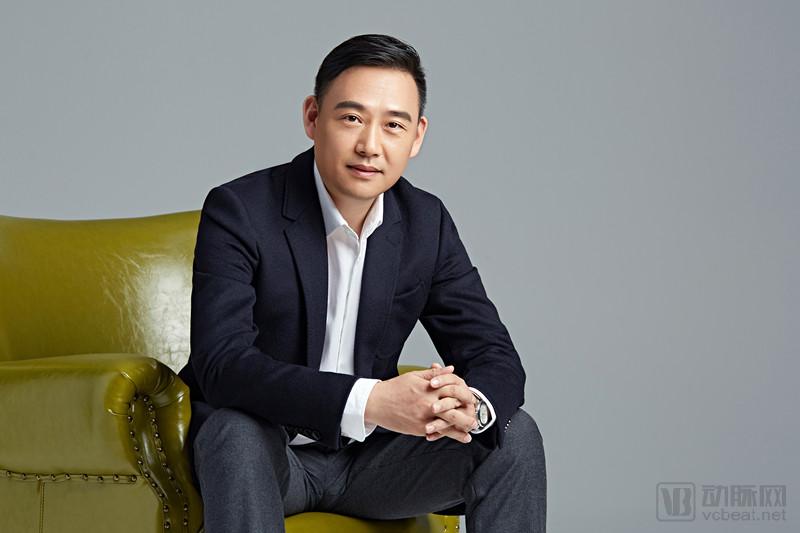
Chen Xiaobing, Founder and CEO of Yunhu Technology
In Hangzhou, such a company was born—Yunhu Technology, China’s first internet platform for medical testing resources. Registered and established in January 2017, the company’s vision is “to make medical testing simpler and diagnosis more convenient.”
Over the past year, Yunhu Technology has not only garnered favor from multiple investment institutions but also established three new subsidiaries: Hangzhou Yunhu Medical Technology Co., Ltd., Hangzhou Yunhu Cold Chain Logistics Co., Ltd., and Hangzhou Yunhu Cloud Information Technology Co., Ltd. By integrating resources within the medical testing industry through platforms such as “Yunhu Yijian,” “Yunhu Medical Care,” “Yunhu Cold Chain,” the “Mi Health Clinic App,” and “Mi Gene,” the company has broken down information silos and advanced the “Internet + Healthcare” service model.
Recently, VCBeat (WeChat ID: vcbeat) learned that Yunhu Technology completed a RMB 50 million Series A financing round in July 2018. Last November, the company secured tens of millions of RMB in Pre-A financing, led by Yuanjing Capital and participated by Morningside Venture Capital.
Chen Xiaobing, Founder and CEO of Yunhu Technology, stated that the funds would be used to further refine and enhance its platform business ecosystem. By leveraging verification as an entry point and seizing opportunities, the company will focus on integrating supply chain resources to continuously empower primary healthcare institutions. Meanwhile, it aims to significantly boost brand awareness, product penetration, and market share, thereby fully unlocking the market.
Currently, Yunhu Technology is also planning its Series A+ financing round. Chen Xiaobin expects to complete it by the end of this year, with the amount potentially exceeding the total funds raised in the previous two rounds. So why has Yunhu Technology repeatedly attracted capital favor? With this question in mind, VCBeat conducted an exclusive interview with Mr. Chen Xiaobin, Founder and CEO of Yunhu Technology. Through this interview, we gained a systematic understanding of Yunhu Technology’s operational system, business model, and future development direction.
In the interview, we believe that the emergence of Yunhu Technology can be summarized as a convergence of favorable timing, advantageous location, and harmonious human relations.
“Tian Shi” refers to the issuance of the “13th Five-Year Plan for Deepening the Reform of the Medical and Healthcare System” by the State Council on January 9, 2017. In accordance with healthcare reform policies, 80% of the diagnosis, treatment, and rehabilitation of common diseases, critical and severe conditions, and certain complex and difficult cases should be basically resolved within county-level jurisdictions. This requires primary care hospitals, despite their limited technical equipment, to carry out a large volume of laboratory tests and examinations, thereby making them heavily reliant on third-party medical testing institutions.
The introduction of these policies has created significant growth opportunities for third-party medical testing institutions. Among the many entrepreneurs eager to enter the market, Chen Xiaobing and his company, Yunhu Technology, have stood out. In fact, even before the healthcare reform policies were introduced, Chen had already set his sights on the third-party medical testing industry and made extensive preparations for his entrepreneurial venture.
“Geographical Advantage” refers to the healthcare reform model in Hangzhou, Zhejiang Province, which has long served as a benchmark for other regions across China to emulate. Naturally, it has received substantial policy support. For instance, in 2017, the Hangzhou Municipal Government issued the Implementation Opinions on Further Promoting the Development of Medical Institutions Established by Social Capital. The document stipulated that private medical institutions would be charged the same rates as public medical institutions for water, electricity, gas, and heating. Non-profit private medical institutions were exempt from relevant administrative and institutional fees during construction, while for-profit private medical institutions enjoyed a 50% reduction in such fees.
“Renhe” refers to the period before his entrepreneurial venture, during which Chen Xiaobing served as the inaugural Chairman of the China Life Sciences Cold Chain Industry Alliance, Head of the Life Sciences Supply Chain Project at SF Group, and Head of the National Logistics Center at Adicon Medical Laboratory Group. His prior professional experience not only enabled him to build an extensive network but also allowed him to accumulate substantial industry expertise.
Chen Xiaobing firmly believes that only technology can drive the grassroots healthcare industry. Therefore, he founded Hangzhou Yunhu Network Technology Co., Ltd. in January 2017.
In fact, there was a small interlude before he founded Yunhu Technology. After leaving Adicon, he joined SF Group to oversee the life sciences supply chain project. However, the project was ultimately aborted due to certain reasons, leading him to “reluctantly” embark on his own entrepreneurial venture.
Following the establishment of the platform, Chen Xiaobin aims for Yunhu Technology to build a new type of primary healthcare service platform composed of an information network, a logistics network, and a terminal network. This will be achieved by integrating core resources across the upstream and downstream supply chain, breaking down information silos in the primary healthcare service chain, linking a nationwide cold-chain service network, and deploying services to nearly one million primary healthcare institutions. With the mission of “improving patients’ medical experience, enhancing the quality of primary healthcare services, and facilitating the implementation of the tiered diagnosis and treatment strategy,” Yunhu Medical is committed to becoming the primary healthcare internet service platform that creates the greatest value for society.
In putting into practice the vision of “making medical testing simpler and diagnosis more convenient,” Chen Xiaobing adopted a two-pronged approach. One prong is online: orders for tests are placed and initiated through the online platforms “Yunhu Yijian” and the “Mi Health Clinic-side APP.” Leveraging Yunhu’s cold-chain logistics system, test samples are delivered to the laboratory at maximum speed. After testing, analysis, and review, the results are uploaded to the Yunhu Testing Services Cloud Platform, where clients can log in to download and view them. The platform also provides precise testing consultation services—including interpretation of test reports and recommendations for disease diagnosis and treatment—as well as health management and value-added services, helping to enhance the comprehensive diagnostic and therapeutic capabilities of primary healthcare institutions.
The other approach is offline. To ensure the timeliness of testing services and the accuracy of test results, Yunhu Technology has established its own rapid testing centers and cold-chain logistics system. As of the first half of this year, Yunhu Technology had piloted and launched three Yunhu POL (Physician Office Laboratory) rapid testing centers across China, with each center serving 30–50 primary healthcare institutions, thereby meeting the demand for rapid testing within one hour for regional clinics. According to Chen Xiaobing, the cost of establishing one rapid testing center is approximately RMB 300,000, and around 30 such centers are expected to be built by the end of the year.
In Chen Xiaobing’s vision, Yunhu Technology aims to rapidly establish a presence in the grassroots medical testing market during the golden period of development for tiered diagnosis and treatment and the health services industry. With its full suite of offerings—Yunhu Network, Yunhu Medical, Yunhu Cloud, and Yunhu Cold Chain—Yunhu Technology has achieved online-to-offline information connectivity, providing users with convenient and efficient mobile healthcare testing services.
Meanwhile, it introduces internationally advanced quality management systems to ensure full-process quality control for every specimen, enabling rapid and accurate testing and analysis at the earliest opportunity. The verified test results are delivered to clients in the shortest possible time through multiple channels, including the Cloud Call Terminal Management System, remote report printing system, and network data integration system. This approach provides clients with professional, efficient, and precise laboratory testing, health management, and value-added services, while ensuring that client sample test results are safe, reliable, and fully visible, controllable, and traceable throughout the entire process.
To enhance testing efficiency, Chen Xiaobing established a specialized cold-chain logistics team, with all frontline staff holding hazardous materials handling certifications. He built a comprehensive logistics transportation network and a robust logistics information system, offering professional cold-chain packaging, GPS tracking, and end-to-end temperature monitoring. By leveraging Internet of Things (IoT) technology to achieve unified informational management of personnel, specimens, locations, and temperatures, he provided time-definite logistics services within the region, thereby establishing a specialized one-stop cold-chain logistics transportation platform.
Furthermore, to address the issue that primary care physicians may not yet be fully familiar with how to reasonably and effectively utilize laboratory resources during clinical practice, Yunhu Technology has established a comprehensive training system. In all regions covered by its business operations, the company has set up independent ground promotion teams, each staffed with more than 20 professionals under direct management by headquarters. These teams provide technical training to every contracted clinic to ensure accurate operation of the online-offline information interconnectivity system.
Meanwhile, Yunhu Technology has integrated upstream third-party clinical laboratories, partnering with hundreds of specialized institutions such as KingMed Diagnostics, Adicon Clinical Laboratories, and Boao Biotechnology, as well as upstream suppliers, to ensure the authority and safety of its testing services. It has currently collaborated with over 20,000 primary healthcare institutions across Beijing, Zhejiang, Fujian, Anhui, Hubei, Shandong, Hebei, Shanghai, Henan, Hunan, Jiangxi, Jiangsu, and other regions, cumulatively serving nearly one million patients.
Why Did Yunhu Technology Secure Two Rounds of Funding in a Short Period? Clues Can Be Found in the Views of Tian Min, Partner at Yuanjing Capital. Tian Min believes that Yunhu Technology connects medical laboratories with primary healthcare institutions through its specialized service capabilities, systematically reducing the costs for medical laboratories to expand into grassroots markets and further stimulating vitality in the medical testing market.
Meanwhile, the Yunhu team comprises professionals from leading enterprises in the clinical laboratory and internet platform sectors, possessing a deep understanding of the pain points in primary healthcare. As national policies for primary healthcare are liberalized, Yunhu is well-positioned to leverage its years of market expertise to support tiered diagnosis and treatment, empowering primary care clinics to enhance their laboratory testing capabilities and diversify their product offerings.
When discussing the reasons for investment, Tian Min stated, “The founder previously served as the head of logistics at Adicon, one of China’s top three third-party medical testing institutions. He has a thorough understanding of medical logistics and team operations. Moreover, his core team members also come from Adicon, including the architect of the entire IT infrastructure and the head of the business development (BD) team responsible for ground promotion. Therefore, his team structure is highly comprehensive.”
It is reported that Chen Xiaobing had just completed the Pre-A round of financing, stating that the funds would be primarily used to build the business framework, refine the product line, and further expand sales channels.
Now that more than half a year has passed, Chen Xiaobing detailed to the reporter the three key upgrades he implemented in his overall business architecture system:
First, the application platform for clinics was established, primarily comprising two modules: the “Yunhu Medical APP” and the “Mi Jiankang Clinic-Side APP.”
Second, the professional and basic editions of “Cloud Call Cloud Clinic,” the supporting system for the clinic side of the SaaS platform, were fully launched by the end of July this year. By the end of October, the platform had reached over 10,000 users;
Third, integrate small clinical laboratories and testing centers with the HIS systems at clinic terminals to better empower grassroots clinics.
In addition, the Yunhu team has comprehensively upgraded its cold-chain logistics, business development, and marketing services, making laboratory testing simpler and more intelligent. Chen Xiaobin stated that since its establishment, Yunhu Technology has been striving to obtain first-hand information data and customer insights. He emphasized that only through continuous technological upgrades and the expansion of service functionalities can the laboratory testing business system remain irreplaceable.
Moving forward, Chen Xiaobing intends to expand into sectors such as pharmaceuticals, medical devices, medical imaging, and telemedicine, striving to build China’s largest health e-commerce platform and healthcare operator ecosystem. Simultaneously, by integrating the platform software with its logistics infrastructure as a unified project, the company will combine its comprehensive Cloud Call technical service system with the Cloud Call Medical Ecosystem Cloud Platform to extend services to grassroots clinics. This initiative aims to provide all-around empowerment, accelerate market deployment, secure greater access to medical resources and data, deliver high-quality healthcare service experiences to users, and ultimately achieve a win-win outcome.
Moreover, Yunhu Technology will fully leverage its capabilities in integrating healthcare industry resources, aggregate high-quality strengths, and actively build a world-class medical ecosystem. It will establish branches and operational centers in provincial capitals and economically developed cities across China, continuously advance new models of home-based medical services, and integrate online and offline resources to realize smart mobile healthcare. Ultimately, this aims to transform the healthcare-seeking habits of grassroots populations and ensure equitable access to high-quality medical services for all.
Overall, Yunhu Technology will fully leverage its capability to integrate resources within the healthcare industry, aggregating high-quality strengths to empower grassroots clinics by combining platforms, services, operational systems, software, and cold-chain logistics. It will continuously advance new models of in-home medical services, achieve comprehensive coverage for the grassroots population, and realize smart mobile healthcare by integrating online and offline resources. This will foster a virtuous cycle in the grassroots healthcare ecosystem, ultimately establishing Yunhu Technology as a one-stop service platform for primary care and creating a brand that becomes the go-to choice whenever people require medical services. Chen Xiaobin stated that this represents the most idealized future state for Yunhu Technology.
Looking back, Yunhu Technology has established its management team and built a robust corporate structure in less than a year. The company has expanded from an initial 200-square-meter office to a new workspace exceeding 1,000 square meters. From a small startup, it has evolved into a professional services firm that continues to attract capital investment, now boasting a team of over 30 management elites, more than 50 technical experts, and over 500 employees.
From the initial pilot in Hangzhou to its current coverage of more than ten provinces and municipalities across China, partnering with over 20,000 medical institutions, Chen Xiaobing has repeatedly emphasized one phrase regarding the rapid growth of Yunhu Technology: “There are always more solutions than difficulties.”, which is the biggest insight since the establishment of Yunhu Technology.
During its development, the most challenging phase was the initial market expansion, which Chen Xiaobing described as “going to war.” Starting with a pilot program in Hangzhou, Yunhu Technology selected Changsha, Hunan Province, as its second business location. To gain the trust of grassroots clinics, the entire team of more than 20 members was deployed; however, no clinics were willing to sign contracts at the outset. This situation persisted for over a month. As the company continuously improved and refined its service capabilities, Yunhu Technology reached a turning point in mid-2017, with an increasing number of grassroots clinics expressing interest in collaboration.According to Chen Xiaobing,,At the Fastest,Capable of signing in a single day100+Home DiagnosisInstitute.
Yunhu Technology’s growth and development are inseparable from the dedication and hard work of every “Yunhu employee.” For Yunhu Technology, another urgent issue to address is the talent shortage. The third-party medical testing sector is not only technology-intensive but also labor-intensive. However, in China, there is an excess demand for third-party medical testing platforms, a severe shortage of pathologists, relatively insufficient technical capabilities, and a particular scarcity of generalist professionals.
To address the talent shortage, all executives and technical staff at Yunhu Technology were deployed to the front lines to train new employees and proactively engage with them, ultimately establishing a highly efficient employee development model. Chen Xiaobin stated that for enterprises, fully mobilizing employee enthusiasm requires significant efforts in refining development and training models as well as incentive mechanisms.
Ultimately, enterprises are commercial entities, and profitability remains an unavoidable issue even in the seemingly vast primary healthcare market. In the short term, Yunhu Technology primarily generates revenue through three channels: sales commissions from upstream suppliers’ testing and inspection products, logistics service fees, and software service fees. Currently,Yunhu Technology’s monthly sales volume has grown from a few thousand yuan at the outset to nearly100010,000 per month,Expected to exceed on a monthly basis by the end of this year1500+10,000。
Chen Xiaobin stated that in reality, no matter how significant the challenge, there is always a solution; difficulties can also serve as a driving force for a company’s progress. Whether dealing with upstream suppliers or downstream medical institutions and clinics, the services and products provided by Yunhu Technology must tangibly address customers’ core issues, thereby continuously enhancing overall market acceptance and recognition.