

China's Domestic Health Product Market Exceeded RMB 700 Billion in 2017: Strategies for Local Enterprises to Compete and Innovate
Over the past 30 years, China has evolved from a nascent player into the world’s leading supplier of raw materials for the plant extraction industry. The year 2008 marked a significant milestone, as China’s export value of plant extraction raw materials surpassed that of traditional Chinese medicine (TCM) decoction pieces for the first time. It was also around 2008 that numerous domestic plant extraction companies went public.
After a decade of development, China’s natural health industry has maintained rapid growth, making the country the world’s second-largest market for dietary supplements. However, opportunities come with challenges. The botanical extract industry is currently undergoing growing pains as it transitions from unchecked expansion to rational, sustainable development. Over the next decade, how domestic enterprises can build competitive products and gain greater influence in the natural health product sector has become a focal point of industry attention.
From October 25 to 27, the China Natural Ingredients Conference (CNIC), themed “The Next Decade: The Rise of Big Health,” was held in Shanghai. Co-hosted by the China Chamber of Commerce for Import and Export of Medicines and Health Products and Plant Extraction Bridge, the conference brought together stakeholders from across the upstream and downstream segments of the natural health products industry to discuss how to seize opportunities and address multiple challenges as the plant extraction industry enters a golden period of development.
Zhang Shuli, General Manager of Zhi Ti Qiao, stated: “After 30 years of industry restructuring and development, how to enhance the efficiency of industry growth in the next decade under the new retail model, and enable the health industry to play a more active role in the national economic landscape under the Healthy China 2030 policy, will remain the key issues that the CNIC Conference continues to focus on and promote.”
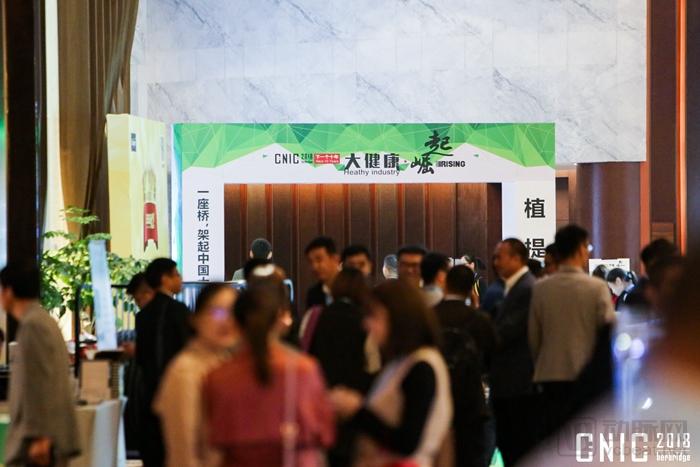
2018 CNIC Conference Site
Plant extracts, as core raw materials and products in the biopharmaceutical industry, are currently widely used in common consumer goods such as botanical drugs, food additives, functional foods, and cosmetics. Particularly in the health supplement sector—whether for functional health products or dietary supplements—plant extracts constitute the most fundamental and critical component of a product’s core competitiveness.
Within the broader health and wellness industry, plant-extracted products also play a significant role. Between the states of health and illness lies sub-health, and correspondingly, between food and pharmaceuticals exists a vast market for health supplements.
In the past, China’s plant extraction industry was primarily export-oriented; however, in retrospect, the domestic market represents a vast blue ocean, both in terms of scale and growth rate.
According to the annual statistical report from the China Food and Drug Administration, there were 2,317 health food production licenses issued nationwide in 2017. In that year, the total value of China’s nutritional and health care market exceeded RMB 700 billion. This figure represents only a 20% market penetration rate for domestic health supplements.
This market still has enormous room for growth. The acceleration of its consumption potential is driven first by overall consumption upgrading, as people are increasingly willing to pay for health, and second by the latent purchasing power of millennials.
In 2017, per capita healthcare expenditure in China reached 1,451 yuan, with a growth rate surpassing that of per capita consumer spending. The oft-cited gap between the United States and China in per capita healthcare expenditure actually stems from differences in health supplement consumption. Furthermore, the demographic profile of consumers in the health supplement market is becoming increasingly diverse.
The post-90s generation, keen on the “wellness trend,” is just as avid in purchasing health supplements as 90-year-olds. Data from EBang shows that during last year’s Double 11 shopping festival, the medical products most favored by the post-80s and post-90s generations were, first, goji berries, and second, condoms. The post-90s are enthusiastic about steeping goji berries in thermos flasks, striving to balance late-night overwork with liver-protective wellness practices. Coexisting with the aging population trend, they are gradually emerging as another major force in health supplement consumption.
Although the plant extraction industry boasts significant market potential, it has undergone a transition from cutthroat competition to standardized development over the past decade. Nevertheless, the industry as a whole continues to face developmental shortcomings.
To gain greater influence and secure a core position in the value chain amid intensifying global competition, China’s natural health product industry must strengthen its capabilities both internally and externally. Under rapid expansion, endogenous challenges—such as stagnant growth in industry scale, weak core competitiveness, and insufficient R&D capacity—are becoming increasingly prominent.
First, the domestic health supplement industry in China does not yet exhibit significant advantages in scale. Enterprises with investments exceeding RMB 100 million account for only 1.45% of the total number of companies in the sector, while those with investments between RMB 100,000 and RMB 1 million constitute 41.39%, and those with investments below RMB 100,000 make up 38%. This indicates that the industry has not yet achieved scaled development. Furthermore, product offerings are plagued by serious imitation and homogenization. Against the backdrop of increasingly intense international competition, domestic companies also face a fiercely competitive landscape characterized by internal cannibalization.
Furthermore, the quality supervision system is characterized by low industry standards and entry barriers; in terms of sales channels, incidents infringing upon consumer rights, such as excessive or even false advertising, are also commonplace.
In addition to breaking through development bottlenecks and addressing endogenous issues within the plant extraction industry in China, changes and challenges in the external environment also require the domestic natural health product industry to proactively adapt and respond. Historically, China has been a major exporter of plant-derived extract raw materials; however, we remain at a competitive disadvantage in downstream product markets within the industrial chain. With intensifying international competition, maintaining the status quo is tantamount to waiting for demise.
Although China’s health supplement market is valued at hundreds of billions of yuan—a massive prize—not everyone can claim a share. At the CNIC conference, VCBeat learned that last year, sales of imported health supplements accounted for 10% of total cross-border e-commerce imports, reaching a market size of RMB 50 billion, with Australian brands such as Blackmores and Swisse ranking among the top in import value. By 2017, the total value of cross-border e-commerce imports had nearly caught up with the market share held by domestically produced health supplement brands.
Data from the China Chamber of Commerce for Import and Export of Medicines and Health Products shows that in 2017, China’s plant extract exports reached $2.01 billion, a year-on-year increase of 4.33%, while health supplement exports amounted to only $241 million, representing a year-on-year decline of 3.35%. In other words, Chinese plant extract raw materials are highly acclaimed in the international market, but final consumer products have failed to gain strong market traction.
While domestic seeds have blossomed abroad, another trend warrants attention: in 2017, China’s health supplement imports reached $323 million. Although this figure is not startling, the year-on-year growth rate was as high as 69.51%. This indicates that foreign products are increasingly impacting the domestic market, and Chinese health supplements can no longer avoid intense international competition.
These data reflect that China’s plant extract industry is entering a golden period of development, but it is also undergoing a phase of industrial growing pains. Whether driven by internal initiative or external industrial pressure, domestic health supplement companies must complete their self-reinvention.
If the past decade saw the emergence of leading enterprises and the initial formation of an industrial landscape, marking a transition from disorder to order within the industry, then how should the next decade unfold? VCBeat gathered insights from multiple industry experts on-site at CNIC.
Overall, in the R&D phase, enterprises need to foster greater innovation and increase investment in scientific research, rather than settling for the upstream segment of the industry chain, which yields the lowest profits. In the production phase, digital approaches should be adopted to redefine quality control. In the marketing phase, new channels should be expanded, collaborations with downstream enterprises strengthened, and brand building advanced.
Meng Dongping, Vice President of the China Chamber of Commerce for Import and Export of Medicines and Health Products, stated at the CNIC Conference: “For the natural health products industry to break through development bottlenecks and achieve scaled growth, it must first adopt a global perspective and adhere to international rules; second, it must continuously innovate to build differentiated competitive advantages; and third, it must leverage industry platforms to implement coordinated strategies, combining investment with trade and integrating ‘bringing in’ with ‘going global.’”
Zhang Chengwen, Chairman of the China Plant Extracts Branch, stated, “At present, the industry still requires the introduction of relevant regulations to standardize its development. Meanwhile, it is essential to fully launch consumer education initiatives and establish a quality monitoring mechanism covering the entire chain from raw materials to distribution.”
Zhang Shuli, General Manager of Plant Extraction Bridge, stated: “After 30 years of industry restructuring and development, how to make the industry develop more efficiently under the new retail format in the next decade, and allow the health industry to play a more active role in the national economic landscape under the Healthy China 2030 policy, will be the issues that the CNIC Conference continues to focus on and promote.”
These are no longer just concepts; at the CNIC site, many enterprises can already be seen making promising attempts at practical implementation.
In terms of R&D, many companies have already focused on specialized plant extraction. In addition, biology and molecular biotechnology are beginning to create more plant-based raw materials.
Currently, in terms of quality control, leading enterprises have established transparent factories and leveraged technologies such as big data, the Internet of Things (IoT), information technology, and data monitoring to build smart factories. By restructuring operational processes, management systems, and production tools, these companies are gaining a competitive edge in the future landscape characterized by agility, personalization, and service orientation.
Policies have been progressively refined. Since the implementation of the Administrative Measures for the Registration and Filing of Health Foods in 2016, the regulatory framework for market entry of health food products has shifted from a standalone registration system to a dual model combining registration and filing. The Measures stipulate that health foods manufactured using ingredients not included in the approved Health Food Raw Materials Directory, as well as imported health foods for the first time, must undergo product registration with the China Food and Drug Administration (CFDA), which will organize on-site inspections and review testing through its evaluation agencies.
Subsequently, in 2017, the China Food and Drug Administration (CFDA) officially released the Catalogue of Raw Materials for Health Foods (I) and the Catalogue of Permitted Health Claims for Health Foods (Batch I), which served as the first batch of raw material catalogues under the health food notification system. This marked the official launch of the notification-based regulatory framework for the health food industry.
It is worth noting that, in addition to the power brought by information technology, China’s natural health products also benefit from valuable natural and historical resources. First, with its vast territory, China boasts abundant botanical resources, including over 300 plant species suitable for extraction, many of which serve as key ingredients for top-selling products in the U.S. market. Beyond these advantages, China’s time-honored traditional Chinese medicine (TCM) formulations and the concept of “medicine and food sharing the same origin” represent another significant treasure trove.
Over the past 30 years, China’s plant extraction industry has grown from scratch to a substantial scale. In the next decade, the industry will transition from being large to becoming strong. Building differentiated core competitiveness is not a task that can be accomplished in the short term. Fortunately, at the CNIC event, we have already observed many industry professionals driving the sector toward deeper development, enhancing capabilities across research and development, quality control, and services, thereby playing a more significant role in the Healthy China strategy and better meeting the multi-level needs of consumers and clients.
Reference: Analysis of Supply and Demand, Market, and Competitive Landscape of China's Plant Extract Industry in 2017