

Julikang: China's Only Nationwide Third-Party Sterilization Service Provider with 100% Contract Renewal Rate Files IPO
Central Sterile Supply Departments (CSSDs) and the provision of sterile supplies are critical components of hospital medical service operations. In August 2017, the former National Health and Family Planning Commission issued the “Notice on Deepening the ‘Streamline Administration, Delegate Power, Improve Regulation, and Upgrade Services’ Reform to Stimulate Investment Vitality in the Healthcare Sector,” listing CSSDs as newly added independent medical institutions. Subsequently, pharmaceutical distribution enterprises, platform providers, infection control equipment suppliers, and even large state-owned pharmaceutical conglomerates have all strategically entered the third-party CSSD market.
VCBeat (WeChat ID: VCbeat) has found that there are few nationwide third-party sterile supply service providers with mature business models in China, and Shanghai Julikang Investment Co., Ltd. (hereinafter referred to as Julikang) is one of them. Founded in 2010, Julikang has established third-party sterile supply centers in seven major cities across China, primarily serving medical institutions at all levels. Its national centers serve a total of nearly 200 clients, with a 100% annual contract renewal rate.

Shen Jiayin, Chairman of Julikang Photo provided by the interviewee
So, how did Julikang build its brand in a market with no precedent to follow? With this question in mind, VCBeat recently visited Julikang, and Chairman Shen Jiayin provided us with the answer.
The Julikang Shanghai Sterile Supply Center (hereinafter referred to as the “Shanghai Center”) we visited is located in Jiading, Shanghai. It was the first of Julikang’s seven regional sterile supply centers to be built and put into operation, and it stands as the most representative regional third-party sterile supply center.
Construction of the Shanghai Center began in 2010 and was completed in 2011. It achieved profitability as a single center the following year. The facility provides medical sterilization and supply services for reusable instruments to multiple hospitals, including Ruijin Hospital North Branch affiliated with Shanghai Jiao Tong University School of Medicine, Huashan Hospital North Branch affiliated with Fudan University, and Changning District Maternal and Child Health Hospital of Shanghai. It holds a pivotal position in Julikang’s commercial landscape.
Equipment. The Shanghai Center is equipped with five single-chamber automated washer-disinfectors and one tunnel-type continuous washer. After contaminated items enter the Shanghai Center and undergo verification and sorting by two staff members, all cleaning and disinfection processes are performed by machines. The tunnel-type continuous washer has a very large capacity, which is rarely seen even in major Grade A tertiary hospitals in China.
Personnel. The Shanghai Center employs over 100 workers, divided into two shifts. The morning shift begins work at 7:00 AM, and the night shift concludes at 3:30 AM. The workers’ primary responsibilities include counting, verifying, collecting, and mechanically cleaning and disinfecting contaminated instruments in the contaminated zone, as well as sorting, assembling, packaging, and sterilizing clean items within a Class 100,000 cleanroom.
Shen Jiayin told VCBeat that the Shanghai center packages more than 6,000 such parcels each day, a workload twice as large as that in Europe, where regional sterile supply centers are most developed.
At 5:30 a.m. every day, Julikang’s proprietary logistics vehicles load qualified sterile medical device packs for delivery to multiple hospitals in Shanghai, supporting surgical procedures and routine medical services. Prior to loading, each pack must undergo meticulous verification and barcode scanning. By 7:30 a.m., before the hospitals open, all sterile medical device packs from the Shanghai Center have been successfully delivered to the served hospitals.
A comprehensive solution for sterile supply services should be based on the supplier’s ability to meet hospitals’ individualized needs and quality control safety requirements. Shen Jiayin told VCBeat that various hospitals have their own distinct professional specialties, along with personalized requirements for medical procedures and quality control processes. This necessitates that third-party sterilization suppliers possess an in-depth understanding of hospital needs and the capability for collaborative work, thereby tailoring customized, holistic service solutions to comply with hospitals’ requirements for outsourced sterilization items and quality control.
In Shen Jiayin’s words, Julikang advocates providing “nanny-style” services to hospitals. After a hospital signs a service agreement with Julikang, the entire process of handling disinfected items and all item handovers within the hospital can be fully outsourced.
During the use of supplies, the hospital associates patients with the sterilization packs provided by Julikang by scanning barcodes, thereby consolidating all quality, safety, and item traceability information onto the sterile item traceability platform provided by Julikang. This enables the hospital to maintain full control over all item traceability information throughout the entire process.
“Looking back, the reason we were able to spend eight years building a robust traceability platform for Julikang was precisely because hospitals’ personalized needs and quality control requirements compelled us to do so. This pressure drove enterprises to strengthen process control, software management, and the development of traceability management platforms, thereby providing hospitals with reliable professional services,” remarked Shen Jiayin.
Safety is paramount for third-party sterile supply services. To this end, Julikang has established a closed-loop product information traceability system. Built upon Julikang’s self-developed MIS Group Management Platform, Central Quality Traceability Operating System, and Sterile Item Traceability System, this closed-loop system integrates with Hospital Information Systems (HIS) and infection control equipment data systems, forming a comprehensive, IoT-based quality control management framework for complete product information traceability.
Shen Jiayin told VCBeat that Julikang is currently the only third-party sterilization supplier whose sterile item traceability management software can achieve data integration with hospital information systems (HIS). By integrating with the hospital HIS, true end-to-end traceability management of sterile items has been realized.
Furthermore, Julikang is the only third-party sterilization provider that directly integrates device manufacturer interfaces into its traceability management software, enabling real-time reading of equipment physical parameter data.
All product information from Julikang can be queried within a closed-loop traceability system via barcodes. The operational logs and device physical parameter records maintained in this closed loop are precise to the second, with each step seamlessly linked throughout the entire process, making falsification impossible. In Shen Jiayin’s view, this closed-loop traceability system constitutes Julikang’s core competitiveness and serves as a critical foundation for its future expansion into platform-based businesses.
In August 2017, the former National Health and Family Planning Commission issued the *Notice on Deepening the Reform of “Delegating Power, Improving Regulation, and Upgrading Services” to Stimulate Investment Vitality in the Medical Field*, adding five new categories of independently established medical institutions, including rehabilitation medical centers, nursing centers, sterile supply centers, small and medium-sized ophthalmic hospitals, and health examination centers. The clear definition of the status of these medical institutions has charted a course for third-party sterile supply centers to undertake hospital sterilization services.
In June 2018, the National Health Commission issued the "Notice on Printing and Distributing the Basic Standards and Management Specifications (Trial) for Three Types of Medical Institutions, Including Medical Disinfection and Supply Centers," which promulgated the "Basic Standards for Medical Disinfection and Supply Centers (Trial)" (hereinafter referred to as the "Basic Standards") and the "Management Specifications for Medical Disinfection and Supply Centers (Trial)."
According to the "Basic Standards," the usable area of business premises in the Central Sterile Supply Department (CSSD) shall account for no less than 85% of the total area. Furthermore, it is required to establish a hard instrument cleaning and disinfection area with a construction area of no less than 2,000 square meters, a soft instrument cleaning and disinfection area with a construction area of no less than 2,000 square meters, and a flexible endoscope cleaning and disinfection area with a construction area of no less than 800 square meters.
With a flurry of new regulations emerging, hospital Sterile Supply Departments (SSDs) have been thrust into the spotlight. As cost centers that generate no direct revenue, SSDs consume significant hospital resources, including clinical space and staffing quotas for professional nursing personnel, thereby placing substantial financial strain on healthcare institutions.
In contrast, hospitals are more inclined to outsource their sterilization and supply services by purchasing third-party medical services. As specialized institutions, third-party sterilization providers handle these logistical support tasks, enabling the sharing of regional medical resources with significant advantages.
Shen Jiayin told VCBeat that, in a year, the Shanghai Center will also be expanded to 6,000 square meters in accordance with national standards, while incorporating capabilities for sterilizing hard instruments, soft instruments, and endoscopes. Meanwhile, the four new standard-compliant medical sterilization centers currently under construction by Julikang are being built from the outset according to the latest national standards and will be equipped with intelligent systems. The construction of these new centers and the integration of artificial intelligence are also key reasons why Julikang has chosen to launch its Series B financing round at this time.
It is reported that Julikang’s seven operational centers handle sterile supply services for more than 200 medical institutions across China. Among its partner institutions, over half are Grade A tertiary hospitals, accounting for 0.1% of all such hospitals nationwide; the remainder include Grade B secondary hospitals, specialized hospitals, and community health centers. The combined financial statements of the seven centers show a profit of RMB 5 million, with a net profit margin of approximately 30%.
By 2020, Julikang plans to establish 25 sterile supply centers across China. During its Series A financing round, Julikang introduced Neptune Fund as an investor, aiming to leverage Neptune’s extensive nationwide network to accelerate its market expansion.
However, Shen Jiayin has no plans to establish additional regional centers beyond the existing 25 sterile supply centers. At that time, Julikang will focus on building a collaborative operating room platform to provide comprehensive, lean, and personalized services for hospital surgeries.
In Shen Jiayin’s vision, once the hospital adopts the mature JuliKang Operating Room Collaboration Platform, JuliKang will provide comprehensive, customized service solutions and staffing. Medical personnel need only arrive at the designated operating room at the scheduled time to perform their specialized surgical procedures.
Currently, Julikang is seeking Series B financing, with a target amount of RMB 150 million and a post-money valuation of RMB 1.2–1.5 billion.
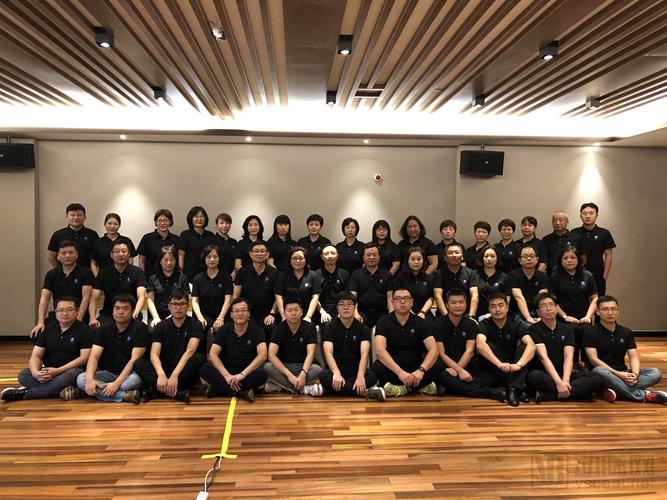
JuliKang Shanghai Center Management (Photo provided by the interviewee)