

23andMe Receives FDA Restricted Approval for De Novo Consumer Pharmacogenetic Test
VCBeat (WeChat ID: VCbeat) has learned that on October 30, 2018, the FDA announced approval for the marketing of 23andMe’s Personal Genome Service Pharmacogenetics Report test. The test is designed to detect whether any of 33 genetic variants are present in a consumer’s genome; these variants may affect the body’s ability to metabolize certain medications.
The purpose of this test is to inform patients and encourage them to discuss more comprehensive treatment options with their healthcare providers. However, 23andMe also emphasizes that genetic test results are not the sole factor for patients or health insurance services to consider when selecting treatment plans, and that any decision on a treatment plan should be based on independent pharmacokinetic clinical trials.
The FDA requires De Novo submissions to meet eight “special controls,” including a label warning advising consumers not to use test results for any drug-related decisions.
Tim Stenzel, Director of the Office of In Vitro Diagnostics and Radiological Health at the FDA’s Center for Devices and Radiological Health, stated in a press release: “Consumers are increasingly interested in genetic information. This test provides consumers with direct information about genetic variants to help them make informed healthcare decisions. The test should be used appropriately, as it does not determine whether a medication is suitable for a patient, does not provide medical advice, and cannot diagnose any health conditions. Treatment decisions should only be made after discussing the results with an authorized healthcare provider and confirming these results through clinical pharmacogenetic testing.”
The FDA stated in a press release that its review of the test demonstrated its accuracy and reproducibility. Additionally, 23andMe submitted study data assessing users’ understanding of the test results and alerts.
For years, regulatory oversight of the privacy, accuracy, and clinical utility of direct-to-consumer genetic testing has lacked transparency. However, the FDA’s de novo clearance of such tests, along with its accompanying restrictive warning conditions, has provided regulators with new perspectives on how to address these novel diagnostics—particularly regarding the role of ordinary consumers in their own healthcare decision-making.
Although the test label warns consumers not to use the test results as the sole factor in making treatment decisions, this test represents a significant step forward in applying genetics and health-focused consumer genomics to personalized medicine.
23andMe is arguably the leader in the genetic variation testing market. After being publicly reprimanded by the FDA for offering health tests in the United States, 23andMe suspended its testing services for two years and was required to submit separate applications for FDA approval for each health test. Last year, the FDA established a special pathway for approving direct-to-consumer genetic health risk tests, allowing companies to submit all testing processes for review in a single application, thereby eliminating the need for individual pre-market clearance for each test.
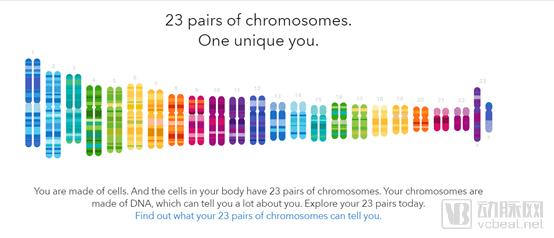
Image from the 23andMe official website
About 23andMe
Founded in April 2006 and headquartered in California, USA, 23andMe was co-founded by Linda Avey and Anne Wojcicki, wife of Google co-founder Sergey Brin. The company is dedicated to human genome research and provides genetic variant testing services to users. 23andMe has established one of the largest genetics/phenotype databases in the world. In May 2007, 23andMe secured $3.9 million in Series A financing, with participation from Google and Sergey Brin. In September 2017, it raised $250 million in Series F financing led by Sequoia Capital; these funds were allocated to accelerate user growth, expand its gene therapy portfolio, and advance its crowdsourced genetic research platform. In July 2018, GSK (GlaxoSmithKline) invested $300 million to collaborate with 23andMe on the development of an LRRK2 inhibitor that could potentially be used for the treatment of Parkinson’s disease.