

Shukun AI Paves the Way in Cardiovascular Diagnosis with End-to-End Clinical Integration

SHUKUN
Provider of Intelligent Products and Innovative Solutions
Cardiac conditions often deteriorate imperceptibly, making it difficult for the general public to detect them on their own. Unlike many chronic diseases, once a heart attack occurs, failure to take immediate action can render even physicians powerless to reverse the outcome.
China faces a severe burden of cardiovascular disease, with nearly 290 million affected individuals. Among patients aged 50 and older, one in five dies from cardiovascular conditions, making it the leading cause of death among both urban and rural residents. Over the next decade, the number of individuals with cardiovascular disease is expected to continue rising rapidly.
To curb this trend, the most effective approach is to promote early cardiovascular screening to detect potential issues at an initial stage. For patients already diagnosed, timely follow-up examinations are essential to monitor disease progression. However, taking cardiac angiography as an example, while the annual volume of CT angiography (CTA) exceeds 6 million cases, the diagnostic process for coronary heart disease is complex and challenging. Due to shortages in equipment and human resources, the current healthcare system is unable to meet the substantial demand from patients.
The advent of artificial intelligence (AI) technology appears to offer an effective solution to this persistent challenge in healthcare. However, although numerous companies have entered the market for AI-based medical imaging products, few have ventured into the cardiovascular field due to its high technical barriers. Nevertheless, some enterprises have dared to explore this technological “no-man’s land.” In fact, hospitals and companies have already collaborated to integrate AI into the entire workflow of cardiovascular diagnosis. Recently, Wuhan Central Hospital held a press conference to share its achievements and recommendations on the clinical application of an intelligent auxiliary diagnostic system for coronary CT angiography (CTA) across the entire diagnostic process. While many medical imaging AI companies have begun clinical trials in hospitals, participation in such trials does not equate to full integration into clinical workflows. As the first hospital in Central China to employ AI-assisted coronary CTA diagnosis, Wuhan Central Hospital’s proactive decision to hold this press conference—the first of its kind—is noteworthy.
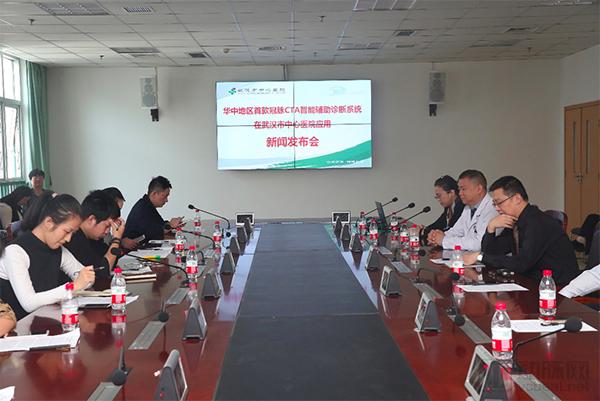
Wuhan Central Hospital Holds Press Conference on SHUKUN’s AI Product for Coronary Heart Disease to Improve the Entire Clinical Workflow
The intelligent AI-assisted diagnostic system for coronary CTA imaging used by Wuhan Central Hospital was jointly developed by Wuhan Central Hospital and SHUKUN. The two parties collaborated to create this AI product with the aim of addressing pain points in medical workflows and establishing a high-efficiency imaging diagnosis workflow.
The collaboration between the two parties began this May. Director Wang Xiang told VCBeat, “In terms of cardiovascular angiography as the entry point, our needs align closely with SHUKUN’s objectives. Although our physicians are highly efficient, the large patient volume still overwhelms the department. So, can we further enhance efficiency? Under current conditions, this is possible—we can delegate simple and tedious operational steps to computers.”
Ms. Ma Chun’e, CEO of SHUKUN, also stated, “Traditional cardiovascular imaging diagnosis involves a significant amount of low-level, repetitive manual labor. Artificial intelligence can replace humans in performing these tasks, even faster and better. We hope our cardiovascular AI products can help physicians break free from tedious, repetitive work, allowing them to refocus on diagnosis itself, on clinical practice, and on patients.”
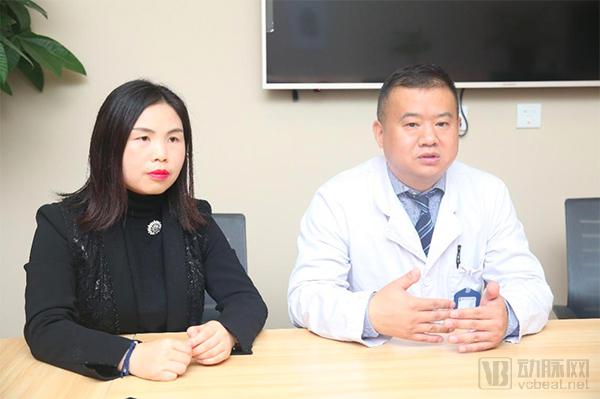
Wang Xiang, Director of the Department of Diagnostic Imaging at Wuhan Central Hospital (right)
Ms. Ma Chun'e, CEO of SHUKUN (left)
During the collaborative development process, Wuhan Central Hospital was responsible for collecting clinical coronary CT angiography (CTA) images, providing physiological parameters and clinical indicators, offering professional medical guidance and training, and conducting clinical validation and review of the intelligent system. Meanwhile, SHUKUN Technology deeply engaged with the hospital to understand physicians’ needs from the frontline, continuously optimizing product features based on actual clinical requirements. This approach ensures that artificial intelligence technology is seamlessly integrated into clinical workflows, enhancing its clinical value and enabling smart healthcare to serve clinical practice more precisely.
Nowadays, the focus of AI in healthcare has shifted from the accuracy of lesion identification to practical implementation capabilities. This is because accuracy rates may be artificially inflated by synthetic data, whereas successful implementation indicates that AI products have entered the real world and are ready to withstand scrutiny by physicians.
However, earning physicians’ trust is no easy feat. Only by delivering precise results that truly address their practical needs and providing homogeneous, structured diagnostic reports that seamlessly integrate into their clinical workflows can medical AI products become deeply embedded in physicians’ daily practice, rather than ending up unused in radiology departments.
How can AI integrate into physicians’ actual clinical workflows to fully unlock their productivity? This is a major challenge for medical AI and the key to realizing its true value.
Compared to many existing AI products, SHUKUN’s automated diagnostic system for coronary CTA imaging has achieved a genuine improvement in the entire clinical detection and diagnosis workflow. It seamlessly integrates intelligent image post-processing, AI-based disease diagnosis, and AI-generated reporting and printing. After patients undergo coronary angiography, the system automatically executes these steps and provides diagnostic results without requiring physician intervention in the intermediate processes. This efficient end-to-end enhancement of the imaging diagnosis workflow represents a technical advantage that other AI products have yet to achieve, and it is a key reason why Wuhan Central Hospital has embraced AI technology and held a press conference to share its successful clinical implementation experience.
Specifically, the system can automatically identify and name coronary arteries in CT images; synthesize automatically segmented myocardium and coronary arteries into 3D images to generate comprehensive coronary VR images; produce curved planar reformation (CPR) images, straightened vessel views, and probe images; and assess coronary lumen stenosis based on changes in lumen radius and vascular calcification.
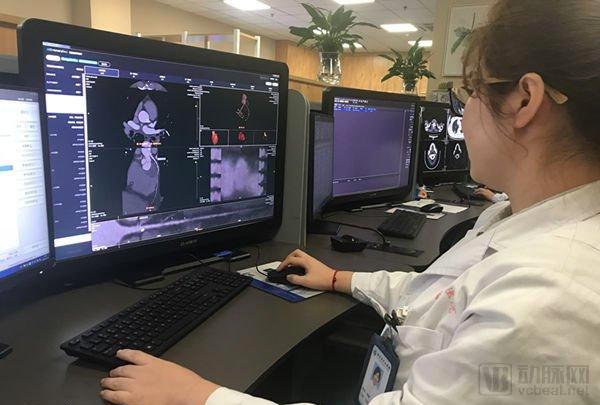
Radiologists are operating the intelligent auxiliary diagnostic system for coronary CTA.
Regarding the practical application of this system, Director Wang Xiang stated, “After completing a traditional coronary CT angiography (CCTA) scan, physicians need to perform post-processing on the raw images. Traditionally, it takes physicians approximately 30 to 40 minutes to conduct 3D reconstruction, interpretation, assessment, and report verification for coronary CTA. This AI technology reduces the processing time for this workflow to just 5 minutes, significantly enhancing physicians’ work efficiency and alleviating the stress associated with prolonged, repetitive tasks. For patients, greater efficiency translates into shorter appointment wait times, thereby providing them with more opportunities for timely treatment.”
“Furthermore, AI holds a distinct advantage in identifying lesions with subtle features. Physicians often experience fatigue after prolonged work hours. In such states, while they can still accurately identify major pathological changes, their attention to detail may diminish; in contrast, intelligent diagnostic systems do not suffer from fatigue.”
“Finally, AI-generated templated reports exhibit a high degree of standardization, which helps ensure diagnostic quality and enhances the homogeneity, standardization, and consistency of diagnostic reports. This is beneficial for achieving mutual recognition of results across the industry. If all practitioners adhere to the system’s standardized protocols for image acquisition, processing, and measurement of luminal stenosis rates, diagnostic consistency will be significantly improved. Standardization is an important hallmark of medical advancement in China.”
To date, SHUKUN’s AI-powered auxiliary diagnostic system for coronary CTA imaging has assisted Wuhan Central Hospital in processing over 2,700 coronary cases, earning unanimous recognition from department directors and attending physicians, thereby truly embodying the “Internet + Healthcare” initiative through technological innovation.
Furthermore, building on its intelligent imaging-based auxiliary diagnosis for cardiovascular diseases, SHUKUN is deepening its involvement across the entire diagnostic and therapeutic continuum. Currently, SHUKUN’s AI products comprehensively cover screening, diagnosis, treatment, and follow-up for cardiovascular diseases, while AI solutions for surgical navigation, surgical planning, and precision medication have entered clinical validation. Meanwhile, SHUKUN is expanding into additional disease areas; for instance, its head and neck AI product is poised for launch and has begun clinical testing at Xuanwu Hospital. In the future, similar to its coronary artery products, this head and neck AI solution will be integrated into the full workflow of intelligent auxiliary diagnosis for head and neck diseases.
Regarding the sensitive issue of commercialization, Ma Chun’e stated: “The value of AI technology depends on its clinical utility, which is reflected in two aspects. First, does it truly liberate radiologists from manual labor and workflow burdens, allowing them to return to the essence of medical practice and better serve patients? Second, artificial intelligence significantly advances the structuring, semantic annotation, and standardization of data, providing great convenience and a new foundation for clinical research. This will help physicians deepen and broaden their understanding of diseases, forming the bedrock of the entire healthcare ecosystem. Our collaboration with Wuhan Central Hospital aims to explore the full extent of the value that AI systems can deliver in clinical settings.”
From a societal perspective, the clinical value delivered by AI technology is a concrete manifestation of its social value. Currently, a major challenge facing China’s development is the scarcity and uneven distribution of medical resources. As a powerful supplement to these resources, artificial intelligence can help address this critical social issue, which is a key reason why “AI + Healthcare” has received policy support. This August, Sir Run Run Shaw Hospital in Zhejiang Province took the lead in including AI solutions in its official fee schedule, with Qingdao, Shanghai, Liaoning, and other regions quickly following suit. With strong support from both the government and hospitals, the rise of the AI healthcare industry has become inevitable.
Hospitals adhere to the principle of serving patients, holding that the ultimate value of AI technology lies in its ability to help physicians better serve their patients. Only by achieving this can hospitals have the intrinsic motivation to purchase artificial intelligence products. In other words, AI products must demonstrate their efficacy in real-world clinical settings: Do they assist physicians in delivering better patient care? Do they enable patients to receive faster, higher-quality, and more cost-effective services? This has long been the pursuit of SHUKUN.
With dual support from hospitals and policies today, AI enterprises should seize the opportunity. Only by aligning their values with those of the nation and hospitals can they achieve self-fulfillment. Ma Chun’e stated, “Social value is the core driver propelling us forward. Our collaboration with Wuhan Central Hospital exemplifies our values, which form the very foundation of all commercial endeavors.”