

Sanofi's 'Innovation Hub' Completes First Cohort and Announces Additional RMB 60 Million Investment to Support Digital Health Innovation

Sanofi
Pharmaceutical Manufacturer
Recently, Sanofi held the graduation ceremony for the first cohort of its digital health innovation platform, the “Ji Chuang Alliance,” in Shanghai. Three startups successfully completed a three-month pilot program and presented their results to the public.
“Jichuang Alliance” was established in April this year. It is a digital health innovation platform built by Sanofi in emerging markets, providing extensive resources and opportunities through collaboration with local Chinese enterprises to achieve innovative development of healthcare projects.
At the “Graduation Ceremony,” Sanofi also announced that it would inject an additional RMB 60 million into the “JiChuang Alliance” program over the next five years to support open innovation and the cultivation of entrepreneurship, fully aligning with China’s “Internet + Healthcare” initiative.
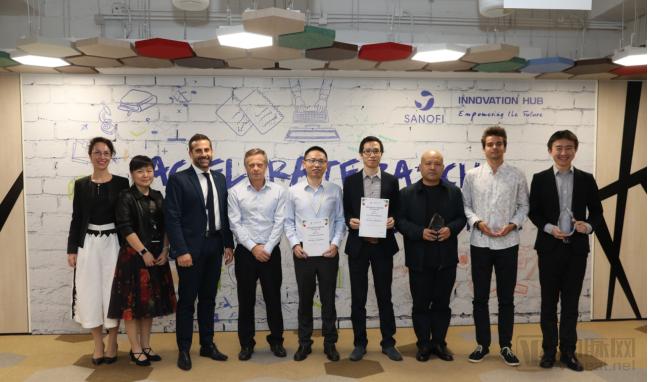
Sanofi “Ji Chuang Alliance” Inaugural Program Graduation Ceremony, photo provided by the company
Mr. Pierre Faury, Head of Commercial Excellence at Sanofi China, stated, “Sanofi has always regarded digital innovation as a core component of its corporate strategy. The establishment of the ‘Extreme Innovation Alliance’ enables Sanofi to integrate more closely with the external internet ecosystem. This ‘cross-industry’ collaboration with internet startups represents another innovation and breakthrough in Sanofi’s business model, leveraging both internal and external expertise to provide more efficient, integrated solutions for healthcare professionals and patients.”
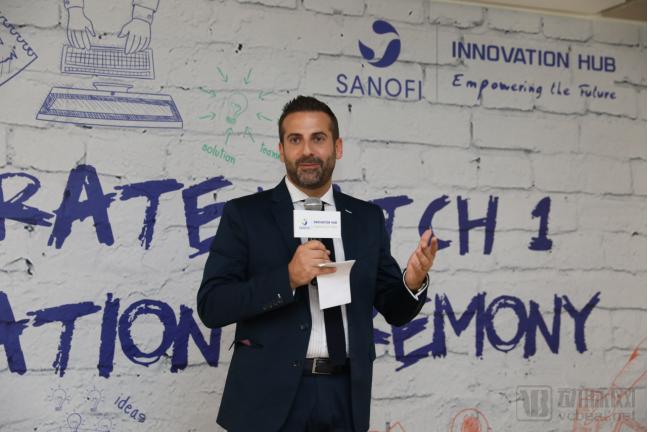
Mr. Pierre Faury, Head of Commercial Excellence at Sanofi China. Photo provided by the company.
Following the establishment of the “Jichuang Alliance,” its inaugural call for applications was issued to startups in late April this year, aiming to identify and nurture promising digital health projects. After a competitive selection process, three startups—RIKAI Labs, Researchably, and Bozhi Technology—partnered with Sanofi to launch pilot projects focused on developing high-potential digital health applications and technologies. At the “graduation ceremony,” these three companies also presented updates on their project progress.
RIKAI Labs has developed AI-powered chatbots on the WeChat platform, leveraging natural language processing and artificial intelligence technologies. These bots can handle simple, repetitive inquiries in place of human agents, such as questions about drug package inserts and contraindications. Furthermore, the intelligent bots can collaborate with experts to address more complex queries.
Researchably primarily leverages artificial intelligence technology to screen academic papers. According to the project lead, over 30,000 medical papers are published globally each week, making it difficult to manually filter all valuable information. AI technology enables this capability; Researchably has achieved an 89% accuracy rate in classifying medical papers, reducing screening time by 85%.
Bozhi Technology aims to leverage artificial intelligence to automate the conversion of medical literature into actionable intelligence. Previously, compiling a medical report typically took one month; with this platform, manual workload is expected to be reduced by at least 60%. Ultimately, Bozhi Technology seeks to develop an efficient, AI-powered medical writing tool to assist in generating medical reports and articles.
In fact, we have observed that these three initiatives are closely aligned with Sanofi’s strategic objectives, such as using chatbots to handle physician inquiries, conducting medical literature searches, organizing professional medical papers, and delivering patient education. Following the initial three-month pilot phase, these projects will continue to be rolled out across Sanofi, with ongoing technical development and iterative application improvements.
For a large organization like Sanofi, maintaining innovative vitality is particularly crucial for development. Collaborating with external enterprises to introduce new technologies, new services, and new business models is the key to sustaining a competitive edge.
Digitalization is the most significant trend in the healthcare industry, with various digital technologies being widely applied in medical services and the pharmaceutical sector, such as AI-assisted drug discovery, the application of big data in clinical research, and internet-based medical consultations. As a global leader in the pharmaceutical and healthcare industry, Sanofi places particular emphasis on digital innovation.
VCBeat’s review reveals that Sanofi has previously made significant investments in digital health: for instance, it established a joint venture with Google’s Verily to create a virtual diabetes clinic; partnered with Evidation Health to collect more real-world, valid patient data; collaborated with Nutrino to modify dietary habits among patients with chronic diseases; worked with TriNetX to improve patient recruitment processes; and joined forces with Science 37 to reduce clinical trial failure rates.
In addition, Sanofi has made significant investments in the digital health sector through its venture capital arm, Sanofi Ventures. For instance, this July, it invested in Click Therapeutics, a company specializing in digital prescription therapeutics, and Curisium, a healthcare billing company leveraging blockchain technology. Earlier, Sanofi announced a €250 million collaboration with Exscientia, an AI-driven drug discovery company, to develop bispecific small-molecule drugs for diabetes.
Sanofi’s digital transformation strategy is clearly defined, leveraging two key pathways—drug discovery and “drug plus” value enhancement—to not only accelerate the development of new medicines but also maximize the value of existing therapies. Through collaborations with and investments in digital health companies, Sanofi aims to improve patient outcomes. This approach not only provides disease management tools for patients and physicians but also helps reduce overall healthcare costs.
Sanofi entered the Chinese market in 1982, establishing its China R&D Center and Asia-Pacific R&D Headquarters in Shanghai, as well as a Global R&D Operations Center in Chengdu. Currently, Sanofi employs more than 9,500 people in China, making the Chinese market one of its most important and fastest-growing markets worldwide. “In China, For China”—rooted in China and serving China—is Sanofi’s core strategy in the Chinese market.
Sanofi is also actively promoting digital innovation in the Chinese market. 2014 marked the inaugural year of Sanofi China’s digital transformation: it launched an integrated program connecting patients, doctors, and nurses through platforms such as tablets and SMS, facilitating doctor-patient communication and patient education, and benefiting over 100,000 patients across China.
In 2015, Sanofi China launched the “Kangsai” county-level chronic disease management platform. Partnering with Health Road, it extended its reach to rural and remote areas by leveraging mobile internet to bridge communication and follow-up between doctors and patients, providing continuing medical education for grassroots healthcare professionals to enhance primary care capabilities, and offering a two-way referral platform to support tiered diagnosis and treatment.
In 2016, Sanofi partnered with Ali Health to establish a secure, professional, and convenient pharmaceutical and healthcare service network. In 2017, Sanofi collaborated with DXY.cn to launch diabetes medical knowledge services, enabling the sharing of academic resources and enhancing physician engagement through diverse interactive channels, with physicians spending over 15.5 hours per week online learning professional knowledge.
From big data, chronic disease management, and medical knowledge dissemination projects to the “Ji Chuang Alliance” platform, Sanofi has continuously enriched its understanding and practical experience in digital health innovation, while adopting an increasingly open mindset. The year 2018 will mark a milestone for Sanofi China’s digital innovation.
Against the backdrop of technological and institutional innovation, the landscape of China’s healthcare industry is undergoing profound changes. Digital innovation aligns with the direction of healthcare reform, addressing the scarcity of high-quality medical resources and the imbalance between supply and demand, thereby enhancing the accessibility and affordability of premium healthcare services. In the era of “New Healthcare,” patients require not just medications, but comprehensive solutions for their diseases. Pharmaceutical companies, represented by Sanofi, are taking proactive steps to embrace new technologies and services, delivering value to patients that extends beyond medicines alone.