

AiTreat Files IPO Prospectus for AI-Powered TCM Massage Robot Emma to Address Therapist Shortage
It is often said that life lies in movement, yet for urban white-collar workers, exercise is actually a luxury. Spending their workdays busily facing computers and maintaining the same posture at their desks, these professionals suffer from shoulder, neck, lower back, and leg pain to varying degrees. In response to such discomfort, “Traditional Chinese Medicine (TCM) Tuina,” a legacy handed down by our ancestors, has gradually become one of the most popular wellness and health-preservation methods today.
However, across the entire tuina industry, there is a severe shortage of professional massage therapists, failing to meet the growing consumer demand. This is something Zhang Yizhong, founder of AiTreat, knows all too well.
As a licensed TCM practitioner with many years of experience in Singapore, Zhang Yizhong has observed that overseas TCM practices primarily focus on pain management, with general TCM consultations playing a secondary role. Pain management relies mainly on tuina (therapeutic massage) and acupuncture. However, TCM practitioners cannot personally perform all tuina sessions, as each treatment typically lasts 30 to 60 minutes, placing significant demands on their physical stamina and time. Therefore, most TCM practitioners employ assistants to handle tuina, while they themselves focus on bone-setting, acupuncture, and other tasks, thereby improving overall work efficiency.
However, this operational model also presents certain challenges. In the early days, many Chinese practitioners traveled abroad to provide Traditional Chinese Medicine (TCM) tuina massage. Currently, due to immigration restrictions, the number of TCM tuina therapists in many countries is declining. Furthermore, given the long working hours and low compensation associated with TCM tuina, an increasing number of people are reluctant to enter this profession, leaving it primarily to older practitioners.
“In recent years, I have rarely seen young Singaporeans pursuing careers as Traditional Chinese Medicine (TCM) tuina therapists,” said Zhang Yizhong meaningfully. “However, with the aging population, the demand for TCM tuina is growing, and the imbalance between supply and demand will become increasingly severe.”The only way to solve this problem is to increase productivity.”
Massage Robots: Addressing the Industry’s Talent Shortage
So, how can productivity be improved? Zhang Yizhong believes that adopting artificial intelligence and robotics technology is a viable solution. To this end, he has put it into practice.
In 2014, Zhang Yizhong returned to his alma mater, Nanyang Technological University, where he learned how to start a business with the help of several professors. With a background in Traditional Chinese Medicine (TCM), he naturally had deep expertise in both his professional field and the market. However, entrepreneurship requires a team—specifically, one with complementary skills. To this end, he recruited two co-founders with strong technical capabilities. CTO Qiu Chen holds a Ph.D. in Robotics from King’s College London and specializes in flexible control, complex control structure design and development, and robot control. COO Liu Kai earned his Ph.D. in Electrical and Electronic Engineering (EEE) from Nanyang Technological University and excels in data visualization, robotic vision, and the development of robotic control systems.
It can be said that AiTreat’s core team has achieved a perfect combination and complementarity in applications, hardware, and software. AiTreat was officially established in October 2015 and launched its first traditional Chinese medicine massage robot, Emma, six months later.
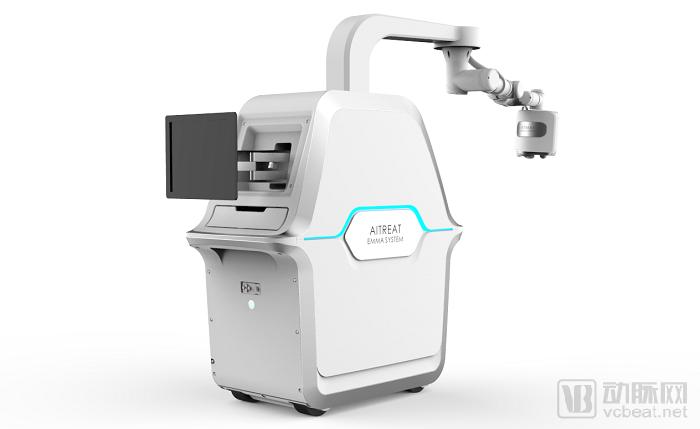
The World's First AI-Powered Massage Robot—Emma
This robot can mimic the human palm and thumb to perform therapeutic massage, and even deliver precise Traditional Chinese Medicine (TCM) therapy targeted at specific acupoints. Patient feedback indicates that the massage service provided by Emma is virtually indistinguishable from that offered by professional massage therapists.
To develop such a highly realistic massage robot, Zhang Yizhong told reporters that four key technologies are primarily required:Flexible Control Technology, 3D Visual Perception and Analysis Technology, Robotic Arm Planning Technology, and Specialized Safety Technology。
In the medical field, nothing is more prominent than the da Vinci Surgical System. While surgical robots emphasize stability and precision, massage robots prioritize requirements akin to those of human massage therapists: a deep understanding of human soft tissues, adaptability to compliant and deformable tissues, precise control of gentle and variable forces, and highly rational path planning.
Leveraging screw theory, the AiTreat team meticulously designed the Emma robot to achieve precise sensing and control of soft tissues. By integrating 3D visual sensors with proprietary algorithms, the system attains a deep understanding of human anatomy. Finally, through user-friendly human-computer interaction, it optimally plans the overall massage motion trajectory.
Emma can measure the precise stiffness of specific muscles or tendons and transmit the collected health data to the cloud, where artificial intelligence calculates the pressure to be applied during massage. Meanwhile, AI can also track and analyze patient progress, generating visualized reports that enable doctors to assess patients’ rehabilitation using precise empirical data.
In terms of safety, Emma employs proprietary, internationally leading feedback technology. By leveraging multiple sensors, it precisely controls force and movement, ensuring high-level safety while accurately executing massage techniques that can replace and even surpass human therapists. If a user experiences excessive pain during the massage, the robot’s sensors will immediately detect the muscle response and adjust the massage pressure in real time.
Furthermore, to enhance user experience, the massage tips at the distal ends of Emma’s limbs are even made of silicone and can be heated to improve comfort. Through continuous iterations of hardware and software upgrades, Emma has now reached its fifth generation.
Multiple Application Scenarios: Future Solutions for Traditional Chinese Medicine
Emma has been repeatedly proven to enhance the productivity and efficacy of Traditional Chinese Medicine (TCM) treatments. Once deployed, it will open new frontiers in TCM tuina massage.
VCBeat has learned that in October 2017, the Emma robot began providing massage services to its first batch of customers at NovaHealth TCM Clinic in Singapore. Meanwhile, according to Zhang Yizhong, the company has also reached preliminary cooperation agreements with several of Singapore’s most renowned TCM clinics. These clinics have expressed willingness to trial the product once it is fully refined, and will deploy it in their facilities if it successfully integrates with their business models.
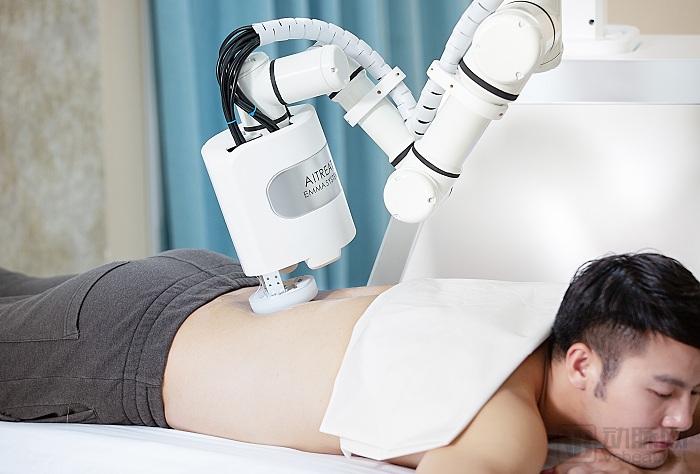
In addition to clinics, Zhang Yizhong stated that the company currently maintains an open attitude, willing to explore different application scenarios and investigate more business models, such as chain pharmacies, sports and health, corporate health management, and health kiosks.
We know that some chain pharmacies now offer Traditional Chinese Medicine (TCM) tuina services, staffed by one or two TCM practitioners or physical therapists. While these pharmacies already have the customer base and facilities, they are often unable to provide such services on a large scale due to staffing shortages.
For such pharmacies, TCM massage robots hold significant appeal. This is because the robot is extremely simple to operate; it does not necessarily require a professional TCM masseur, as a pharmacist can also operate it.“It won’t be any harder to use than a smartphone app,” emphasized Zhang Yizhong.Therefore, deploying such a robot in a pharmacy incurs no additional personnel costs and serves as an ancillary service that enriches the pharmacy’s business offerings.
In the field of sports health, massage robots also have a broad market. Emma can help patients alleviate muscle strains and injuries, provide high-quality sports therapy, and make up for the shortage of professional sports therapists. It is reported that Emma has provided massage services to many national athletes in Singapore, including Mr. Chase Tan, a national basketball player.
In addition, AiTreat plans to partner with a well-known health kiosk brand next year to establish a massage center in Silicon Valley, deploying it within the office buildings of major corporations such as Google to provide Tui Na (Chinese therapeutic massage) services for their employees.
It is evident that the development prospects for Traditional Chinese Medicine (TCM) massage robots are highly promising. According to Zhang Yizhong, Professor Güttinger-Benner from Hannover Medical School (MHH) in Germany—a leading authority in rehabilitation—is spearheading Emma’s clinical trials in Europe. This initiative will accelerate the integration of Emma’s physical therapy models into mainstream modern medicine.
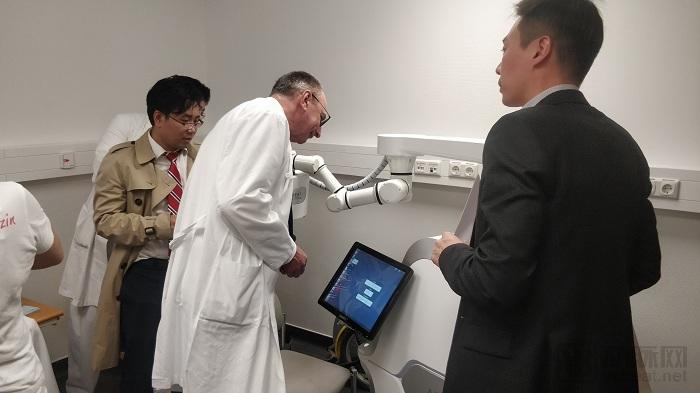
The First Emma Robot Deployed Overseas at MHH Hospital in Germany to Participate in Clinical Trials
Innovative Business Model – Financial Leasing
In terms of its business model, AiTreat is currently penetrating the market through financial leasing.
Zhang Yizhong believes that selling products directly to customers seems impractical, as their cash should primarily be allocated to store and brand expansion. Tying up significant capital in equipment would hold little value for either party. By adopting a financial leasing model, however, they can integrate robots into their business model to achieve rapid brand expansion, with leasing companies providing the necessary financial support.
On this issue, Zhang Yizhong illustrated the point with a simple mathematical problem.
He stated that the current overseas rental price for Emma is $3,000 per month, while the early-bird promotional price for the base model in the Chinese market can drop to approximately RMB 7,500 per month, equivalent to about RMB 250 per day. What does this imply? A single robot can serve at least five people per day; if it serves ten people, the average cost per person drops to RMB 25, which is significantly lower than the cost of hiring a regular massage therapist.
Furthermore, the current market price for a single session of tuina (Chinese therapeutic massage) ranges from 100 to 200 yuan. Adding an hour of robotic massage to existing services for an additional fee of 50 yuan is generally acceptable to most consumers. In other words, this robot can be integrated into the business models of clinics or traditional Chinese medicine (TCM) centers at a relatively low cost, thereby enhancing service quality and user experience. Meanwhile, customers incur only a modest additional expense while gaining access to a treatment package that offers greater consistency and comfort compared to manual tuina.
So, how exactly is this done? Zhang Yizhong further explained:
For small clinics with minimal patient volume, a model pairing one physician with one robotic unit can be adopted. The physician conducts the consultation and then schedules the robot to perform tuina (Chinese therapeutic massage). After the robotic massage, the physician follows up with treatments such as bone setting, acupuncture, and cupping. This model reduces the physician’s workload, allowing them to see up to 10 patients per day without fatigue, while also enhancing the clinic’s premium image.
For large clinics with a high patient volume, an assistant can be hired to operate two robots. Since each robot typically manages two beds, one assistant can oversee four beds simultaneously. Over the course of a day, a team consisting of one physician, one assistant, and two robots can serve 40 patients, ensuring that each receives sufficiently long and comfortable care. Without robotic assistance, it would be impossible for just two staff members to provide such a level of service.
Beyond marveling at the CEO’s consistently sharp mathematical prowess, reporters were even more impressed by his clear business acumen. He stated:“Our goal in developing Emma is not to replace human massage therapists, but to help address the shortage of professional practitioners. As the population ages, therapists’ workloads have increased, and this technology will significantly alleviate their burden.”
As an office worker who spends long hours at a desk every day, this reporter also hopes that this technology will reach the market soon to serve more users. Of course, this process cannot happen without capital support. VCBeat has learned that AiTreat is currently seeking a new round of financing, primarily for market expansion. The company previously secured Pre-A round funding in 2017 from two publicly listed companies, Tasly and Monfair, as well as from the U.S.-based BRC.