

Genovac Bio Secures Tens of Millions in Angel Funding to Advance Personalized Cancer Vaccines and AI-Driven Neoantigen Platforms
VCBeat (WeChat ID: vcbeat) has learned that on December 17, 2018, Geyuan Zhishan announced the completion of an angel financing round worth tens of millions of RMB, with Heli Investment as the investor. It is reported that the funds will be used to conduct clinical trials and to build the TumorNeo™ AI-based prediction and optimization system for neoantigens and the TumorVac™ high-efficiency in vitro evaluation platform for neoantigens. Headquartered in Shanghai, China, Geyuan Zhishan is a biomedical research company whose core technology focuses on the research and application of personalized cancer vaccines.
Nowadays, tumor immunology has become one of the hottest fields. This October, the Nobel Prize in Physiology or Medicine was awarded to two immunologists: James Allison from the United States and Tasuku Honjo from Japan, in recognition of their contributions to discovering "new therapies for cancer treatment through negative immune regulation." Tumor immunotherapy is still on the rise.
However, from the perspective of clinical efficacy, the path for tumor immunotherapy remains long and arduous. Taking PD-1/PD-L1 inhibitors as an example, only 20%–30% of cancer patients benefit from them. Meanwhile, CAR-T therapy is effective primarily against hematologic malignancies, particularly B-cell lymphomas, and is associated with severe side effects. The majority of cancer patients still lack effective treatment options. Tumor immunotherapy requires further exploration of additional possibilities, among which personalized cancer vaccines, the focus of Geyuan Zhishan, represent one promising avenue.
Unlike CAR-T therapy, which seeks treatment solutions targeting a limited number of existing antigens, personalized cancer vaccines predict neoantigens from tumor mutation genes and administer synthesized neoantigens back into the patient’s bloodstream to stimulate the autologous immune system to attack tumor cells. Global research on cancer vaccines has spanned nearly two decades, with a cumulative total of 947 clinical development projects for “Cancer Vaccine” currently registered on ClinicalTrials.gov in the United States. The development of personalized cancer vaccines is an integrated technology that combines precise genetic testing with tumor immunotherapy, a field that is still in its early stages.
In July 2017, Nature published two consecutive case studies demonstrating the successful treatment of melanoma patients with personalized tumor vaccines. The studies showed that among patients with stage III and stage IV disease who received personalized tumor vaccines, some experienced significant tumor regression directly, while others achieved complete tumor regression when combined with anti-PD-1 therapy. Furthermore, research has indicated that personalized tumor vaccines have also elicited complete responses in clinical trials involving patients with advanced ovarian cancer and breast cancer.
The primary challenge in personalized cancer vaccine technology lies in predicting neoantigens with high affinity for MHC molecules from the high-throughput data obtained through gene sequencing. To address this, Geyuan Zhishan has independently developed the TumorNeo™ AI-based Neoantigen Prediction and Selection System and the TumorVac™ In Vitro High-Efficiency Neoantigen Evaluation Platform, which are used for neoantigen prediction and in vitro assessment of personalized cancer vaccines, respectively.
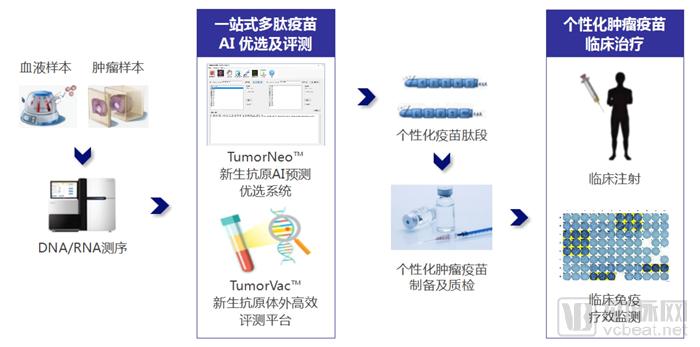
Schematic Diagram of the Clinical Process for Geyuan Zhishan’s Personalized Cancer Vaccine. Image provided by Geyuan Zhishan.
GeYuan ZhiShan has developed the TumorNeo™ AI-based Neoantigen Prediction and Selection System, which is built upon gene mutations, gene expression, and MHC affinity. Leveraging the extensive experience and technical expertise of its expert team in diagnosing patients and delivering precision medicine based on high-throughput genomic sequencing data, the system employs artificial intelligence algorithms to simultaneously detect variant peptides arising from multiple mutations. It predicts the affinity of these tumor-derived variant peptides for MHC class I and MHC class II molecules. By integrating a proprietary neoantigen database specific to the Chinese population, GeYuan ZhiShan’s unique prediction models, and clinical data, the system accurately predicts and screens for high-quality tumor neoantigen sequences.
However, for both peptide and RNA vaccines, the efficacy and safety of neoantigen synthesis in personalized settings are critical for clinical application. If neoantigens cannot be rapidly and accurately evaluated prior to administration, or if patients cannot be promptly and precisely monitored post-administration, the prospects for the clinical adoption of personalized vaccines will be significantly diminished.
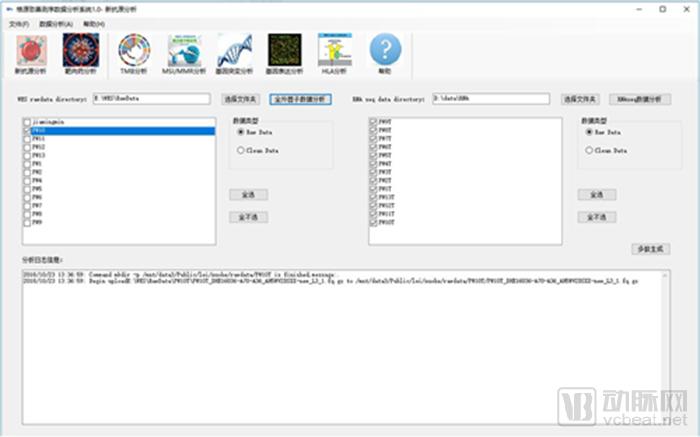
TumorNeo™ AI-Powered Neoantigen Prediction and Selection System Interface. Image provided by Geyuan Zhishan.
Therefore, Geyuan Zhishan has developed the TumorVac™ high-efficiency in vitro neoantigen evaluation platform. This platform comprises three systems: an in vitro T-cell induction system, a humanized PDX mouse evaluation system, and a single-cell MHC affinity assessment system. It features outstanding efficiency and accuracy, enhancing the efficacy and safety of neoantigens. Furthermore, Geyuan Zhishan has incorporated unique quality control procedures into the TumorVac™ platform, which improve accuracy by 20% and increase cost-effectiveness by 1.2-fold compared to conventional methods.
According to Dr. Su Xiaoping, Chief Scientist at Geyuan Zhishan, the TumorNeo™ AI-based Prediction and Optimization System for Neoantigens and the TumorVac™ High-Efficiency In Vitro Evaluation Platform for Neoantigens are currently undergoing applications for patents and software copyrights.
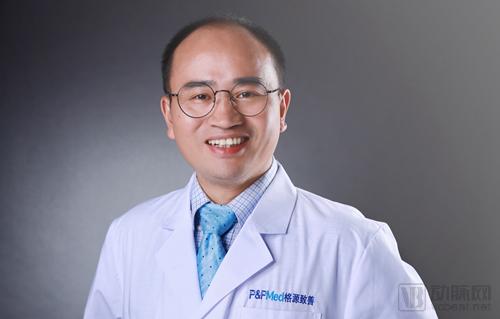
Dr. Su Xiaoping. Image provided by Geyuan Zhishan.
Dr. Su Xiaoping told VCBeat that the TumorNeo™ AI-based neoantigen prediction and selection system and the TumorVac™ high-efficiency in vitro neoantigen evaluation platform have both been fully developed. By 2020, Geyuan Zhishan plans to complete in vitro assessments of the efficacy and safety of personalized tumor vaccines, as well as file patent applications, for 500–1,000 cases involving high-incidence cancers such as gastrointestinal tumors, lung cancer, liver cancer, cervical cancer, and refractory breast cancer. Dr. Su Xiaoping stated that the accuracy of this AI system will continue to improve as its training dataset expands.
In terms of clinical trials, Geyuan Zhishan has officially launched joint clinical studies with multiple Grade A tertiary hospitals in Shanghai, Zhejiang Province, and Fujian Province. The company has obtained ethical approvals for several clinical trials and is currently conducting studies on lung cancer, liver cancer, and cholangiocarcinoma. Dozens of patients have been enrolled, and ten patients are currently receiving personalized tumor vaccine infusion therapy. Geyuan Zhishan will conduct continuous follow-up with patients participating in the clinical studies, working alongside partner hospitals to provide subsequent medical examinations and rehabilitation services. Furthermore, Geyuan Zhishan has initiated collaborative research on combination therapies with globally renowned immuno-oncology (I-O) pharmaceutical companies, with related clinical trials poised to commence shortly.
Team Composition. The Geyuan Zhishan team is primarily composed of immunologists, clinical oncologists, clinical immunotherapy specialists, and bioinformatics experts. Dr. Su Xiaoping holds a Ph.D. from the Second Military Medical University and completed his postdoctoral research at Zhejiang University. He studied under the renowned immunologist Academician Cao Xuetao and worked for 13 years at the State Key Laboratory of Medical Immunology, engaging in long-term research related to cell biology, oncology, and immunology. After leaving military service in 2016, Dr. Su held successive positions in the fields of CAR-T therapy and genetic testing, possessing an interdisciplinary knowledge structure spanning immunology, oncology, and genomics.
Among the core technical team, Professor Li Wenfeng, who is responsible for designing clinical research protocols for personalized cancer vaccines, is a clinical oncology expert, Chief Physician of the Department of Radiotherapy and Chemotherapy at the First Affiliated Hospital of Wenzhou Medical University, and a Master’s supervisor. He is a member of the Wenzhou 551 Talent Plan (Category II), has published numerous SCI-indexed papers, and authored multiple medical monographs.
Professor Sun Weihong, who is responsible for establishing the in vitro evaluation system for personalized tumor vaccines, is an expert in clinical immunotherapy. He holds a Ph.D. from the State Key Laboratory of Medical Immunology and completed his postdoctoral research at Zhejiang University. For over a decade, he has been engaged in research on tumor vaccines and tumor immune cell therapy at the Biotherapy Center of Qingdao Central Hospital. Professor Liu Xiaolong, who oversees personalized vaccine data analysis and the development of the TumorNeo™ AI-based neoantigen prediction and optimization system, is a renowned clinical research expert in the field. He earned his Ph.D. from Brown University in the United States and completed his postdoctoral training at Brown University and the Biozentrum of the University of Basel in Switzerland. Professor Su Juan, who is responsible for clinical trial monitoring and quality control, is a former Associate Professor at the Department of Basic Medicine of the Second Military Medical University. She has long been engaged in cell biology research and served as a visiting scholar in the Department of Genetics at Yale School of Medicine.
Heli Investment stated to VCBeat that, after engaging with numerous oncology immunotherapy projects, it found Geyuan Zhishan’s multidisciplinary team to be highly valuable. “While many may already recognize the promise of treating cancer through a ‘gene sequencing + cellular immunotherapy’ approach, the exceptionally high demands this therapy places on a team’s technical integration capabilities undoubtedly create a significant barrier to entry in the industry.”
Dr. Su Xiaoping believes that although personalized tumor vaccines still face limitations such as the difficulty in distinguishing between primary and metastatic lesions, as well as high costs, the Geyuan Zhishan team has already developed clear optimization strategies and will continue to make efforts. Dr. Su Xiaoping is confident that personalized tumor vaccines represent an important direction for the future of immunotherapy. He hopes that more technical teams will join this field to jointly promote the research and application of new methods in cancer treatment.
The Geyuan Zhishan team expressed its welcome to resource-oriented investors to join, aiming to bring personalized cancer vaccines to market as soon as possible.