DXY Open Class: Serving Over 2 Million Medical Professionals in Two Years, Building an Online Medical School
2016 is widely recognized as the inaugural year of the paid knowledge economy, with various paid knowledge products beginning to emerge in the market, and related content entrepreneurship seizing a significant opportunity.
In August of that year, DXY’s online learning platform dedicated to examination preparation, clinical practice, and scientific research—“DXY Open Courses”—was officially launched. Leveraging the momentum of “Internet + Medical Education,” the platform has served more than 2 million physicians cumulatively in the two years since its launch. Through structured and systematic content production, it deeply meets the online learning needs of healthcare professionals.
“Every day, more than 50,000 users ‘attend classes’ on DXY Open Courses, equivalent to the total enrollment of ten medical schools.” Ji Lingyan, the project lead with many years of experience in medical education, stated that DXY Open Courses integrates high-quality resources accumulated by DXY over its years of deep engagement in the healthcare sector, creating a vast repository of premium medical content. By leveraging internet-based approaches, it supports continuing medical education for physicians in China and facilitates their professional development.
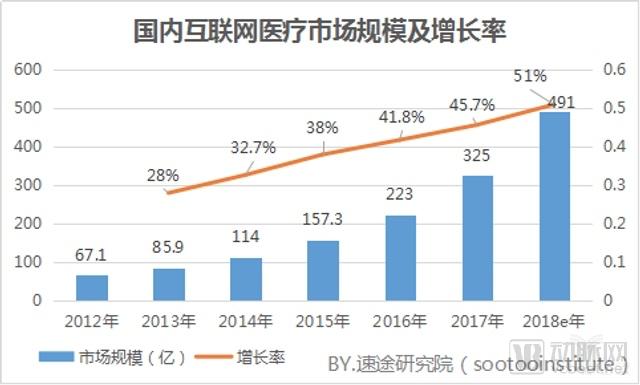
Data released by Sootoo Research Institute shows that as of the first quarter of 2018, the overall size of China’s internet healthcare market reached RMB 49.1 billion. Although there are no specific figures indicating the proportion accounted for by medical education within this market, its importance speaks for itself.
Another set of public data shows that more than 5 million people across China take medical licensing and professional title examinations each year; there is enormous demand for “Three Basics” examinations (covering basic theories, fundamental knowledge, and essential skills), continuing medical education exams, and related skills training, with the market size reaching tens of billions of yuan.
The report released by the research firm Technavio also predicts that the global medical education market will continue to grow at a compound annual growth rate (CAGR) of 17% from 2017 to 2021.
Despite the enormous market potential, the current skill levels of healthcare professionals and the size of the professional physician workforce in China are insufficient to meet demand. The government has successively introduced relevant policies and measures to promote and strengthen the training and development of general practitioners and resident physicians.
As early as October 2016, the "Outline of the Healthy China 2030 Plan" laid out a long-term strategy for the cultivation of medical professionals. It pointed out the need to reform the medical education system and accelerate the establishment of a training system for medical talent that organically integrates three stages: institutional education, post-graduation education, and continuing education, tailored to the characteristics of the industry; it also emphasized strengthening the system of continuing medical education for all healthcare professionals.
Industry veterans point out that the market size of the medical education sector will continue to grow, while policy liberalization and incentives will drive the industry toward more standardized and steady development. For companies like DXY, which have strategically positioned themselves in medical education, this presents new opportunities for growth.
Physicians are a group that requires continuous learning, yet the distribution of medical education resources in China is highly uneven. Large tertiary Grade A teaching hospitals boast excellent software and hardware infrastructure, enabling physicians to enhance their skills and professional competence in such environments. However, in non-tier-1 cities and non-teaching hospitals, the continuing education needs of a large number of physicians remain unmet.
In 2017, the journal Continuing Medical Education published a survey titled “Survey on Research Training Needs of General Practitioners,” which found that over 80% of physicians considered “research training” to be their most pressing need at present, and 81.7% of general practitioners believed that research in general practice could help improve the quality of health services.
In the past, physicians obtained continuing medical education through offline training courses, academic conferences, and seminars. However, such approaches incurred substantial time and financial costs. Despite the burden of travel and training fees often amounting to thousands of yuan, the content acquired remained fragmented and difficult to systematize.
Dingxiang Open Courses, born to break the barriers of time and geography, leverages Dingxiang Yuan, China’s largest physician community, to recreate an “online” medical school through structured and systematic content production mechanisms. It is reported that Dingxiang Open Courses has launched over 1,000 professional courses in fields such as internal medicine, surgery, gynecology, pediatrics, and general practice, accumulating hundreds of thousands of paying users and generating annual revenues in the tens of millions.
As a “paid knowledge” offering in the medical field, DXY Open Courses have achieved such success primarily by delivering on two key attributes: scarcity and professionalism. This approach is widely recognized as the definitive strategy for content monetization.
The “2017 Physicians’ Digital Life Report,” jointly released by DXY and Kantar Health, shows that physicians spend an average of approximately 29.2 hours per week online, with half of that time devoted to browsing medical-related information. Digital channels have surpassed traditional channels as the primary source for physicians to access professional information.
According to data from the DXY Big Data Research Institute, among users engaged in open-course learning, 81% are clinical physicians. Nearly half of these physicians are highly educated professionals working in major cities and large hospitals. Specifically, 43% are from first- and second-tier cities, 47% are from tertiary hospitals, and 43% hold master’s or doctoral degrees.
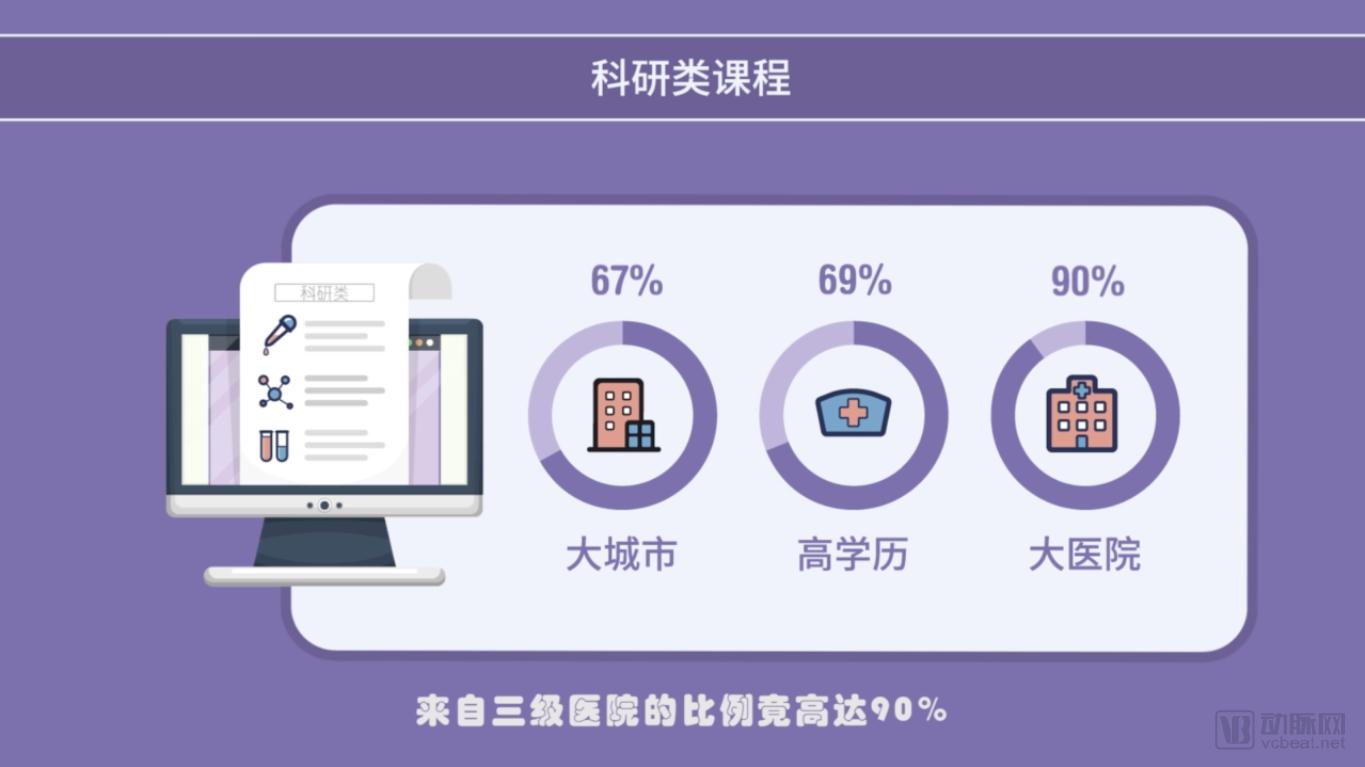
Among the learners of the research courses, 67% are medical professionals from first- and second-tier cities, nearly 70% hold master’s or doctoral degrees, and a striking 90% are affiliated with tertiary hospitals. This truly embodies the saying, “It’s not that others are more talented than you; it’s that they are both more talented and more hardworking.”
Furthermore, according to the DXY Physician Compensation Survey, physicians at tertiary hospitals in first- and second-tier cities see an average of 126 outpatients and manage 36 inpatients per week, with a weekly working hour total of 51 hours. How, then, do they carve out time for learning amidst such demanding schedules?
It is said that Harvard University once proposed a famous theory: the gap between individuals is determined by how they spend their time between 8 p.m. and 10 p.m. The peak learning hours on DXY Open Courses indeed fall within this 8–10 p.m. window, with an average study duration of 20 minutes per user. While you are engrossed in scrolling through Douyin and Weibo, top students are quietly enhancing their knowledge by completing a medical open course. Over time, the disparity becomes evident.
It is understood that, in terms of course topic selection, DXY Open Courses focus on the hard skills required by physicians in clinical and research practice. The invited instructors are not only authorities in their respective fields but also emphasize practical clinical experience.
For instance, the clinical use of antibiotics is a topic that every physician must master yet often finds perplexing. Dingxiang Open Courses once invited a team of 15 PhD-holding instructors from the Institute of Antibiotics at Huashan Hospital to produce the course series “Huashan Hospital Institute of Antibiotics: Rational Use of Antimicrobial Agents.” Such courses served as a timely boon, effectively addressing physicians’ practical needs. The courses proved unexpectedly popular, surpassing expectations with over 4,000 paid users shortly after their launch.
Furthermore, traditional online education platforms often lack interactive and supervisory mechanisms, relying entirely on self-discipline, which makes it difficult for users to persist in their studies. In contrast, on the DXY Open Course platform, users can engage in one-on-one communication with instructors after purchasing a course, thereby ensuring effective learning outcomes.
If users encounter issues in clinical practice, they can receive timely answers on DXY Open Courses. For each course, dedicated staff will collect frequently asked questions and compile them into Q&A documents for easy reference and self-checking by users. The learning communities established through online groups foster a “collaborative learning” atmosphere, facilitating peer interaction and direct communication with instructors. This significantly enhances user stickiness, reducing the likelihood of dropout.
Ji Lingyan revealed that Dingxiang Open Courses will continue to develop more high-quality, long-tail, and accumulable content, truly becoming a valuable aid for clinical healthcare professionals.
From initial needs assessment and content design to subsequent launch promotion and user engagement, the DXY Open Course team has remained dedicated to addressing the learning needs of clinicians. This commitment underscores the core value that has enabled its parent company, DXY, to become China’s largest physician community.
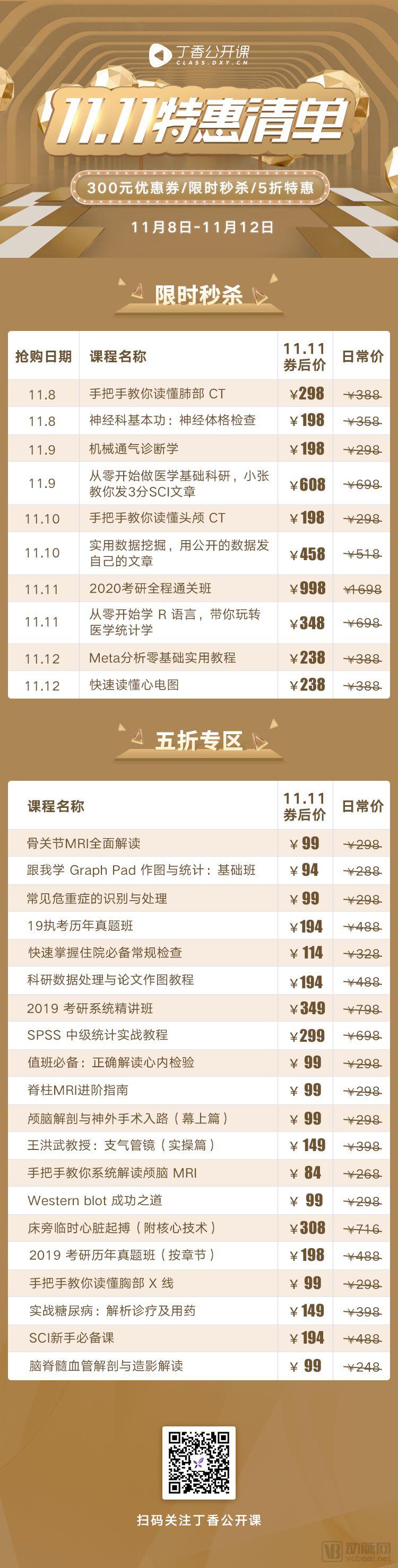
Coinciding with the 11.11 Shopping Festival, in addition to shopping sprees on major e-commerce platforms, DXY Open Courses have also prepared a wealth of high-quality medical content.
From November 8 to November 12, a curated selection of courses with varying content will be offered each day. The lineup includes not only research and exam-oriented courses such as “2020 Comprehensive Pass-Through Course for the Postgraduate Entrance Examination” and “Getting Started with Basic Medical Research: Xiao Zhang Guides You to Publish a 3-Point SCI Paper,” but also hands-on clinical courses such as “Step-by-Step Guide to Interpreting Lung CT Scans,” “Step-by-Step Guide to Interpreting Head CT Scans,” and “Identification and Management of Common Critical Conditions.”
11.11, Join DXY Open Courses, pick a great course, and accelerate your medical career.