

HeyGears Captures Dental Clinics and Small Labs with Innovative Desktop 3D Printing Model
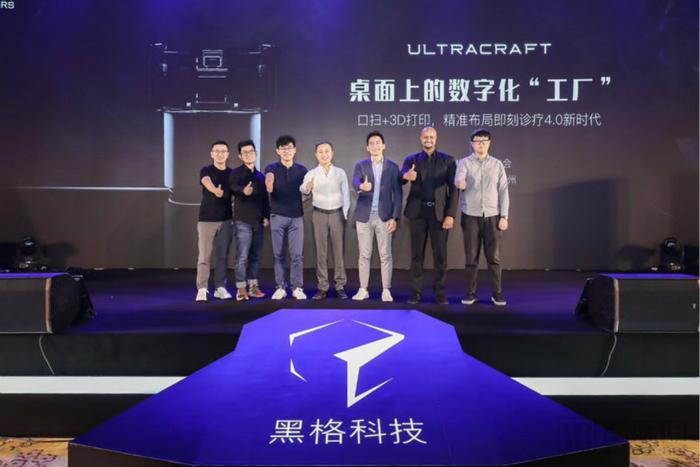
Ultracraft D-OS Desktop 3D Printer Launched (Image source: Provided by the company)
The digitalization trend in dentistry is irreversible, and the dental industry has long been eager for new technologies, products, experiences, and business models.
VCBeat (WeChat ID: vcbeat) has learned that shortly after announcing its RMB 325 million Series A financing round led by IDG, Guangzhou Heyge Intelligent Manufacturing Information Technology Co., Ltd. (hereinafter referred to as “Heyge Tech”) unveiled its next-generation 3D printer—the Ultracraft D-OS Desktop 3D Printer (hereinafter referred to as the “D-OS 3D Printer”). By enabling immediate diagnosis and treatment, immediate implantation, and immediate restoration within one hour, this innovation provides new momentum for the digital transformation of the dental ecosystem.
For Dental Clinics and Small-Scale Dental Laboratories
After the dentist formulates a treatment plan, the Ultracraft D-OS 3D printer automatically designs and fabricates the restoration based on intraoral scan data using specialized software. Within 1–2 hours, custom-made dental prosthetics tailored to the patient’s oral anatomy can be placed in the patient’s mouth. This represents the new diagnostic and therapeutic experience created for dentists and patients by HeyGears’ Ultracraft D-OS 3D printer.
Technically, the D-OS 3D printer employs patented OS (Optical Scan) technology to maximize the build area through active scanning of the formation plane. Without OS technology, the build area is limited to 50 mm; with OS technology, it expands to 150 mm, representing a threefold increase. Additionally, the printer incorporates patented suspended vat technology, a comprehensive upgrade over the previous generation’s SP (Side Peel) technology. By mounting the resin vat to the chassis in a “suspended” configuration and utilizing a long-axis downward pull mechanism, this design further reduces pressure and tensile forces during the peeling process, thereby improving print success rates.
In terms of product applications, the D-OS 3D printer facilitates two primary use cases: enabling rapid chairside diagnosis and treatment in dental clinics, and achieving efficient, digital small-batch production in dental laboratories. Traditionally, due to cost constraints, dental clinics have often been unable to utilize the large-scale 3D printing equipment employed by major dental laboratories.
In fact, prior to the Ultracraft D-OS 3D printer, 3D printing technology had already been widely adopted in both international and domestic dental markets for the fabrication of surgical guides, crowns and bridges, dental models, and clear aligners. Nevertheless, patients typically still require multiple visits to complete dental restorations or implant procedures.
The transformation brought by the Ultracraft D-OS 3D printer lies in its integration with Ultra-Hub (cloud-based data management center) and Ultra-Net (printer device management system), which connects the entire dental workflow from scanning to design and production, making digital dental product printing clear, efficient, precise, and easy to operate.
For dentists, this facilitates a more effective grasp of patients’ conditions and enables faster formulation of treatment plans; for consumers, it saves both time and financial costs.
In response, Gui Peiyan, Founder and CEO of Heges Technology, acknowledged that the Ultracraft D-OS 3D printer will have extensive application scenarios in dental clinics and dental laboratories.
“For dental clinics, when integrated with existing equipment, it enables patients to have their restorations designed and fabricated in-house during a single visit, allowing for immediate placement. In dental laboratories, it seamlessly interfaces with digital dental practices and, when combined with existing lab equipment, facilitates small-batch digital production of dental products,” stated Gui Peiyan.
Innovative Business Model
Heige Technology officially entered the digital dental healthcare industry in 2017, focusing on 3D-printed customized dental products, including resin teeth (crowns/bridges), surgical guides, dental models, cast restorations, and custom trays. Major competitors in this sector currently include Stratasys (which acquired Israel’s Objet) from the United States, EnvisionTEC from the United States, 3D Systems from the United States, Formlabs from the United States, as well as domestic companies such as Shanghai UnionTech, Zhejiang Shining 3D, and Xunshi.
It has successively established a laboratory in collaboration with DETAX, a leading German supplier of polymer materials, to jointly develop medical-grade 3D printing resins; partnered with Alibaba Cloud to research and develop AI-driven printing algorithms; entered into a strategic cooperation agreement with Materialise, the world’s largest comprehensive 3D printing technology provider based in Belgium, for in-depth joint development of 3D printing control software; and collaborated with 3Shape, a top-tier global digital scanning supplier from Denmark, to integrate the entry point for digital dental data acquisition.
Within just two years, it has successively obtained Class II medical device production licenses issued by the National Medical Products Administration (NMPA) for bracketless clear aligners and custom-made anti-snoring devices. Securing these licenses also paves the way for its future profitability model.
To accelerate the integration of 3D technology into China’s dental sector, HeyGears has pioneered a new business model. The company deploys Ultracraft A2 industrial-grade printers to clients, providing professional equipment training, complimentary technical upgrades, and comprehensive after-sales support, thereby strengthening its customer service offerings. At this stage, revenue streams from upstream and downstream industries—including scanners, software development, and consumables—have been clearly established and validated.
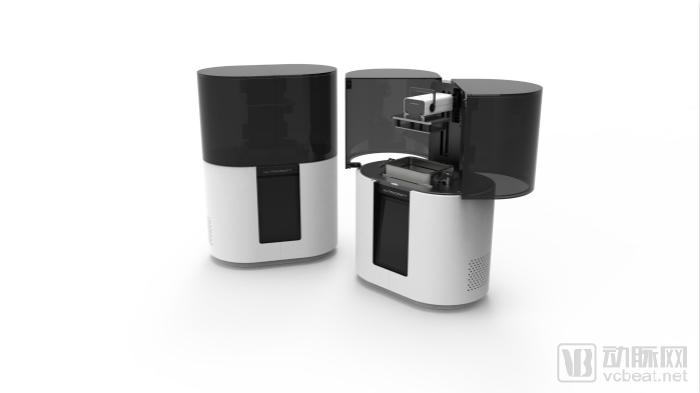
Free placement, profiting from consumables (Image source: Provided by the company)
The competitiveness derived from in-depth exploration of application scenarios and innovation in leasing models is precisely what IDG has identified as promising. IDG Capital stated that HeyGears demonstrates forward-thinking innovation in its business model. As a company with independently developed core technologies, it does not focus solely on technology or services; instead, it centers on integrating the entire 3D printing application chain, enabling the adoption of 3D printing across various industries and driving the industrialization and large-scale commercialization of 3D printing technology.
“To enable 3D printing to truly flourish, future technologies must be integrated into everyday life.” This is how Gui Peiyan described HeyGears’ recent digital upgrade and transformation of the dental healthcare ecosystem. In Gui Peiyan’s view, any manufacturing enterprise, regardless of its size or industry, can leverage 3D printing technology in the future.
It is understood that, in addition to the dental industry, HeyGears has also embarked on deepening application expansion across multiple sectors—including wearable devices, consumer electronics, cultural and creative products, and orthopedic products—with several of its products already achieving large-scale adoption.