

Six Key Trends Shaping China's Billion-Dollar Dental Industry: Chain Expansion, Investment Dynamics, and Localization of Imported Equipment
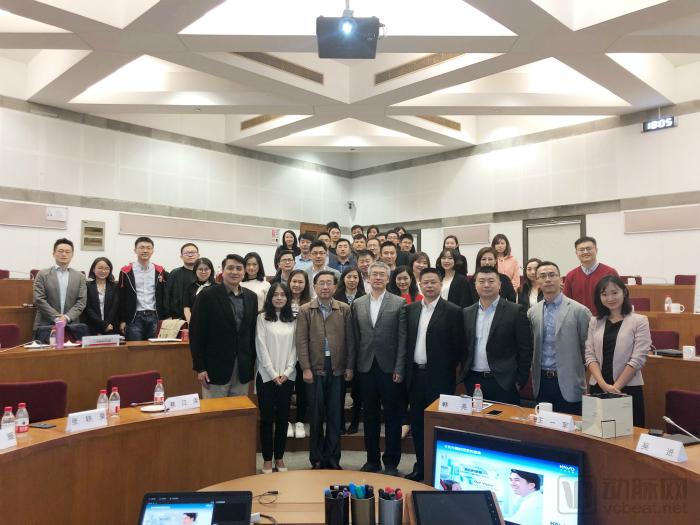
Group Photo of Guest Speakers and Attendees
In the field of dentistry, several apparent paradoxes exist. For instance, while emerging digital technologies have streamlined traditional dental care processes, their adoption rate remains low. Many institutions and practitioners prioritize high-value-added, high-ticket items such as dental implants and orthodontics, yet remain indifferent to preventive care systems that offer more thorough solutions to dental diseases. Moreover, despite sustained enthusiasm from capital investors for chain dental practices, nationwide cross-regional chains often struggle with profitability.
The oral care industry has been in a state of dynamic change, with the private sector continuing to experience rapid growth. On November 4, a special symposium on future trends in China’s oral care industry, hosted by CEIBS MedFeng Tang and sponsored by KaVo Group, was held in Shanghai. The event was moderated by Professor Cai Jiangnan, Director of the Center for Health Management and Policy at China Europe International Business School (CEIBS) and Adjunct Professor of Economics. Featured speakers included Mr. Han Liang, Vice President of Beijing Xingye Stomatological Hospital; Mr. Wang Yijun, General Manager of Arrail Dental’s South China Region; Mr. Wu Jin, Partner at Honghui Capital; Ms. Sun Yuanyuan, Senior Analyst in Pharmaceutical Research at Industrial Securities; and Mr. Zhang Yihao, President of KaVo Group Asia-Pacific.
Addressing the hot-button issues emerging in the dental industry, panelists shared their insights. In subsequent interviews conducted by VCBeat, new trends and opportunities within the dental sector were also uncovered. VCBeat (WeChat ID: vcbeat) provides an analysis of these developments, offering you insights into:
1. The importance of oral health prevention is self-evident, so why is it so difficult to popularize?
2. Maintaining the doctor-patient relationship: Why physician partners are gaining prominence;
3. Why Dental Chains Are the Most Favored by Capital;
4. Several Models for the Replicability of Dental Chains;
5. How foreign medical device giants such as KaWa implement effective localization strategies;
6. The Background and Ultimate Problems Solved by the Booming Digitalization of Dentistry;
Industry Hot Topic 1: Oral Prevention, a Long and Arduous Journey
Although the etiologies and treatment modalities for oral diseases are well-defined, the incidence rate has not shown a decline. In contrast, Japan has achieved full integration between its national insurance and social security systems and private medical institutions, established comprehensive supporting frameworks for preventive care, and ensured both high prioritization and competitive compensation for healthcare professionals. So, what is the current state of progress in oral disease prevention in China? Mr. Han Liang, Vice President of Beijing Xingye Stomatological Hospital, provides an analysis on this topic.
Han Liang:Currently, some private clinics are placing greater emphasis on high-end orthodontics and dental implant services, which are characterized by high value-added and high average transaction values. Adopting such a strategy necessitates corresponding marketing approaches and cost structures, involving aggressive, high-profile campaigns. Moreover, these institutions continue to face talent bottlenecks, with many already engaged in fierce competition within this red ocean market.
However, taking a long-term perspective, dental diseases are lifelong conditions with clearly identified etiologies and well-defined prevention and control measures. Once the necessary social conditions and capabilities are in place, effective prevention can be implemented. The optimal approach is to prevent dental diseases from occurring through early intervention, such as establishing a routine of professional dental cleaning.
In reality, the current state of oral disease prevention is very poor. Taking childhood dental caries as an example, epidemiological survey data show a steady increase in incidence rates. This trend is attributable to multiple factors, such as parents’ insufficient awareness and inadequate attention to their children’s oral health; overly refined diets with excessive consumption of highly cariogenic sugars; a shortage of personnel dedicated to primary preventive care for children; and imbalances in evaluation and social reward systems.
This is closely related to the overall social environment. In fact, all oral diseases, including the two major conditions—dental caries and periodontal disease—can have their current status improved if preventive measures are effectively implemented and community-wide efforts are fully mobilized. Prevention is not solely the responsibility of medical institutions; it requires participation from the entire society. The solution does not lie in building more short-sighted, profit-driven healthcare facilities.
So, what should a dental institution do? First, it must enhance its service capacity by cultivating talent. Second, it should reduce the complexity and difficulty of patient needs by focusing on preventive care. Third, it needs to improve social recognition by fulfilling its corporate social responsibilities.
Industry Hot Topic 2: Institutions Advance Hand in Hand in Maintaining Relationships with Patients and Physicians
In the dental industry, dentists are in extremely short supply. Typically, physician costs account for 20%–40% of a clinic’s expenses, with figures below 20% being rare—a testament to their critical importance. The industry trend is shifting toward treating dentists as clients, offering them dignity and incentives, rather than viewing patients as the sole clientele. In today’s landscape, where patient experience is increasingly vital, how can branded dental chains retain dentists while simultaneously crafting highly favorable patient experiences? Mr. Wang Yijun, General Manager of South China at Arrail Dental, offers his insights on these questions.
Wang Yijun:In the dental industry, the public healthcare system still holds a dominant position. Although medical costs are relatively low, the patient experience is often poor, leading to strained doctor-patient relationships. Driven by capital investment, private dental clinics are gradually encroaching on the public sector’s market share; however, market concentration remains low. Among the 65,000 dental clinics, 95% are independently owned practices, while fewer than 5% operate as chain clinics. Therefore, with the development of the broader health and wellness industry, supportive policies, rising per capita disposable income, and growing consumer demand for improved medical service experiences, branded chain clinics still have significant opportunities for growth.
Arrail Dental, established in 1999, will celebrate its 20th anniversary next year. Its entire operational team and philosophy were introduced from the United States. Our service philosophy is “people-oriented, treating customers like family,” with all efforts centered around the patient.
For patients, the first factor they evaluate when visiting a healthcare institution is the physician. In the dental industry, dentists must first provide effective treatment at a reasonable price. Furthermore, throughout the entire consultation process—encompassing both treatment and communication—patients should feel at ease and satisfied. If medical care lacks compassion, support, and a humanistic touch, focusing solely on disease treatment, it would be considered incomplete.
Arrail Dental defines itself as an institution that manages “customer relationships,” rather than merely providing treatment. Patients gradually transition from initial therapeutic care to ongoing preventive maintenance, developing habits such as regular dental cleanings in accordance with professional advice. This creates a virtuous cycle.
In terms of brand positioning, the focus is on establishing a distinct identity. Arrail Dental positions itself as a premium brand, delivering clear added value to customers. Beyond offering high-quality products and experiences, it fosters intimate relationships with its clientele. Through regular engagements such as customer interviews, small-scale symposia, salons, and birthday or anniversary celebrations, the company builds interactive connections, effectively evolving into a supportive organization. When patients have positive experiences, they are likely to recommend the service to friends and family. While medication treats the disease, heartfelt care heals the person.
Currently, Arrail Dental has established three stable customer segments: first, designated service providers for foreign insurance companies; second, preferred dental care providers for bank Platinum Card holders and above; and third, exclusive agreements with Fortune 500 companies. These achievements are based on customers’ recognition of Arrail’s product and service design. We have been continuously exploring how to provide patients with a comprehensive clinical experience by leveraging our entire reception team—comprising customer service representatives, nurses, dentists, and assistants—to seamlessly connect every touchpoint and ensure service standardization.
Of course, the foundation of all services remains the physicians; therefore, how to attract, cultivate, manage, and incentivize them is of paramount importance. In terms of physician recruitment, public hospitals serve as academic leaders, while private hospitals have become socially integrated. It is crucial to identify the right candidates: physicians must possess not only technical expertise but also a sense of mission and genuine kindness emanating from within.
In terms of incentives, Arrail Dental provides dentists with ample dignity and honor. Although the field of dentistry features a tradition of mentorship, opportunities for self-development are even more critical. Regarding rule-making, a mentorship system is implemented to foster self-discipline. In training, the company focuses on cultivating culture, professional dedication, doctor-patient communication skills, and teamwork capabilities, while placing strong emphasis on employee satisfaction.
In summary, healthcare is not a standardized product; it requires engaging the right professionals and delivering high-quality services. Our ultimate goal is to shift the patient mindset from seeking treatment to prioritizing prevention, which has always been the core mission of Arrail Dental.
Industry Hot Topic 3: Why Is Investment in Terminal Entities Still So Hot?
As a relatively mature segment of the consumer healthcare market, oral care has consistently attracted significant capital attention, with continuous financing activities spanning from upstream medical devices and consumables to downstream clinics and hospitals. The introduction of digital technologies has enhanced efficiency in dental implantology and orthodontics; these high-ticket services have become key offerings for clinics, making the import substitution of dental equipment a visible trend. Which niche sectors within oral care remain worthy of investment? Wu Jin, Partner at Honghui Capital, provides his insights.
Wu Jin:From 2016 to May 2018, our incomplete statistics show a slight decline in the number of investment cases in the dental sector, which generally aligns with the broader investment trends this year. In terms of geographic distribution, terminal institutions (including chains) remain the most popular investment targets, followed by B2B enterprises (such as internet platforms, physician platforms, and SaaS providers) and medical devices and consumables.
Specifically, first, B2B enterprises, such as internet platforms, may represent an industry with Chinese characteristics. In the United States or Europe, there is a large base of commercial insurance customers, where commercial insurance plays a role in patient triage and diversion. However, in China, the low penetration rate of commercial insurance has given rise to such internet-based platforms.
Compared with sectors such as orthopedics and cardiology, the upstream consumables and equipment segment accounts for a relatively small proportion—less than 30%—of the dental industry. The majority of revenue is concentrated in end-user institutions, indicating that dentists and labor contribute higher value-added in the dental sector. This explains why investors have flocked to the service end from an investment perspective: first, it generates higher output value; second, it better reflects the value-added of services. Globally, service providers have been continuously raising capital, and rapid consolidation into dental chains has emerged in Europe and the United States.
Consolidation in the terminal healthcare sector has become a trend in China. Although private entities account for a very high proportion of the market, the chain affiliation rate among private providers remains very low, thereby driving significant capital investment toward industry consolidation. Dental hospitals feature high gross margins, are conducive to standardized chain expansion, and carry a low risk of major medical malpractice incidents. Due to challenges associated with the restructuring of public hospitals and the scalability limitations of individual clinics, private dental chains have currently emerged as the mainstream investment focus.
In analyzing investment trends, the core competitiveness primarily lies in the ability to provide standardized services. Technological upgrades and shifting consumer perspectives are driving changes in service offerings, transitioning from therapeutic needs to aesthetic services. Medical institutions will become more chain-operated, high-end, and digitized. The industry’s competitive landscape is currently fragmented but is poised for consolidation in the future, with mergers and acquisitions serving as the primary exit channel for capital.
None of the top ten global dental companies operates as a healthcare service provider. The top ten are essentially divided into two categories: one comprises comprehensive medical consumables and equipment companies, such as KaVo, which can be regarded as channel- or platform-based enterprises; the other consists of highly competitive product-focused companies, such as Invisalign.
From an investor’s perspective, we believe that China will see the emergence of new companies ranking among the top ten in the Chinese dental industry, particularly in the fields of orthodontics and dental implants. This represents a major trend. In terms of supply and demand dynamics, there is substantial room for growth when comparing China with foreign countries in metrics such as total dental services per capita and the number of dentists per capita. According to statistics, there are 200 million missing teeth in China. What is the annual volume of dental implant procedures in China? It is likely around 1 million units, which falls significantly short of the expected demand. The overall industry gap is considerable, and the market potential for dental implants is vast. Domestically produced dental implants are rarely seen in clinics and currently hold a low market share.
Orthodontic products are performing relatively better. Future competition in this industry will not be all-encompassing; rather, it will focus on each company’s niche market, including how to better serve physicians.
In summary, the import substitution and industrialization of comprehensive dental equipment represent a key direction. Foreign enterprises primarily dominate the high-end equipment segment, while domestic companies mainly focus on low-end products. However, from a P/E ratio perspective, there is limited upside potential at present. The dental equipment industry requires further technological innovation and vertical integration.
Industry Hot Topic 4: What Is the Level of Replicability and Entry Barriers for Dental Chain Clinics?
Cross-regional dental chains face certain obstacles in branding, operations, management, and revenue due to the geographic radius of medical services. In contrast, regional chains often achieve maximum brand premium through high-density store layouts, making deep penetration of a single regional market a common strategy for many brands. From the perspective of the entire healthcare industry, what is the level of replicability and entry barriers for dental institutions, and why do they not continuously attract investment? Sun Yuanyuan, a senior analyst in pharmaceutical research at Industrial Securities, provides an interpretation.
Sun Yuanyuan:Broadly speaking, there are several key attributes that define attractive investment targets in the healthcare services sector: asset-light structure, rapid expansion, and scalability. While the long-term outlook for the healthcare services industry remains positive, hospital investments are typically capital-intensive, with profitability difficult to achieve in the short term. Consequently, asset-light models are generally preferred. The short-term investment thesis hinges on the ability to continuously secure high-quality medical resources; over the medium to long term, it depends on improvements in hospital operational management efficiency and effective incentive mechanisms for physicians and hospital management teams.
From the perspectives of replicability and entry barriers, the dental sector has relatively low entry thresholds and investment costs. Dentists play a pivotal role; however, their high turnover rate and significant labor costs pose challenges. Variations in clinical expertise among dentists, coupled with limited brand reach, make it difficult to achieve fully standardized replication across dental chains. Therefore, sustained investments in capital, talent, and branding are essential to build strong specialized hospital chains. To achieve continuous expansion, retaining top-tier talent and strengthening brand equity are critically important.
From an industry perspective, the dental sector represents a highly lucrative market, with demand far from being fully met. In terms of the number of dentists per million people, China still faces a significant shortage, with only around 100 dentists per million, compared to 500–1,000 in developed countries such as those in Europe and the United States.
Regarding the future trends in the dental industry, I personally believe that the chain affiliation rate of dental clinics will rise rapidly. The economies of scale achieved by chains can be reflected through brand strength and purchasing power. However, given the low barriers to entry and the high mobility of dentists, small independent clinics will still account for a significant proportion.
Industry Hot Topic 5: The Localization Path of Foreign Medical Device Giants
Dental equipment and consumables, as upstream components of the oral care industry chain, have long been firmly controlled by foreign enterprises, which have earned customer preference through their advantages in technology, products, and services. However, the upstream sector has been undergoing continuous consolidation and changes. For instance, this July, Danaher once again made headlines by announcing its intention to spin off its dental division into an independent company named DentalCo. Furthermore, as foreign companies enter China’s oral care market, valued at hundreds of billions of yuan, how they can localize their operations and flexibly respond to policy changes in the Chinese market remains a topic worthy of deep reflection. In this regard, Zhang Yihao, President of KaVo Kerr Asia Pacific, provided his insights.
Zhang Yihao:Although the oral care industry holds great promise, success for foreign enterprises also depends on favorable timing, location, and human resources. Danaher boasts extensive history and experience in dental operations, places significant emphasis on its China platform, and possesses an outstanding team and corporate culture—all of which are unparalleled by other companies.
Many years ago, I began to consider how multinational corporations (MNCs) should chart their future course in China. Given that many private enterprises are now expanding at a rapid pace and leveraging capital markets effectively, MNCs must adapt their traditional strategies. The conventional localization approach for MNCs has involved redeveloping products—either manufacturing them locally in China or stripping away certain features to reduce costs. However, this model is increasingly unsustainable and poses significant challenges in the long run.
If Danaher is likened to an elephant, merely dancing is insufficient in China’s market environment; the elephant must learn to surf in the ocean to maintain agility. Therefore, its localization strategy must adapt to the methods and policies of the Chinese market, redefining certain rules of the game in China’s dental sector. By integrating diverse products, equipment, and consumables, the company must not only remain agile but also advance at a rapid pace. Localization should not be regarded merely as a strategy, but as an imperative that must be thoroughly implemented.
Danaher’s success lies in its parallel advancement of industry and capital. In the past, after acquiring 25 dental companies, we integrated them and took them public, benchmarking against the company’s investments in the life sciences sector. Moreover, following the spin-off of the Dental segment into an independent company this year, we will be able to serve customers with greater funding and increased agility. This is particularly relevant in the Chinese market, where our contributions will be more significant and our response times faster. Over the past six years in China, we have already completed several mergers and acquisitions.
In 2015, Kava China began its localization efforts by independently developing and manufacturing products, and its first CT scanner made in China has already been launched on the market. Over the past three years, it has established two factories—one in Suzhou and one in Chengdu—with its R&D center located in Shanghai.
During the localization process, we have been continuously experimenting with new approaches. For instance, during this year’s Double 11 shopping festival, we partnered with Alibaba Health on a dental implant campaign, jointly promoted by 600 clinics. Our aim is to better understand and assist our customers, driving foot traffic to end-user facilities through such initiatives. We also seek to leverage internet-based strategies; this time, it is not merely about opening a store on Tmall, but rather about instilling China’s spirit of innovation into our U.S. company. Furthermore, we have conducted extensive training programs to help industry peers generate more customers.
Industry Hot Topic 6: Dental Digitalization—What Are the Objectives and Barriers?
With the introduction of equipment and technologies such as intraoral scanning, CBCT, and 3D printing, dental digitalization has transformed dentists’ traditional practices in patient care and streamlined workflows. While technological advancement is unstoppable, the adoption rate of certain digital solutions remains low, and their unit costs remain high. What, then, should be the ultimate goal of dental digitalization? Mr. Han Liang, Vice President of Beijing Xingye Stomatological Hospital; Mr. Wang Yijun, General Manager of Arrail Dental’s South China Region; and Mr. Wu Jin, Partner at Honghui Capital, offer their insights on this question.
Han Liang:Digital technology has, to a certain extent, addressed issues of precision and convenience in medical processes. Some even treat digital workflows as a high-end luxury. While new technologies are inevitably luxurious at their inception, I believe this perspective is not entirely correct. In fact, the long-term goal of digital technology should be universal accessibility for the general public. Its purpose is not to increase the average transaction value per patient, but to provide patients with services of higher quality than previously available.
What specific problems does digitalization address? First, it facilitates the professional development of dental practitioners, enabling them to reach a certain level of expertise more rapidly. Digital technologies shorten training time, enhance surgical precision, and streamline workflows. Second, when developed in the right direction, digital technology reduces overall healthcare costs and promotes the enhancement of health value.
Wang Yijun:This is a prevailing trend that has been consistently pursued. The emergence of numerous new devices, such as intraoral scanners and CBCT systems, has enabled procedures like immediate restoration surgery and Invisalign orthodontic treatment.
Digitalization and data visualization indeed facilitate communication between doctors and patients, allowing patients to visualize the final outcomes in a timely manner. Another significant advantage is the long-term management of comprehensive case records, which aids in building a robust and complete case database. Additionally, it enables convenient cross-regional and cross-clinic consultations.
Wu Jin:Currently, 3D printing and digital manufacturing are gaining significant traction. While these new technologies will undoubtedly drive changes across the industry, their adoption rate remains relatively low, even in the United States. This is because they require clinicians to possess proficient operational skills with the equipment. Moreover, if digital manufacturing fails to match the accuracy and efficiency of traditional impression-taking methods, it loses its practical value. Today, mainstream production in the U.S. still relies partially on manual processes. Therefore, I predict that while digital manufacturing and 3D printing will bring about changes to the industry, the transition will not be rapid unless clinicians can achieve more widespread and superior outcomes in their applications over the next 5–10 years.