

Electronic Medical Records: How Pioneers Are Unlocking a Billion-Dollar Market — 2018 Annual Review
The surging popularity of artificial intelligence in the healthcare sector ensures that Clinical Decision Support Systems (CDSS) will not remain a mere sideshow. After enduring the early years of chaotic, rule-based expert systems, CDSS urgently needs to leverage the concept of AI to restore order and rectify past missteps. The hospital informatization policies centered on electronic medical records have precisely sounded the clarion call for this “counteroffensive.”
Despite policy support, the implementation of Clinical Decision Support Systems (CDSS) in hospitals has been far from smooth. Factors such as the high demands of clinical scenarios, varying levels of physician acceptance of medical AI, and slow progress in hospital data warehouse construction have constrained the industry’s rapid development. Under these conditions, domestic companies such as Huimei Technology and Kangfuzi have taken the lead as “gold diggers,” leveraging innovative technologies including structured electronic medical records, “plug-and-play” components, and knowledge graphs.
Under policy support, the new “Gold Mine"Begin to appear
In September 2018, the Bureau of Medical Administration and Hospital Management of the National Health Commission issued the “Notice on Further Promoting the Construction of Information Systems in Medical Institutions with Electronic Medical Records at the Core” (hereinafter referred to as the “Notice”). As it pertains to core issues such as hospital accreditation and compliance, it has garnered significant attention from hospitals at all levels.
“The Notice” explicitly requires that by 2020, tertiary hospitals must achieve a level 4 or higher in the graded evaluation, which entails realizing hospital-wide information sharing and possessing medical decision support capabilities. This clearly demonstrates that medical decision support is becoming a critical component in the development of electronic medical record (EMR) systems in hospitals.
In fact, the growing attention to medical decision-making was already evident early this year. On March 23, at the China Hospital Information Network Conference (2018 CHINC), experts from the Hospital Management Institute of the National Health and Family Planning Commission provided an interpretation of the “Methodology and Standards for Grading and Evaluating the Functional Application Level of Electronic Medical Record Systems (2018 Revised Draft for Comment).”
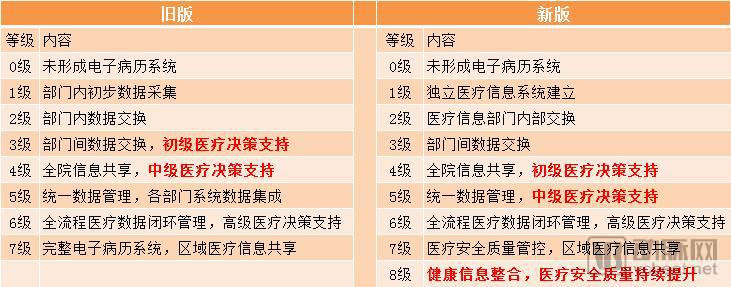
Comparison of Implementation Difficulty Between the Legacy and New Versions
A comparison of the basic content between the old and new versions reveals that, following the adjustment of standards, there has been an overall upward revision in the grading of clinical decision support. The specific details for each level of clinical decision support are as follows:
![IV23C0@I}0C5]KL}T7@P9OV.png](https://cdn.vcbeat.top/upload/image/06/11/11/01/1541916100847280.png)
It can be seen that primary clinical decision support mainly provides alerts for simple conditions, such as rational drug use, including alerts for drug incompatibilities and access to a knowledge base of clinical practice guidelines. Intermediate decision support can handle relatively complex conditions, such as contraindication alerts for medication use based on factors like diseases mentioned in medical history, diagnoses, age, and gender, while providing a knowledge system grounded in evidence-based medicine. Advanced decision support leverages big data processing and machine learning, integrating clinical practice guidelines, evidence-based medicine knowledge systems, and real-world data to enable early warning of clinical behaviors, prognostic analysis, and recommendation of similar medical cases.
With clear definitions in place, hospitals at varying levels of electronic medical record (EMR) system development can flexibly determine the appropriate classification level to apply for, based on their specific circumstances.
A Multi-Billion-Dollar “Gold Mine” Could Spark a New Gold Rush
According to relevant data from the “2017–2018 Survey Report on Hospital Informatization in China” released by the Health Information Management Professional Committee of the Chinese Hospital Association (CHIMA), the development of Clinical Decision Support System (CDSS) in domestic tertiary hospitals and non-tertiary hospitals is still at an initial stage. The adoption rate stands at 20.15% for tertiary hospitals and merely 8.6% for non-tertiary hospitals, indicating that widespread implementation remains far from reach.
![2T)4G744)VL]RUIZJ[$KOEF.png](https://cdn.vcbeat.top/upload/image/06/11/11/02/1541916127815215.png)
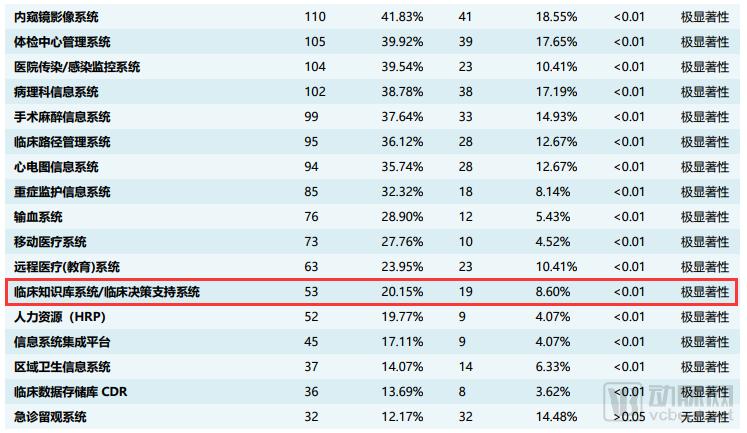
VCBeat previously in "New EMR Policies Activate Two Multi-Billion-Dollar Markets in Healthcare IT: How Should Hospitals Choose Solutions to Meet Compliance Standards?》investigated the market size of CDSS, primarily by assessing the number of hospitals and the unit price of products.
Regarding unit pricing, industry insiders reveal that electronic medical record (EMR) grading evaluations at Level 4 and above all require clinical decision support (CDS) functionality. CDS functionality is not equivalent to a knowledge base; rather, it represents an application more aligned with artificial intelligence. For instance, it must be capable of processing unstructured, multidimensional clinical data, automatically predicting a list of differential diagnoses based on patient clinical data, and recommending personalized diagnosis and treatment plans. Advanced decision support must cover all aspects of medical care and rely on an evidence-based, real-time updated medical knowledge base. Differences in the authority of the knowledge base, the capability to process unstructured data, and model prediction accuracy are all factors contributing to price variations among Clinical Decision Support Systems (CDSS).
In many cases, Clinical Decision Support Systems (CDSS) are bundled into larger projects and not sold separately. When sold independently, CDSS solutions (excluding pure knowledge-base systems) typically range in price from RMB 500,000 to RMB 1 million. Therefore, VCBeat estimates the current average market price for CDSS at approximately RMB 750,000. Based on data released by the Statistical Information Center of the National Health Commission, which reported 2,439 tertiary hospitals across China as of the end of June 2018, VCBeat estimates that the market size for CDSS in tertiary hospitals will reach approximately RMB 1.9 billion by 2020.
However, given that CDSS can be categorized into general practice and single-disease systems, if enterprises develop specialty-specific CDSS tailored to different clinical departments, the potential market size would be approximately ten times the current market scale. From this perspective, the market potential for CDSS approaches RMB 20 billion.
"Competition for"Gold Mine”? First, pass these hurdles
Although policy support has facilitated the implementation of Clinical Decision Support Systems (CDSS) in hospitals, obstacles are inevitable due to limitations in the market environment and technical issues.
From the perspectives of market environment and awareness, the overall level of informatization in domestic hospitals remains relatively low. Without a robust informatization platform as a foundation, it is difficult to advance Clinical Decision Support Systems (CDSS). During product integration, the primary challenge for CDSS is achieving compatibility with systems from various vendors. The implementation timeline, whether long or short, depends on the hospital’s drive for adoption and the vendor’s level of cooperation. Furthermore, the progress of hospital data warehouse construction also influences and constrains the end-to-end application of CDSS.
For example, when a Clinical Decision Support System (CDSS) analyzes whether a patient’s electrocardiogram (ECG) was completed within 10 minutes of the clinical visit, it needs to retrieve the outpatient/emergency registration time and the completion time of the electrophysiological test from outside the Electronic Medical Record (EMR) system. The availability of cross-system data interfaces and whether physicians enter data as required both affect the automatic completion of this analysis.
Furthermore, CDSS products involve numerous clinical departments, and physicians’ acceptance of medical AI varies. The transition from implementation to practical application requires a process of education and gradual acceptance. In particular, for tools that can reduce workload and improve efficiency, most physicians may initially resist them before selectively trying them out, which to some extent prolongs the validation cycle of CDSS products.
Given the stringent requirements of clinical hospital settings and the high workload borne by physicians, Clinical Decision Support Systems (CDSS) must provide tangible assistance to clinicians and achieve seamless integration with clinical workflows, rather than being designed merely to meet rating criteria. This process cannot be accomplished overnight.
Contradictions also exist in the demands for Clinical Decision Support Systems (CDSS) between clinicians and administrators. Administrators typically prioritize strict control over the entire workflow, whereas clinicians focus more on reducing workload and alleviating burdens; in certain scenarios, these needs may be mutually contradictory.
From the perspective of product development, the greatest challenge for an AI-assisted diagnosis and treatment system is to digest medical knowledge in a manner comparable to that of clinical physicians.
Taking Huimei Technology, a well-known domestic medical AI enterprise, as an example, the company has transformed individual articles on clinical knowledge, guidelines, and standards into a set of “computer-readable and comprehensible” clinical reasoning frameworks based on the Mayo Clinic’s disease diagnosis and treatment pathways. By employing logic extraction methods derived from these clinical reasoning frameworks, Huimei Technology collaborates with partner hospitals to refine and enhance specialized knowledge bases for specific medical specialties and diseases.
Huimei Technology extracts real-world information from medical record data to continuously train its AI “brain” and refine diagnostic models, transforming experts’ clinical reasoning and experience into diagnosis and treatment pathways that reflect the unique characteristics and strengths of hospitals. This approach and underlying logic constitute the core value proposition of Huimei Technology.
It is reported that Huimei CDSS has partnered with more than 40 large tertiary Grade A hospitals. Among them, six hospitals have achieved Level 5 and Level 6 in the Electronic Medical Record (EMR) Application Maturity Grading Evaluation, four have passed the HIMSS Stage 7 accreditation, and two have attained Level 5-Yi in the Interconnectivity Standardization Maturity Assessment. The partner institutions also include renowned hospitals such as The First Affiliated Hospital of Zhejiang University School of Medicine, Xiangya Hospital of Central South University, The Second Affiliated Hospital of Zhejiang University School of Medicine, China-Japan Friendship Hospital, and Jiangsu Province People’s Hospital.
Huimei CDSS is a clinical-centric intelligent Clinical Decision Support System (CDSS). According to Zhang Qi, CEO of Huimei Technology, the essence of CDSS application lies primarily in helping physicians ensure consistency and standardization in clinical diagnosis and treatment, thereby improving clinical quality. To achieve this, the foremost consideration is whether the vendor’s knowledge base is sufficiently advanced and authoritative. The integration of Mayo Clinic’s comprehensive knowledge system has established the authority of Huimei CDSS and is one of the key reasons for its acceptance by clinicians.
Strive to Be an Early Bird: The Arms Race Has Already Begun
The dual boost from policy and market forces does not mean that companies have done their homework or possess sufficient technological reserves to respond. To truly meet the clinical decision support requirements of hospital departments, enterprises need to move beyond the “old paradigm” of expert rule-based systems and achieve a qualitative leap by leveraging new technologies such as deep learning and big data. In this regard, some companies are already leading the way…
In the first half of 2017, a well-known domestic health IT vendor sought to promote a Grade 6 Electronic Medical Record (EMR) accreditation project for a tertiary A hospital in China, requiring technical support from an enterprise. Upon learning of this opportunity, Kangfuzi, a renowned Chinese medical AI company, successfully developed a new Clinical Decision Support System (CDSS) product after more than six months of efforts. The product involved the development of 30 interfaces, facilitating the smooth implementation of the project.
In early 2018, Kangfuzi re-evaluated and examined the needs for clinical decision support, and officially launched its Clinical Decision Support product in late June 2018. Unlike traditional expert rule-based systems, this is a truly AI-driven clinical decision support product.
According to VCBeat, the entire clinical decision support system (CDSS) emphasizes practicality and scalability. In addition to helping hospitals meet various informatization rating requirements and enabling clinical application functions such as assisted diagnosis, rational drug use, risk alerts, order recommendations, knowledge push, and medical record quality control, the product also focuses on addressing the needs of hospitals and IT vendors for easy implementation, scalability, and convenient management by building a CDSS knowledge management platform and a CDSS data analysis platform.
Moreover, Kangfuzi adopts a “plug-and-play” component deployment strategy in its product design philosophy. Specialized modules—such as Hospital-Acquired Infection (HAI) control, Venous Thromboembolism (VTE) management, single-disease diagnosis, and disease subtyping—can be rapidly developed and launched. These modules leverage Kangfuzi’s standardized medical record interpretation results as input, customizable template formats as output, and a variety of optional algorithm-driven models.
At the level of clinical decision support functionality, it essentially addresses two matters:
1) Engine Level: Real-time identification and understanding of the current physician’s clinical content to provide decision-making results; Kangfuzi leverages cutting-edge artificial intelligence technologies to achieve outcomes far beyond the reach of expert rule-based engines and traditional machine learning methods.
2) Knowledge Base Level: Provides explanations based on decision outcomes and delivers authoritative static knowledge base content to physicians. Kangfuzi has partnered with People's Medical Publishing House, the largest and most authoritative medical publishing institution in China. Meanwhile, the product supports integration with mainstream knowledge bases available on the market and also offers an internal editing platform for hospitals, allowing their physicians’ clinical experience to be added to the platform.
The clinical decision support engine consists of two major components:
1) Semantic Understanding Engine; 2) Reasoning and Decision-Making Engine.
Semantic Understanding: The information recorded by healthcare professionals consists of extensive continuous text. For computers to process and comprehend this text, the primary step is knowledge feature extraction. Kangfuzi accomplishes this through its Medical Record Structuring Engine. This engine performs structured analysis across more than 200 dimensions for medical records covering all disease types. It has been integrated into the health information systems of dozens of top-tier tertiary hospitals across China, including two of the nation’s leading institutions: the PLA General Hospital (301 Hospital) and Peking Union Medical College Hospital.
Without a medical record structuring engine, enterprises can only approximate similar functionality by matching medical record texts against dictionary term lists. However, for medical records written in free-text format, which feature highly diverse expressions, keyword matching approaches are largely ineffective.
Inference and Decision-Making Engine: After feature extraction required for computational processing is completed, the remaining tasks are handed over to the inference and decision-making engine for analysis. Medicine is a highly complex discipline, posing significant challenges to inference and decision-making. Kangfuzi employs a proprietary algorithm for its inference and decision-making processes, known internally as the Deep Bayesian Network. This network is structured around a Bayesian inference framework, but Kangfuzi has introduced substantial innovations in calculating joint probability distributions.
In computational mathematics, Kang Fuzi has made numerous assumptions to simplify calculations, such as introducing the naive Bayes assumption and the Markov assumption, among others. For a patient, “cough” and “fever” do not exist independently. In deep Bayesian networks, Kang Fuzi employs hierarchical structures to model the correlations between these features.
Furthermore, the entire decision-making algorithm operates on top of a knowledge graph. The constraints and guidance provided by the knowledge graph ensure that reasoning proceeds in the correct direction, thereby preventing elementary errors.
Take a real medical record as an example:
Male, 50 years old, admitted due to intermittent abdominal pain, jaundice, and fever for 3 months. Three months ago, the patient suddenly experienced severe epigastric pain after meals without any obvious trigger, radiating to the back and both shoulders, accompanied by a fever of around 38°C. The next day, scleral and skin jaundice were observed, with no nausea or vomiting. Symptoms alleviated after treatment with antibiotics and choleretic drugs at a local hospital. Similar episodes occurred twice more in the following two months, and symptoms improved with anti-inflammatory, choleretic, and hepatoprotective treatments. The patient was referred to our hospital for further diagnosis and treatment. Six months ago, the patient underwent cholecystectomy for "chronic cholecystitis and gallstones." No history of smoking or alcohol consumption, and no history of hepatitis or tuberculosis.
The knowledge to be extracted by the semantic understanding engine includes: sex male, age 50 years, symptoms of abdominal pain (duration: 3 months; intermittent episodes; radiation to the back and both shoulders; severe pain intensity), negative symptom: nausea, ..., historical treatment regimen: "cholecystectomy", etc.
First, the decision engine generates potential diagnoses, such as gallbladder stones and common bile duct stones, based on information including symptoms and signs. Subsequently, the system further analyzes historical treatment records, identifies that the patient has previously undergone cholecystectomy, and thereby excludes "gallbladder stones" from the suspected diagnoses.
Within three months of its launch, the product has been deployed in nearly 20 Grade A tertiary hospitals across China, including Nanjing Drum Tower Hospital and Shengjing Hospital. Furthermore, Kangfuzi’s Clinical Decision Support System (CDSS) serves over 10,000 village clinics in a certain province through the provincial village doctor platform. It has also entered into a deep strategic partnership with the Health Commission of a district in Beijing, with the CDSS system fully implemented online across all four district-affiliated hospitals and more than 100 community health centers and village clinics in the district.
According to VCBeat, in 2018, besides helping a large number of hospitals meet their grading requirements, Huimei Technology focused more on enabling clinical value. The realization of clinical value is a key feature that distinguishes Huimei from other CDSS vendors. Taking the AI-based quality control project collaborated by Huimei Technology and Xuanwu Hospital as an example, the company and the Department of Neurology at Xuanwu Hospital jointly identified eleven quality control points for the standardized treatment of acute cerebral infarction.
For example, regarding the NIHSS score, the patient's current NIHSS score is recorded in each progress note; for antithrombotic therapy within 48 hours, treatment should be initiated within 48 hours of admission. By continuously monitoring medical record texts, if any treatment deficiencies are identified, Huimei CDSS will alert physicians to complete the treatment on the medical documentation pages (admission notes, first-day progress notes, daily progress notes, and discharge summaries).
Within less than a month of implementing the Huimei CDSS quality control alerts, Xuanwu Hospital’s Department of Neurology saw its compliance rate with 11 stroke diagnosis and treatment standards rise from 70.19% to 93.85%, representing a 33.7% increase. Notably, the rate of in-hospital intensive lipid-lowering therapy increased from 72.73% to 92.16%, while the rate of antithrombotic therapy at discharge rose from 65% to 100%. Song Haiqing, Deputy Director of the Department of Neurology at Xuanwu Hospital, stated that this improvement in treatment standardization will significantly enhance patient prognosis and reduce post-treatment recurrence rates.
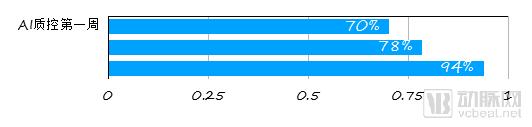
From clinical decision support to medical record quality control, Huimei CDSS effectively enhances the consistency and standardization of clinical diagnosis and treatment, establishing a closed-loop quality management system that spans pre-consultation order entry, intra-consultation medical record documentation review, and post-consultation data reporting.
In response, Zhang Qi stated, “Evaluating CDSS from an application perspective boils down to two key points: first, accuracy, which is self-explanatory; and second, real-time integration, meaning it should be fully embedded into the clinical diagnosis and treatment workflow with real-time interaction, rather than requiring users to exit the system for queries or perform retrospective reviews after errors are identified. Only by achieving these two prerequisites can CDSS exert a genuine impact on clinical quality.”
He also cited a practical case to illustrate this: For a patient admitted with acute cerebral infarction, the Huimei CDSS automatically recommends treatment options such as intravenous thrombolysis, endovascular intervention, and antiplatelet therapy by real-time analysis of medical record texts—including chief complaints, history of present illness, treatments, and medication records—based on clinical practice guidelines. However, when the physician further updates the patient’s history by noting “the patient suffered head trauma two months ago,” the Huimei CDSS instantly identifies intravenous thrombolysis as contraindicated and alerts the physician that this treatment is inappropriate. Meanwhile, the recommended treatment plan is automatically updated, and intravenous thrombolysis is removed from the list of suggested options.
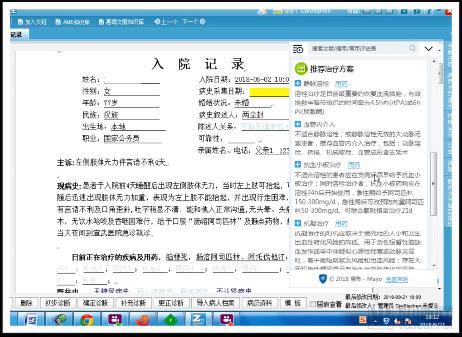
Recommendations for Standard Treatment Regimens for Acute Cerebral Infarction
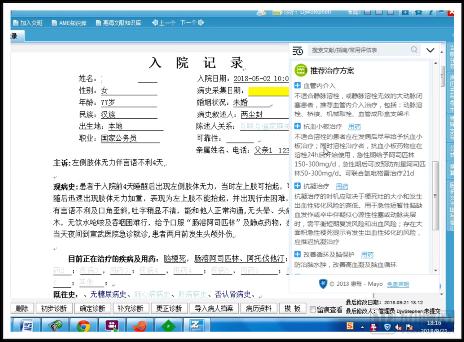
Real-time identification of patient contraindications and recommendation of precise, personalized treatment plans
Prospects for CDSS in the New Business Landscape
Based on the preceding analysis, VCBeat believes that for Clinical Decision Support Systems (CDSS) to truly achieve a market size in the tens of billions, they must tangibly assist physicians and integrate seamlessly into clinical workflows. To this end, CDSS must meet at least the following criteria:
1. The progress of hospital data warehouse construction is sufficiently rapid;
2. Resolve the issue of CDSS integration with systems from various health IT vendors;
3. Meet the diverse needs of clinicians and hospital administrators;
4. Leverage clinical reasoning-based logic extraction methods to collaboratively refine specialty-specific and disease-specific knowledge bases with physicians;
5. Ensure the accessibility of clinical data to the greatest extent possible through structured medical records;
6. Collaborate with sufficiently authoritative hospital departments to ensure the authority of the decision-making knowledge base;
In other words, although there is substantial market potential, the current foundational capabilities of both enterprises and hospitals remain inadequate. Only those who can accurately identify their own shortcomings and are willing to make timely improvements will gain a competitive edge and reap the benefits of Clinical Decision Support Systems (CDSS).