

Returning to the Core Mission: Empowering Doctors and Patients Through Medical AI
November 10 News: The 2018 Internet Plus Healthy China Conference and the Second “Healthy China” Summit, jointly hosted by Health News Agency and Sir Run Run Shaw Hospital, Zhejiang University School of Medicine, was held in Hangzhou on November 10. In line with the consensus reached at the Wuzhen Summit of the World Internet Conference, artificial intelligence has become a mainstream topic of discussion across all industries, and the healthcare sector is no exception. The parallel forum on “Internet Plus Medical AI,” exclusively supported by TumorDoc, conducted comprehensive and in-depth discussions on medical artificial intelligence. It is reported that the Hangzhou Summit of this year’s Healthy China conference included artificial intelligence in its parallel forums for the first time, focusing on the opportunities and trends brought about by medical AI.
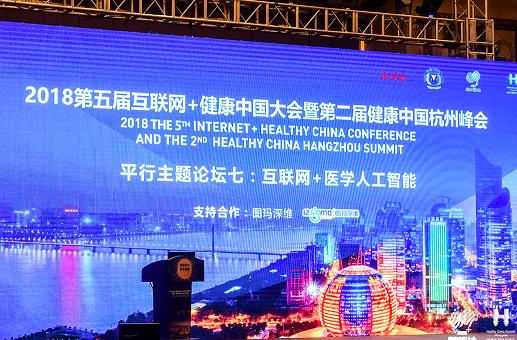
The Parallel Forum on Medical Artificial Intelligence brought together government officials from the National Health Commission, domestic and international experts and scholars, industry leaders, and media representatives to discuss frontier technological innovations in medical AI and their practical industrial applications, as well as to share experiences in the development of artificial intelligence. The insights shared by the conference guests were widely acclaimed by the audience. Artificial intelligence can empower the comprehensive realization of the “Healthy China” initiative, provide solutions for China’s healthcare sector undergoing transformation, and enhance the efficiency of the country’s healthcare system.
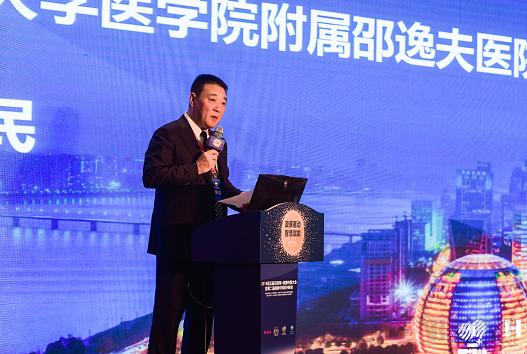
Liu Limin, Party Secretary and Vice President of Sir Run Run Shaw Hospital
In his address, Liu Limin, Party Secretary and Vice President of Sir Run Run Shaw Hospital, stated that with the support of relevant national policies, internet technology has become more mature, significantly boosting medical standards, effectively optimizing the allocation of medical resources, and bringing about transformative changes to healthcare by making it more efficient and safer. Against the backdrop of China’s accelerating population aging and shortage of medical resources, medical artificial intelligence will effectively compensate for shortcomings such as human resource shortages, facilitate cross-disciplinary integration, and support clinical application practices.
Liu Limin also pointed out that medical imaging is currently the most widely applied field in healthcare, and has become a key factor driving the development of the healthcare industry and enhancing service quality. However, artificial intelligence (AI) in healthcare still faces numerous challenges, including issues related to regulatory oversight of the quality and effectiveness of clinical practices, establishment of standards and guidelines, privacy protection, promotion of collaboration among industry, academia, research, and clinical application, and avoidance of homogeneous competition. It is imperative for all relevant stakeholders—including the National Health and Family Planning Commission, healthcare institutions, Chinese and international scholars and experts, and the industrial sector—to jointly establish a robust ecosystem for innovation, thereby advancing the in-depth application and practical implementation of AI in the medical field.
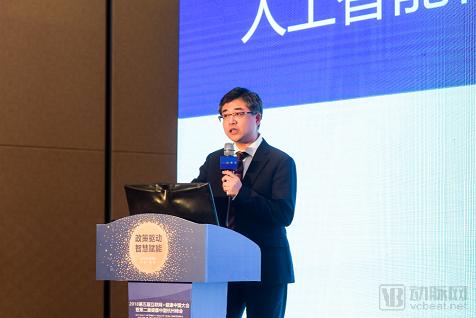
Shen Jianfeng, Director of the Department of Planning Development and Informatization, National Health Commission
Shen Jianfeng, Director at the Department of Planning, Development and Informatization of the National Health Commission, stated that during the recent ninth group study session of the Political Bureau of the CPC Central Committee on the current status and trends of artificial intelligence development, General Secretary Xi Jinping pointed out that AI has become a strategic issue concerning the opportunities presented by the new round of technological and industrial transformation.
In terms of national policy, artificial intelligence (AI) has been elevated to the status of a national strategy. On July 8, 2017, the State Council issued the Development Plan for New-Generation Artificial Intelligence, which proposes “making China the world’s primary AI innovation center by 2030.” All of this underscores the state’s emphasis on and support for the development of AI. Healthcare is an important application scenario for AI and holds substantial value in the practice of tiered diagnosis and treatment in China. National policy orientations will continue to introduce many favorable policies for AI. The healthcare industry needs to fully leverage information technology and intelligent solutions to promote the development of China’s medical and health services.
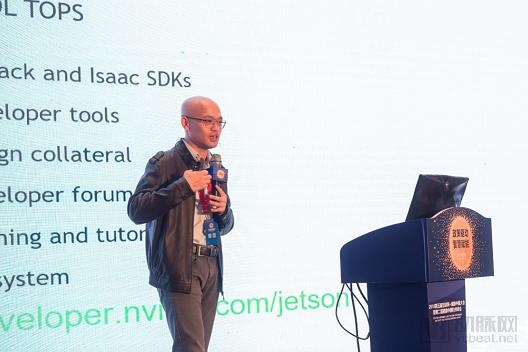
Chang Yu, Chief Architect of Life Sciences at NVIDIA
Computing power, one of the three core elements of artificial intelligence (AI), plays a pivotal role in medical AI. The rapid breakthroughs in algorithms within the field of medical imaging are largely attributable to the continuous growth in computing power. As a leader in AI computing, NVIDIA has established its own industrial logic in this domain. Chang Yu, Chief Architect of Life Sciences at NVIDIA, pointed out that with the evolution of healthcare service models and the introduction of an increasing number of emerging technologies into the medical field, physical healthcare service models will transition toward distributed healthcare service models through the integration of AI and the Internet.
Yu Chang stated that NVIDIA is willing to serve as a builder of the underlying technology ecosystem, providing new frameworks and algorithms for scientific research in machine vision, such as image processing. This will enable platform services to have broader application scenarios ranging from healthcare to finance. Leveraging NVIDIA’s data center infrastructure and its comprehensive support spanning from high-performance computing (HPC) to AI, the company aims to enhance the development efficiency of downstream AI vendors, thereby delivering more applications to consumers and enterprises.
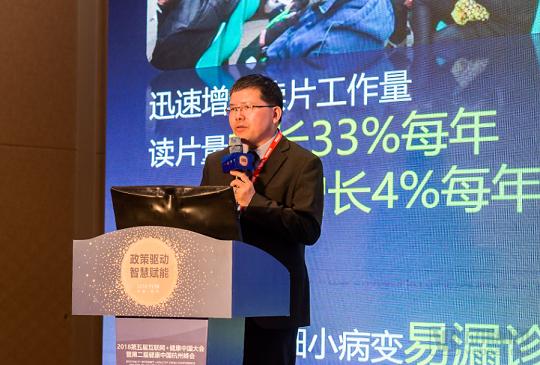
Hu Hongjie, Director of the Department of Radiology, Sir Run Run Shaw Hospital, Zhejiang University School of Medicine
Regarding the clinical application of medical artificial intelligence (AI), Hu Hongjie, Director of the Department of Radiology at Sir Run Run Shaw Hospital, Zhejiang University School of Medicine, stated that the hospital maintains an open and embracing attitude toward the implementation of AI in healthcare. Significant progress has been made in collaboration with TomoDeep, a representative company in the field, covering AI product development, pilot trials, and scientific research cooperation. Dr. Hu noted that AI technology can effectively address numerous challenges currently facing early screening and diagnosis of lung cancer, such as difficulties in follow-up, surging workloads, and risks of missed or misdiagnoses. By substantially reducing physicians’ workload and boosting their confidence, AI offers tangible benefits and convenience for both doctors and patients. In addition to deep collaboration on pulmonary nodule assessment, Dr. Hu introduced ongoing joint research and development initiatives between TomoDeep and Sir Run Run Shaw Hospital focused on the Liver Imaging Reporting and Data System (LI-RADS). This project is expected to improve the accuracy of liver tumor grading, thereby guiding treatment decisions, transforming current diagnostic and therapeutic paradigms for liver tumors, and achieving highly efficient and precise clinical outcomes.
Lin Hui, Director of the Office of Internet and Artificial Intelligence at Sir Run Run Shaw Hospital, Zhejiang University School of Medicine, stated that medical artificial intelligence (AI) represents a deep integration of healthcare and AI. He emphasized that AI, as a factor of production, permeates the entire cycle of medical diagnosis and treatment, currently encompassing intelligent health management, imaging diagnostics, and medical education. He also specifically highlighted the importance of establishing standards for medical AI. Other speakers who delivered presentations on medical AI at the conference included Bennett Landman, Professor in the Department of Electrical Engineering and Computer Science at Vanderbilt University in the United States, and Diao Anyuan, National Product Manager for Digital Services at GE Healthcare China.

Roundtable Discussion: Practical Implementation of AI in Medicine
During the roundtable discussion, Wu Kai, a partner at SoftBank China, pointed out that while capital continues to pour into the sector, there are also voices pessimistic about artificial intelligence, creating a stark dichotomy of “ice and fire” in the AI landscape. Zhong Xin, CEO of TomoDeep, argued that TomoDeep is a genuine medical AI company. He noted that the rapid shift from the “Year One of AI” enthusiasm to widespread pessimism does not align with the natural cycles of technological development. TomoDeep is actively collaborating with upstream and downstream players in the medical AI industry chain to explore innovative models for commercial monetization, having made significant progress. We believe that true AI companies will survive, while pseudo-AI companies will disappear.
Hu Hongjie acknowledges the polarized state of artificial intelligence (AI), noting its current rapid development. He emphasizes that AI companies should return to their original mission by delivering tangible benefits to patients. The successful implementation of medical AI requires AI companies to possess a basic understanding of medicine, while physicians need to acquire some knowledge of AI. Hu Hongjie also clearly stated that modern medicine has evolved over hundreds or even thousands of years; therefore, AI cannot rapidly replace physicians. Given the complexity of medicine and the currently limited range of diseases addressed by AI applications, gradual refinement over time is necessary. We will continue to educate the physician community to actively embrace medical AI, ensuring that medical AI stays true to its original purpose and genuinely benefits both doctors and patients.
Yu Chang, however, regards this as a perfectly normal occurrence. Citing Gartner’s “Hype Cycle” model from the world’s largest IT consulting firm, he noted that any technology undergoes five stages, including the innovation trigger, peak of inflated expectations, and trough of disillusionment. The maturation of medical AI technology will be a lengthy process, requiring more meticulous efforts in the next phase.