

AliveCor's Smartphone ECG Matches Traditional 12-Lead ECG in Detecting STEMI, New International Study Shows
Recently, VCBeat (WeChat official account: vcbeat) learned from foreign media reports that new data from an international study on the AliveCor smartphone application and its attached dual-lead electrocardiogram (ECG) revealed that this smartphone ECG is comparable to the traditional standard 12-lead ECG in patients with acute ST-segment elevation myocardial infarction (STEMI).
AliveCor, founded in 2010, is a startup in the medical device sector dedicated to developing mobile cardiac solutions. The company pioneered Kardia Mobile, a “machine learning”-enabled, FDA-cleared, clinical-grade personal ECG (electrocardiogram) monitor, which is the most clinically validated mobile ECG solution on the market. Kardia Mobile can transform any smartphone into an ECG recorder with professional medical-device quality, enabling users to capture medical-grade ECGs within 30 seconds anytime and anywhere to determine whether their heart rhythm is normal or if atrial fibrillation is detected, and to email the ECG results to the patient or their physician.
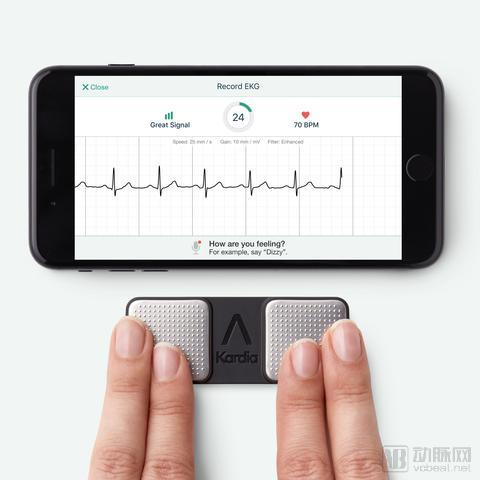
Image from the official AliveCor website
Kardia Mobile is recommended by leading cardiologists, used by cardiac care professionals and patients, has recorded over 30 million electrocardiograms (ECGs), and is recognized worldwide. This simple-to-use mobile device and app-based service provides patients with instant ECG analysis, enabling the detection of atrial fibrillation and normal sinus rhythm to support proactive cardiac care.
The study results were presented on November 11 (local time) at the American Heart Association’s 2018 Scientific Sessions in Chicago. A total of 204 patients from five research sites worldwide, who presented with chest pain or symptoms suggestive of STEMI, underwent both AliveCor smartphone-based electrocardiography and conventional electrocardiography. A panel of blinded readers independently reviewed these tests and classified each result as STEMI, left bundle branch block (LBBB), non-STEMI, or uninterpretable.
In the interpretable paired tests, the expert panel found sensitivity and specificity to be 0.89 and 0.84, respectively, with positive and negative predictive values for STEMI or LBBB of 0.7 and 0.95, respectively. The test results showed that 79.2% of the paired “smartphone–conventional ECG” tests demonstrated good correlation.
Researchers have pointed out that if AliveCor’s smartphone ECG truly demonstrates the high feasibility indicated by the data, it will become a more affordable and portable tool for managing patients with ST-elevation myocardial infarction (STEMI). Furthermore, improved accessibility of this tool may enable hospitals to retain a greater volume of patient ECG records, thereby saving the time required to clear backlogs of patient information.
“In our study, we found that this app can significantly accelerate treatment and save patients’ lives,” said Dr. J. Brent Muhlestein, principal investigator at the Intermountain Medical Center Heart Institute in Salt Lake City, Utah, in a statement.
AliveCor’s smartphone-based electrocardiogram (ECG) has been the subject of several clinical studies, and the company recently launched a new 6-lead version of its device. Notably, AliveCor’s wrist-worn ECG device is in fierce competition with the latest version of the Apple Watch.