

12Sigma Technologies Files for IPO: A Pioneer in AI-Powered Diagnostic Solutions
Many attempt to lay their own racetracks atop the wasteland. While the track is undoubtedly important, infrastructure ultimately serves the products built upon it.
Therefore, building the car is just as important as paving the road. In the field of AI medical imaging, core competition still stems from differences in product quality.
Recently, at the 2018 Chinese Congress of Radiology, TomoDeep, a company deeply engaged in AI-based medical imaging, officially launched four products covering lung, liver, breast, and stroke applications. This launch clarified TomoDeep’s five mature AI product lines, marking another milestone on its AI journey.
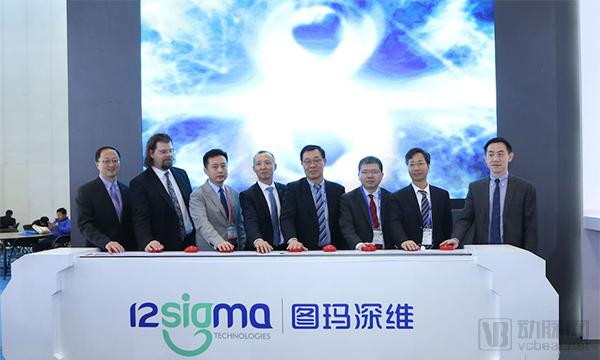
Tumour Deep Vision New Product Launch Ceremony
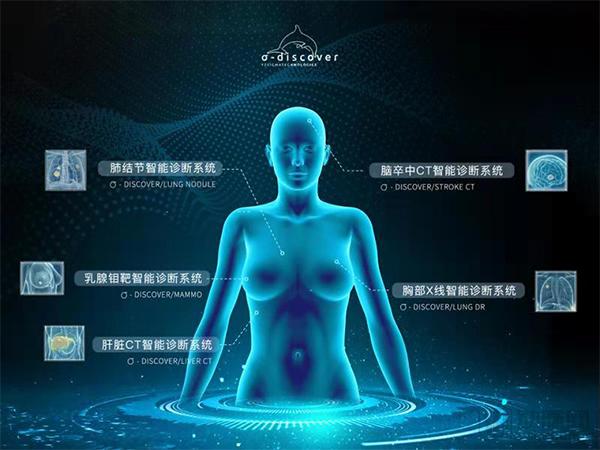
In August 2017, Deepwise AI launched its first intelligent diagnostic product—the Discover/Lung Nodule system for intelligent diagnosis of pulmonary nodules. Building on its accumulated expertise, Deepwise AI has subsequently released four new intelligent products: the Chest X-ray Intelligent Diagnostic System (σ-Discover/Lung DR), the Mammography Intelligent Diagnostic System (σ-Discover/Mammo), the Stroke CT Intelligent Diagnostic System (σ-Discover/Stroke CT), and the Liver CT Intelligent Diagnostic System (σ-Discover/Liver CT). These four products address clinical pain points and real-world needs, covering the entire diagnostic workflow—including disease monitoring, quantitative analysis, disease classification, benign/malignant assessment, follow-up tracking, and report generation—thereby providing physicians with precise auxiliary diagnostic tools.
This AI product, designed for chest imaging, is used for the analysis of digital radiography (DR) images of the thorax. It enables automatic detection and localization of 15 types of chest diseases, with a system sensitivity exceeding 90%. The system can automatically differentiate various pathological conditions and accurately identify healthy individuals, thereby improving physicians’ work efficiency. Additionally, the product features benign and malignant risk assessment capabilities, effectively minimizing the risk of system misdiagnosis.
This product is designed for the analysis of mammography images, capable of intelligently identifying breast lesions and achieving precise localization. It demonstrates a sensitivity of over 95% for calcifications and over 90% for masses. Adhering to BI-RADS guidelines, this system provides critical evidence to support clinical treatment decisions.
This system can rapidly detect acute hemorrhage and ischemic lesions in CT images, determine their location, volume, risk level, and other information, clarify the diagnosis and treatment plan within the golden window for emergency care, and provide prognostic assessment.
This system can automatically perform liver segmentation based on CT images, intelligently detect hepatic lesions, and identify information such as the location and volume of lesions including hepatic nodules, liver cirrhosis, and fatty liver. It also features functionality for assessing the benign or malignant nature of lesions.
Wu Gang, Vice President of Tuma Shenwei, stated that the company’s four new AI-powered products are currently undergoing clinical trials in hospitals. Other products, including intelligent diagnostic systems for prostate cancer, fractures, and diabetic retinopathy, are under development. This series of products focuses on areas with high incidence rates among Chinese patients, such as oncology, cardiovascular and cerebrovascular diseases, and chronic diseases, and has been customized specifically for the Chinese patient population. In the future, Tuma Shenwei plans to launch 3–5 new products annually to rapidly achieve full-process diagnostic coverage for multiple body regions, while simultaneously strengthening its expansion into overseas markets, including the United States, Europe, Japan, and Southeast Asia.
“By expanding its range of covered diseases, Tuma Shenwei has achieved a value leap from radiology to clinical practice. This powerful AI-assisted diagnosis and treatment system will become the infrastructure of the entire intelligent healthcare industry and serve as a key component of Tuma Shenwei’s integrated smart service platform, which combines research, genomics, and pharmaceuticals.”
Compared with other AI companies, TomoDeep appears to have a clearer sense of its positioning.
“As a startup, our resources are limited, but we are sufficiently agile. We can concentrate our efforts on a specific focal point in medical AI, distill its essence, and strive for excellence; furthermore, we can closely monitor current trends and promptly adjust our R&D direction in response to market dynamics,” said Zhong Xin, CEO of Tuma Shenwei.
“Therefore, we partner with Alibaba Health to deploy our products through its leading-edge cloud technology; we collaborate with GE to integrate artificial intelligence with traditional imaging equipment; and we work with hospitals to nourish our algorithms with the highest-quality and most extensive data… Our pursuit is to enable every participant in the AI product ecosystem to maximize their value.”
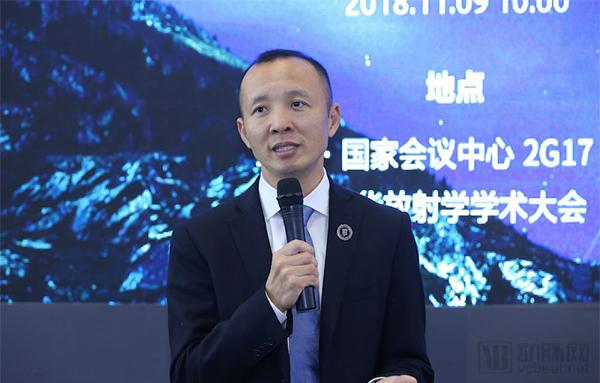
Tumour Deep Vision CEO Zhong Xin Introduces Four New Products at Press Conference
On the other hand, at this current juncture, Tuma Shenwei has a profound understanding of the positioning of AI products within clinical application scenarios. Wu Gang employed a vivid analogy, comparing physicians to the procuratorate and AI to the public security organs. While public security authorities may apprehend suspects and label them as such, it is ultimately the procuratorate that determines the outcome of the case based on evidence. Similarly, in AI-assisted diagnosis, taking the differentiation between benign and malignant pulmonary nodules as an example, the diagnostic accuracy of most AI products remains less than satisfactory. Therefore, the final imaging diagnosis must still be determined by physicians.
Guided by this philosophy, Tumashen has gradually developed unique technological, resource, and market advantages through years of practical exploration.
The new products released by Tuma Shenwei adopt the latest methods in deep learning and artificial intelligence, including 3D convolution-based deep adversarial generative networks and general model training. By extracting shareable information from diverse data sources, the same network model can be applied simultaneously across multiple applications, significantly improving the efficiency of model training and computation. This approach effectively addresses the challenges of class imbalance in medical data and incomplete data annotation, establishing a first-mover advantage through cutting-edge technology. Taking its pulmonary nodule product as an example, Tuma Shenwei’s AI achieves a detection rate of 97.92% for nodules measuring 3–4 mm; the clinical concordance rate for benign versus malignant diagnosis exceeds 90%; and the false-positive rate is as low as 2.8 FP/scan, representing a top-tier industry standard.
As it translates its technological advantages into product competitiveness, TumorDeep has become a strategic partner of companies such as GE Healthcare, NVIDIA, Alibaba Health, United Imaging Intelligence, and Infervision, collaborating across various aspects including product research and development and implementation to jointly drive the rapid development of intelligent healthcare in China.
The collaboration between Tumaini and GE may serve as a microcosm of AI business models. For a long time, traditional medical equipment sales have remained a significant revenue source for industry giants. Now, in the internet era, integrating artificial intelligence components has become an inevitable trend. However, when large enterprises establish separate departments to develop AI products, the input and benefits are clearly disproportionate.
Currently, there is a shortage of primary healthcare professionals and the standard of medical care remains low. There is significant demand for traditional medical equipment (such as CT and MRI scanners) integrated with AI, particularly for hospitals and health examination institutions in remote areas. This product will substantially enhance the image interpretation and diagnostic capabilities of primary care physicians.
The “software + hardware” partnership between Tuma and GE enables both parties to leverage their respective comparative advantages. GE can reduce its R&D costs, empowering its hardware capabilities with lower expenditure, while Tuma can accelerate the deployment of its AI products by leveraging GE’s hardware equipment.
To effectively serve the healthcare sector, technological research and development alone are far from sufficient. Companies must gain a profound understanding of physicians’ workloads, their clinical workflows, and the specific challenges that require corporate solutions throughout these processes. These issues cannot be resolved overnight. Zhong Xin told VCBeat, “Initially, physicians offered suggestions for improving our product. It was precisely their candor that enabled us to continuously refine and enhance it. Today, physician satisfaction with our company’s products continues to rise, because in a sense, this is a product we have co-created with physicians.”
To date, the accuracy of AI has gradually converged, and the marketing of AI products is increasingly becoming a priority. Currently, Tuma Shenwei has deployed its intelligent diagnostic product for pulmonary nodules to more than 200 hospitals across China, with adoption rates reaching 100% in some institutions.
“Given the current pace of development, each company will likely cover approximately 10–20 disease areas in the future, but no single company can achieve both broad coverage and deep expertise across all of them. In the future, the market is likely to become increasingly segmented, with each leading enterprise carving out its own niche,” said Zhong Xin in an interview. “Tumai Shenwei is no exception. Last year, only radiologists used our products; today, thoracic surgeons, internists, and other specialists have also become users of Tumai Shenwei’s solutions. We currently have five mature product lines, and we plan to develop approximately three to five new product lines annually. From these, we will identify the most suitable application scenarios and strive to deliver best-in-class solutions.”