

World's Top Academia-Industry-Medical Alliance Convenes in Munich to Propel Medical Robotics from Research to Clinical Practice — Highlights of the 3rd World Medical Robotics Conference
Munich, Germany, is a city familiar to many. It is world-renowned for its automotive industry (home to BMW’s headquarters), football (Bayern Munich), and beer (Oktoberfest).
In the eastern part of the city lies another world-renowned university of science and technology—the Technical University of Munich. As Germany’s most prestigious institution in this field, it has not only produced 17 Nobel laureates but also boasts such distinguished alumni as Rudolf Diesel, the “father of the diesel engine”; Carl von Linde, the “father of refrigeration”; and Ludwig Prandtl, the “father of fluid mechanics.”
From November 10 to 11, the Technical University of Munich hosted another high-profile event—the 3rd World Medical Robotics Conference. The conference was jointly organized by the World Medical Robotics Association, the Technical University of Munich, and Shenzhen RoboMedical Technology Co., Ltd.
To gain an in-depth understanding of the latest developments in medical robotics and to provide accurate and comprehensive coverage of this premier event, VCBeat has assembled a dedicated interview team that traveled specifically to Munich.
Yang Jialin, founder of RoboMed, told VCBeat that the World Medical Robot Conference has three objectives: to showcase R&D achievements in medical robotics, to promote industry-academia-research exchanges in the global medical robotics field, and to drive the development of the worldwide medical robotics industry. Building on the successful hosting of the first two editions in Shenzhen in 2016 and 2017, this year’s conference centers on the theme “From Research to Clinical Practice: Ushering in a New Era for the Medical Robotics Industry.” It is dedicated to discussions spanning from scientific research to market application of medical robots, covering areas such as surgical robots, medical imaging, precision surgery, robotics and AI technologies, and industrial translation.
The conference brought together top experts in the surgical robotics industry from the United States, China, Germany, Japan, Switzerland, and other countries. Over the course of a two-day agenda, the venue was packed to capacity with professional attendees from around the world, including university professors, hospital physicians, corporate engineers, current students, and industry professionals. Distinguished guests from across the globe drew upon their respective research to engage in thorough discussions on the current state of scientific research, technological breakthroughs, clinical applications, and industrial translation in the field of medical robotics.
Munich, nestled at the foot of the Alps and along the banks of the Isar River, has always been a beautiful city. On this early winter weekend, the city was blanketed in golden leaves, transforming it into a scene straight out of a fairy tale. Such picturesque surroundings were perfect for sparking the imagination. VCBeat had the privilege of joining top-tier elites from academia, industry, and research institutions around the globe to reflect on the past and envision the future. The two days were truly a rare and delightful experience.
The first day of the conference kicked off with seven keynote addresses. Leading scholars and entrepreneurs in the field of medical robotics—including industry pioneer Russell H. Taylor, Yang Guangzhong, Nassir Navab, and the CEO of Verb Surgical (a joint venture between Google and Johnson & Johnson)—delivered compelling presentations on topics such as surgical robots, medical imaging, and precision surgery, generating an enthusiastic atmosphere among attendees.
Professor Russell H. Taylor, known as the “Father of Surgical Robotics,” a co-inventor of the da Vinci Surgical System, and Director of the Computer-Integrated Surgical Systems and Technology Research Center at Johns Hopkins University, led us through a review of the history of medical robotics and outlined the industry’s future trajectory. The audience not only gained extensive knowledge from his presentation but also witnessed the relentless spirit of truth-seeking characteristic of a true scientist. Attendees actively posed questions, seizing every opportunity to engage with this distinguished expert.
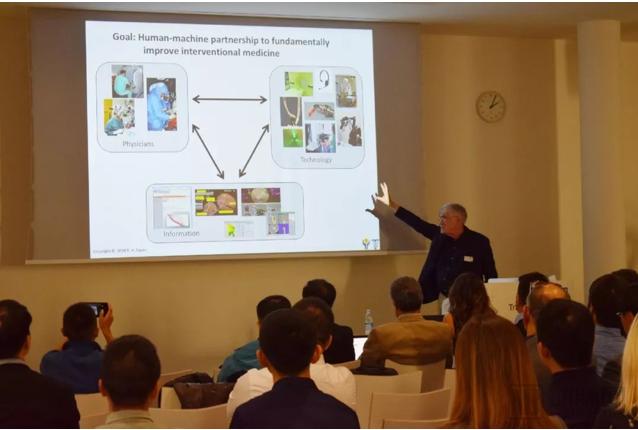
Prof. Russell H. Taylor
Professor Guang-Zhong Yang, Fellow of the Royal Academy of Engineering (UK), Co-founder and Director of the Hamlyn Centre at Imperial College London, stated that surgical robots have evolved from a nascent stage 25 years ago to a phase of rapid transformation and development, playing a pioneering role in advancements such as precision medicine, personal health, and quality-of-life improvements.
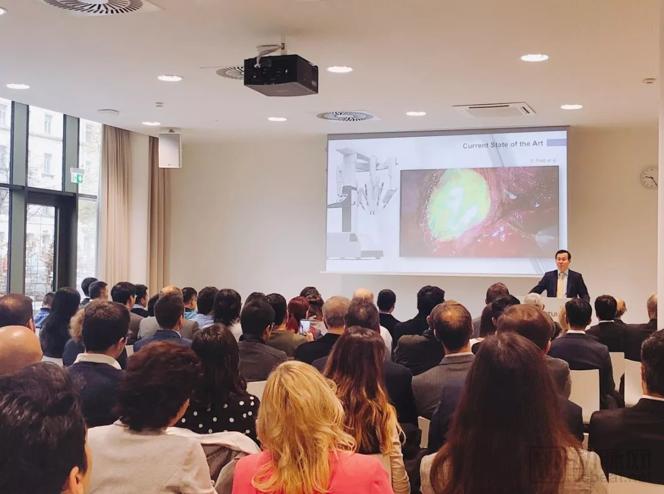
Prof. Guang-Zhong Yang
Chris P. Lohmann, Director of the Department of Ophthalmology at Klinikum rechts der Isar, the Clinical Teaching Center on the Isar River of the Technical University of Munich, stated that ophthalmic surgical robots have made certain advances in various directions. The greatest benefit of applying robotic surgery in ophthalmology lies in combining robotic sensory navigation with semi-autonomous control to achieve the ideal outcome of surgeon-directed teleoperation.
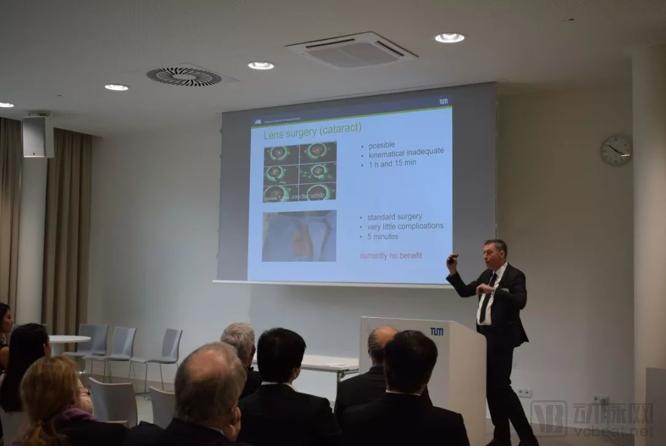
Professor Chris P. Lohmann
In his lecture, Professor Hubertus Feussner, Director of the Minimally Invasive Interdisciplinary Center at the Technical University of Munich, argued that in the era of Surgery 4.0, robotics can become a critical component of the entire surgical workflow, characterized by standardization, quantification, and controllability. He also emphasized that “Surgineering” is a vital concept representing the holistic planning and design of surgical procedures, capable of continuously improving the overall surgical system.
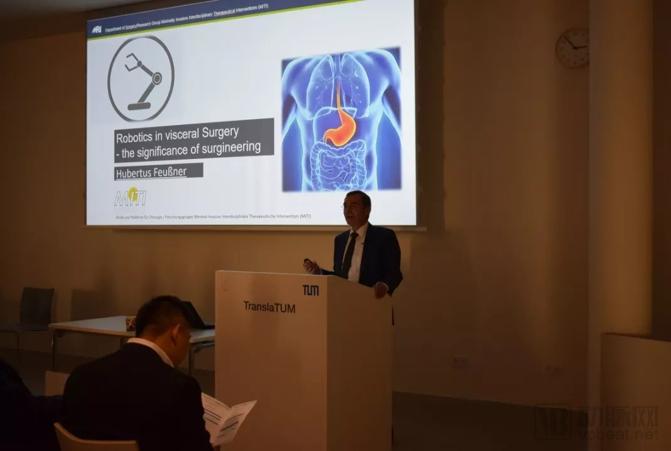
Professor Hubertus Feussner
Professor Philip WY Chiu, Director of the Jockey Club Centre for Minimally Invasive Surgical Technologies and Director of the Chow Yuk Ho Technology Centre for Innovative Medicine at The Chinese University of Hong Kong, delivered a lecture titled “Advances in Robotic Research for Esophageal Cancer: From Minimally Invasive Esophagectomy to Endoscopic Robotics.” He reviewed the historical development of surgical treatments for esophageal cancer and unveiled a newly developed, self-developed endoscopic robotic system designed for endoscopic submucosal dissection (ESD).
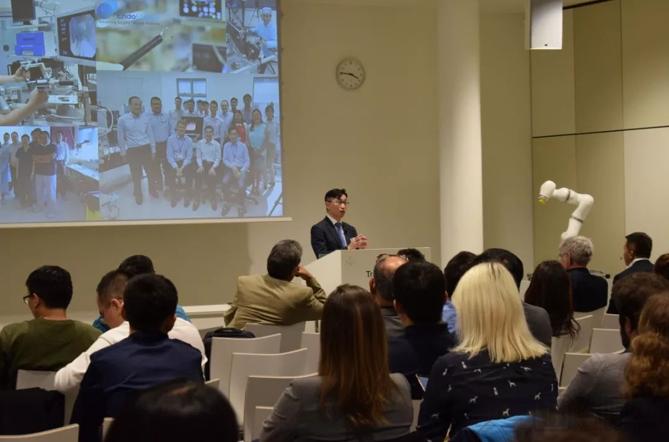
Professor Philip WY Chiu
Nassir Navab, Chair of Computer Aided Medical Procedures and Augmented Reality at the Technical University of Munich and Professor of Computer Science at Johns Hopkins University in the United States, delivered a keynote address titled “Machine Learning and Augmented Reality for Computer-Assisted Interventions.” He presented a blueprint for intelligent computer-assisted healthcare, emphasizing the pivotal role of machine learning and virtual/augmented reality technologies in the development of surgical robots.
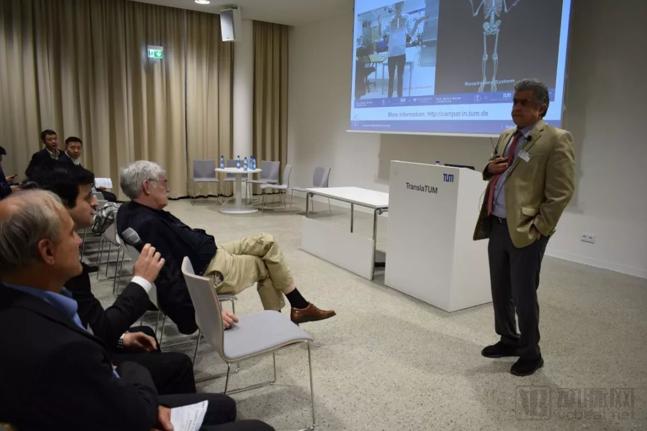
Professor Nassir Navab
The final agenda item on the first day was the High-Level Forum on Surgical Robotics. A distinguished panel of experts—Professor Russell H. Taylor, Professor Deborah Nagle, Professor Philip WY Chiu, Professor Nassir Navab, and Professor Hubertus Feussner—engaged in lively discussions on current hot topics, including digital surgery, the level of automation in robotic surgery, big data privacy and ethics, the integration of medical engineering with industrialization, and the cultivation of interdisciplinary talent. The panel also reviewed the history of medical robotics and explored future directions for the industry.
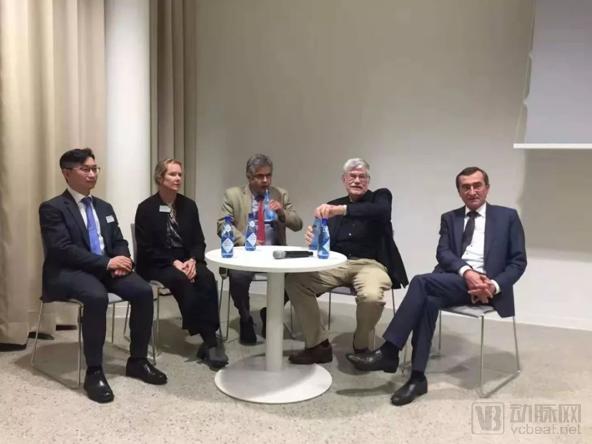
Day 1 Roundtable Forum
The second day’s agenda focused on topics such as robotics, AI technology, and industrial commercialization.
Professor Tim C. Lueth from the Department of Mechanical Engineering at the Technical University of Munich delivered a lecture on robotic mechanism design, manufacturing, and automation (Professor Lueth served as Dean of the School of Mechanical Engineering from 2013 to 2016). The presentation began with an overview of the development of surgical robots over recent decades and proposed advancing medical devices by modifying existing manufacturing technologies. He introduced patient-specific customization and eight methods to facilitate automated diagnosis and treatment, primarily including preoperative medical image reconstruction, intraoperative registration and navigation, and remote control techniques.
Furthermore, he demonstrated a precision component fabricated using rapid 3D prototyping technology at the conference and proposed achieving the manufacturing of flexible surgical instruments through techniques such as designing micro-rotational joints and utilizing shape memory alloys. At the end of his presentation, he briefly outlined an approach to automated mechanism design and fabrication using algorithms and MATLAB toolboxes. This technology is expected to accelerate the research and development of medical devices in the future.
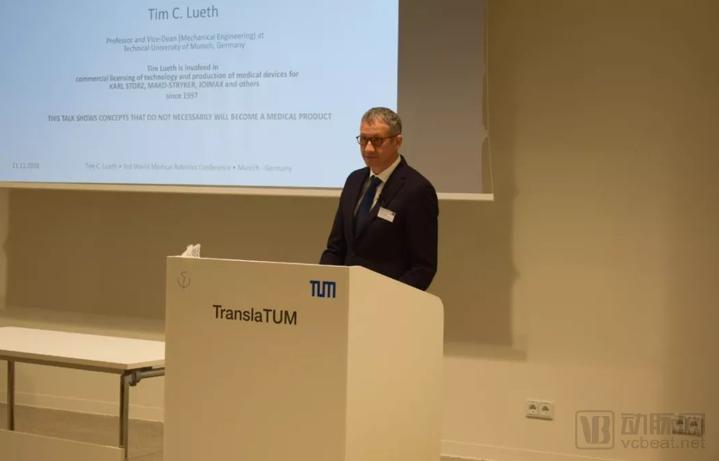
Prof. Tim C. Lueth
Professor Hannes Bleuler, Director of the Robotics Laboratory at École Polytechnique Fédérale de Lausanne (EPFL) and Member of the Swiss Academy of Technical Sciences (SATW), delivered a lecture titled “The Surgeon’s Third Hand.” He pointed out that existing surgical robots lack haptic feedback and are characterized by high-dimensional degrees of freedom and complexity. He stated that the core technological challenge currently lies in effectively addressing human–robot interaction issues. To grant surgeons greater control flexibility, he proposed designing foot-controlled mechanisms to coordinate with hand movements, thereby enabling more complex surgical procedures. Furthermore, he suggested that the Japanese method of Shisa Kanko (pointing and calling) offers valuable insights for enhancing surgical safety. In conclusion, he emphasized that translating these surgical robotic technologies into clinical practice is a critical imperative at present.
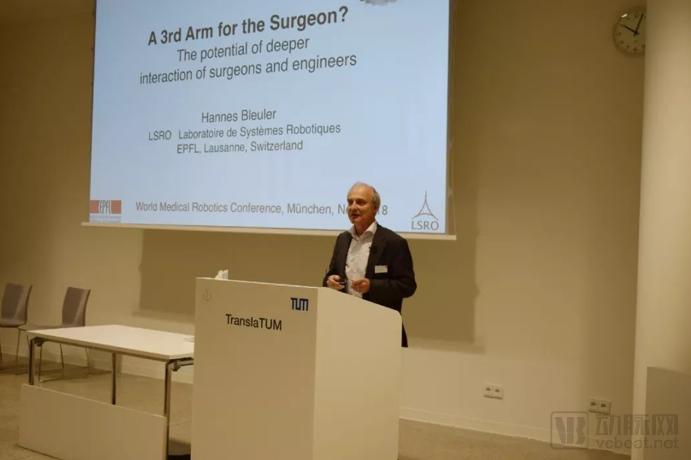
Prof. Hannes Bleuler
Professor Sami Haddadin, Dean of the Institute for Robotics and Machine Intelligence at the Technical University of Munich, delivered a lecture titled “Machine Intelligence: Breaking Down the Barriers Between Robotics and AI.” He emphasized that the advancement of robotic intelligence does not imply job losses for humans and reviewed the scientific progress in robot-environment interaction. Through multiple video demonstrations, Professor Haddadin showed how deep learning algorithms enable robotic arms to perform tasks such as inserting and turning keys. He further stated that 5G networks can be leveraged to create multi-robot machine learning networks, thereby achieving rapid and effective execution of peg-in-hole operations. Finally, he presented his research achievements in medical robotics, including prosthetics, robotic-arm-assisted grasping, and assistive robots for the elderly. In conclusion, he posited that machine intelligence is a learning process that integrates sensing, planning, and action.
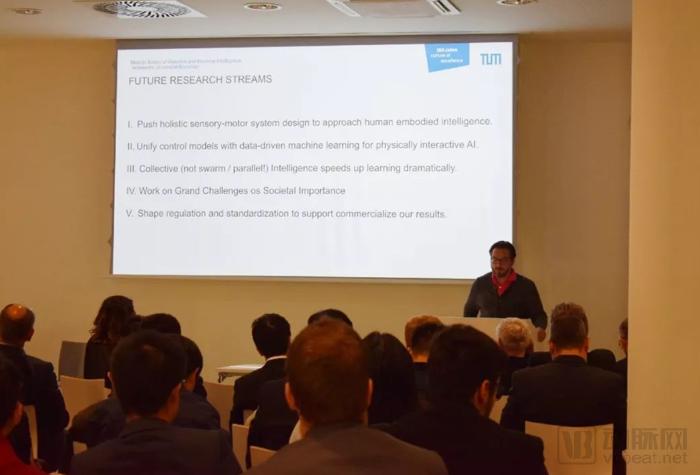
Professor Sami Haddadin
Professor Matthias Biebl, a surgeon at Charité – Universitätsmedizin Berlin, stated that while robot-assisted surgery has seen rapid growth in recent years, it is characterized by a low cost-benefit ratio and unclear economic benefits, meaning it is not suitable for all patients. However, its application holds significant value in specific types of surgeries, such as those involving the esophagus, rectum, and pancreas.
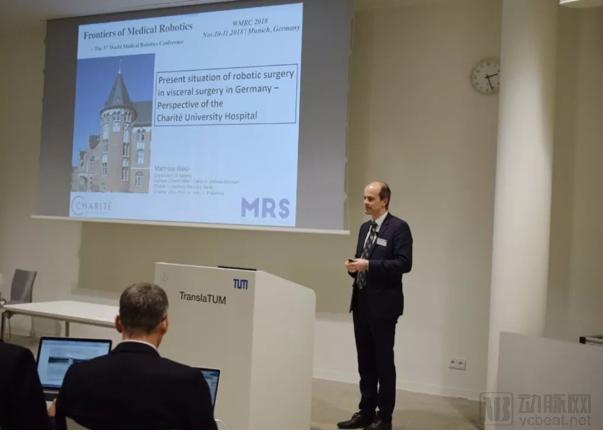
Professor Matthias Biebl
Dr. Shan Peng, Director of the Medical Products Division at Robor Surgical, shared insights in his presentation titled “From Human to Robotic Surgeons: An Introduction to Robor Surgical’s Surgical Robots.” Dr. Shan stated that vascular diseases are the leading cause of death worldwide. Vascular surgeons devote considerable effort to saving patients’ lives while being exposed to X-rays over prolonged periods, posing risks of radiation-induced harm. Endovascular interventional robotics can mitigate such radiation exposure for physicians. Committed to the research, development, and industrialization of medical robots, Robor Surgical has launched its independently developed EndoPicasso—the first ESD-assisted surgical robot—which holds multiple “firsts” in the field of digestive endoscopy. Other products from Robor Surgical include the AGV-based autonomous medical transport vehicle RoboGo and the Tarzan series of rehabilitation robots (ZERO and Yoo).
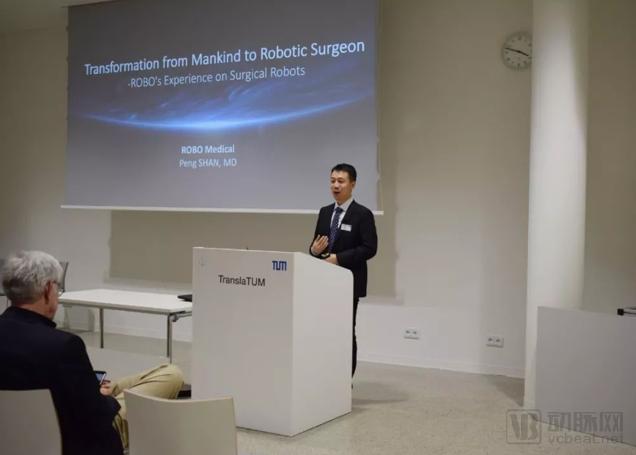
Dr. Shan Peng
Professor Beat Müller-Stich, Surgeon and Director of Minimally Invasive Surgery at Heidelberg University, delivered a lecture titled “Translation of Medical Robots in Minimally Invasive Surgery,” emphasizing that surgeons must be involved in the research, development, and industrialization of surgical instruments. Extensive high-level evidence from double-blind randomized controlled trials has demonstrated that robotic surgery is primarily applied in prostate, colorectal, and pancreatic procedures, offering advantages such as a short learning curve, enhanced maneuverability in confined spaces, and minimal invasiveness.
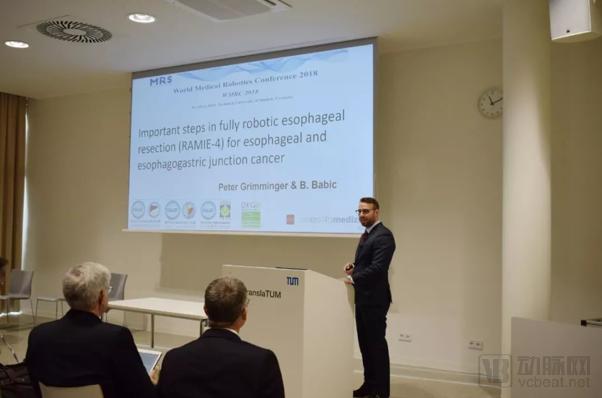
Prof. Beat Müller-Stich
Professor Rüdiger von Eisenhart-Rothe, Director of the Department of Orthopedics and Sports Orthopedics at the Klinikum rechts der Isar, Technical University of Munich, delivered a lecture titled “Robotics in Arthroplasty: Past and Future.” He stated that orthopedic hard-tissue robots are currently being widely adopted by physicians in Germany. Featuring functionalities such as active-passive mode switching, these robotic systems offer advantages including enhanced precision and reduced operative time, thereby revolutionizing traditional surgical approaches. The introduction of robotics has facilitated the integration of the entire procedural workflow, with applications in osteotomy and joint reconstruction surgeries.
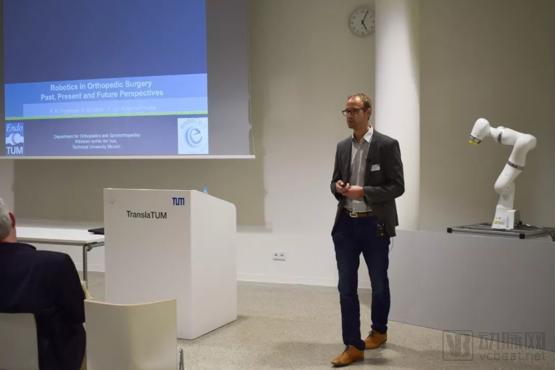
Meanwhile, the conference also invited representatives from industry. Cyrill von Tiesenhausen, Manager at KUKA Roboter GmbH, shared insights on the future applications of lightweight robots in medicine; Sumio Sugita, Manager at NSK Ltd. (Japan), presented on the applications of NSK robots in biology and medicine.
During the final hour of the summit forum, Professor Markus Schwaiger, Professor Sami Haddadin, Professor Beat Müller-Stich, Professor M. Biebl, Professor Helmut Friess, Professor Hannes Bleuler, and other distinguished experts engaged in lively discussions on pressing issues facing the medical robotics industry. These topics included attracting investment, shortening the learning curve for robotic surgery, integrating research into residency training, maintaining world-leading standards in medicine and technology, and establishing integrated centers. Through the exchange of knowledge and the collision of ideas, they delivered a feast of thought and an academic banquet to the audience.
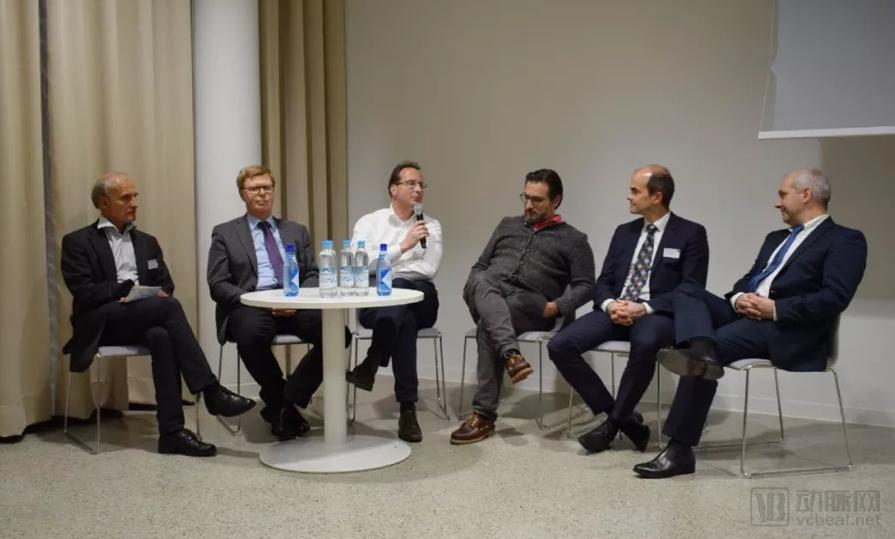
Day 2: Roundtable Forum
The conference aims to promote academic exchanges in the field of medical robotics, strengthen linkages and collaboration among global research institutions, enterprises, clinical practitioners, and governments, and advance the research and development of medical robotics technologies worldwide. Upholding the spirit of “openness, sharing, collaboration, and mutual benefit,” the conference seeks to jointly establish an international alliance and community for medical robotics, and to co-create an integrated ecosystem encompassing government, industry, academia, research, clinical practice, inspection and testing, and investment.
In 2016, the inaugural World Medical Robot Conference was successfully held in Shenzhen, China, marking the first large-scale international conference in the global medical robotics field to integrate scientific research, clinical practice, and industry. In November 2017, the second World Medical Robot Conference was grandly convened in Shenzhen once again, featuring more than ten international speakers from eight countries, attracting nearly 500 professional attendees, and receiving coverage from nearly one hundred media outlets both domestically and internationally.
In November 2018, the 3rd World Medical Robot Conference was grandly held at the Technical University of Munich, providing a multi-dimensional and comprehensive analysis of the medical robotics industry and highlighting the most cutting-edge research and development advancements.
After three years of perseverance, the conference has become an annual grand event for the global medical robotics industry.
The next conference will be held in Shenzhen on November 1 and 2, 2019. It will be jointly organized by the Shenzhen Institute of Advanced Technology, Chinese Academy of Sciences, and Robo Medical.
(Excerpts from the guest speech are sourced from the “ROBO Tech” WeChat official account; special thanks are hereby extended.)