

Dermatology AI Application Debuts at CDA 2018 with New Dermoscopy-Integrated Platform
Recently, at the 14th Annual Meeting of Chinese Dermatologists (CDA 2018) held in Guangzhou, projects from Germany and China showcased new models for the application of artificial intelligence in dermoscopy.
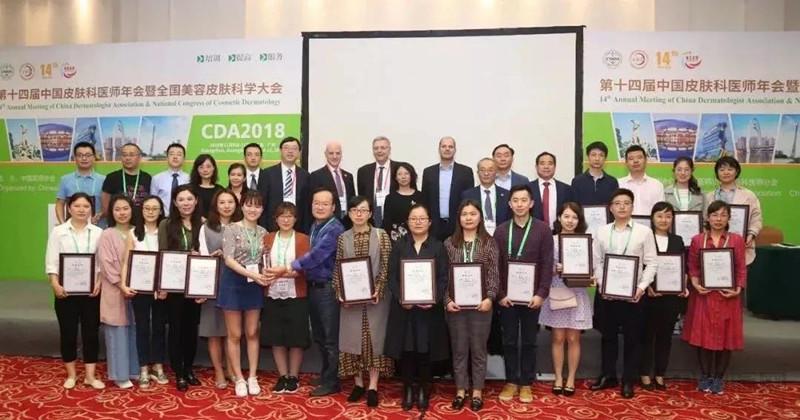
The conference was attended by numerous domestic and international experts, including Professor Peter H. Soyer, Founding President of the International Dermoscopy Society; Professor George Hruza, President-Elect of the American Academy of Dermatology (AAD); Professor Li Hang from Peking University First Hospital; Professor Liu Jie from Peking Union Medical College Hospital; and Professor Ran Yuping from West China Hospital.
Dermoscopy is a novel, non-invasive diagnostic technique for dermatological conditions, offering high diagnostic efficiency. Over the past two years, the research, development, and application of artificial intelligence in the field of dermatological diagnosis have been progressing vigorously both domestically and internationally.
The competition was initiated and planned by Professor Li Hang, Secretary-General of the Dermatology Branch of the Chinese Medical Doctor Association and Director of the Department of Dermatology at Peking University First Hospital. Following extensive outreach and meticulous organization in the preparatory phase, nearly 30 dermatologist teams from across China ultimately registered to compete. The event also featured two “machine teams” participating in the human-versus-machine challenge: the Smart Skin–Dermoscopy Version system, presented by China’s Huaxia Skin Imaging AI Consortium, and Germany’s FotoFinder system.
The Huaxia Dermoscopy AI Consortium is a dermatological imaging diagnostic center led by the Department of Dermatology at Peking Union Medical College Hospital, comprising medical experts and scientists from more than 60 domestic and international medical institutions, universities, and research institutes. The consortium has accumulated extensive clinical data and academic achievements in this field, particularly holding a first-mover advantage in dermoscopic imaging. On August 26 this year, the Huaxia Dermoscopy AI Consortium entered into a strategic partnership with the Alliance for the Development of Artificial Intelligence in Dermatology. Leveraging the Alliance’s comprehensive AI-assisted diagnosis and treatment platform for skin diseases—“Smart Skin”—the collaboration aims to expand the clinical decision-support model based on “dermoscopy,” thereby launching the “Smart Skin–Dermoscopy Edition” and achieving coverage across multiple clinical application scenarios of Smart Skin.
FotoFinder is a globally leading medical imaging systems company from Germany, founded in 1991. It primarily focuses on the early diagnosis of melanoma and non-melanoma skin cancers, hair disorder diagnostics (TrichoLAB), and psoriasis assessment.
After multiple rounds of fierce competition, the team from Peking University Third Hospital ultimately emerged as the champion. Following the match, the winning team engaged in a “human-versus-machine” challenge against two invited competitors: Germany’s FotoFinder team and China’s “Huaxia Dermatology Imaging AI Consortium · Intelligent Skin – Dermoscopy Edition.”
In two human-machine competitions, the champion teams achieved accuracy rates of 70% and 90%, respectively, in interpreting dermoscopic images. Germany’s FotoFinder intelligent system provided benign versus malignant assessments of skin lesions with an accuracy rate as high as 90%. “Smart Skin – Dermoscopy Edition” directly identified skin diseases by intelligently analyzing images of skin lesions, achieving an accuracy rate of 80%. In response to these results, the physicians in the audience unanimously expressed admiration and gave enthusiastic applause.
Commenting on these results, Professor Li Hang stated, “We can see that AI in dermatology in China, as represented by ‘Smart Skin,’ has advanced to a leading level. However, image recognition is only one component of clinical diagnosis and treatment. Healthcare is a compassionate service that integrates scientific rigor with humanistic care. From both technical and ethical-legal perspectives, artificial intelligence can never replace dermatologists. In the future, AI should serve as a valuable assistant to physicians. Neither overhyping nor avoiding AI represents the correct approach. Only by properly understanding AI can we ensure its sustainable development and enable it to contribute effectively to the diagnosis and treatment of skin diseases.”
Professor Liu Jie, Deputy Head of the Huaxia Collaborative Group and a dermatologist at Peking Union Medical College Hospital, stated, “It is gratifying to witness the professionalism of Chinese dermatologists today, as well as the impressive performance of the AI Dermoscopy Module of Smart Skin in this competition. The AI Dermoscopy Module of Smart Skin, developed through the collaboration between the Huaxia Collaborative Group and the Artificial Intelligence Alliance for Dermatology, aims to deliver value to physicians and better serve patients. Moving forward, we will work with the Alliance to expand intelligent recognition capabilities for a broader range of dermoscopic features associated with various skin diseases.”
Professor Liu Jie introduced that the “Smart Skin” system currently achieves an overall recognition accuracy of 86% for 85 types of skin diseases, ranking first in the industry in terms of both the number of identifiable conditions and accuracy. To date, more than 7,000 certified physicians have adopted the system, which has assisted doctors in performing over 27,000 auxiliary diagnoses and supported clinical data retrieval more than 1.3 million times.
According to statistical data, China currently has only over 20,000 dermatologists, yet the incidence rate of skin diseases exceeds 90%, resulting in a severe shortage and uneven distribution of dermatology specialists. This issue is particularly pronounced in grassroots and remote areas, where diagnostic and confirmed diagnosis rates for skin conditions remain very low. There is an urgent need to allocate more resources to these regions, provide professional guidance, and offer clinical support.
"Smart Skin," the first AI-assisted comprehensive platform for dermatological diagnosis and treatment in China, was jointly developed through a strategic collaboration among the Second Xiangya Hospital of Central South University, DXY, and Ruiqi Software. It was officially launched on April 27, 2018, and made available to clinicians nationwide. Concurrently, the "Dermatology AI Development Alliance," comprising dozens of top-tier tertiary hospitals across China and leading clinical dermatology experts, was formally established to jointly promote the application and advancement of artificial intelligence in the field of dermatological diagnosis and treatment.
Currently, Smart Skin not only intelligently recognizes images of skin lesions to provide physicians with auxiliary diagnostic results, but also offers corresponding disease encyclopedias, classic image galleries, diagnostic and treatment frameworks, and medication guidance based on these results, thereby further assisting physicians in clinical decision-making. Meanwhile, Smart Skin integrates functions such as professional education, doctor-patient interaction, and patient services, truly empowering physicians at all levels in their actual clinical practice and thus delivering high-efficiency, high-quality services to patients.
Since its establishment over six months ago, the Dermatology AI Development Alliance has entered into strategic partnerships with provincial and municipal government departments across various regions in China. It has rapidly introduced its advanced AI-assisted comprehensive diagnosis and treatment platform for dermatology to local areas, collaborating with local professional institutions to co-establish a dermatology diagnosis and treatment management system featuring local characteristics, based on “AI technology and internet platforms.” This initiative provides the public with an innovative and efficient service platform for dermatological diagnosis and treatment. We believe that, under the guidance of national policies promoting tiered diagnosis and treatment systems and innovation in AI-enabled medical applications, Smart Skin will unlock significant value.