

Chengdu to Host 21 Industry Leaders at the 12th Sichuan Internet Conference on 'The New Digital Healthcare Ecosystem'
This year, although the market landscape of the “Internet + Healthcare” industry has gradually become clearer, challenges remain, such as how to successfully commercialize AI-driven medical products from the laboratory to clinical applications, weak willingness among public hospital management to promote the development of medical big data, and a shortage of high-quality health informatics talent.
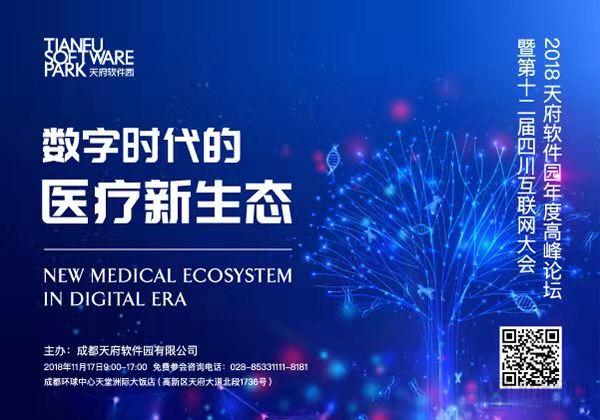
On November 17, the largest annual gathering of internet entrepreneurs in Western China—the 2018 Tianfu Software Park Annual Summit and the 12th Sichuan Internet Conference—will grandly open at the InterContinental Paradise Hotel in Chengdu Global Center. The theme of this conference is “The New Healthcare Ecosystem in the Digital Age.” As a key platform for the innovative development of the new-generation information technology industry in Western China, Chengdu Tianfu Software Park, as the organizer, has invited dozens of prominent entrepreneurs, authoritative experts, and top-tier investors to discuss and reflect on the current status, development trends, and industry pain points of the healthcare ecosystem chain in the internet era.
21 Industry Leaders: A Pinnacle Dialogue in Healthcare
(Listed in no particular order)
Embrace Smart Healthcare——The Current State and Transformation of Internet Healthcare

Wu Ping | Deloitte China National Leader, Life Sciences & Healthcare
Wu Ping has stated that municipal and district governments should leverage government platforms to integrate regional public and private medical resources, as well as peripheral resources such as medical logistics, health checkups, and R&D, thereby fostering a “medical ecosystem” and fully realizing the synergistic effects of limited resources. Alternatively, this task of resource integration can be undertaken by commercial entities, which can utilize upstream and downstream supply chain partnerships and leverage online consumer platforms to achieve the goal of building an ecosystem by integrating asset-heavy operations through an asset-light model.
2018: The Great Upheaval in Internet Healthcare

Wang Xiaocen | Partner, CE Health Fund
Wang Xiaocen once pointed out that 2014 was the exploratory phase of internet healthcare, when investment in this sector began to take root. In 2015, boundaries started to expand, leading to a surge in projects; financing volumes tripled to over RMB 30 billion, with angel-round funding increasing eightfold and Series A funding rising fivefold. The years 2016 and 2017 witnessed a flourishing landscape, marked by a period of irrational investment. Amidst the fervor in health and medical industry investments, the sector also began undergoing natural selection, seeking business models with long-term value.
Watson Health Builds Intelligent Healthcare
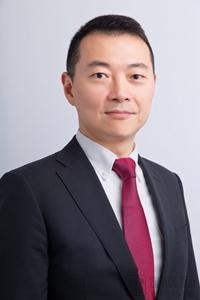
Zhou Debiao | Operating Officer, IBM Watson Health Greater China
IBM Watson, where Zhou Debiao is based, began to expand its scope in 2016 as artificial intelligence technology matured. With a focus on oncology, it achieved breakthroughs in nine major healthcare domains—including chronic disease management, precision medicine, and in vitro diagnostics—gradually realizing the value of AI as a novel tool.
Exploration of Innovative Models for Internet Hospitals Under New Policies
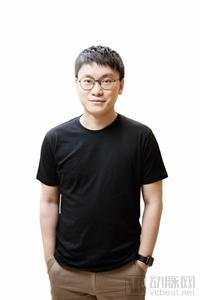
Wang Shirui | Founder and CEO of Medlinker, CEO of Penguin Almond
Under the leadership of Wang Shirui, Medlinker’s “One Platform, Three Connections” business model will continue to unleash the “power of connectivity.” It supplies healthcare institutions with resources such as physicians, pharmaceuticals and medical devices, and AI-assisted diagnosis and treatment. For pharmaceutical and medical device manufacturers, it provides services including CRO-led clinical drug development, market data analysis, and academic content promotion. Leveraging healthcare big data, Medlinker collaborates with commercial insurance partners on new insurance product development, underwriting and cost control, and healthcare service procurement.
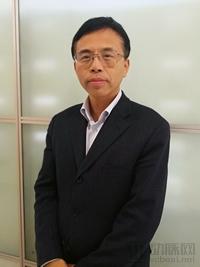
Zhao Lijun | Former Dean of the IoT Research Institute, China Mobile Research Institute; Currently Deputy Head of the Preparatory Team for China Mobile Chengdu Industrial Research Institute
Zhao Lijun once pointed out that TD-SCDMA is China’s third-generation mobile communication system with independent intellectual property rights. He believed that since the Internet of Things (IoT) would permeate every aspect of social life, the security of TD-SCDMA’s entire information and network infrastructure has become critically important. Meanwhile, in the early stages of IoT development, its business models are still in the process of exploration and maturation.
Applications and Practices of Artificial Intelligence in Healthcare
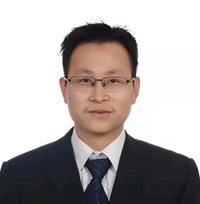
Wu Mingzhu | Director, Tencent Miying Application Center
Wu Mingzhu once stated that leveraging artificial intelligence and image recognition technologies to assist primary care hospitals in enhancing their medical technical capabilities, and using such technological means to improve the work efficiency of physicians at Grade A tertiary hospitals, is the mission of Tencent Miying.
When Intelligence Meets Machines
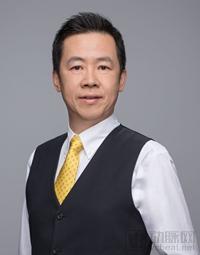
Ma Jianing | General Manager, GE Healthcare China West Region
Ma Jianing stated that over the five years since its establishment, the Chengdu CIC has generated more than 50 innovative patents, collaborated with over 40 local suppliers, and rapidly incubated nine innovative products and green energy projects in the medical and oil & gas sectors. These initiatives have been launched into the market, benefiting the local community.
Resetting the Order of the Intelligent Medical Environment: From the Spring and Autumn Period to the Warring States Period
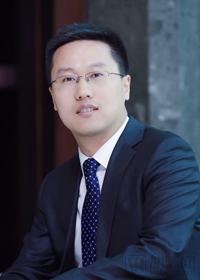
Zhou Zhenyu | Senior Director, Clinical Science Department, Integrated Solutions Center, Philips (China) Investment Co., Ltd.; Dean, Philips Imaging Research Institute; Standing Committee Member, Medical Artificial Intelligence Branch, Chinese Society of Biomedical Engineering
Zhou Zhenyu has stated that AI is a crucial tool in clinical decision support. Regardless of the clinical specialty, medical imaging serves as a vital basis for enabling early intervention and precise diagnosis by physicians. AI can present imaging information through both quantitative and qualitative analyses, which underpins its promising application prospects in the field of medical imaging.
Construction and Application Practices of Healthcare Big Data
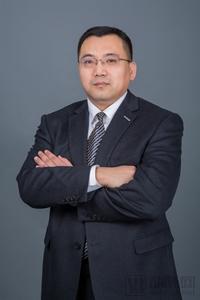
Pan Qi | Deputy General Manager, Healthcare Business Division, Inspur Group
Pan Qi has stated that due to the disconnect between clinical practice and scientific research, data generated in clinical settings fail to meet research requirements. Furthermore, healthcare information systems are fragmented and dispersed, resulting in poor data aggregation and making data extraction difficult. Physicians also have limited capabilities in statistical data analysis and often lack the time to collaborate. Both hospitals and pharmaceutical companies have distinct needs: hospitals prioritize cost control, clinical decision support, and intelligent diagnosis, while pharmaceutical companies focus on epidemiological investigations, post-marketing studies of new drugs, and evidence-based medicine.
AI and Internet Applications and Practices in Smart Hospitals
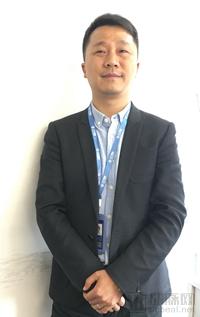
Feng Yang | Deputy General Manager, Winning Health Internet Technology Co., Ltd.
Feng Yang once stated: By leveraging cloud computing, big data, the Internet of Things (IoT), and mobile internet technologies, we have optimized the workflows of traditional medical services and health management models. Through the accumulation and establishment of knowledge bases, we have enhanced physicians’ service capabilities and the overall standard of medical care. Furthermore, by facilitating interactive communication between doctors and patients, we have alleviated prominent issues faced by the public in seeking medical treatment and health consultations, thereby improving information symmetry and patients’ ability to manage their own health.

Wang Haitao | Dean of the School of Continuing Education, Chinese Academy of Medical Sciences and Peking Union Medical College; Executive Deputy Director of the Training Center, Peking Union Medical College; Senior Visiting Scholar in Health Management for the World Health Organization; Senior Visiting Scholar on China’s Health Reform at the Harvard T.H. Chan School of Public Health
Wang Haitao has stated that the development of medical informatics is not merely a technological breakthrough, but also requires an elevation in concepts surrounding medical information. Compared with other industries, the growth and training process for professionals in the medical field is more complex, necessitating support from specialized systems, dedicated training bases, professional training programs, and qualified faculty.
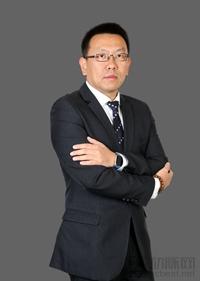
Zhang Junhua | Siemens Healthineers, Imaging IT Solutions Business Unit
As introduced by Zhang Junhua, the integration of evidence-based medicine with the characteristics of China’s healthcare system has given rise to theoretical and practical innovations with distinct Chinese features. In particular, the formation of evidence-based scientific concepts and the development of evidence-based Traditional Chinese Medicine (TCM) represent evidence-based medical practices with Chinese characteristics. The advancement of evidence-based TCM has not only promoted the generation and translational application of high-quality evidence in TCM, but also facilitated a transformation in clinical research and decision-making models within TCM, thereby enriching the connotation of evidence-based medicine.
In addition to the keynote speeches delivered by the aforementioned guests, the event will feature roundtable discussions. VCBeat, IBM, Shenyuan, Borns, and Yingda will address “Breakthroughs and Reflections on Smart Healthcare,” while Southwest Jiaotong University’s International Institute of Aging Science, Philips, Maimai Elderly Care, Yunweikang, and Langrui Medical will explore “Envisioning New Models for Future Elderly Care.” These sessions aim to identify innovative development models that integrate internet technologies with healthcare, thereby addressing critical pain points within the industry.
Connecting and Incubating: Chengdu Tianfu Software Park Boosts Innovative Development in the Healthcare Sector
As one of China’s top three key industrial parks and the core hub for innovation and entrepreneurship in western China, Chengdu Tianfu Software Park plays a vital role in “connecting” and “incubating” businesses. The park is home to more than 600 renowned domestic and international companies, including IBM, SAP, EMC, Philips, Maersk, Siemens, Ericsson, Dell, DHL, PwC, NCS, Garmin, Alibaba, Tencent, and Manulife Financial, employing over 60,000 professionals. This conference explores hot industry topics from three perspectives—medical practitioners, enterprises, and capital—aiming to connect businesses of all types and sizes, pool core resources, seek synergistic effects, and address pain points, thereby fostering better development for companies in the healthcare sector.

Scan the QR code to register for the Tianfu Software Park Annual Summit Forum and Sichuan Internet Conference
Background: Tianfu Software Park Annual Summit & Sichuan Internet Conference
The Tianfu Software Park Annual Summit & Sichuan Internet Conference is an internet industry conference guided by the Administrative Committee of Chengdu High-Tech Zone and hosted by Chengdu Tianfu Software Park Co., Ltd. Having been held consecutively for eleven sessions, the event has grown to a scale of thousands of attendees. It has become an annual gathering for internet entrepreneurs and professionals in Sichuan to discuss industry outlooks, share trends, exchange technologies, and explore business cooperation, ranking among the largest internet conferences in Western China.