

Exploring Europe's Top Biotech Cluster: What Are the Ten Leading Companies Working On?
Denmark, the renowned land of fairy tales, has given the world not only beloved stories such as The Little Mermaid and The Emperor’s New Clothes, but also advanced biotechnology and sophisticated pharmaceutical R&D. As a powerhouse in medicine, Denmark has secured five Nobel Prizes in Physiology or Medicine out of the 13 Nobel laureates it produced in the twentieth century. The pharmaceutical industry is a cornerstone of Denmark’s economy, with pharmaceutical products accounting for the vast majority of the country’s exports.
When discussing Denmark’s pharmaceutical industry, the most prominent feature is undoubtedly Medicon Valley in Copenhagen. As Europe’s largest biotechnology cluster, it is now home to more than 100 biotech companies of varying sizes. From Novozymes, the world’s largest enzyme and microorganism R&D enterprise, to Zealand Pharma, a long-established peptide therapeutics company, both are headquartered in this city. Which renowned biotech companies are based in Copenhagen? What cutting-edge biotechnologies are being developed there? Today, we will explore ten well-known biotechnology companies in Copenhagen.
(Listed in no particular order)
For patients with chronic diseases, long-term medication for management is unavoidable. The act of following a doctor’s instructions for treatment is referred to as “adherence.” A significant cause of failure in chronic disease management is poor adherence to medication regimens. Requiring daily dosing is not only inconvenient but also prone to missed doses.
Ascendis Pharma is a biopharmaceutical company dedicated to the development of therapies for rare diseases. The company is leveraging its proprietary TransCon technology to develop long-acting medications with improved adherence for the treatment of rare diseases, thereby addressing the current needs of patients.
Mr. Jan Møller Mikkelsen, the company’s Chief Executive Officer, graduated with a degree in Biochemistry from the University of Southern Denmark in Odense. He has served as president of multiple biopharmaceutical companies, including LifeCycle Pharma and Novo Nordisk, and founded Maxygen, Inc. Mr. Mikkelsen brings over a decade of industry experience to his role.
Ascendis Pharma’s proprietary TransCon technology combines the advantages of prodrug and sustained-release technologies. By leveraging physiological pH and temperature conditions at the injection site, it ensures the drug is released in its original form to maximize therapeutic efficacy. Meanwhile, the release rate of the active parent drug is pre-engineered to slow down systemic exposure, thereby significantly reducing the injection frequency required for chronic disease management.
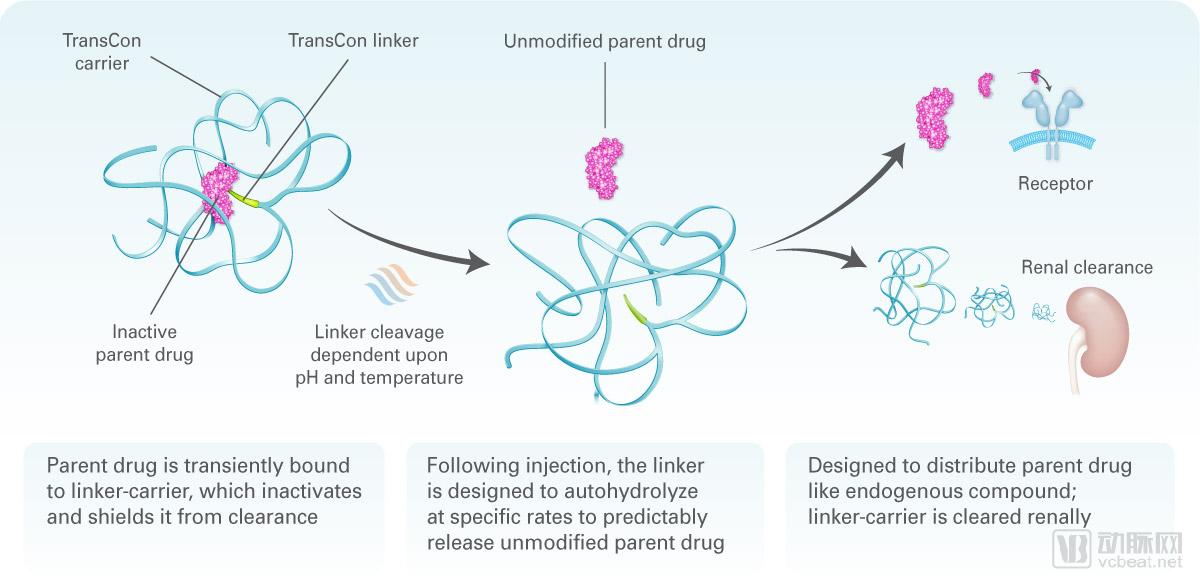
Figure: Principle of TransCon Technology (Image from the official website)
The company has built a pharmaceutical platform centered on the research and development of rare disease drugs through its TransCon technology. Its current clinical product, TransCon Growth Hormone, targets children and adults with growth hormone deficiency (GHD). Patients with this rare condition typically require daily injections; however, TransCon technology reduces the dosing frequency to once weekly. The product is currently undergoing Phase 3 clinical trials. Meanwhile, Ascendis Pharma is applying this technology to experimental treatments for hypoparathyroidism and achondroplasia, with TransCon PTH in Phase 1 clinical trials and TransCon CNP in the preclinical stage, respectively.
In addition, Ascendis Pharma has partnered with Roche Genentech to leverage its TransCon technology for the development of anti-vascular endothelial growth factor (anti-VEGF) therapies, a collaboration with a potential value of approximately $7 billion. The company is also collaborating with pharmaceutical giant Sanofi to develop long-acting TransCon peptide prodrugs for the treatment of diabetes, a product with a conservative estimated market value of $1 billion.
Ascendis Pharma, founded in 2007, has completed two rounds of financing: €17.6 million in 2007 and $60 million in 2014. As of February 2017, the company’s market capitalization was approximately €717 million.

Zealand Pharma is a biopharmaceutical company developing peptide-based therapeutics, dedicated to becoming a leader in specialized treatments for metabolic and gastrointestinal diseases. The company has achieved significant progress in the field of diabetes, with two diabetes products already on the market, both of which have been licensed to Sanofi.
Britt Meelby Jensen, CEO of Zealand Pharma, holds an MBA from Solvay Business School in Belgium and has 11 years of experience at Novo Nordisk. Previously, Britt worked at McKinsey & Company and at EU institutions in Brussels.
The company primarily offers two product lines. One is Glepaglutide, indicated for the treatment of short bowel syndrome (SBS). The other is the company’s flagship product, Dasiglucagon, a ready-to-use injectable pen and currently the most advanced therapy for diabetes, providing stable glucose restoration for patients with severe hypoglycemia. Hypoglycemia is common in patients with type 1 diabetes and can be fatal if blood glucose levels drop too low; it can be alleviated by administering insulin when blood glucose levels fall below the normal range. Phase 3 clinical trials have demonstrated that a single dose of Dasiglucagon rapidly increases blood glucose levels in patients with type 1 diabetes.
In 2017, both the U.S. FDA and the European Commission approved dasiglucagon for the treatment of congenital hyperinsulinism (CHI).
The company was founded in 1998 and raised $75 million through its initial public offering on the NASDAQ in 2017, securing funding for its diabetes treatment pipeline and its short bowel syndrome therapy, which was poised to enter Phase III clinical trials. As of January 2018, Zealand Pharma had a market capitalization of approximately €260 million.

Genmab is a biopharmaceutical company dedicated to the development of antibody-based therapeutics, primarily targeting life-threatening conditions such as cancer and inflammatory diseases. Founded in 1999 as a European spin-off of the U.S. biotechnology firm Medarex, the company was established with investment from renowned Danish investor Florian Schönharting. At its inception, Lisa Drakeman, then Vice President of Medarex, served as Genmab’s Chief Executive Officer.
In 2010, Jan Van de Winkel was appointed President and CEO of Genmab. He has over 20 years of practical experience in the field of antibody therapeutics. He is the author of more than 300 scientific publications and holds over 40 patents and pending patent applications.
Genmab’s core technology is differentiated antibody therapeutics. What are differentiated antibody therapeutics? In brief, this approach treats diseased cells (such as cancer cells) as “self-antigens” within the human body, and then employs hybridoma and recombinant DNA technologies to produce antibodies in vitro that can specifically bind to these antigens. These antibodies serve as therapeutic agents for cancer and are administered to patients for antibody-based therapy.
Our innate immune system recognizes foreign bacteria and viruses as antigens, while turning a blind eye to the body’s own pathological cells and failing to produce corresponding antibodies. Cancer cells, which arise from the transformation of normal cells, possess unique “immune escape mechanisms” that allow them to evade immune detection, thereby proliferating extensively within the patient’s body. Since the patient’s own immune system is unable to generate the necessary antibodies, Genmab’s approach involves directly administering these antibodies into the patient’s body to achieve therapeutic effects against cancer.
The injected antibodies mainly fall into three categories: HuMAb®, DuoBody®, and antibody-drug conjugates (ADCs).
HuMAb® is an antibody adapted to the human immune response, produced and extracted from transgenic mice using the patented UltiMAb® technology, which was licensed from Medarex;
DuoBody® is a bispecific antibody synthesized in vitro that can alter the conformation of IgG4 antibodies, which impairs patients' immune responses against diseased cells, thereby slowing the malignant proliferation of these cells. This technology, known as UniBody®, was independently developed by Genmab.
ADC, or Antibody-Drug Conjugate, delivers therapeutic agents preferentially to diseased cells by recognizing specific targets on tumor cells, thereby killing malignant cells while preserving the health of normal cells.
“From the very beginning, Genmab has placed a strong emphasis on products rather than technology,” said Jan van de Winkel, the company’s CEO. “We believe that only products can build a truly powerful company.”
In terms of products, Genmab has two marketed products: Arzerra® (ofatumumab) and DARZALEX™ (daratumumab). Ofatumumab is approved for the treatment of certain indications of chronic lymphocytic leukemia (CLL), while daratumumab is approved for the treatment of multiple myeloma. In addition to these two products, the company is developing clinical-stage drugs for 11 diseases, including cervical cancer, ovarian cancer, and Parkinson’s disease, and conducting more than 20 preclinical projects through collaborative development.
In addition to a $2 million seed round in 1999, Genmab has completed four rounds of public equity financing. Its initial public offering (IPO) took place in 2000, with financings of $4.8 million and $40.5 million completed in April and June of that year, respectively. The company subsequently raised $23 million in 2009 and $134 million in 2010. With a current market capitalization of approximately $12.9 billion, Genmab has become the largest biotechnology company in Europe.

Symphogen is a biotechnology company developing recombinant polyclonal antibody drugs (recombinant antibody mixtures). The company’s antibody therapies primarily target cancer, infectious diseases, and immunoglobulin replacement.
Dr. Kirsten Drejer, Co-founder and former CEO of the company, has 30 years of experience in the pharmaceutical and biotechnology industries. In August 2016, Dr. Kirsten Drejer resigned as CEO and became Executive Director, with Martin Olin, the former Chief Financial Officer, assuming the role of CEO.
Symphogen holds patents for its drug discovery platform, Symplex, and its drug manufacturing platform, Sympress. Currently, the company is developing more than ten drug candidates, including Sym004, a mixture of antibodies targeting the epidermal growth factor receptor (EGFR); Sym009, an antibody for treating Staphylococcus aureus infections; and Sym013, a mixture of six humanized full-length monoclonal antibodies.
Furthermore, the company is pioneering a novel approach to cancer treatment using monoclonal antibody (mAb) cocktails. Composed of multiple screened components and developed as an independent therapeutic agent, this approach aims to overcome some of the limitations associated with traditional single-target monoclonal antibody therapies.
Symphogen was founded in 2000 and has completed ten rounds of financing to date. Its first round, closed in January 2002, raised $15 million. The most recent round, completed in October 2015, raised €67.5 million. As of July 2018, the company had raised a total of €317 million.

IO Biotech is a key player in the immuno-oncology field, developing disruptive immune therapies for cancer treatment. These therapies utilize peptides to modulate T-cell activity, release immunosuppressive cells, and send signals that weaken the immune activity of diseased cells, thereby eliminating cancer cells.
Dr. Mai-Britt Zocca, Founder and CEO of the company, is affiliated with the Institute for Medical Microbiology and Immunology at Hagen University, the National Institutes of Health (NIH), and the National Cancer Institute (NCI). With over 15 years of experience in immuno-oncology, she has previously served as CEO at OncoNOx and LevOss Biotech. She has published 25 papers in international journals and holds multiple invention patents.
IO Biotech has a proprietary T-Win technology platform that can identify compounds with dual mechanisms of action, directly killing immunosuppressive cells and tumor cells while indirectly activating T-cell effectors, thereby generating a robust anti-tumor response. Currently, the company is primarily focused on the clinical development of two lead compounds targeting IDO and PD-L1. Its clinical pipeline includes IO102, IO103, and IO130, among others. Notably, IO102, indicated for the treatment of non-small cell lung cancer (NSCLC) and melanoma, is currently in Phase 1/2 clinical trials.
In 2014, IO Biotech entered into a clinical collaboration with MSD to launch a treatment program combining IO102 with KEYTRUDA® (pembrolizumab) for patients with metastatic non-small cell lung cancer. In March 2017, IO Biotech signed a similar collaboration agreement with Merck & Co., Inc., focusing on combination therapy involving checkpoint inhibitors and IO102. Throughout this period, IO Biotech has retained exclusive global commercialization rights for IO102.
IO Biotech was founded in 2014 and has raised funding only once, in 2016, securing €11 million from Lundbeckfonden Ventures.
Orphazyme is a pharmaceutical company dedicated to developing drugs for rare diseases, with a primary focus on innovative therapies for conditions caused by protein misfolding. Anders Hinsby, the Company’s CEO and Co-Founder, holds an M.D. from the University of Copenhagen, serves as a board member of the Danish Biotechnology Association, and has previously held positions at BankInvest Biomedical Venture and as an Assistant Professor in Systems Biology.
The company’s drug development technology centers on heat shock proteins. Heat shock proteins are a natural cellular protective mechanism that ensures normal cell function, facilitates the proper functioning of other proteins, and prevents toxicity arising from misfolded proteins and dysfunctional cellular recycling processes, effectively acting as “lifeguards” for cells. Orphazyme has developed a stress-response protein that stimulates the upregulation of heat shock proteins, thereby treating related diseases.
This substance, which stimulates the upregulation of heat shock proteins, is the drug Arimoclomol. It facilitates the refolding of proteins into their correct three-dimensional conformations, thereby maintaining equilibrium between cellular protein aggregates and lysosomal function. It is being developed for the treatment of four rare diseases: amyotrophic lateral sclerosis (ALS), sporadic inclusion body myositis (sIBM), Niemann-Pick disease type C (NPC), and Gaucher disease. Clinical trials for these indications are currently in Phase III, Phase II/III, Phase II/III, and Phase II proof-of-concept stages, respectively. The company expects its first product to be launched in 2020.
Meanwhile, Orphazyme is also developing a series of new heat shock protein (HSP) amplifying drugs to treat other diseases caused by protein misfolding.
Orphazyme was founded in 2009 and has completed five rounds of financing to date. The most recent round, held in March 2017, raised €14 million, bringing its total funding to €50 million.

Galecto Biotech derives its name from its core technology, galectin modulators. Leveraging over a decade of research into galectins and galectin modulators, the company is dedicated to treating serious conditions such as fibrosis, cancer, and inflammation.
The company was co-founded by Dr. Ulf J. Nilsson, Dr. Hakon Leffler, Dr. Tariq Sethi, and Dr. Hans T. Schambye, with Dr. Hans T. Schambye also serving as the company’s CEO. Dr. Schambye holds a medical degree from the University of Odense and the University of Copenhagen. He previously served as Chief Executive Officer at ReceptIcon and Gastrotech Pharma, bringing extensive experience in drug development within the medical and biological fields.
Galecto Biotech’s lead product, the galectin-3 inhibitor TD139, is a molecule that modulates various immune responses and inflammatory processes by blocking the binding of galectin-3 to carbohydrate structures. TD139 is involved in multiple cellular processes, including growth, differentiation, and apoptosis, and is being developed for the treatment of idiopathic pulmonary fibrosis (IPF). IPF is an irreversible lung disease and the most common form of idiopathic interstitial pneumonia. TD139 is currently in Phase IIa clinical trials. In addition to TD139, the company’s clinical pipeline includes GAL-400, GAL-200, and GAL-300, which are being developed for the treatment of non-alcoholic steatohepatitis (NASH), ocular diseases, and cancer, respectively.
Galecto Biotech was founded in 2011. The company has completed three rounds of financing to date, with the most recent round occurring on October 26, 2018, raising €79 million, primarily from investors OrbiMed and Ysios Capital. To date, the company has raised a cumulative total of €89 million.
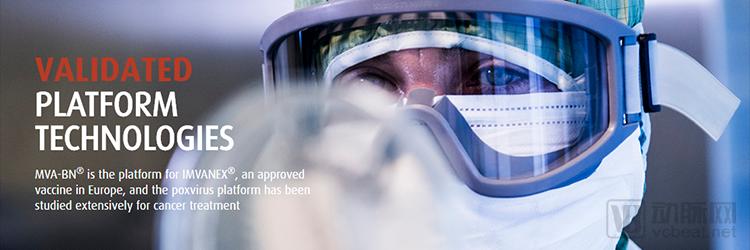
Smallpox was eradicated in the 1980s, yet samples of the variola virus are still retained in two laboratories in the United States and Russia for further scientific research. The World Health Organization has stated that smallpox could re-emerge as a result of bioterrorist attacks, underscoring the imperative that research into highly contagious diseases must never cease.
Bavarian Nordic is a biopharmaceutical company specializing in the production of active vaccines, with its business primarily focused on three areas: biodefense, infectious diseases, and cancer. The company’s product pipeline includes vaccines for highly contagious diseases such as smallpox, Ebola, and HIV. Additionally, Bavarian Nordic has collaborated with the U.S. Department of Defense to develop vaccines against bacteria such as Burkholderia mallei, aiming to counter potential bioterrorism threats.
Mr. Paul Chaplin, CEO of Bavarian Nordic, holds a Ph.D. in Immunology from the University of Bristol in the United Kingdom. He previously served as General Manager of Bavarian Nordic GmbH, where he led the research and development of infectious disease vaccines, and was promoted to President and CEO of Bavarian Nordic in 2014.
The company has developed the patented MVA-BN® technology, which is derived from the Modified Vaccinia Ankara (MVA) virus. Leveraging the live-virus R&D platform established with MVA-BN® technology, the company developed IMVAMUNE®, a non-replicating smallpox vaccine that has been approved in the European Union and Canada. Furthermore, in the field of infectious diseases, the company has developed live vaccines for RSV, HPV, and Ebola, and has collaborated with Janssen to develop vaccines for HBV and HIV.
In addition to infectious disease vaccines, the company is also seeking to apply vaccine technology to the field of oncology. It is currently testing four different checkpoint inhibitors for tumors and developing clinical vaccines for various cancer types, including lung cancer, colorectal cancer, and bladder cancer.
Bavarian Nordic, founded in 1994, secured a €30 million loan from the European Investment Bank in August of this year, and its market capitalization reached €700 million as of January 2018.
Detergents, textiles, food, leather, papermaking, animal feed, beer brewing, starch-based sugar production, fuel ethanol, golf course turf—these seemingly unrelated industries. If one company could tightly connect them all, wouldn’t you be curious about what this company actually researches and develops?
Indeed, such a company exists: Novozymes, a biotechnology firm headquartered in Copenhagen. If Novozymes ranks second globally in enzyme and microbial research, then no one else can claim the top spot. The company accounts for two-thirds of global industry investment in enzyme development and holds a 48% share of the industrial enzyme market. In this field, it has launched more than 700 products in over 130 countries, spanning diverse categories such as detergents, biofuels, and food ingredients.
Novozymes traces its origins back to 1925, when brothers Harald and Thorvald Pedersen founded Novo Terapeutisk Laboratorium. In 2000, Novo Terapeutisk Laboratorium was split into three independent companies: Novo, Novo Nordisk, and Novozymes. Thus, Novozymes can be considered part of the Novo Group.
Peder Holk Nielsen, CEO of Novozymes, has held various positions within the Novo Group for many years and assumed the role of Chief Executive Officer in 2013. He holds a Ph.D. in Chemical Engineering from the Technical University of Denmark (DTU), serves as Co-Chair of the B20 Task Force on Energy, Climate, and Resource Efficiency, and is a member of the U.S. Council for International Business.
Novozymes has developed a myriad of eco-friendly products based on enzymes and microorganisms. Here are a few notable examples. The company’s Novozymes Medley® multi-enzyme solution effectively tackles a wide range of stains, with each enzyme in the blend targeting specific types of stains to meet diverse laundry needs. Meanwhile, Novozymes BioRemove 2300, a carefully selected microbial consortium, features unique hydrocarbon-degrading capabilities. It reduces total suspended solids (TSS) in wastewater by 26% and keeps biochemical oxygen demand (BOD) within permissible limits, generating annual savings of $120,000 for a petrochemical wastewater treatment facility. Furthermore, last year Novozymes launched an open innovation initiative encouraging entrepreneurs to develop more convenient water testing methods. This aims to enable faster detection of bacterially contaminated water in areas with inadequate water treatment, thereby addressing drinking water issues affecting over 18,000 children.
Novozymes places significant emphasis on the Chinese market, maintaining close collaborations with numerous enterprises in China. In the detergent industry, it partners with Liby, Nice Group, and Blue Moon; in the starch manufacturing sector, it has established important long-term partnerships with companies such as Meihua Group and COFCO. The company raised $17.5 million in financing in 2014 and an additional $6.6 million in 2015. Currently, Novozymes has a market capitalization of $14.4 billion.
Y-mAbs Therapeutics is a biotechnology company that utilizes immunotherapy to treat cancer, with its core audience being children in need of cancer treatment. This focus stems from the company’s founder, Mr. Thomas Gad, a father whose daughter was diagnosed with neuroblastoma. After his daughter survived six years of cancer immunotherapy at the Memorial Sloan Kettering (MSK) Cancer Center, Mr. Gad decided to dedicate himself to the field of neuroblastoma and launched Y-mAbs Therapeutics following its seed funding round.
Neuroblastoma is the company’s research focus; it is the most common tumor in infants and young children, with approximately 700 pediatric cases diagnosed annually in the United States. Y-mAbs already has two drugs approved for the treatment of neuroblastoma and certain other cancers: naxitamab and omburtamab, which target tumors expressing GD2 and B7-H3, respectively. Both products have received FDA Breakthrough Therapy Designation. Inspired by Memorial Sloan Kettering (MSK), Y-mAbs has developed bispecific antibodies that simultaneously target two cancer antigens. Two such antibodies are currently in Phase III clinical trials for the treatment of neuroblastoma, holding promise for advancing the field of pediatric oncology.
The company was founded in 2014 and is headquartered in New York, with a dedicated team in Copenhagen. It has completed two rounds of financing: $50 million in October 2017 and RMB 30 million in November 2017, achieving a valuation of approximately $878 million.
Copenhagen, the capital of Denmark, is hailed as the “Gateway to the Nordics.” This city, covering a mere 97 square kilometers, has now become a vital hub for the dissemination of biotechnology in Europe. With over 40,000 employees in the biosector, Copenhagen conducts cutting-edge research in neuroscience, cancer, infectious diseases, and metabolic disorders. Medicon Valley has made Copenhagen a fertile ground for cultivating biotech enterprises in Europe, playing a significant role in driving the development of the biotechnology industry.