

ASK Health Tech Pioneers China-Style HMO Model, Shifting from 'Drug-Supported Medicine' to 'Insurance-Supported Care'
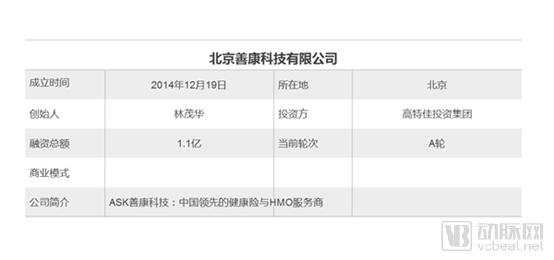
“Broad coverage, low benefit levels” characterize China’s universal health insurance system. In fact, despite the extensive coverage, the healthcare system’s reliance on drug markups to subsidize medical services—a model established in the 1950s—has led to over-treatment and resulting deficits in the health insurance fund.
To alleviate the burden of out-of-pocket medical expenses, the state has actively promoted the development of the health insurance industry. However, the current reality is that commercial health insurers are generally operating at a loss: 80% of insurers have loss ratios exceeding 80%, and approximately 40% have loss ratios surpassing 100%. Insurance fraud and overtreatment increase claims payouts for insurers, posing the greatest challenge to the health insurance sector. Therefore, cost containment is central to the development of commercial health insurance.
“Most medical services in China are focused on post-onset treatment, with little emphasis on pre-disease prevention and post-operative rehabilitation,” said Lin Maohua, founder and chairman of Shankang Technology (ASK), in an interview with VCBeat. “Preventing diseases in advance or ensuring proper post-operative rehabilitation can reduce healthcare expenditures.”
ASK provides medical services to patients with chronic diseases outside hospitals and those undergoing postoperative rehabilitation through insurance purchases, proactively managing patient health. This approach not only meets patients' medical needs but also fundamentally reduces healthcare expenditures. ASK is an industry leader in health insurance product design, in-hospital sales channels, health management services, and integration with in-hospital data systems. In essence, ASK’s health insurance offerings are a microcosm of its distinctive HMO model.
Founded in 2014, ASK currently boasts a sales team of over 5,000 members, has developed more than 200 health insurance products, and has established signed partnerships with over 60 top-tier insurance companies and more than 100 Grade III Class A hospitals. In October 2016, ASK launched China’s first accidental injury insurance product covering intraoperative and postoperative risks associated with percutaneous coronary intervention (PCI) stent implantation—known as the “PCI Insurance” or “Jixiang Xinbao”—and secured RMB 100 million in Series A financing. This milestone marked ASK’s innovative exploration of a new business model integrating internet healthcare with insurance.
“We are a professional health insurance service platform, responsible for both the design of health insurance products and the provision of medical services,” said Liu Zhiqi, Founder and Vice President of ASK, in an interview.
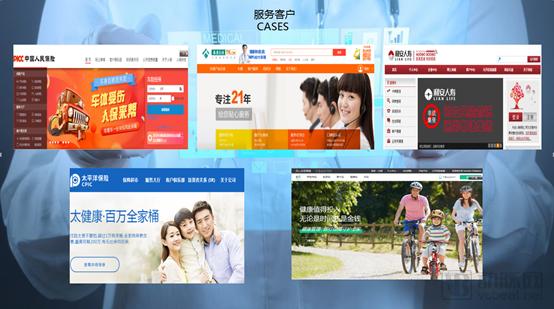
Shankang Partner Insurance Companies
ASK’s profit model primarily consists of three areas: health insurance product development, health insurance sales, and revenue from healthcare services and comprehensive cost containment.
First, ASK designs specific health insurance products, currently focusing primarily on surgery-related coverage such as PCI insurance, maternal and infant insurance, and vaccine insurance. It is expected to launch outpatient drug-related insurance products in 2019. ASK collaborates with insurance companies to underwrite and sell these insurance products. To date, ASK has signed master agreements with more than 60 top-tier insurance companies.
Prior to surgery, the patient purchased PCI insurance underwritten through a collaboration between ASK, Pacific Insurance, and PICC (covering intraoperative accidental injury and postoperative rehabilitation), thereby securing comprehensive accident coverage during the surgical procedure and rehabilitation services within one year after surgery. In the event of disease recurrence or death postoperatively, the insurance company will provide compensation.
Furthermore, ASK collaborates with medical institutions to provide post-discharge health management plans for patients. ASK is the only company in China certified under ISO 9001 for medical services. It boasts a professional, fully standardized medical assistant team and integrates with hospital systems. Through the ASK Care system and the Henuo system, ASK delivers comprehensive postoperative tracking and health management services to insured individuals.
Postoperatively, patients receive a comprehensive rehabilitation service system provided by ASK and its partner medical institutions. If patients recover successfully, these partner institutions earn revenue from health insurance cost-containment programs. This incentivizes them to prioritize patient health and generate more transparent insurance-related income, thereby gradually facilitating the transition in healthcare delivery from a “drug-revenue-dependent” model to a “care-revenue-dependent” model. “This represents a small-scale HMO ecological closed loop that ASK has built, starting with single-disease management,” said Liu Zhiqi in an interview.
Finally, ASK integrates with hospital systems to obtain real-time diagnosis, treatment, and payment information, providing insured users with fast and direct claims settlement services, and then charges insurance companies based on the number of underwritten users and the content of their information.
Liu Zhiqi stated that cross-sector integration represents a significant challenge for ASK in the “Internet Plus” domain, while also constituting the team’s most distinctive characteristic and competitive advantage. The ASK team comprises professionals from Haodf Online, medical device manufacturers, pharmaceutical companies, insurance carriers, and underwriting, claims assessment, and adjusting firms, thereby integrating expertise across the financial, internet, healthcare, and insurance sectors. This synergistic collaboration has infused ASK with renewed vitality. On the upstream business end, ASK designs health insurance products in partnership with insurance carriers; downstream, ASK acts on behalf of insurers to collaborate with healthcare institutions, providing patients with rehabilitation management services.
“The health insurance market is a trillion-yuan industry. With our robust sales system, we aim to collaborate with both medical institutions and insurance companies to jointly establish a new healthcare payment system,” said Lin Maohua in an interview. Currently, commercial insurance accounts for approximately 3–5% of total healthcare expenditures, whereas in developed countries, this proportion exceeds 10%. In the future, ASK will design a wider range of health insurance products, expected to cover populations across various segments.
ASK is currently undergoing a new round of financing, with a target amount of 150 million yuan, and expects to implement the HMO model in multiple provinces and cities across China in 2019.