

Custom 3D-Printed Oxygen-Delivering Insoles Could Be a Breakthrough for Diabetic Foot Ulcer Patients
VCBeat (WeChat Official Account: vcbeat) has learned that on November 15, 2018, Eastern Time, Purdue University in Indiana, USA, developed a prototype oxygen-delivering insole for the treatment of diabetic foot ulcers.
According to the American Podiatric Medical Association, approximately 15% of patients with diabetes develop chronic foot ulcers. Diabetic foot ulcers can lead to impaired mobility and lifelong disability, severely affecting patients’ physical and mental health as well as their quality of life. In terms of daily ambulation, rubber insoles may help facilitate the treatment of foot ulcers in these patients.
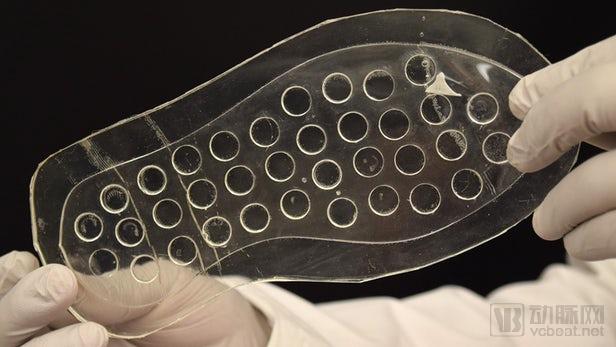
Image source: New Atlas official website
Purdue University in Indiana has developed a prototype dual-layer oxygen-distributing insole made of polydimethylsiloxane (PDMS, or silicone). The bottom layer of the insole serves as an oxygen-containing chamber, while the top layer consists of laser-ablated silicone that slowly releases oxygen at the site of ulcers.
When the wearer walks, pressure is exerted by both feet onto the insole, causing oxygen to be continuously expelled from the base layer and to permeate upward through the top silicone layer into the hypoxic ulcerated tissue, thereby accelerating the healing of foot ulcers. Even while sitting, the feet continue to apply sufficient pressure to deliver a certain amount of oxygen to the ulcerated tissue.
Studies estimate that this prototype insole can supply oxygen for at least 8 hours under the pressure exerted by individuals weighing between 53 and 81 kg, indicating that the oxygen permeability of the insole can be adjusted to accommodate patients of varying body weights. Although this prototype was manufactured from a mold using laser processing, the insoles can be 3D-printed and customized for individual patients based on the specific conditions of their feet.
These patients can carry out their daily activities and routines while remaining mobile, and simultaneously receive treatment for their foot ulcers. In contrast, conventional hyperbaric oxygen therapy requires them to remain immobile for extended periods.
The team is currently seeking commercial partners to help commercialize its patent-pending technology. Clinical trials in patients with diabetes are also underway. The latest research paper on this study has been published in the journal Materials Research Society Communications.
About Diabetic Foot