

Tencent Partners with Professor Wang Ningli's Expert Team at Tongren Hospital to Launch AI-powered Glaucoma Imaging Research for Early Screening
Glaucoma is one of the leading causes of blindness worldwide. It causes irreversible damage to patients’ visual function and optic nerves, severely affecting their quality of life and imposing substantial physical and psychological burdens on both patients and their families.
With changes in people’s lifestyles, the prevalence of metabolic disorders has increased, leading to a corresponding rise in the incidence of secondary glaucoma associated with these conditions. The economic burden imposed by glaucoma on patients and society is growing; in China alone, annual healthcare expenditures attributable to glaucoma amount to RMB 18.8 billion.
Current medical research has not yet fully elucidated the pathogenesis of glaucoma, nor can it restore vision to patients who have already become blind. However, effective self-management behaviors can delay or even halt the progression of the disease. If glaucoma is detected early and treated in accordance with standardized protocols, patients can achieve favorable therapeutic outcomes; in some cases, angle-closure glaucoma may even be curable.
However, the early screening coverage for glaucoma in China is far below that of developed countries. Data show that the detection rate for glaucoma in Western countries is approximately 70%, whereas the treatment rate in China is only 10–20%, with 75% of glaucoma cases already at moderate to advanced stages at initial diagnosis.
On one hand, public awareness of glaucoma remains insufficient, with a lack of emphasis on early screening, resulting in an disproportionately high proportion of patients presenting at moderate to advanced stages. On the other hand, due to the complexity of glaucoma onset and diagnosis, coupled with the subtle nature of fundus lesions, some primary care physicians lack sufficient experience and basic diagnostic equipment. This has led to overcrowded ophthalmology departments in tertiary hospitals, causing severe misallocation of medical resources. Wang Ningli, President of Beijing Tongren Hospital, revealed that the hospital sees approximately 50–60 glaucoma outpatients per day, with image interpretation consuming a significant amount of physicians’ time.
Effective early screening for glaucoma hinges on decentralizing efforts to the primary care level. Recently, Tencent Miying, which already possesses mature AI-based screening technology for diabetic retinopathy, has turned its attention to this area, aiming to leverage artificial intelligence to support glaucoma screening at the grassroots level.
Tencent’s exploration of artificial intelligence (AI) applications in ophthalmology began with screening for diabetic retinopathy. In late October 2017, Tencent partnered with the West China Ophthalmology Alliance to establish a Joint Laboratory for AI Medical Imaging, jointly launching clinical pilot studies for diabetic retinopathy screening. After learning from and analyzing hundreds of thousands of images with staged diabetic retinopathy data, “Tencent Miying,” Tencent’s first product to apply AI technology in the medical field, has achieved an identification accuracy rate of up to 97% for diabetic retinopathy. Building on this foundation, Tencent Miying is now expanding into glaucoma care, leveraging its significant algorithmic and experiential advantages.
From November 15 to 17, the "12th National Glaucoma Academic Conference," hosted by the Chinese Medical Association, its Ophthalmology Branch, and the Glaucoma Group of the Ophthalmology Branch, was held in Guiyang. Taking this opportunity, Tencent and Professor Wang Ningli’s expert team from Beijing Tongren Hospital held a signing ceremony at the conference, announcing the launch of a joint research initiative on AI-assisted diagnosis of glaucoma.
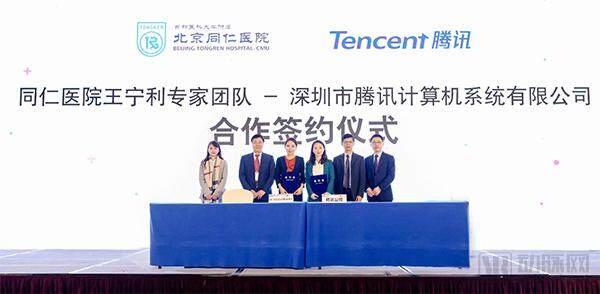
Professor Wang Ningli stated, “The development of AI technology offers the greatest benefit to primary care hospitals. Deploying AI at the grassroots level is tantamount to accomplishing a major feat—bringing specialists from tertiary hospitals down to the primary care level.”
According to Professor Wang Ningli, AI technology has significantly streamlined previously cumbersome treatment processes. After physicians capture fundus images of patients using a fundus camera, the generated images are transmitted to a central reading center for unified AI-based interpretation. This process reduces the image reading time from 3–10 minutes to just 5–10 seconds.
Regarding the significance of this collaboration, Wang Shaojun, Vice President of Tencent Medical Health, stated, “Tencent is undertaking this initiative because we have the capacity to assume such social responsibility, and we hope to leverage more AI technologies for the benefit of the general public.”
In recent years, technological advancements in artificial intelligence have spearheaded innovation and revolution across numerous fields, with AI-assisted medical image interpretation and diagnosis making substantial progress. In the prevention and management of glaucoma, artificial intelligence also holds significant promise. However, medical development is a slow, incremental process; popularizing early screening for glaucoma requires a prolonged period of dissemination and learning within primary healthcare settings. Furthermore, due to the complexity of glaucoma, the research and development of AI-based products present considerable challenges.
Wang Shaojun stated, “From data acquisition to algorithm optimization, and then to implementation experiments, this requires a process that demands the joint efforts of doctors and R&D personnel, enabling artificial intelligence to learn from doctors step by step.”
Boundless Reach: Following the establishment of a partnership between Tencent and Professor Wang Ningli’s expert team at Beijing Tongren Hospital, both parties will leverage Tencent’s technological expertise in artificial intelligence (AI) alongside the team’s existing glaucoma imaging data and clinical experience. They aim to research and develop AI solutions to assist physicians in areas such as automated detection and classification, automatic segmentation of the optic disc and cup, parametric modeling of the optic disc, cup, and neuroretinal rim morphology, as well as lesion identification and analysis. Through cross-sector integration, the two parties will drive technological innovation and jointly conduct research on applying AI-based image recognition technology to the auxiliary diagnosis of glaucoma, ultimately ensuring the practical implementation of these technologies to provide tangible benefits to both doctors and patients.