

West China Hospital ICU Partners with Niuno Tech and Zhikang Tech to Launch Remote Critical Care Alliance System
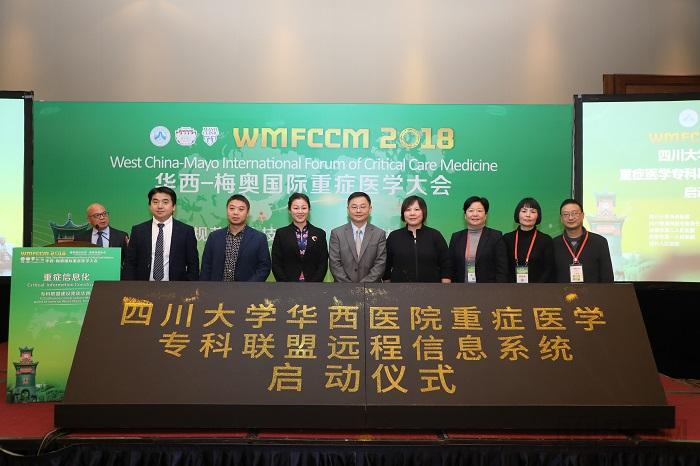
VCBeat (WeChat ID: vcbeat) has learned that on November 17, 2018, the launch ceremony for the collaboration between Hangzhou Nuonuo Technology Co., Ltd. (hereinafter referred to as “Nuonuo Tech”) and the Department of Critical Care Medicine at West China Hospital of Sichuan University (hereinafter referred to as “West China ICU”) was held in Chengdu.According to the announcement, both parties will leverage their respective strengths to jointly develop a (rapid) assessment system for brain function in critically ill patients. This system is designed for brain function evaluation and data mining in critical care settings, aiming to address the current pain points and challenges associated with the clinical application of electroencephalography (EEG) in the ICU.
High Demand for EEG Monitoring in the ICU
Severe central nervous system dysfunction in cerebrovascular disease is associated with extremely high rates of disability and mortality, making it one of the common conditions affecting human health and quality of life. Accurate assessment of brain function and prognosis is therefore of significant importance.Severe central nervous system dysfunction is most commonly seen in the neurology intensive care unit (ICU) and represents a major diagnostic and therapeutic challenge in clinical neurology practice.
In recent years, with the rapid development of imaging technologies, head CT, MRI, and transcranial Doppler have become routine auxiliary examinations for assessing the prognosis of cerebrovascular diseases. While imaging diagnostics can visualize the anatomical regions of brain injury, they cannot directly assess the functional status of the affected brain areas. In the ICU, patients with severe neurological conditions often present with disturbances of consciousness and significant brain injury. These patients require urgent interventions, including monitoring of vital signs, mechanical ventilation, and pharmacological therapy, which often preclude frequent patient transport and thereby limit the feasibility of imaging studies.
Therefore, there is an urgent need in current clinical diagnosis and treatment for a more direct and simpler method to reflect the brain functional status of such patients, thereby enabling a preliminary assessment of patient prognosis.
Electroencephalography (EEG) is a commonly used method for assessing brain function, offering advantages such as simplicity, non-invasiveness, bedside continuous monitoring, low cost, and good reproducibility. It is increasingly being utilized for monitoring brain function in patients with critical neurological conditions. By recording the electrical activity of neurons in the brain, EEG can reflect changes in brain function at an early stage. It is particularly sensitive to cerebral ischemia, hypoxia, and metabolic abnormalities. Decreases in amplitude and slowing of frequency are both associated with brain tissue damage. Furthermore, EEG allows for convenient bedside, long-term, and repeated testing, making it one of the more ideal tools for monitoring and evaluating brain function in the Neurological Intensive Care Unit (NICU).
The Department of Critical Care Medicine at West China Hospital, Sichuan University, is one of the largest comprehensive critical care units in China. It currently has over 200 open beds and more than 700 medical staff members, treating over 10,000 critically ill patients annually, resulting in a substantial demand for EEG monitoring.
According to Kang Yan, Director of the Department of Critical Care Medicine at West China Hospital, approximately one-quarter of the more than 200 critical care beds at the hospital are occupied by patients requiring daily electroencephalogram (EEG) monitoring. National statistics indicate that critical care beds typically account for 2%–8% of total beds in general hospitals. Therefore, a hospital with 1,000 beds would have at least 20 critical care patients. Based on the proportion observed at West China Hospital, at least five of these patients would require daily EEG monitoring.
It is evident that bedside EEG monitoring holds broad application prospects in the ICU, particularly in the NICU.
Current Applications of Electroencephalography in the ICU
Although bedside EEG monitoring for critically ill patients in the NICU has garnered widespread attention, EEG itself still has many limitations, particularly in clinical practice, where a gap remains between its capabilities and physicians’ needs.Specifically, it mainly manifests in the following three aspects:
First,Most EEG devices are complex to operate, resulting in prolonged preparation time for physicians, typically exceeding 30 minutes.
Second,EEG devices on the market generally exhibit poor anti-interference performance. In the NICU environment, EEG equipment is highly susceptible to interference from various medical instruments such as patient monitors and ventilators, resulting in inaccurate EEG readings that fail to guide clinical treatment.
Third,The lack of continuous monitoring methods makes it difficult to assess the short- and long-term prognosis of brain function. Moreover, the massive volume of EEG signals generated during prolonged monitoring exhibits high complexity and uncertainty, requiring manual interpretation by specialists. This approach is not only labor-intensive but also hinders real-time judgment and feedback for clinical intervention. Therefore, the critical need for EEG monitoring in the ICU is real-time recognition powered by AI algorithms.
“Current EEG technology has limited development; even in the ICU, EEG monitoring is still intermittent and has not achieved continuous monitoring. If the large volume of data generated by continuous monitoring is not well-analyzed and is presented directly to physicians, the workload of interpreting the traces would be excessively burdensome, rendering the data essentially unusable,” Kang Yan told VCBeat.
Professor Xie Xiaoqi, Deputy Director of the ICU at West China Hospital of Sichuan University, believes that it is too difficult to solve these problems by relying solely on a single instrument or system; we need to adopt comprehensive measures through targeted solutions.
To this end, West China Hospital has partnered with NuoNuo Technology to develop an ICU Critical Brain Function Decision Support System by analyzing continuous electroencephalogram (cEEG) monitoring data. Leveraging artificial intelligence, the system aims to provide disease monitoring and assessment for critically ill patients, as well as prognostic rehabilitation evaluation, thereby offering clinicians auxiliary early warnings and decision support to improve patient survival rates and prognostic outcomes.
Nuo Nuo Technology is a leading high-tech enterprise in China, integrating comprehensive EEG solutions, AI algorithm technology research, and the R&D of software and hardware products. Its business scope covers self-developed supporting hardware such as an EEG case database and algorithms, an EEG big data cloud platform, and electroencephalographs.
In terms of hardware, NuoNuo Technology offers a range of EEG devices whose quality surpasses that of leading domestic and international manufacturers. These include medical-grade EEG machines, portable EEG devices, and headband-style EEG monitors. The company is also about to launch custom-developed EEG equipment specifically designed for ICU scenarios, enabling rapid electrode application within one minute. Notably, its medical-grade EEG series has obtained EU CE certification and China’s Class II Medical Device Registration Certificate from the CFDA. It is currently the only EEG device certified by the CFDA that utilizes a 24-bit sampling precision chip.
In terms of software and algorithms, NuoNuo Technology has launched a unified EEG data format platform and a cloud-based platform for big data analysis of EEG signals. These initiatives have broken down data format barriers across different brands, achieving standardization and seamless circulation of data on the EEG cloud platform. The company has also implemented automatic preliminary screening of positive EEG indicators, developed algorithms for epilepsy detection and early warning, and established systems for assessing brain function and analyzing trends (focusing on brain function in critically ill patients, as well as pre- and post-operative care). NuoNuo Technology is currently the only company domestically and internationally to have built a comprehensive big data platform for EEG.
“Through this collaboration between West China Hospital and NuoNuo Technology, we aim to develop a product that meets clinical needs, leverages its full potential to provide greater reference and guidance for clinical practice, and ultimately benefits both clinicians and patients,” stated Professor Xie Xiaoqi.
Rapid Assessment System for Brain Function in Critically Ill Patients
So, what exactly is the rapid brain function assessment system for critically ill patients jointly developed by West China Hospital and NuoNuo? What are its highlights? And what value does it offer?
Dai Kunyi, Founder and CEO of Niuno Technology, introduced to reporters that the system mainly consists of two modules:ICU Brain Function Big Data Research Platform and ICU Specialty AI Expert Decision Support System. Among them, the AI expert decision-making system provides an analytical assessment framework by performing online real-time monitoring of continuous electroencephalography (cEEG) data in ICU patients.
First, it analyzes patients’ cerebral conditions in real time using intelligent methods and describes their current status, providing a basis for physicians to assess preoperative conditions. Then, the system employs intelligent learning algorithms to build disease progression models, analyzing predicted trends in patient condition to provide intraoperative evaluation support and assist clinical diagnostic decision-making. Finally, by modeling postoperative disease evolution, the system evaluates and analyzes patients’ recovery trajectories, offering prognostic assessments.
In general,The core functions of this system include real-time analysis of patient condition, prediction of disease progression, and prognostic assessment.。
1. Real-time Analysis of Patient Condition
cEEG data is highly complex and uncertain. Long-term monitoring with multi-channel EEG can effectively characterize a patient’s cerebral status, but manual analysis of the monitoring data entails a substantial workload. Therefore, the real-time condition analysis system developed by NuoNuo Technology provides an intelligent, real-time EEG interpretation tool that rapidly extracts parameters relevant to disease diagnosis. Direct voice alerts enable early detection and real-time intervention, assisting clinicians in clinical decision-making and helping patients safely navigate the critical period as soon as possible.
It is reported that Phase I development of the system initially focuses on two aspects of brain function detection: establishing assessments for brain function in comatose patients and automated detection of persistent non-convulsive seizures. Subsequent phases will involve multi-stage collaborations to conduct preoperative and postoperative brain function assessment and prediction, as well as brain function rehabilitation. By integrating multiple AI models, the system aims to gradually build a rapid brain function evaluation platform for critically ill patients.
2. Prediction of Disease Progression
The rapidly changing physiological data in the ICU are not only voluminous but also exhibit high rates of change. Nevertheless, these data serve as the basis for diagnosing patients’ conditions and are crucial for early warning of critical illness risk. Such multidimensional and complex data often require effective analysis by senior physicians leveraging years of clinical experience to formulate final diagnostic and therapeutic strategies. However, due to the massive volume of monitoring data, even outstanding clinicians struggle to develop optimal treatment plans tailored to each individual patient.
The Disease Progression Prediction System models disease evolution by leveraging massive amounts of historical multimodal data and real-time data. It provides an automated predictive analytics model for disease progression, offering reference for efficacy assessment in clinical diagnosis and decision support for physicians in adjusting treatment strategies.
3. Prognosis Assessment
Early identification of poor prognosis, followed by appropriate withdrawal or limitation of treatment, can alleviate patients’ ongoing suffering, reduce the waste of social medical resources, lessen the burden on individual families, and improve patient outcomes. Therefore, it is of great significance to develop a reliable prediction method with high specificity, high sensitivity, and strong reproducibility.
The system employs machine learning algorithms to construct rehabilitation and risk scoring models, providing real-time feedback of the model outputs to physicians, thereby offering a degree of clinical decision support.
Director Kang Yan stated that if the collaboration between West China Hospital and Nuonuo Technology proceeds smoothly, this rapid assessment system for brain function in critically ill patients is expected to become a routine method for bedside EEG monitoring, which would hold significant importance for both West China Hospital and clinical practice.
According to Director Kang Yan, over the past five to ten years, West China Hospital has collaborated with Zhikang Technology to develop its proprietary “Critical Care Clinical Information System.” To date, the system has reached a relatively mature stage, effectively supporting the monitoring of respiratory and circulatory functions, among others. It is also capable of collecting, organizing, analyzing, and synthesizing various data generated during ICU treatment of critically ill patients, thereby enabling diverse clinical applications.
However, the monitoring and assessment of neurological critical care have remained relatively weak within West China Hospital’s clinical information system for intensive care. The collaboration with Nuonuo Technology may help address these gaps in neurological critical care monitoring to some extent, thereby enhancing the hospital’s comprehensive monitoring system for vital organs.
West China Hospital Critical Care Specialty Alliance Pioneers the Enhanced-ICU Model
Regarding the collaboration between West China Hospital and Zhikang Technology, Dr. Xiao Jun from West China Hospital stated that the partnership between the two entities began eight years ago. Since 2010, West China Hospital and Zhikang Technology have established a long-term, amicable cooperative relationship, setting up research and practice bases. These initiatives have provided comprehensive conceptual frameworks for product development and offered a robust scientific research platform for clinical trials.
Zhikang Technology is a high-tech enterprise in China that was among the first to dedicate itself to the research and development, production, and sales of smart healthcare software products. It is a provider of proprietary products and solutions in the fields of medical big data mining and medical data analysis. In May 2018, in response to the “Guiding Opinions on Promoting the Construction and Development of Medical Consortia” issued by the General Office of the State Council, Zhikang Technology leveraged its “Telemedicine System” and “Critical Care Clinical Information System” as technological foundations to assist West China Hospital in establishing a Critical Care Specialty Alliance. This initiative aimed to build a system for decentralizing medical resources and create a new model of three-tier triage in the field of critical care:Tele-Intensive Care Unit (Enhanced-ICU)。
Zhikang Technology supports the West China Critical Care Specialty Alliance through four systems: the "Critical Care Clinical Information System," the "Critical Care Medicine Quality Control System," the "Real-World Study Platform," and the "Telemedicine System." These systems provide comprehensive support across clinical practice, education, research, and management. The company has established collaborations with ten hospitals, including Guang'an People's Hospital, Ziyang No. 1 People's Hospital, Mianzhu People's Hospital, Ganluo County People's Hospital, and Ganzi Prefecture People's Hospital. By leveraging internet technologies, Zhikang Technology has achieved full-time coverage of remote management, remote collaborative ward rounds, remote consultations, and remote on-call services, while also facilitating remote education, in-situ discipline management, green channels for patient referrals between different levels of care, collaborative scientific research, and distance teaching.
According to Kang Yan, the collaborative model of the West China Hospital Critical Care Specialty Alliance has yielded significant results. The clinical proficiency of physicians at primary-care hospitals has improved markedly, while the proportion of patients referred from primary-care institutions to higher-level hospitals has declined substantially. Most patients can now receive treatment locally, with some hospitals even experiencing a shortage of critical care beds.
“Our goal is to build our consortium blockchain into a remote ward similar to the Department of Critical Care Medicine at West China Hospital, ensuring homogeneity in clinical care standards among alliance members and minimizing disparities. This is the core objective of our medical consortium initiative.”"Kang Yan emphasized."
In recent years, the state has consistently encouraged collaborative innovation among industry, academia, research, and clinical application. The partnership between West China Hospital, Nuonuo Technology, and Zhikang Technology fully demonstrates the importance of “hospital-enterprise collaboration for mutual benefit and development.” Only by engaging in deep cooperation with hospitals and leveraging high-quality medical resources can enterprises develop products that are well-suited to clinical needs and workflows, thereby facilitating the translation and implementation of innovative achievements.